Hablar de una burbuja en las criptomonedas no es nada nuevo. El debate suele resurgir durante los mercados bajistas, tras los grandes ciclos de 2013, 2017, 2021 y 2025. Con el BTC cotizando actualmente por debajo de los 65 000 $, el tema vuelve a estar en el centro de atención.
Pero, ¿qué significa realmente una burbuja cripto? ¿Cómo pueden los inversores reconocerla? ¿Y es un fenómeno exclusivo de las criptomonedas o las finanzas tradicionales atraviesan ciclos similares? En este artículo, analizamos cómo se forman las burbujas de mercado, por qué estallan y qué podemos aprender de ellas.
Significado de burbuja cripto: ¿qué es una burbuja en las criptomonedas?
Las burbujas cripto se forman cuando el precio de un activo se desconecta de su valor intrínseco. Puede entenderse como una euforia colectiva: los inversores impulsan los precios al alza basándose en expectativas, entusiasmo mediático (hype) y demanda futura en lugar de en los fundamentos del activo.
En los mercados tradicionales, esto puede ocurrir con acciones, bienes inmuebles o materias primas. En cuanto al significado de una burbuja cripto, la misma lógica se aplica a tokens, NFT e incluso narrativas completas: su valor se infla artificialmente porque el mercado empieza a descontar un futuro que tal vez nunca se materialice o simplemente confía en vender el «activo» a otra persona a un precio más alto.
Muchos proyectos de criptomonedas carecen de las métricas estándar utilizadas para evaluar empresas tradicionales, como informes trimestrales, ingresos, producción o flujo de caja. Rara vez los inversores cripto, tanto minoristas como privados, prestan atención a estos factores. En consecuencia, suelen centrarse menos en los fundamentos actuales y más en la demanda futura, lo que puede generar mayores ganancias especulativas, pero también mayores pérdidas a largo plazo.
Las burbujas cripto se forman más rápido y con mayor frecuencia que sus equivalentes tradicionales. Se puede crear un token en menos de 24 horas, promocionarlo en X y asociarlo con un creador de mercado casi de inmediato. En los mercados tradicionales, por el contrario, la reevaluación completa de la valoración de una empresa puede tardar más de un año.
Comparemos la frecuencia de las mayores burbujas de Wall Street y del sector cripto.
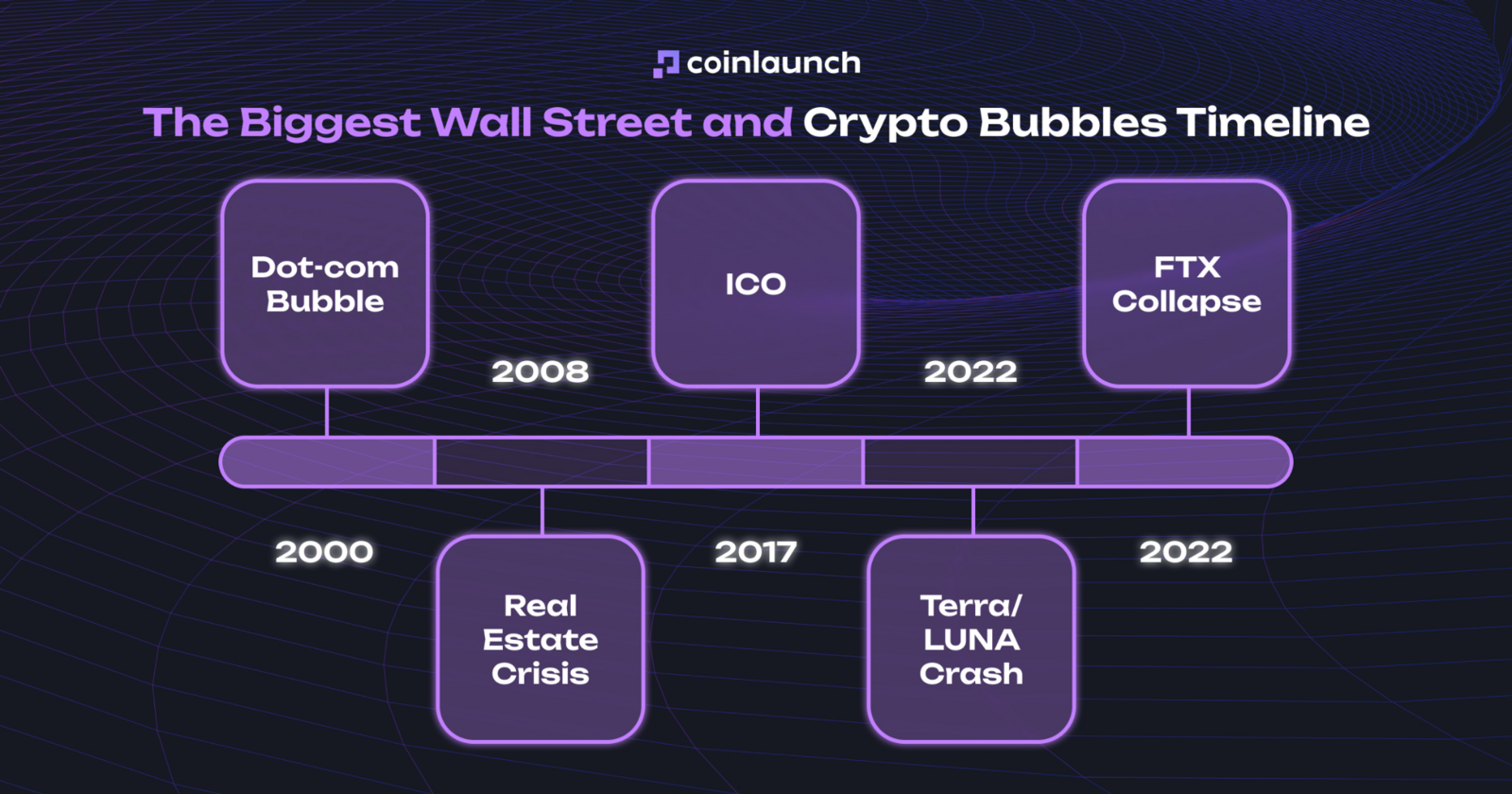
Cronología de las mayores burbujas de Wall Street y del sector cripto. Fuente: coinlaunch.space
En las finanzas tradicionales, a menudo transcurren años entre grandes crisis. En el año 2000, la burbuja puntocom estalló después de que el mercado sobrevalorara a las empresas de internet, muchas de las cuales aún no eran rentables. En 2008, la crisis comenzó en el mercado inmobiliario: el crédito fácil, concedido de forma masiva a prestatarios insolventes, impulsó los precios de la vivienda, mientras que productos hipotecarios complejos propagaron el riesgo por todo el sistema bancario.
En el sector de las criptomonedas, estos ciclos suelen ser más breves y concentrados. En 2017, el mercado de las ICO se sobrecalentó, llegando a clasificarse cerca del 78% de los proyectos como estafas. En mayo de 2022, Terra/LUNA colapsó tras la pérdida de la paridad de UST con el dólar. En noviembre de ese mismo año, FTX, uno de los mayores exchanges de criptomonedas del momento, se declaró en quiebra.
Como puede observarse, aunque el sector cripto y el mercado bursátil son industrias completamente distintas, el denominador común de una burbuja es la convicción de los operadores de que nunca colapsará. Si ha intentado acumular criptomonedas, es probable que ya lo haya notado: cuando se piensa que el mercado nunca va a caer, suele hacerlo.
¿Cómo funcionan las burbujas cripto?
En términos más formales: una burbuja cripto está impulsada por la psicología del mercado y el comportamiento de rebaño. A medida que los precios suben, más participantes entran al mercado, alimentando el movimiento alcista. La burbuja continúa creciendo hasta alcanzar un punto de inflexión.
Luego, la tendencia cambia bruscamente: los inversores se dan cuenta repentinamente de que no podrán vender el activo a un precio superior al que lo compraron, se apresuran a vender y los precios caen con rapidez.
Este es el patrón básico detrás de la mayoría de las burbujas cripto.
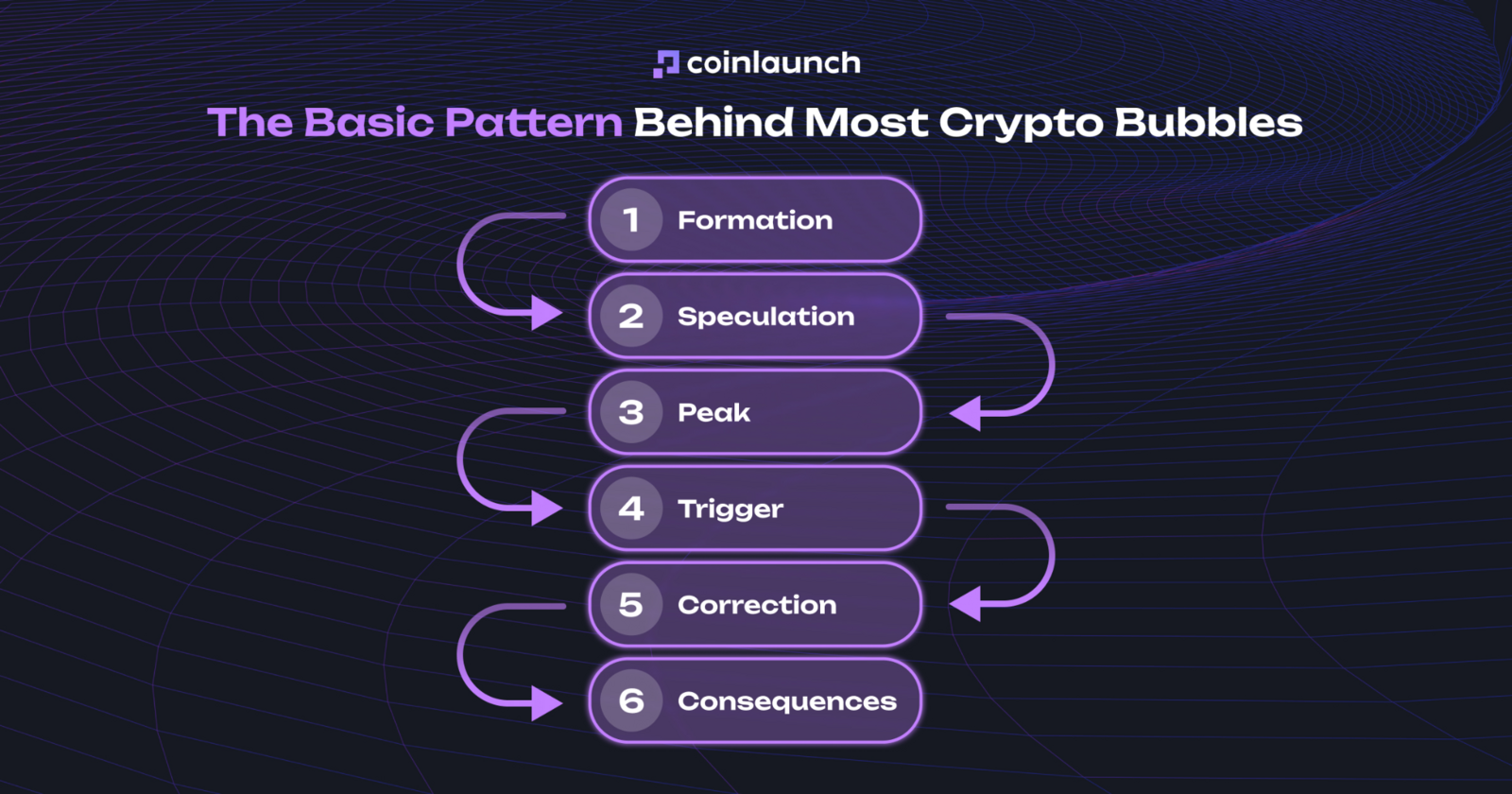
El patrón básico detrás de la mayoría de las burbujas cripto. Fuente: coinlaunch.space
- Formación. Una burbuja cripto suele comenzar con una subida inicial del valor de un activo. Este repunte puede estar impulsado por una nueva tecnología, el crecimiento general del mercado o una narrativa específica. En esta fase, el sentimiento se vuelve alcista y entran nuevos compradores en busca de beneficios rápidos.
- Especulación. La demanda deja de estar motivada por los fundamentos para basarse en las expectativas de mayores subidas. Aparece el FOMO y los propios inversores terminan alimentando la escalada del precio.
- Punto máximo. El precio se desconecta del valor intrínseco del activo. El mercado gana confianza en que la tendencia alcista continuará. Los operadores incrementan el apalancamiento y aumentan el tamaño de sus posiciones.
- Detonante. La burbuja estalla cuando un catalizador repentino quiebra la narrativa. Esto puede ser una investigación de ZachXBT, medidas regulatorias o revelaciones perjudiciales.
- Corrección. Los inversores comienzan a vender los activos sobrevalorados. El precio cae a medida que las ventas por pánico se aceleran.
- Consecuencias. Tras el estallido de la burbuja, es posible que el activo nunca vuelva a recuperar sus máximos anteriores. Esto es habitual en el sector cripto, con excepciones como BTC, ETH, SOL y otros.
Las mayores burbujas cripto de los últimos 10 años
Durante los últimos 10 años, el mercado ha experimentado varias burbujas cripto: ICO, memecoins, NFT, Terra/LUNA y FTX. Sin embargo, englobarlas a todas en la misma categoría es un error. Cada una representa un tipo de exceso de mercado muy diferente.
El auge de las ICO fue esencialmente un frenesí de recaudación de fondos: los inversores compraban activos antes de que la mayoría de los proyectos hubieran demostrado una demanda real de mercado, desarrollado un producto funcional o generado tracción verificable. Dichos proyectos podían recaudar entre 40 y 60 millones de dólares con un presupuesto inicial de solo 200 000 $ y un equipo de 8 personas.
La burbuja de los NFT se asemejó más a una manía especulativa clásica. Por ejemplo, en 2021, Lil Uzi Vert promocionó Eternal Beings, una colección de 11 111 avatares alienígenas. Los NFT se agotaron por completo a 2,5 SOL cada uno, recaudando aproximadamente 3,7 millones de dólares en total. En una publicación posteriormente eliminada, el rapero afirmó que el precio base (floor price) de la colección alcanzaría fácilmente los 6 SOL. Tras la venta, borró sus publicaciones promocionales, el precio base cayó a 1,67 SOL y el proyecto fue acusado de estafa de salida (rug pull). Hoy en día, su precio base es de 0,09 SOL.
Por su parte, Terra/LUNA y FTX fueron implosiones estructurales de ecosistemas específicos que se desarrollaron en el contexto de un mercado ya sobrecalentado.
Analicemos algunas de las más significativas a lo largo de los últimos ciclos del sector.
El estallido de la burbuja de los NFT (2021-2022)
La burbuja de los NFT surgió del concepto de propiedad digital. En 2021, los NFT no solo representaban imágenes, sino también estatus, escasez, acceso a comunidades y la promesa de una reventa rápida con beneficios. El sector abarcó desde avatares de perfil (PFP) y objetos de videojuegos hasta terrenos en el metaverso y lanzamientos de celebridades.
La cuestión ya no era si los NFT estaban en una burbuja, sino: ¿cuándo estallará la burbuja de los NFT? La capitalización total del mercado de NFT alcanzó su punto máximo a principios de 2022 antes de sufrir una fuerte caída, de la cual no se ha recuperado desde entonces. Los precios medios se desplomaron aproximadamente un 87%.
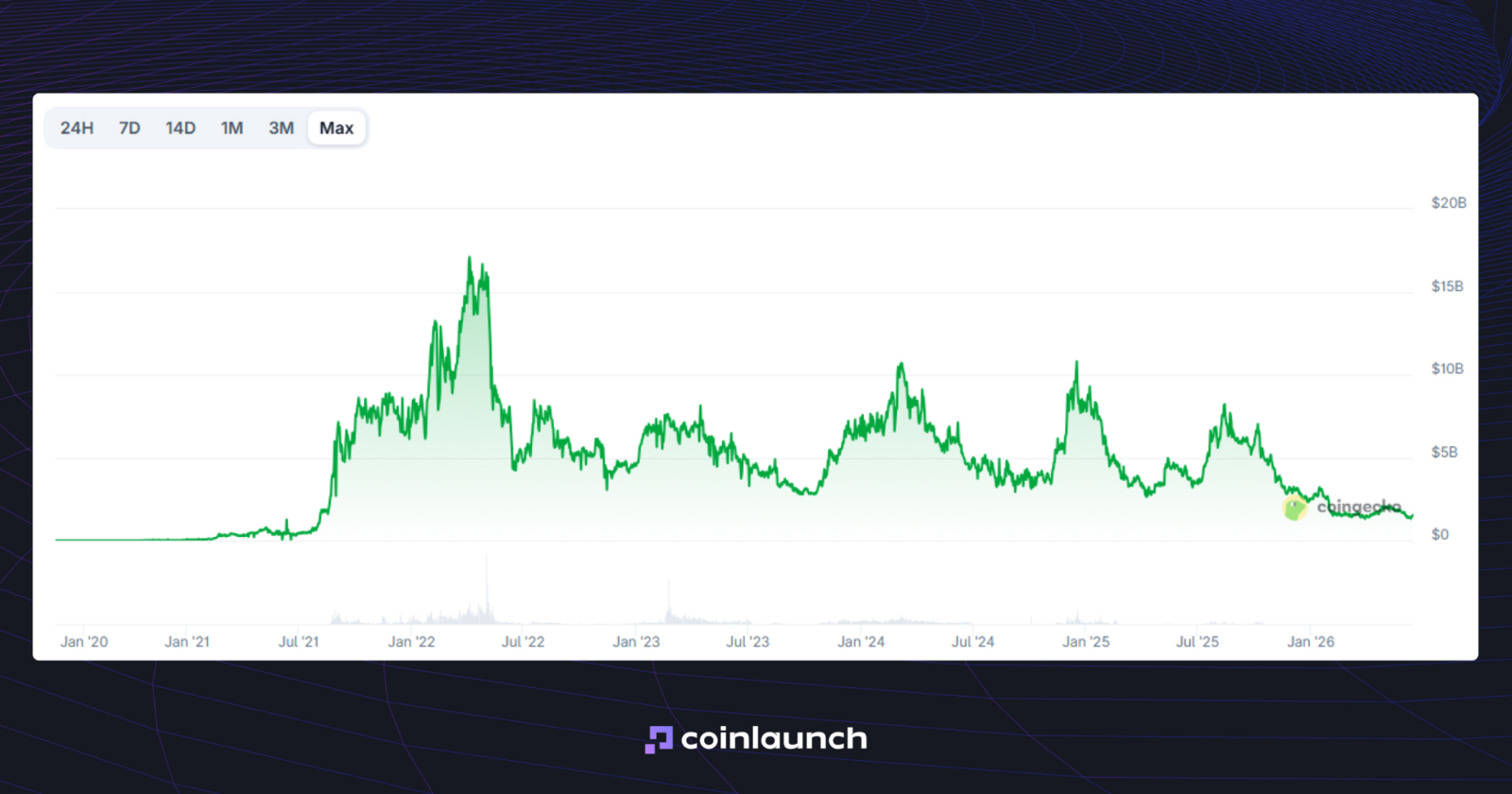
Gráfico de la capitalización total del mercado de NFT. Fuente: coingecko.com
Dicho esto, el estallido de la burbuja de los NFT no acabó con la tecnología subyacente. Simplemente disipó la ilusión de que cualquier colección con escasez artificial y un sitio web atractivo tenía una revalorización garantizada. Una vez calmado el mercado, se empezó a trazar una distinción más clara entre las colecciones puramente especulativas y los NFT que aportan utilidad real: acceso exclusivo, activos en juegos, derechos de propiedad intelectual, venta de entradas o identidad digital.
El colapso de FTX
A pesar de haber sido uno de los momentos determinantes en la historia de las criptomonedas, pocos comprenden en profundidad la realidad tras la caída de FTX. El colapso de FTX no fue una burbuja limitada a un solo sector, sino la implosión de un exchange centralizado que había adquirido una importancia sistémica en el mercado cripto. Antes de su quiebra, FTX era considerada una de las mayores plataformas del sector, mientras que su fundador, Sam Bankman-Fried, era ampliamente visto como la cuarta figura más influyente de la industria, por detrás de Satoshi Nakamoto, Vitalik Buterin y CZ (Changpeng Zhao).
Para entender lo que ocurrió con FTX, conviene comenzar por Alameda Research, la firma de trading vinculada a FTX. La caída comenzó cuando el balance de Alameda fue objeto de un riguroso análisis. Este reveló una dependencia crítica de FTT, el token nativo del exchange: una gran parte del capital de Alameda estaba vinculada a un activo cuyo precio dependía en gran medida de la reputación de FTX. La lógica era simple y peligrosa: si FTT caía, Alameda quedaba en una situación de extrema vulnerabilidad; y si Alameda parecía vulnerable, la confianza del mercado en FTX podía desaparecer de forma casi instantánea.
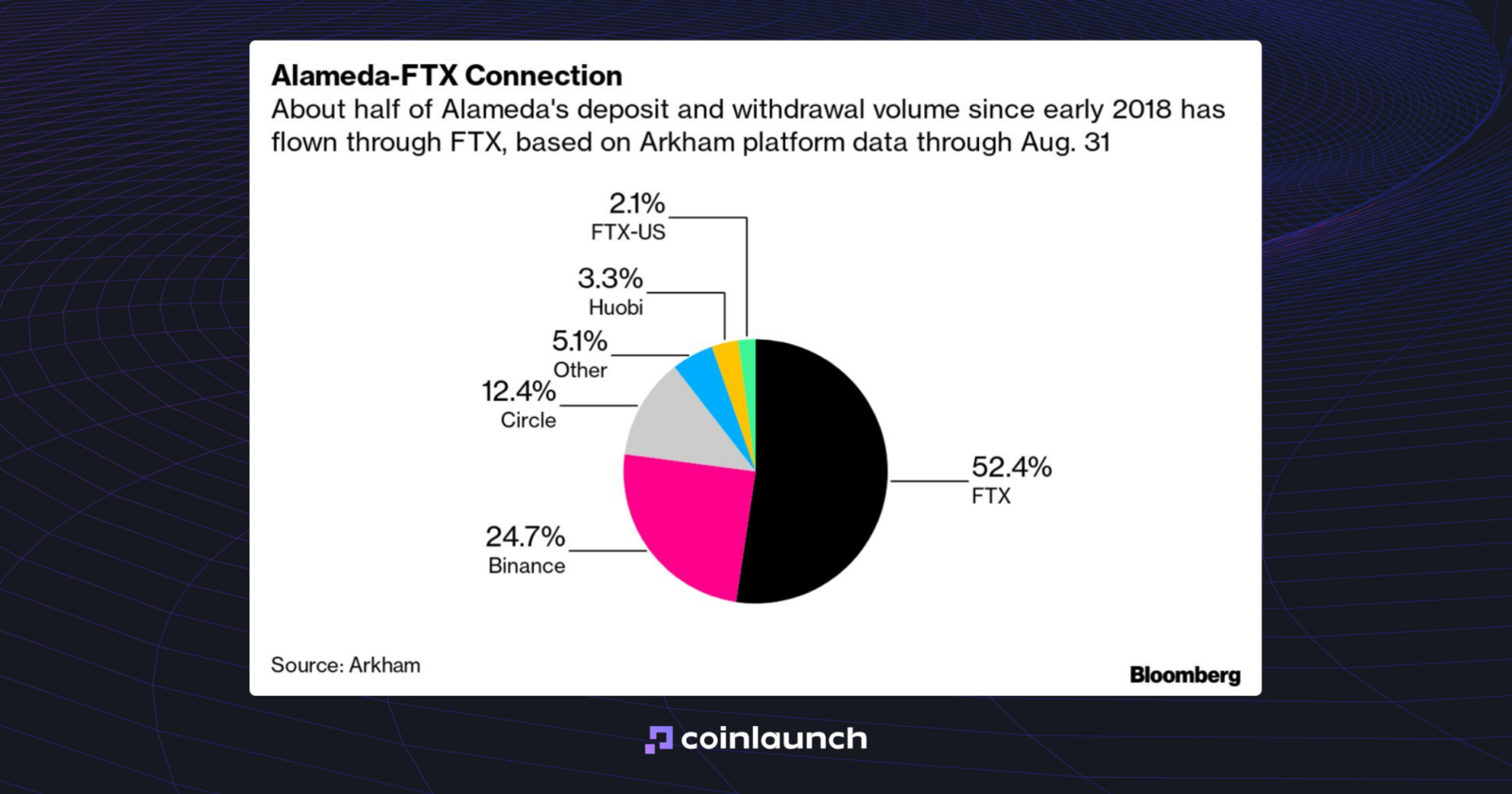
Desde principios de 2018, aproximadamente la mitad de los depósitos y retiros de Alameda pasaron por FTX. Fuente: bloomberg.com
Estas revelaciones provocaron una retirada masiva de depósitos en FTX: si el exchange hubiera mantenido los activos de los clientes en reserva según lo prometido, los retiros se habrían procesado con normalidad. Sin embargo, ante una severa crisis de liquidez, la plataforma se vio superada y, el 11 de noviembre de 2022, la compañía inició formalmente el proceso de quiebra acogiéndose al Capítulo 11 de la ley de quiebras de EE. UU.
Bankman-Fried no era necesariamente un mal inversor en el sentido estricto. Si el colapso de FTX no hubiera forzado la liquidación de la cartera de la compañía, sus participaciones en Anthropic, Solana, Robinhood, SpaceX, Cursor y otros proyectos podrían haber alcanzado un valor cercano a los 114 000 millones de dólares. El problema fundamental fue utilizar los fondos de los clientes para realizar estas inversiones, lo que provocó su caída definitiva.
SBF respaldó empresas con un potencial de crecimiento real, pero las inversiones acertadas no pudieron salvar a FTX de una deficiente gestión de riesgos. El exchange dependía excesivamente de FTT, mezclaba los fondos de los clientes con los activos de Alameda y no pudo resistir una corrida bancaria. Los activos subyacentes podían ser sólidos, pero la gestión del riesgo no lo fue.
El colapso de Terra Luna
El colapso de Terra Luna estuvo directamente ligado a UST, una stablecoin algorítmica diseñada para mantener la paridad de 1 $ mediante su vinculación con LUNA. A diferencia de USDT o USDC, UST no contaba con reservas tradicionales respaldadas en dólares. Su estabilidad dependía de un mecanismo de arbitraje y canje: 1 UST podía convertirse en 1 $ en valor de LUNA.
Antes del colapso de Luna, su crecimiento fue impulsado por Anchor, un protocolo DeFi que ofrecía a los tenedores de UST un rendimiento en torno al 19,5% de APY. Este retorno atrajo un volumen considerable de capital, pero el modelo resultó insostenible. Para la primavera de 2022, las crecientes dudas sobre una posible pérdida de paridad de UST prepararon el terreno para la caída del ecosistema.
En mayo de 2022, comenzaron las salidas masivas de capital de Anchor Protocol. Al perder UST su paridad con el dólar, el mecanismo de estabilización provocó una emisión hiperinflacionaria de LUNA. Esto desencadenó una clásica espiral de muerte: las conversiones masivas de UST a LUNA diluyeron el suministro y aceleraron el desplome del precio. En solo unos días, el colapso de Terra Luna borró aproximadamente 50 000 millones de dólares de capitalización de mercado, reduciendo el valor de LUNA prácticamente a cero.
Señales de una burbuja de mercado y cómo identificarla
Las burbujas de mercado son difíciles de identificar con certeza en tiempo real. En la mayoría de los casos, es en retrospectiva cuando el mercado atribuye con claridad una caída al estallido de una burbuja. Por ello, un enfoque práctico consiste en monitorizar las señales de una burbuja y evaluar la probabilidad de que se esté gestando una.
Los indicadores clave de una burbuja cripto incluyen: una rápida apreciación del precio desligada del valor fundamental, euforia generalizada entre inversores minoristas, promesas de rentabilidad poco realistas, tokenómicas frágiles y una excesiva dependencia de una única narrativa. Un producto no necesita carecer de utilidad para que se forme una burbuja; puede tener un valor real. La verdadera pregunta es: ¿justifica su precio actual?
Para mitigar la exposición a futuras burbujas, los inversores deben analizar la profundidad del mercado, la liquidez, los calendarios de desbloqueo (vesting) y la concentración de tokens entre fundadores, firmas de capital de riesgo y grandes tenedores («ballenas»). Para un análisis basado en datos, conviene recurrir a indicadores clave: plataformas como CoinLaunch proporcionan análisis exhaustivos de los fundamentos del proyecto y sus rondas de financiación, mientras que Bubblemaps permite auditar visualmente la estructura de tenedores para detectar posibles alertas.
Otra señal de alerta es la promoción agresiva a través de líderes de opinión (KOL) y celebridades. Los tokens vinculados a figuras públicas evidencian este patrón: Davido promocionó RapDoge y más tarde lanzó DAVIDO; Adin Ross promovió MILF; Floyd Mayweather publicitó EMAX y Mayweverse; Lil Uzi Vert estuvo asociado a Eternal Beings; y Rich the Kid lanzó RichKidsOfficial. En todos los casos, la notoriedad mediática precedió al aumento del precio, pero el valor fundamental nunca llegó a respaldarlo, lo que llevó a estos proyectos a perder relevancia con el tiempo.
¿Son las criptomonedas una burbuja?
El mercado de las criptomonedas no es un bloque homogéneo. De forma más precisa, en el sector cripto se forman burbujas de manera periódica en tokens individuales, sectores, ecosistemas y narrativas específicas. Las ICO, los NFT, Terra/LUNA y el auge de las memecoins demuestran este comportamiento. Aunque el mercado tiende al sobrecalentamiento, esto no basta para responder con un simple «sí» a la pregunta de si las criptomonedas son una burbuja.
Si un token se adquiere únicamente con la intención de revenderlo más caro, su dinámica es claramente equiparable a la de una burbuja. Sin embargo, si una red procesa transacciones, genera comisiones y da soporte a stablecoins, aplicaciones DeFi o almacenamiento de valor, posee una utilidad intrínseca más allá de su cotización. Esta utilidad no inmuniza al token frente a correcciones de precio, pero diferencia la tecnología con fundamentos de la demanda puramente especulativa.
Por tanto, la respuesta a si las criptomonedas son una burbuja no es un simple sí o no. Ciertos segmentos del mercado están impulsados predominantemente por el sentimiento especulativo y funcionan como burbujas, mientras que otros están constituidos por cadenas de bloques funcionales, activos con utilidad probada e infraestructura financiera esencial.
¿Es Bitcoin una burbuja?
Calificar a Bitcoin de burbuja puede resultar impreciso, aunque indudablemente ha atravesado ciclos recurrentes: subidas parabólicas en 2013, 2017, 2021 y 2025, seguidas de correcciones profundas. Estos periodos reflejan movimientos de precio frecuentemente asociados a burbujas especulativas históricas.
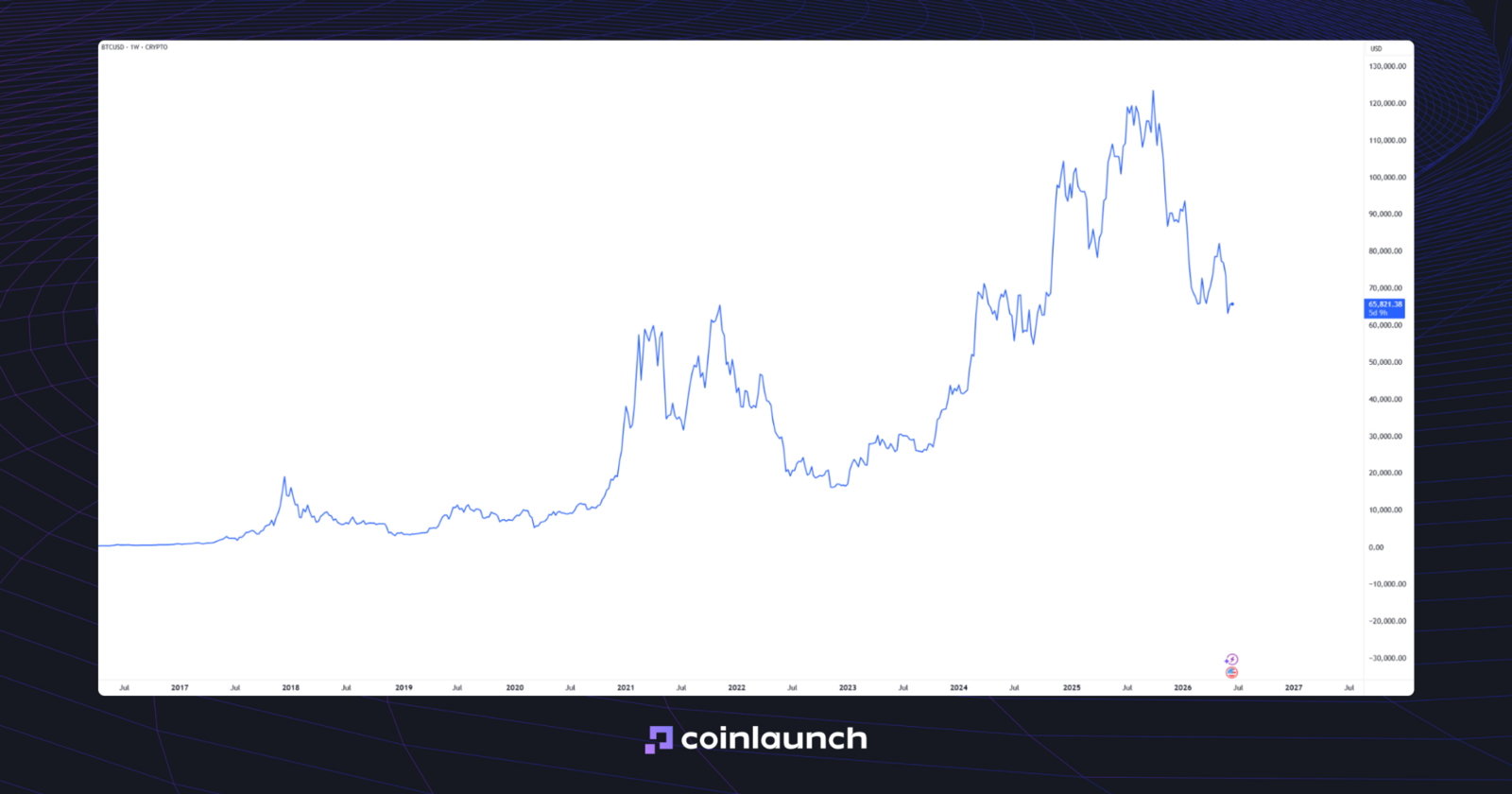
El precio de BTC cayó, pero eso no convirtió a Bitcoin en una burbuja. Fuente: tradingview.com
Sin embargo, esto no valida la afirmación de que Bitcoin sea en sí mismo una burbuja. Al carecer de flujos de ingresos o beneficios tradicionales, escapa a los modelos de valoración de activos financieros estándar. En su lugar, su valor se fundamenta en su oferta limitada, su independencia respecto a entidades centrales, sus características de seguridad y su función como activo de reserva del ecosistema cripto.
Una respuesta más precisa a si Bitcoin es una burbuja sería esta: Bitcoin experimenta periódicamente ciclos con dinámicas de burbuja, pero el activo en sí mismo no lo es.
Resumen: ¿podría ocurrir realmente un colapso por burbuja cripto?
Un colapso por el estallido de una burbuja cripto es ciertamente posible. No obstante, una caída severa no implica el fin de la industria en su conjunto. Por lo general, la pérdida de valor se concentra en un sector, token o ecosistema específico donde las expectativas superaron con creces el rendimiento real. Posteriormente, el capital suele rotar hacia activos más sólidos, los inversores adoptan posturas más cautelosas y la atención se traslada hacia nuevas narrativas.
Los mercados rara vez colapsan cuando la mayoría lo anticipa. Con frecuencia sucede lo contrario: una burbuja se vuelve más peligrosa cuando el consenso general asume que el crecimiento será indefinido.
Esto no convierte al sector cripto en una excepción. Ciclos similares han ocurrido en las finanzas tradicionales, y con frecuencia se trazan paralelismos entre la burbuja puntocom y las burbujas cripto. No se trata de una sentencia de muerte para la industria, sino de una dinámica natural de mercado: los proyectos débiles desaparecen, mientras que aquellos con fundamentos sostenibles permanecen y continúan desarrollándose.