Các Narrative Crypto Hiện tại: Bức tranh Toàn cảnh Thị trường Hôm nay
Các Sản phẩm và Đợt Ra mắt Mới: Robinhood Chain, x402 và Thị trường Token hóa
Các Vòng Gọi Vốn Crypto Lớn Nhất: Paradigm, Prime Intellect, Gauntlet và Venice
Top Tài Sản Tăng Và Giảm Mạnh Nhất: ETH, CASHCAT, INDEX và BMEX
Danh sách các Narrative Crypto Hàng đầu Tháng 7/2026
Ra mắt Robinhood Chain và Meta Stock Meme
x402 và Thanh toán Bằng Stablecoin Cho Các Tác Tử AI
Sự Đóng Cửa Của Các Sàn Giao Dịch: AscendEX, BitMEX và BitMart
Kỳ Vọng Gì Từ Thị Trường Crypto Trong Những Tháng Tới
Tổng Kết Thị Trường Crypto: Các Narrative Tháng 7 Phản Ánh Điều Gì?
Chia sẻ bài viết blog này
Tháng 7 mang lại nhiều biến động thị trường với các gam màu đối lập nhau. AscendEX dừng hoạt động, BitMEX và BitMart công bố đóng cửa, khiến giá token BMEX giảm khoảng 90% ngay sau tin tức. Cùng lúc đó, CASHCAT đã tăng vọt 2.158% trong một tuần, trong khi đợt ra mắt mainnet của Robinhood Chain thu hút một làn sóng nhà giao dịch on-chain mới – những người dường như đã biến mất trong vài tháng qua. Và thực tế hiện tại là: một blockchain mới do sàn CEX phát triển đã đạt khối lượng giao dịch DEX hàng tuần ở mức đỉnh khoảng 4,5 tỷ USD.
Sự phân hóa rõ rệt này làm nổi bật đặc điểm cốt lõi của các narrative crypto năm 2026: dòng vốn không phân bổ đều trên toàn bộ thị trường, mà luân chuyển nhanh chóng giữa các tài sản gắn liền với các chất xúc tác cụ thể.
Dù vậy, các narrative crypto thịnh hành hàng đầu năm 2026 được thúc đẩy bởi nhiều yếu tố hơn là chỉ những đợt tăng giá token ngắn hạn. Robinhood Chain nổi lên như một trung tâm dành cho tài sản token hóa (tokenized assets) và trào lưu stock meme mới, trong khi x402 giới thiệu cơ sở hạ tầng thanh toán dành cho các tác tử AI (AI agent). Mặc dù các lĩnh vực này vẫn đang ở giai đoạn sơ khởi, chúng đã nằm trong số các narrative crypto hàng đầu năm 2026 và sẵn sàng định hình các hướng tăng trưởng tiếp theo của ngành.
Trong bài viết này, chúng tôi sẽ tổng hợp các sự kiện đáng chú ý: việc AscendEX, BitMEX và BitMart đóng cửa, sự trỗi dậy của CASHCAT, màn ra mắt mainnet Robinhood Chain, cũng như sự phát triển của tài sản token hóa và hạ tầng thanh toán x402 cho AI agent.
Các Narrative Crypto Hiện tại: Bức tranh Toàn cảnh Thị trường Hôm nay
Trước hết là tổng quan về thị trường.
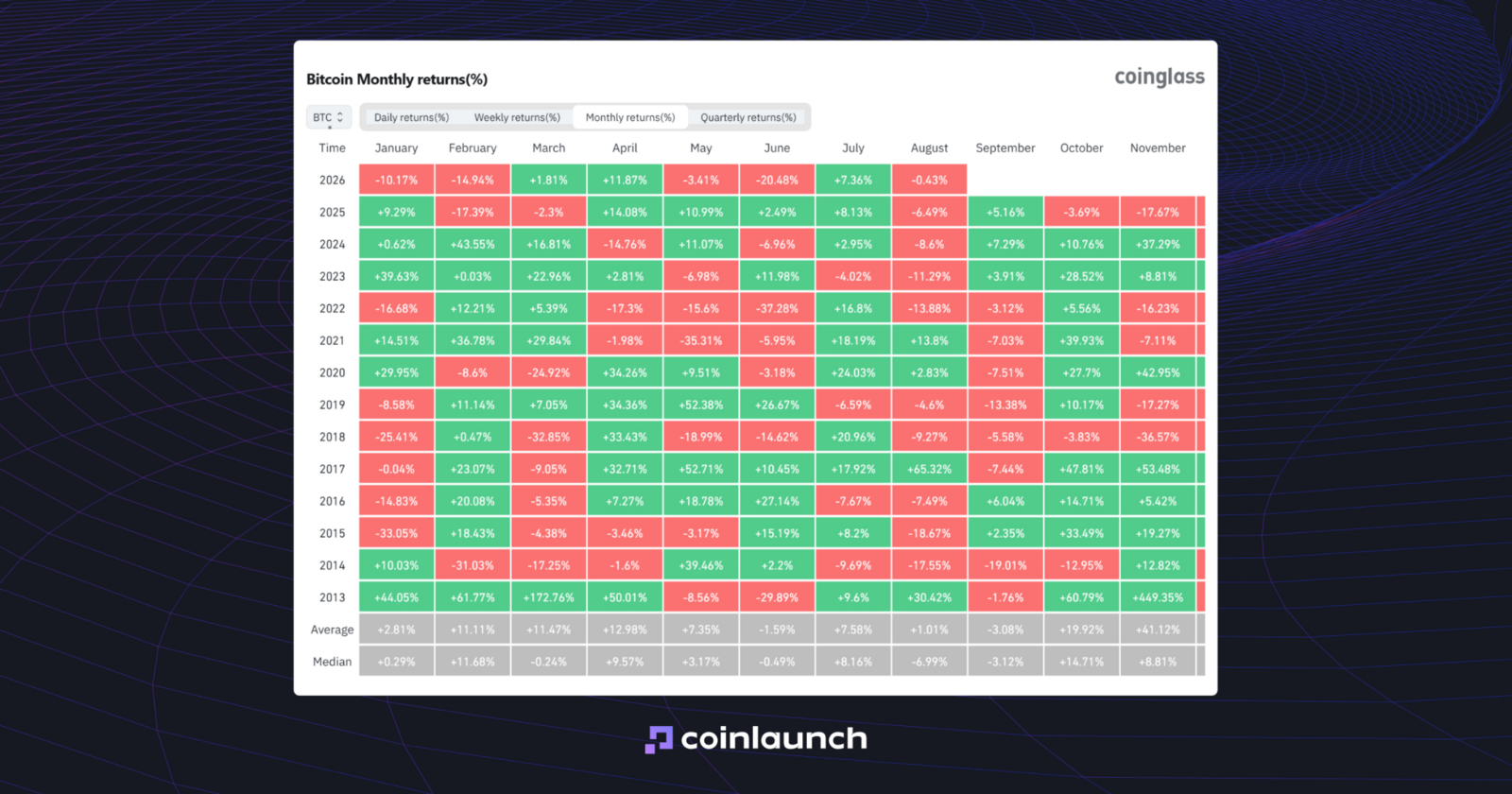
Tính đến cuối tháng 7, tổng vốn hóa thị trường crypto dao động quanh mức 2,2 nghìn tỷ USD. Bitcoin chiếm 56% thị phần, giao dịch ở mức khoảng 62.500 USD, trong khi Ethereum dao động gần 1.800 USD. Đồng thời, Bitcoin kết thúc tháng 7 với mức tăng 7,36%, đánh dấu một trong ba tháng tăng điểm hiếm hoi kể từ đầu năm 2026.
Bối cảnh thị trường chung này chính là phông nền định hình nên các narrative crypto hiện tại của năm 2026.
Tổng quan Lợi suất Hàng tháng của Bitcoin. Nguồn: coinglass.com
Đến cuối tháng 7, thị trường vẫn duy trì cấu trúc phân mảnh. Vào ngày 31 tháng 7, Chỉ số Sợ hãi & Tham lam (Fear and Greed Index) ở mức 34 (Sợ hãi Tột độ). Trong tuần trước đó, chỉ có 9 trong số 25 blockchain hàng đầu tính theo Tổng Giá trị Khóa (TVL) và 10 trong số 25 giao thức hàng đầu ghi nhận mức tăng trưởng dương hàng tuần, trong khi tổng dư nợ cho vay đang hoạt động trên DeFi đạt mức27,5 tỷ USD, với Aave và Morpho chiếm khoảng 56% tổng số. Do đó, các narrative crypto thịnh hành hiện nay chỉ phát triển cục bộ trong từng phân khúc riêng lẻ thay vì bùng nổ trên diện rộng.
Chất xúc tác vĩ mô bên ngoài chủ yếu vẫn là chính sách tiền tệ của Mỹ. Vào ngày 29 tháng 7, Cục Dự trữ Liên bang Mỹ (Fed) đã quyết định giữ nguyên lãi suất mục tiêu trong khoảng 3,5% đến 3,75%. Nghị quyết được thông qua với tỷ lệ bỏ phiếu 9-3, trong đó ba quan chức phản đối đã ủng hộ mức tăng 25 điểm cơ bản. Cùng lúc đó, căng thẳng leo thang trở lại giữa Mỹ và Iran đã đẩy giá dầu tăng trở lại, một lần nữa làm gia tăng rủi ro lạm phát.
Nhu cầu từ các tổ chức thông qua quỹ Bitcoin ETF giao ngay cũng chưa tạo ra được một xu hướng ổn định. Sau khi ghi nhận dòng vốn vào ròng 233,1 triệu USD vào ngày 30 tháng 7, các quỹ đã bị rút ròng 265,4 triệu USD vào ngày 31 tháng 7. Nhìn chung, tháng 7 khép lại mà không có động lực tăng trưởng đồng nhất, khi thanh khoản luân chuyển linh hoạt giữa các tài sản ngách cụ thể trong khi các mạng Layer-1 lớn và giao thức nền tảng ghi nhận diễn biến trái chiều.
Một diễn biến đáng chú ý khác trên thị trường là động thái từ Strategy (MicroStrategy). Trong khoảng thời gian từ ngày 27 tháng 7 đến ngày 2 tháng 8, công ty đã bán 1.638 BTC thu về 104,7 triệu USD, giảm lượng nắm giữ xuống còn 842.138 BTC. Số tiền thu được được dùng để trả cổ tức cổ phiếu ưu đãi và mua lại cổ phiếu STRC. Lượng bán này vẫn còn nhỏ so với tổng dự trữ của Strategy, nhưng các đợt bán tiếp theo có thể gây áp lực lên tâm lý thị trường, khi một trong những người mua tổ chức lớn nhất của Bitcoin hiện cũng trở thành nguồn cung trên thị trường.
Trong khi đó, Đạo luật CLARITY vẫn đang bị đình trệ tại Thượng viện Mỹ. Nếu việc xem xét kéo dài đến cuộc bầu cử giữa nhiệm kỳ, khả năng phiên bản hiện tại được thông qua sẽ càng thấp hơn: Đảng Dân chủ chỉ cần giành thêm bốn ghế để lấy lại thế đa số, và tỷ lệ ủng hộ dành cho họ tại các bang quan trọng đang tăng lên. Đồng thời, đảng này cũng đang yêu cầu các điều khoản nghiêm ngặt hơn về bảo vệ người dùng, phòng chống rửa tiền và xung đột lợi ích.
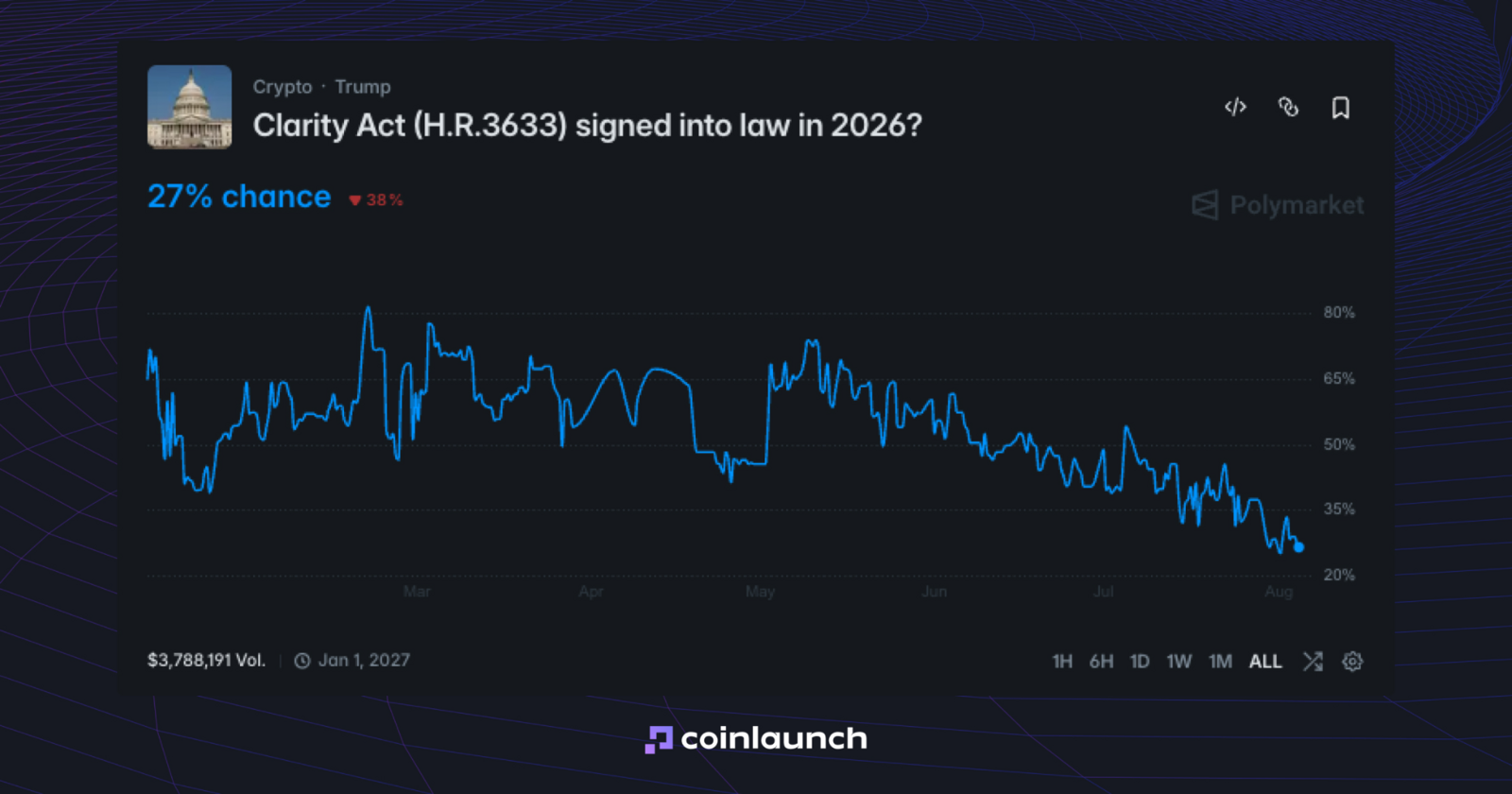
Các thị trường dự đoán cũng phản ánh sự hoài nghi tương tự. Tính đến ngày 4 tháng 8, các nhà giao dịch trên Polymarket chỉ đưa ra 27% khả năng Đạo luật CLARITY sẽ được ký thành luật trong năm 2026, giảm 38 điểm phần trăm so với mức trước đó.
Biểu đồ Tỷ lệ khả năng thông qua Đạo luật CLARITY. Nguồn: x.com
Do đó, sự thay đổi trong cán cân quyền lực có thể không đảo ngược hoàn toàn chính sách crypto của Mỹ, nhưng có thể làm chậm lại các sáng kiến ủng hộ tiền mã hóa của Đảng Cộng hòa.
Các Sản phẩm và Đợt Ra mắt Mới: Robinhood Chain, x402 và Thị trường Token hóa
Trong tháng 7, các đợt ra mắt crypto đáng chú ý đã vượt xa các đợt phát hành token (TGE) thông thường. Robinhood đã triển khai mạng Layer-2 độc quyền của mình lên mainnet công khai, Linux Foundation đã đưa Quỹ x402 đi vào hoạt động, trong khi Securitize, Ondo và Backpackgiới thiệu các sản phẩm mới được thiết kế riêng cho việc giao dịch cổ phiếu on-chain.
Vào ngày 1 tháng 7, Robinhood đã chính thức ra mắt mainnet công khai cho Robinhood Chain. Được xây dựng trên nền tảng Arbitrum, blockchain này được thiết kế đặc biệt cho các dịch vụ tài chính, ứng dụng DeFi và token hóa tài sản thực (RWA). Các đối tác mạng lưới ban đầu gồm Uniswap và Pleiades, trong khi các giải pháp cơ sở hạ tầng cốt lõi được cung cấp bởi Alchemy, BitGo và Chainlink.
Đồng thời, công ty đã phát hành các token cổ phiếu Robinhood mới (Robinhood Stock Tokens). Chúng có thể được giao dịch 24/7 và sử dụng trong các pool tín dụng hoặc làm tài sản thế chấp. Tuy nhiên, các cổ phiếu token hóa này không trao cho người sở hữu quyền lợi pháp lý đối với cổ phiếu cơ sở. Robinhood định nghĩa chúng là các chứng khoán nợ được token hóa nhằm phản ánh giá trị kinh tế của các chứng khoán tương ứng.
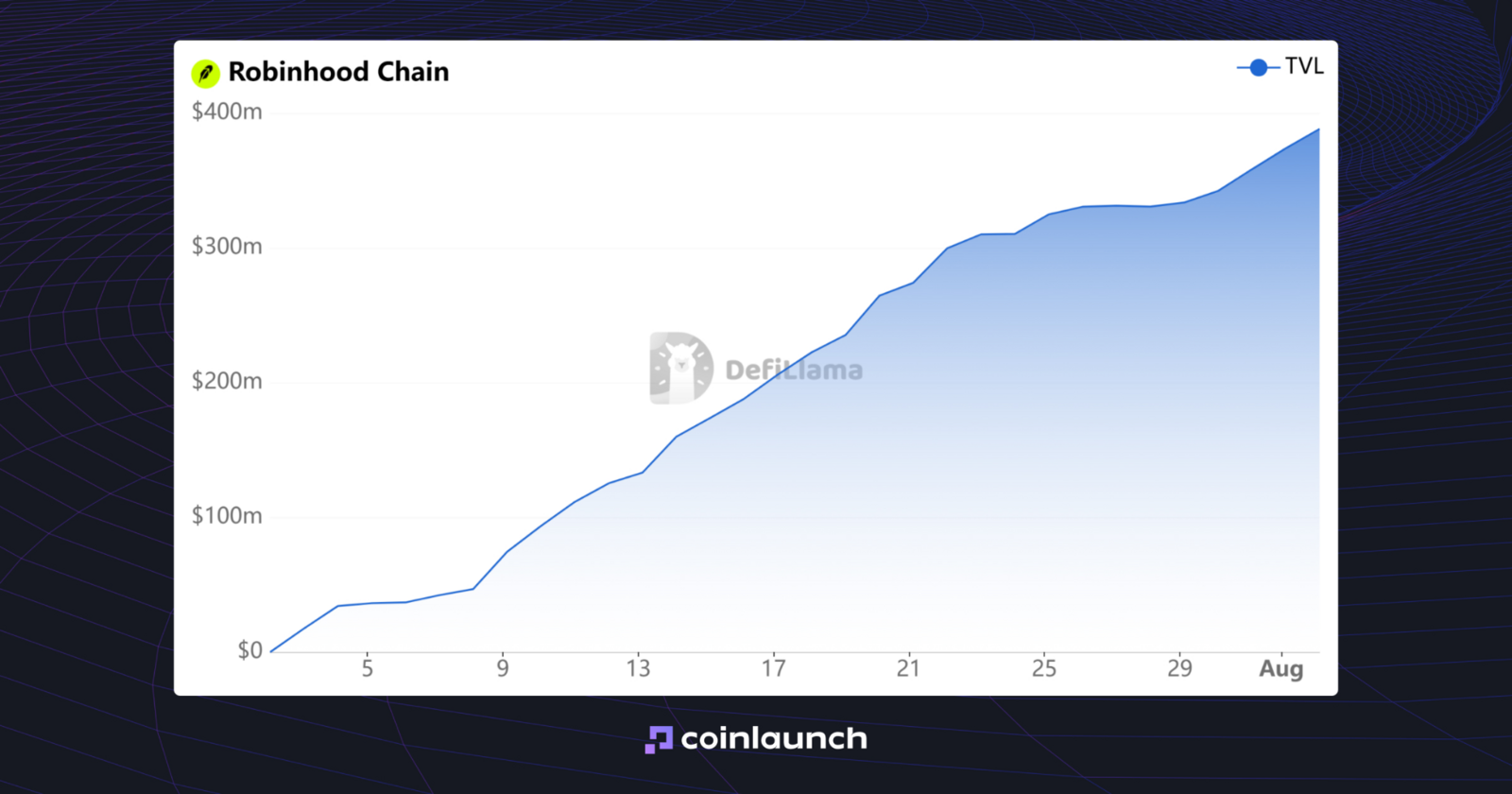
Đến cuối tháng 7, blockchain của Robinhood đã xử lý gần 200 triệu giao dịch trong chưa đầy một tháng. Trong hai tuần đầu tiên, lượng giao dịch hàng ngày đã vượt mốc 11 triệu và sau đó ổn định ở mức khoảng 9 triệu giao dịch. TVL của mạng lưới đạt khoảng 390 triệu USD, cao hơn khoảng 30% so với OP Mainnet ở mức 302 triệu USD. Trong 7 ngày trước đó, khối lượng giao dịch DEX trên Robinhood Chain đạt 3,16 tỷ USD và vốn hóa stablecoin đạt 536 triệu USD.
Biểu đồ TVL của Robinhood Chain. Nguồn: defillama.com
Trong số các token gốc trên Robinhood Chain, các memecoin CASHCAT và INDEX là phổ biến nhất, bên cạnh các cổ phiếu token hóa bao gồm AAPL và NVDA cũng được lưu thông trên cùng mạng lưới.
Việc một công ty từng ít tham gia sâu vào crypto như Robinhood tự phát triển blockchain riêng cho thấy sự giao thoa ngày càng lớn giữa hai lĩnh vực: Tài chính truyền thống (TradFi) và Crypto. Xu hướng này cũng được củng cố bởi việc hàng loạt sàn CEX niêm yết cổ phiếu, chứng khoán, ngoại hối và kim loại quý trong tháng 7/2026.
Theo nghiên cứu từ CoinLaunch, 71% trong tổng số 418 lượt niêm yết trên 7 sàn giao dịch crypto hàng đầu (Binance, Bitget, Hyperliquid, Kraken, Coinbase, KuCoin và OKX) có liên quan đến tài sản TradFi. Bitget, OKX, Binance và Hyperliquid dẫn đầu xu hướng này với các danh mục niêm yết cổ phiếu token hóa, ETF, hàng hóa và các sản phẩm phái sinh vốn cổ phần, trong khi các tài sản crypto thuần túy chỉ chiếm 29% các đợt niêm yết mới.
Vào ngày 14 tháng 7, Linux Foundation đã công bố việc đưa Quỹ x402 vào vận hành và hoàn tất việc tiếp nhận giao thức x402 từ Coinbase. Giao thức này nhúng tính năng thanh toán trực tiếp vào các yêu cầu HTTP (HTTP request), cho phép các ứng dụng, API và tác tử AI tự động yêu cầu và thanh toán dịch vụ mà không cần chuyển hướng sang trang thanh toán riêng biệt. Giao thức thanh toán x402 hỗ trợ nhiều phương thức thanh toán, từ thẻ ngân hàng đến thanh toán bằng stablecoin.
Quỹ x402 quy tụ 40 tổ chức thành viên, bao gồm AWS, American Express, Circle, Cloudflare, Coinbase, Google, Mastercard, Shopify, Stripe và Visa. Circle cho biết khi kết hợp x402 và USDC, các khoản thanh toán của AI agent có thể được xác nhận chỉ trong vài giây với chi phí giao dịch chỉ bằng một phần nhỏ của một cent.
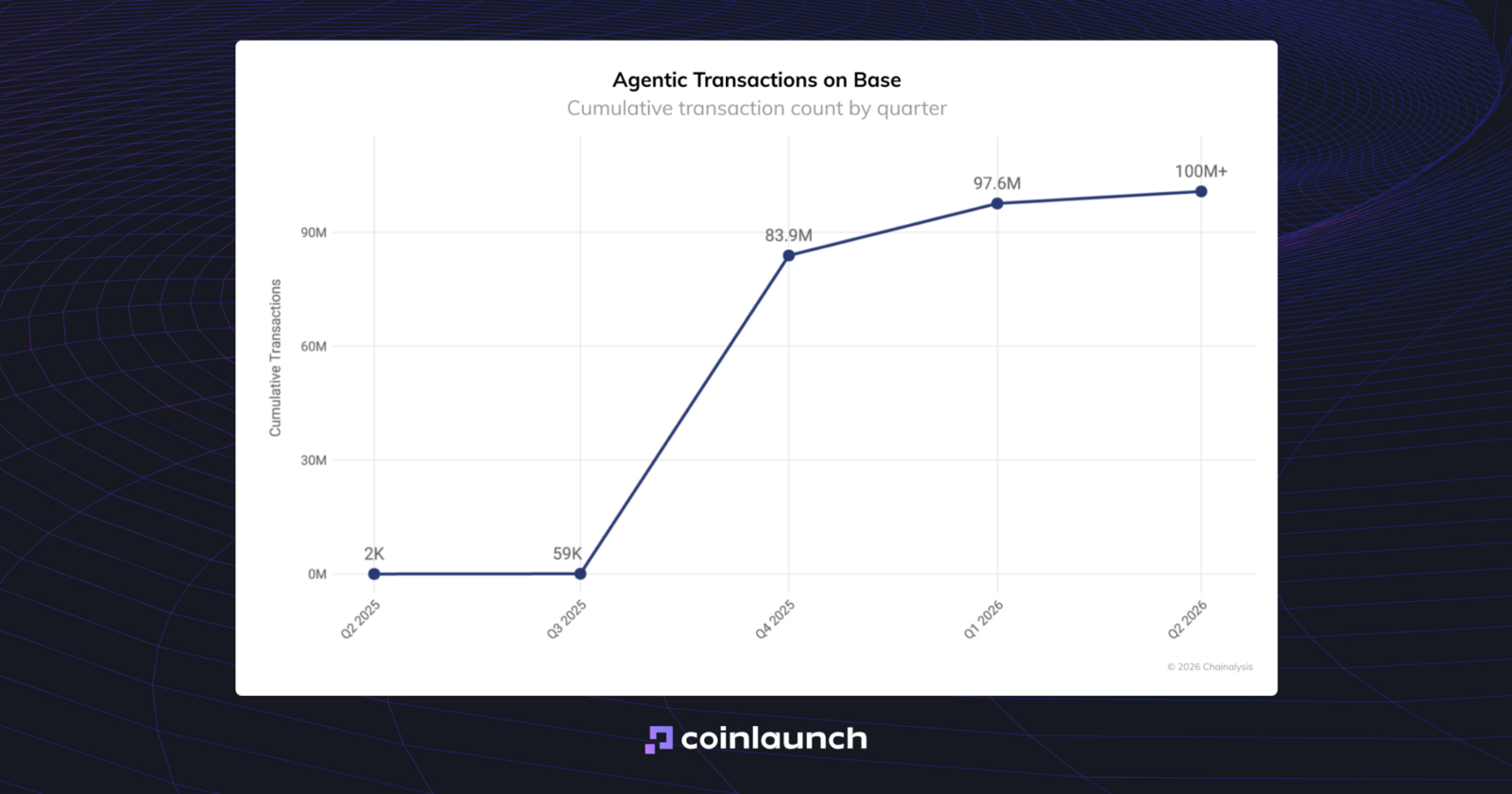
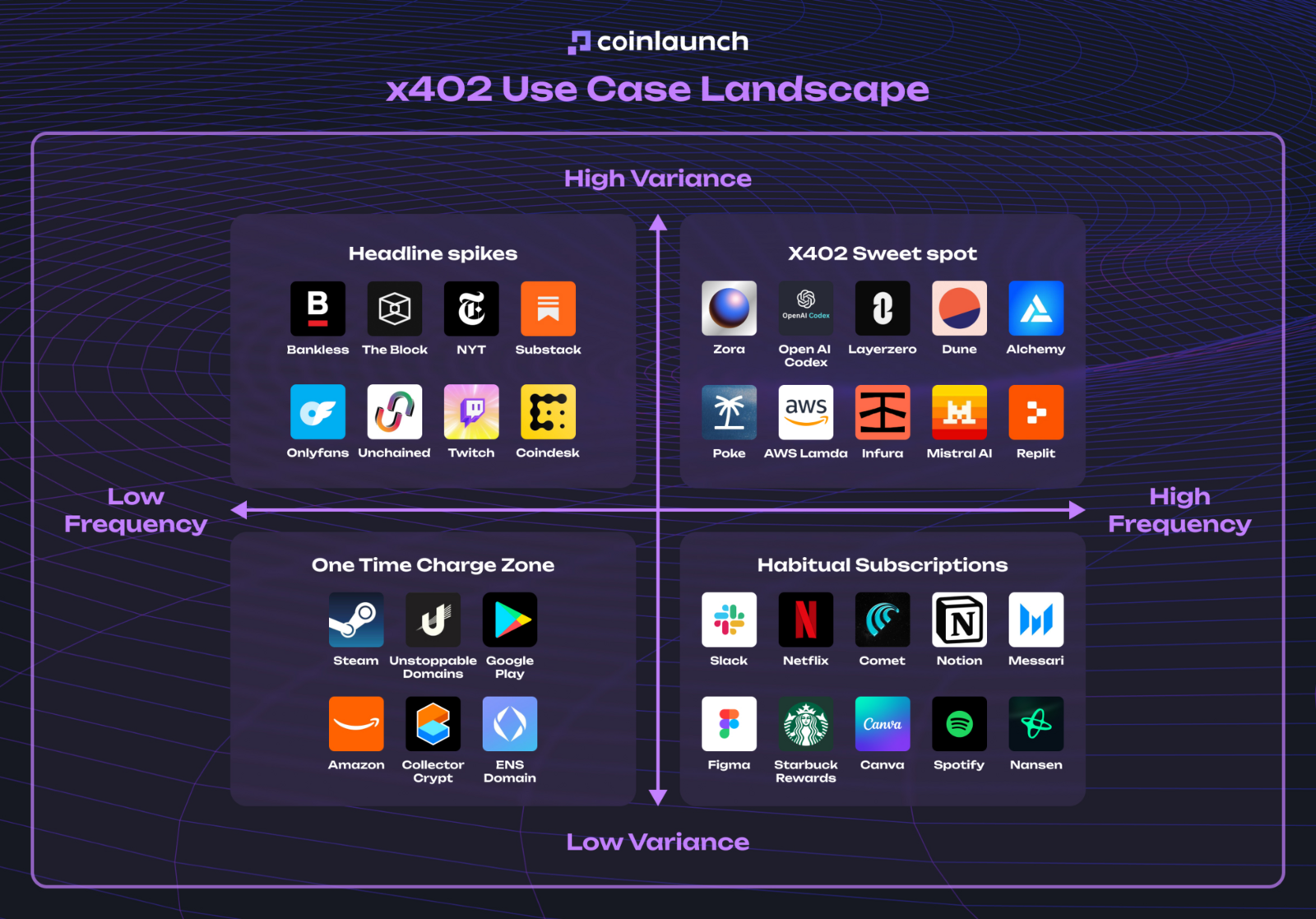
Mặc dù sở hữu tiềm năng công nghệ mang tính bước ngoặt (có thể thay thế định dạng đăng ký thuê bao định kỳ quen thuộc cho các nền tảng phổ biến như Netflix, Dune, Slack, Substack và CoinLaunch), mức độ hoạt động của giao thức này vẫn còn khiêm tốn so với quy mô thị trường tiềm năng. Đến cuối quý 1 năm 2026, số lượng thanh toán x402 trên mạng Base đã đạt hơn 100 triệu lượt.
Số lượng giao dịch x402 trên mạng Base. Nguồn: chainalysis.com
Đồng thời, hoạt động xoay quanh memecoin PING chiếm một phần lớn trong mức tăng trưởng này. Cơ chế của nó yêu cầu trả 1 USDC qua x402 để mint token. Trong một tuần, số lượng giao dịch đã tăng hơn 10.000%, và trong tháng đầu tiên, PING đã xử lý hơn 150.000 giao dịch. Sau khi nhu cầu đầu cơ giảm bớt, tốc độ tăng trưởng của x402 đã chậm lại.
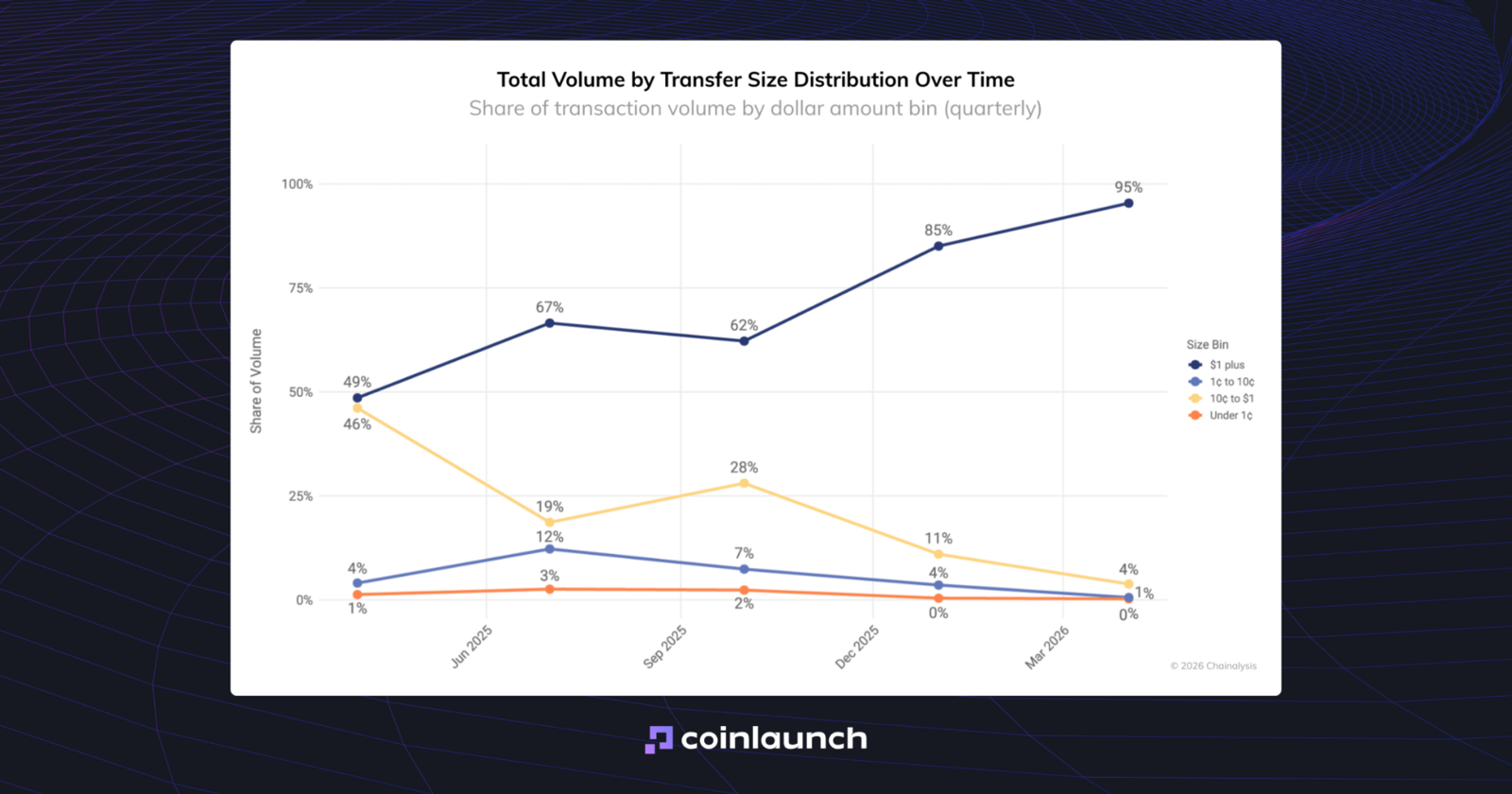
Song song với đó, cấu trúc thanh toán đang dần thay đổi. Đầu năm 2025, các giao dịch từ 1 USD trở lên chiếm 49% khối lượng chuyển tiền, và đến đầu năm 2026, tỷ trọng này đã tăng lên 95%. Trong vòng sáu tháng, tỷ lệ các ví thử nghiệm sau đó chuyển sang thanh toán thực tế đã tăng gấp bốn lần.
Phân bổ tổng khối lượng theo quy mô giao dịch. Nguồn: chainalysis.com
Hiện nay, tỷ lệ giữ chân người dùng đang có dấu hiệu cải thiện, nhưng việc áp dụng đại trà công nghệ này vẫn còn là một chặng đường dài: tệp người dùng chính của x402 vẫn là các thành viên trong thị trường crypto, chưa mở rộng nhiều tới các doanh nghiệp lớn và dịch vụ truyền thống. Bước đi gần đây của Linux Foundation có thể sẽ trở thành một bước ngoặt quan trọng cho công nghệ này.
Nhiều sản phẩm mới cũng đã xuất hiện trong thị trường chứng khoán token hóa. Trong tháng 7, Backpack đã ra mắt dịch vụ giao dịch 24/7 cho các cổ phiếu Mỹ thực tế. Những tài sản đầu tiên bao gồm SpaceX, Micron, SanDisk và SK Hynix. Công ty tuyên bố rằng người mua sẽ nhận được cổ phiếu cơ sở, cổ tức và quyền thực hiện các hành động doanh nghiệp, thay vì chỉ tiếp cận biến động giá thông qua hợp đồng tổng hợp (synthetic contract). Tài khoản giao dịch có thể được nạp bằng USD hoặc USDC.
Đến cuối tháng 6, vốn hóa thị trường của các tài sản token hóa gắn với cổ phiếu đạt khoảng 1,7 tỷ USD, so với mức 329 triệu USD của một năm trước đó. Khối lượng chuyển nhượng on-chain hàng tháng đối với cổ phiếu token hóa đã tăng từ 53 triệu USD lên 9,22 tỷ USD.
Các Vòng Gọi Vốn Crypto Lớn Nhất: Paradigm, Prime Intellect, Gauntlet và Venice
Trong tháng 7, các vòng gọi vốn crypto lớn nhất bao gồm quỹ mới của Paradigm cùng các vòng gọi vốn của Prime Intellect, Gauntlet và Venice. Đối với Paradigm, nguồn vốn này dành cho các hoạt động đầu tư tiếp theo, trong khi ba công ty còn lại huy động vốn để phục vụ quá trình phát triển sản phẩm của chính họ.
Công ty
Ngày
Số tiền huy động
Vòng / Loại hình
Nhà đầu tư dẫn đầu
Chi tiết
Paradigm
8/7/2026
1,2 tỷ USD
Quỹ thứ tư
Các LP của Paradigm
Đầu tư tương lai vào crypto, AI, robotics và nghiên cứu R&D nội bộ
Prime Intellect
8/7/2026
130 triệu USD
Series A
Radical Ventures
Mở rộng hạ tầng tính toán, đào tạo mô hình lớn hơn và hệ thống học cho AI agent
Gauntlet
9/7/2026
125 triệu USD
Series C
SBI Holdings USA
Sản phẩm on-chain mới, mở rộng đội ngũ và mở rộng hỗ trợ nhiều stablecoin hơn
Venice
1/7/2026
65 triệu USD
Series A
Dragonfly
Mở rộng ứng dụng và API
Vào ngày 8 tháng 7, Paradigm thông báo đã huy động được 1,2 tỷ USD cho quỹ thứ tư của mình. Công ty khởi đầu là một quỹ đầu tư mạo hiểm mảng crypto, nhưng hiện có kế hoạch mở rộng đầu tư sang cả AI, robotics và các lĩnh vực công nghệ khác.
Đồng thời, Paradigm khẳng định sẽ tiếp tục đồng hành cùng các dự án crypto và các sản phẩm phục vụ thị trường tài chính. Công ty đã nêu tên một số dự án tiêu biểu như Hyperliquid, blockchain Tempo và nền tảng thị trường dự đoán Kalshi. Quỹ crypto mới của Paradigm cũng sẽ tiếp tục tài trợ cho các dự án phát triển nội bộ, bao gồm Foundry, Reth, Centaur và chuẩn đo kiểm EVMbench được phát triển cùng OpenAI.
Paradigm’s 4th fund
$1.2B to invest and build in crypto, AI, robotics, and other areas of the technical frontier pic.twitter.com/Svy5ncVTbm
Cùng ngày, Prime Intellect đã hoàn tất vòng gọi vốn Series A trị giá 130 triệu USD do Radical Ventures dẫn đầu. Các nhà đầu tư tham gia gồm NVIDIA Ventures, Intel Capital, Dell Technologies Capital cùng các nhà đầu tư hiện hữu của công ty. Sau vòng gọi vốn này, tổng số vốn huy động của Prime Intellect đã vượt mốc 150 triệu USD.
Prime Intellect phát triển cơ sở hạ tầng phục vụ việc đào tạo, triển khai và cải thiện các mô hình AI. Nền tảng này tích hợp tài nguyên tính toán, công cụ học tăng cường, môi trường sandbox, đánh giá mô hình và suy luận (inference). Theo công ty, hiện có hơn 6.000 khách hàng đang sử dụng dịch vụ và doanh thu tính theo năm đã vượt mức 100 triệu USD.
Nguồn vốn Series A của Prime Intellect sẽ được phân bổ để mở rộng cơ sở hạ tầng tính toán, huấn luyện các mô hình lớn hơn và phát triển hệ thống tự học liên tục cho các tác tử AI.
Vào ngày 9 tháng 7, Gauntlet đã huy động125 triệu USD trong vòng Series C do SBI Holdings dẫn đầu thông qua chi nhánh tại Mỹ là SBI Holdings USA. Công ty dự kiến sẽ mở rộng độ phủ của stablecoin ra ngoài USD và EUR, bổ sung hỗ trợ cho các tài sản neo theo đồng MXN và JPY, tuyển dụng thêm nhân sự và phân bổ một phần vốn để ra mắt các sản phẩm on-chain mới.
Venice cũng hoàn tất một đợt huy động vốn lớn. Vào ngày 1 tháng 7, nền tảng AI này đã huy động được 65 triệu USD trong vòng Series A với mức định giá 1 tỷ USD. Vòng này do Dragonfly dẫn đầu, với sự tham gia của Coinbase Ventures, F-Prime, North Island Ventures và các nhà đầu tư khác. Đối với Venice, đây là đợt huy động vốn từ bên ngoài đầu tiên kể từ khi dự án ra mắt vào năm 2024.
Venice cung cấp quyền truy cập vào hơn 200 mô hình AI cho văn bản, hình ảnh, video và âm thanh. Đơn vị này khẳng định không lưu trữ yêu cầu của người dùng trên máy chủ.
Theo thông tin từ công ty, 3,5 triệu người dùng đăng ký trên nền tảng, xử lý khoảng 1,3 nghìn tỷ token dữ liệu mỗi tháng và lên tới 2 triệu yêu cầu API mỗi ngày. Nguồn vốn tài trợ cho Venice AI sẽ được dùng để nâng cấp ứng dụng và mở rộng hệ thống API. Dự án này cũng sử dụng token VVV: tính đến thời điểm công bố vòng gọi vốn, 33,7 triệu token đã được đốt, tương đương khoảng 42% tổng cung.
Top Tài Sản Tăng Và Giảm Mạnh Nhất: ETH, CASHCAT, INDEX và BMEX
Trong tháng 7, những tài sản biến động mạnh nhất thị trường crypto bao gồm cả các đồng coin vốn hóa lớn lẫn các token có vốn hóa vài triệu USD. ETH đã tăng gần 19% trong tháng. CASHCAT và INDEX ghi nhận mức lợi nhuận từ ba đến bốn chữ số sau khi Robinhood Chain ra mắt. Ở chiều ngược lại, token BMEX đã mất khoảng 90% giá trị sau thông tin sàn BitMEX đóng cửa.
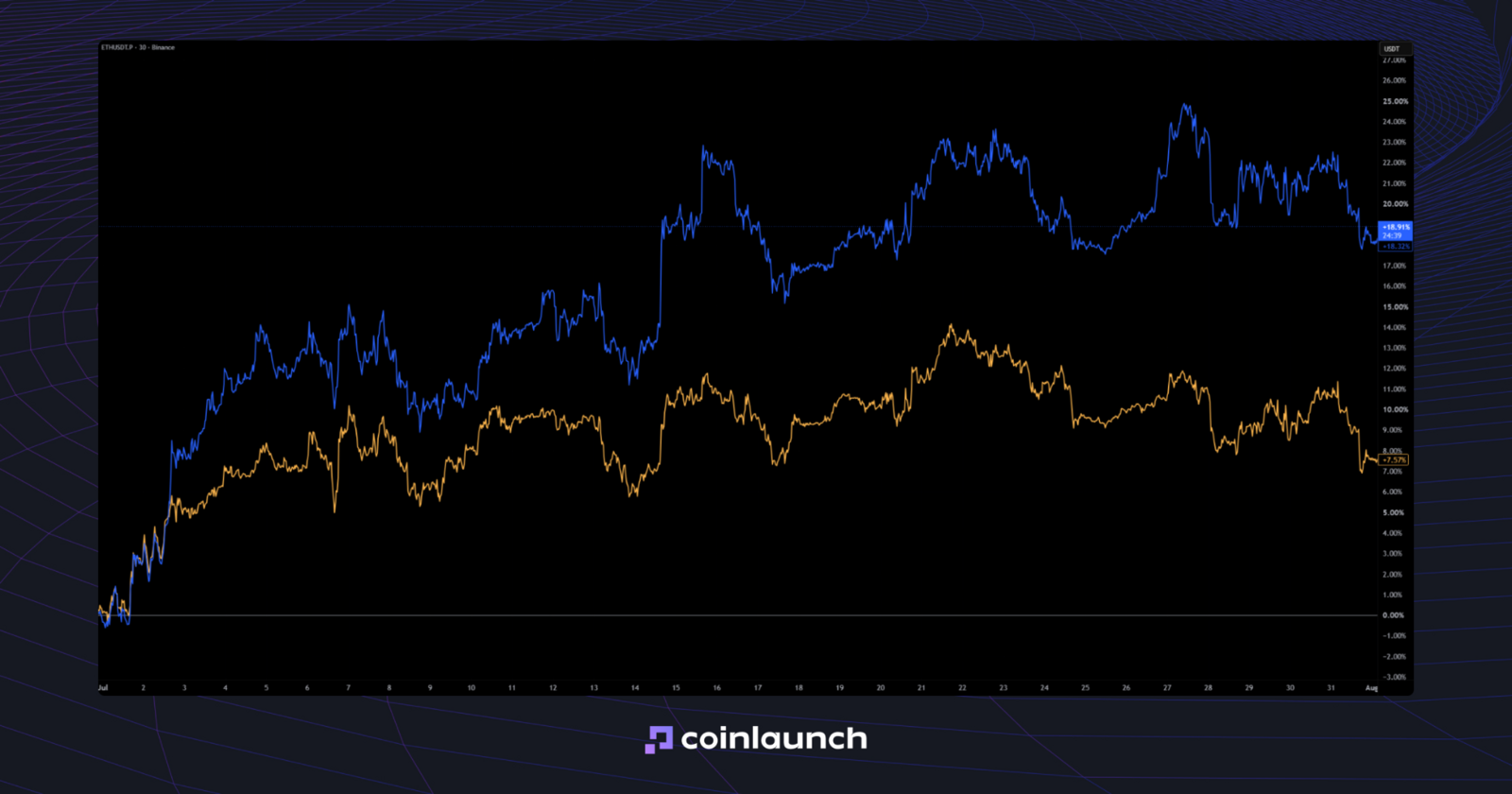
Theo Fortune, vào ngày 31 tháng 7, Ethereum được giao dịch ở mức khoảng 1.886 USD so với mức 1.601 USD của một tháng trước đó. Như vậy, hiệu suất giá của Ethereum trong giai đoạn này đạt mức tăng khoảng 18,8%. ETH trở thành một trong những tài sản tăng trưởng hàng đầu trong nhóm vốn hóa lớn và vượt qua Bitcoin khoảng 11% (Bitcoin kết thúc tháng 7 với mức tăng xấp xỉ 7,5%).
So sánh mức tăng trưởng giá của ETH (xanh lam) và BTC (cam) trong tháng 7/2026. Nguồn: tradingview.com
Cùng với sự tăng giá, nhu cầu đối với các sản phẩm tài chính dựa trên Ethereum được cấp phép cũng tăng lên. Tính đến ngày 30 tháng 7, các quỹ spot ETH ETF tại Mỹ đã thu hút342,85 triệu USD kể từ đầu tháng. Dòng vốn chảy vào các quỹ Bitcoin ETF trong cùng kỳ đạt mức205 triệu USD.
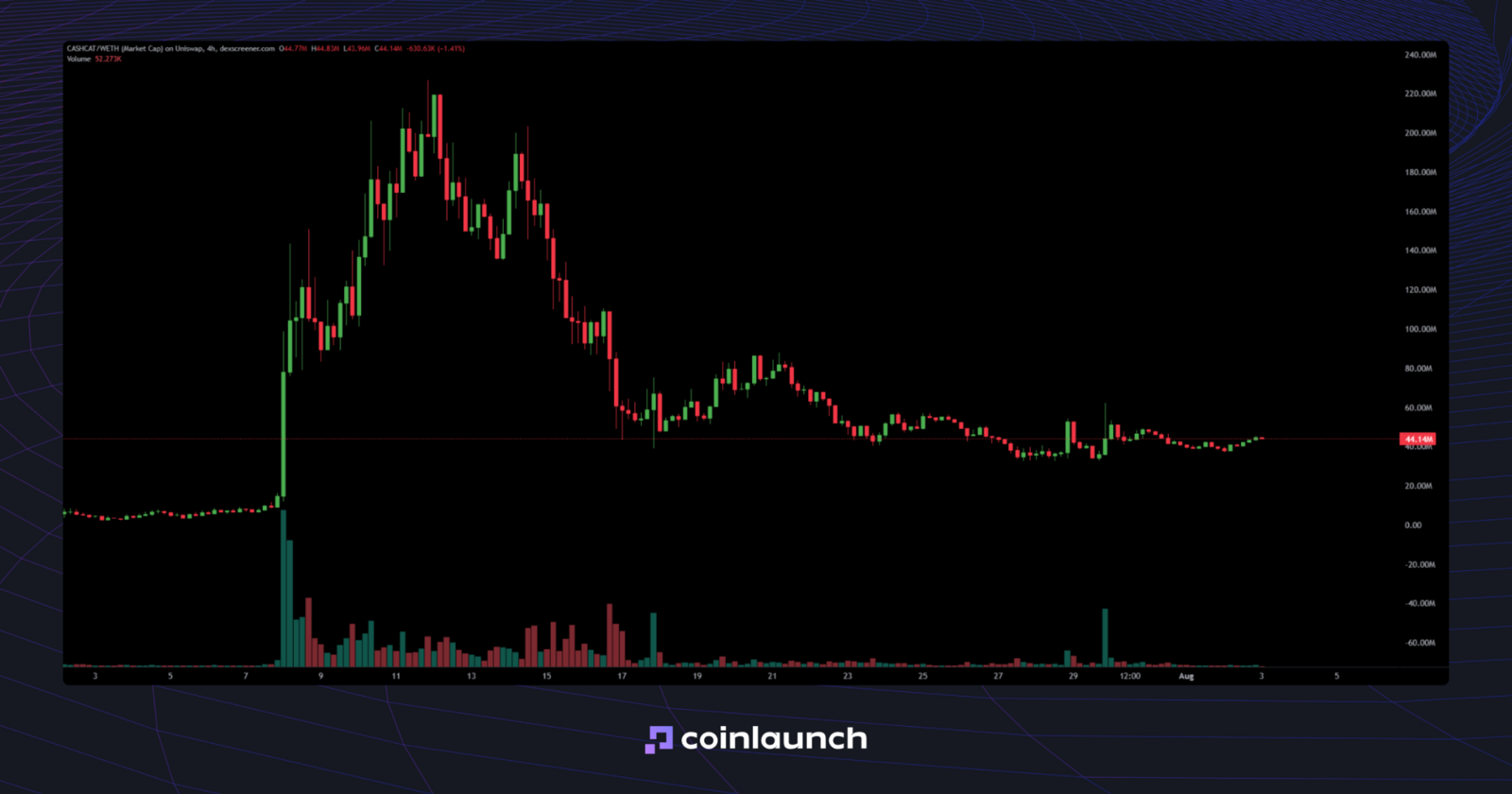
Những biến động giá mạnh mẽ hơn đã diễn ra trên Robinhood Chain. Mặc dù mạng lưới này được ra mắt nhằm phục vụ cho cổ phiếu token hóa và các tài sản RWA khác, nhưng trong vài tuần đầu tiên, các memecoin lại chiếm phần lớn hoạt động giao dịch. Đến ngày 13 tháng 7, giá token CASHCAT đã tăng 2.158% trong vòng bảy ngày và vốn hóa thị trường đạt 156 triệu USD. Để so sánh, tổng giá trị của tất cả tài sản RWA token hóa trên mạng lưới vào thời điểm đó chỉ là 12,81 triệu USD.
CASHCAT được đặt theo tên CashCat – tên gọi và linh vật ban đầu của Robinhood trước khi tái định vị thương hiệu. Bản thân token này không có mối liên kết chính thức với công ty. Vào ngày 11 tháng 7, vốn hóa thị trường của token này từng vượt mốc 200 triệu USD trong thời gian ngắn với mức giá đạt 0,211 USD. Tuy nhiên, đến ngày 25 tháng 7, đồng coin này đã giảm khoảng 75% so với mức đỉnh.
Biểu đồ vốn hóa thị trường của CASHCAT. Nguồn: dexscreener.com
Một nhóm token lấy cảm hứng từ thương hiệu và lịch sử của Robinhood cũng đã xuất hiện xoay quanh CASHCAT, bao gồm: Cash Dog in Hood, Little John, Hoodrat và Arrow.
Ở thời điểm đỉnh cao của hoạt động giao dịch, từ ngày 17 đến ngày 21 tháng 7, khối lượng giao dịch DEX hàng tuần trên Robinhood Chain đạt khoảng 4,5 tỷ USD. Con số này sau đó giảm xuống 3,9 tỷ USD trong giai đoạn từ 23 đến 27 tháng 7 và còn khoảng 3 tỷ USD vào đầu tháng 8.
Token INDEX cũng tận dụng nhu cầu đầu cơ tương tự nhưng bổ sung thêm cơ chế liên quan đến cổ phiếu token hóa. Giao thức thu mức phí 3% bằng ETH trên các giao dịch token. Lượng ETH tích lũy được dùng để mua các token cổ phiếu Robinhood, bao gồm AAPL và NVDA. Sau đó, số tài sản này sẽ tự động phân phối cho những người nắm giữ token INDEX.
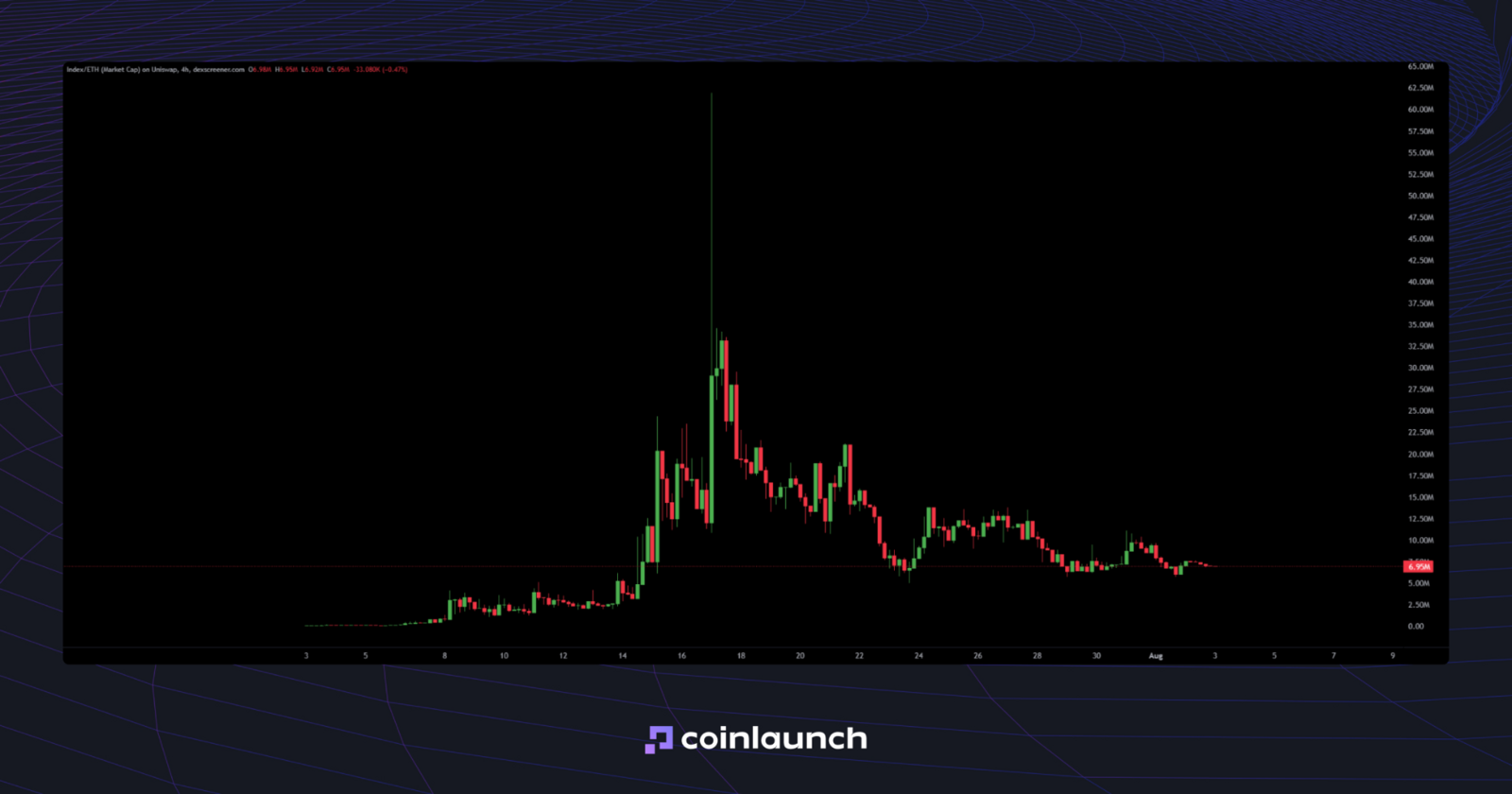
Vào ngày 16 tháng 7, INDEX đã tăng hơn 150% trong 24 giờ và vốn hóa thị trường vượt mức 18 triệu USD. Mức tăng trưởng này diễn ra sau các bài đăng của Vlad Tenev về việc phát triển ứng dụng dựa trên RWA và tuyên bố của ông rằng Robinhood Chain không chỉ phù hợp cho các tài sản thực tế mà còn cho cả memecoin. Vào ngày 17 tháng 7, INDEX đã chạm mức vốn hóa thị trường cao nhất là 62 triệu USD.
Biểu đồ vốn hóa thị trường của INDEX. Nguồn: dexscreener.com
Sự phổ biến của các memecoin trên Robinhood Chain cũng thu hút những đối tượng lừa đảo, chúng tôi sẽ đề cập chi tiết hơn ở phần "Ra mắt Robinhood Chain và Meta Stock Meme" bên dưới.
Tài sản giảm giá mạnh nhất là BMEX. Vào ngày 23 tháng 7, BitMEX thông báo sẽ ngừng hoạt động vào tháng 9. Sàn giao dịch đã đóng cổng đăng ký người dùng mới ngay lập tức và khuyến nghị khách hàng rút tiền. Nền tảng cũng mở khóa toàn bộ số BMEX đang được staking.
Sau thông báo này, giá BMEX đã giảm từ khoảng 0,06 USD xuống còn 0,002 USD. Trong vòng 24 giờ, token này mất khoảng 90% giá trị, trở thành một trong những tài sản crypto có hiệu suất kém nhất trong tháng 7.
Danh sách các Narrative Crypto Hàng đầu Tháng 7/2026
Trong tháng 7, các narrative crypto hàng đầu hình thành xoay quanh những phương thức ứng dụng blockchain mới. Robinhood Chain thu hút sự chú ý với cổ phiếu token hóa và trào lưu stock meme. x402 được bàn luận như một lớp thanh toán dành cho các tác tử AI, trong khi hàng loạt vụ đóng cửa sàn CEX đã làm nóng lại chủ đề về khả năng duy trì hoạt động của các nền tảng tập trung.
Danh sách narrative crypto này tổng hợp các chủ đề chưa đạt đến độ phủ sóng đại trà nhưng có thể tạo nền móng cho giai đoạn phát triển tiếp theo của ngành: token hóa đang dần trở thành hướng đi chủ đạo cho fintech và blockchain, trong khi x402 xây dựng cơ sở hạ tầng thanh toán chuyên biệt cho AI agent.
Cả hai chủ đề này đều đã nằm trong các narrative crypto hàng đầu năm 2026, bất chấp việc chúng vẫn đang ở giai đoạn triển khai ban đầu.
Ra mắt Robinhood Chain và Meta Stock Meme
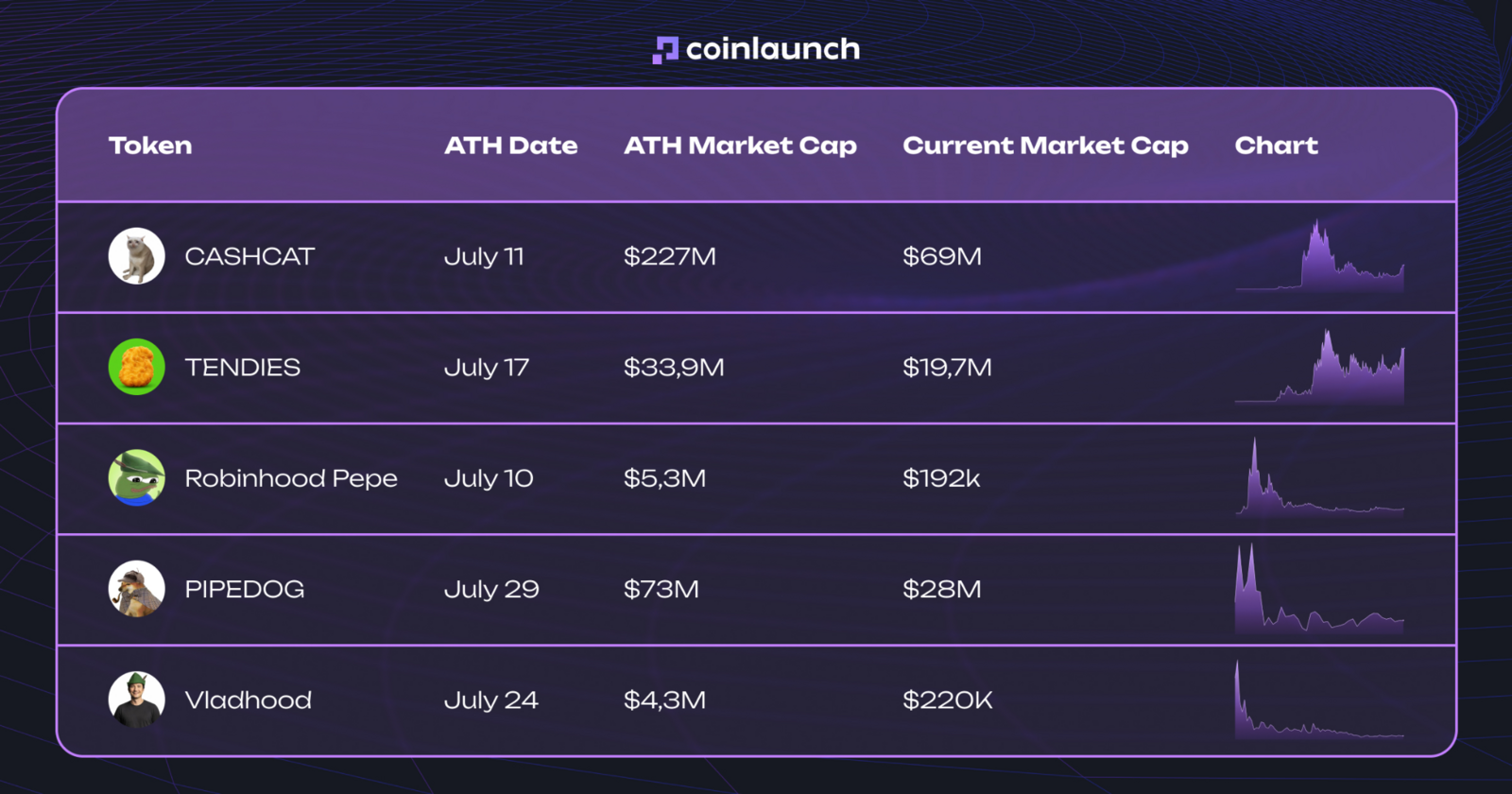
Sau khi Robinhood Chain ra mắt, một làn sóng meme theo phong cách cổ phiếu (stock meme meta) rõ nét đã hình thành xoay quanh mạng lưới này. Những người tham gia lấy cảm hứng từ lịch sử của Robinhood, tiếng lóng của giới giao dịch nhỏ lẻ và các hình ảnh quen thuộc từ những chu kỳ memecoin trước. Memecoin CASHCAT gợi nhắc đến tên gọi ban đầu của công ty, TENDIES lấy từ tiếng lóng của cộng đồng WallStreetBets, còn Robinhood Pepe (REPE) gắn với sự kiện niêm yết token PEPE gốc trên ứng dụng Robinhood.
Vào cuối tháng 7, PIPEDOG cũng gia nhập danh sách này với mức vốn hóa thị trường vượt mốc74 triệu USD chỉ sau 4 giờ ra mắt.
Hiệu suất của các memecoin phổ biến nhất trên Robinhood Chain. Nguồn: coinlaunch.space
Giả thuyết giao dịch được xây dựng dựa trên việc tìm kiếm memecoin dẫn đầu hệ sinh thái Robinhood Chain. Trong các chu kỳ trước trên những blockchain khác, vai trò này lần lượt thuộc về DOGE, PEPE, SHIB và WIF. Do đó, một bộ phận người tham gia thị trường kỳ vọng rằng blockchain của Robinhood cũng sẽ sở hữu một token đại diện với mức vốn hóa lên tới hàng trăm triệu hoặc vài tỷ USD.
Một nhà giao dịch đã mô tả REPE với câu nói "mỗi chain đều cần có một meme chú ếch của riêng mình". Những người khác lại xem CASHCAT, TENDIES và PIPEDOG là các ứng viên tiềm năng cho vị trí memecoin chủ lực của mạng lưới.
Vào ngày 23 tháng 7, một kẻ lừa đảo đã lợi dụng sự cường điệu xung quanh các memecoin trên Robinhood Chain. Kẻ này đã chiếm quyền truy cập vào tài khoản X của CEO Robinhood – Vlad Tenev – và đăng bài về một token được cho là chính thức có tên Vladhood với mã VLAD. Đồng coin này được gọi là "linh vật chính thức của Robinhood Chain" kèm lời hứa sẽ được thêm vào ứng dụng Robinhood. Kẻ tấn công cũng thay đổi ảnh đại diện của Tenev bằng một hình ảnh chỉnh sửa có thêm chiếc mũ lông vũ.
Sau đó, Tenev cho biết kẻ tấn công đã thuyết phục đội ngũ hỗ trợ của X để được cấp quyền truy cập tài khoản, từ đó vượt qua xác thực hai yếu tố (2FA) và thông báo đăng nhập. Bài viết lừa đảo đã bị xóa và tài khoản được khôi phục ngay trong ngày. Sau sự cố, nền tảng X đã áp dụng các biện pháp bảo mật bổ sung cho tài khoản này.
x402 và Thanh toán Bằng Stablecoin Cho Các Tác Tử AI
Vào ngày 14 tháng 7, Linux Foundation đã công bố việc đưa Quỹ x402 vào vận hành, một tổ chức sẽ phát triển tiêu chuẩn thanh toán internet mở dành cho các tác tử AI (AI agent) và các ứng dụng.
x402 là tiêu chuẩn thanh toán được xây dựng trên giao thức HTTP, sử dụng mã trạng thái 402 Payment Required. Khi một AI agent truy cập vào một dịch vụ có phí, máy chủ có thể chỉ định mức giá, loại tài sản chấp nhận và mạng lưới thanh toán trong phản hồi trả về. Tác tử AI sẽ tự động thanh toán bằng stablecoin và nhận quyền truy cập vào dữ liệu hoặc API tương ứng.
Giao thức này giải quyết bài toán cho các dịch vụ có tần suất sử dụng liên tục nhưng không đều đặn. Ví dụ, một tác tử AI có thể thực hiện 800 yêu cầu trong 10 giây rồi sau đó không tương tác với sản phẩm trong thời gian dài. Mô hình thuê bao cố định không phù hợp với kiểu tiêu thụ này, trong khi cơ chế thanh toán x402 cho phép trả tiền cho từng hành động cụ thể mà không cần đăng ký tài khoản, cấp khóa API hay nạp trước số dư.
Nói cách khác, x402 cho phép máy chủ báo giá cho từng tác vụ riêng lẻ và người dùng/agent có thể thanh toán ngay lập tức bằng stablecoin.
Sự Đóng Cửa Của Các Sàn Giao Dịch: AscendEX, BitMEX và BitMart
Trong tháng 7 năm 2026, ba sàn giao dịch crypto tập trung đã công bố ngừng hoạt động. AscendEX đã tạm dừng các dịch vụ chính vào ngày 1 tháng 7, BitMEX ấn định thời điểm đóng cửa vào tháng 9 (công bố ngày 23 tháng 7), và BitMart bắt đầu lộ trình thu hẹp nền tảng từ ngày 26 tháng 7 kéo dài đến tháng 1 năm 2027. Diễn biến và kịch bản đóng cửa của ba sàn giao dịch này có sự khác biệt rõ rệt.
AscendEX là sàn đầu tiên. Kể từ ngày 1 tháng 7, người dùng không thể mở tài khoản, nạp tiền, giao dịch hoặc sử dụng các sản phẩm staking và cho vay. Sàn giao dịch này lý giải quyết định trên là do không đáp ứng được các giấy phép quy định theo khung pháp lý MiCA, cùng với các vấn đề về tài chính và vận hành.
Công ty cũng cho biết một đối tác đã không thực hiện đúng các điều khoản trong thỏa thuận cung cấp thanh khoản bổ sung cho nền tảng. Bắt đầu từ ngày 6 tháng 7, các lệnh rút tiền tự động bị tạm ngưng và toàn bộ yêu cầu chuyển sang quy trình xét duyệt thủ công. AscendEX không cam kết về thời gian xử lý hay việc hoàn trả đầy đủ tiền gửi cho người dùng.
Sự kiện đóng cửa của BitMEX diễn ra tiếp sau đó vào ngày 23 tháng 7. Sàn đã ngừng tiếp nhận khách hàng mới và thông báo sẽ ngừng hoạt động vĩnh viễn vào lúc 04:00 UTC ngày 23 tháng 9. Kể từ ngày 26 tháng 8, người dùng chỉ có thể giảm quy mô vị thế hiện tại và sàn sẽ tự động đóng các hợp đồng còn lại. Ban lãnh đạo BitMEX giải thích quyết định này xuất phát từ kết quả đánh giá chiến lược kinh doanh và hiện trạng của ngành crypto.
Ba ngày sau, BitMart công bố kế hoạch đóng cửa. Sàn giao dịch bắt đầu tạm ngừng đăng ký, nạp tiền và mở lệnh mới từ ngày 26 tháng 7. Tất cả dịch vụ giao dịch dự kiến sẽ ngừng hoạt động vào ngày 26 tháng 8 và đóng cửa hoàn toàn nền tảng vào ngày 31 tháng 1 năm 2027. BitMart khuyến nghị người dùng nên chủ động đóng các vị thế trước ngày 26 tháng 8 và gửi yêu cầu rút tiền trước 05:00 UTC cùng ngày, với lý do điều kiện hoạt động, tình hình thị trường và định hướng chiến lược tương lai.
Sau các thông báo này, danh sách hơn 60 dự án crypto đã đóng cửa hoặc dừng hoạt động trong năm 2026 đã được lan truyền rộng rãi trên X.
Người đăng bài đã liệt kê BitMEX, BitMart, Dango, Odos Protocol, Across Protocol, Moonbeam, NFTfi, Loopring DEX và nhiều dự án khác. Tác giả danh sách cũng nhận định rằng một số sàn giao dịch crypto khác có thể sẽ tiếp tục ngừng hoạt động trong tương lai, nhưng không nêu tên nền tảng cụ thể.
Kỳ Vọng Gì Từ Thị Trường Crypto Trong Những Tháng Tới
Trong tháng 8, thị trường sẽ chủ yếu theo dõi các dữ liệu kinh tế vĩ mô của Mỹ. Báo cáo việc làm tháng 7 sẽ được công bố vào ngày 7 tháng 8, Chỉ số Giá Tiêu dùng (CPI) vào ngày 12 tháng 8 và Chỉ số Giá Sản xuất (PPI) vào ngày 13 tháng 8. Tháng này không có cuộc họp của Fed; phiên họp tiếp theo dự kiến diễn ra vào ngày 15-16 tháng 9. Các chỉ số này sẽ là cơ sở trực tiếp để đánh giá định hướng chính sách của cơ quan quản lý trong thời gian tới.
Sự kiện
Ngày
Dự báo
Trước đó
Chỉ số PMI Dịch vụ ISM
5/8/2026
54.5
54
Bảng lương Phi nông nghiệp (NFP)
7/8/2026
88K
57K
Tỷ lệ Thất nghiệp Mỹ
7/8/2026
4.20%
4.20%
CPI Mỹ theo năm (YoY)
12/8/2026
-
3.50%
PPI Mỹ theo tháng (MoM)
13/8/2026
-
-0.3%
Tình hình địa chính trị cũng là yếu tố đáng quan sát. Xung đột Mỹ - Iran tác động trực tiếp đến giá dầu, lạm phát và các quyết định lãi suất của Fed, vì vậy một đợt leo thang mới có thể ảnh hưởng tiêu cực đến thị trường tài sản. Ngoài ra, Strategy cũng đang tác động đến tâm lý nhà đầu tư: công ty đã bán ra 5.258 Bitcoin (khoảng 335 triệu USD) và có thể tiếp tục động thái này, tạo thêm áp lực nguồn cung lên thị trường. Trong khi đó, cuộc bầu cử giữa nhiệm kỳ của Mỹ đang đến gần; nếu Đảng Dân chủ giành lại quyền kiểm soát Thượng viện, khả năng Đạo luật CLARITY được thông qua ở hình thức hiện tại sẽ suy giảm.
Hai hội nghị lớn tại châu Á cũng là điểm nhấn trong lịch trình ngành: Coinfest Asia sẽ diễn ra vào ngày 20-21 tháng 8 tại Bali, và Bitcoin Asia vào ngày 27-28 tháng 8 tại Hồng Kông. Ban tổ chức Bitcoin Asia dự kiến đón hơn 10.000 người tham dự và 150 diễn giả. Do đó, các thông báo và thỏa thuận hợp tác mới xoay quanh việc ứng dụng Bitcoin ở cấp độ tổ chức, thanh toán và token hóa sẽ là những xu hướng crypto đáng theo dõi trong tháng 8.
Ứng viên tiềm năng cho narrative crypto lớn tiếp theo là x402. Giao thức này hiện đã có thể được trải nghiệm độc lập: thông qua x402 Bazaar, người dùng và AI agent có thể tìm kiếm các API trả phí, kiểm tra điều khoản và thực hiện thanh toán, trong khi các nhà phát triển có thể kết nối dịch vụ của chính họ.
Hiện chưa có chương trình phần thưởng chính thức nào trong các tài liệu của x402 và Coinbase. Do đó, việc sử dụng giao thức với kỳ vọng nhận airdrop hồi tố (retroactive airdrop) hoàn toàn chỉ là giả định. Bạn nên xem đây là cơ hội sớm để tìm hiểu và trải nghiệm thực tế một trong những narrative crypto mới nổi.
Sau các thông báo trong tháng 7 từ AscendEX, BitMEX và BitMart, không loại trừ khả năng danh sách các sàn đóng cửa sẽ tiếp tục nối dài. Vì vậy, trong những tháng tới, bên cạnh việc theo dõi các đợt ra mắt mới, nhà đầu tư cũng cần cẩn trọng với các vị thế nắm giữ, bởi thông báo đóng cửa tiếp theo có thể tác động mạnh đến giá trị token của sàn giao dịch đó.
Kỳ vọng đối với thị trường crypto trong năm 2026 không chỉ bao gồm các sản phẩm và narrative mới, mà còn là sự thanh lọc mạnh mẽ hơn đối với những dự án không thể giữ chân người dùng, thiếu hụt thanh khoản hoặc không có mô hình kinh doanh bền vững.
Tổng Kết Thị Trường Crypto: Các Narrative Tháng 7 Phản Ánh Điều Gì?
Tổng kết thị trường crypto tháng 7 cho thấy thị trường vẫn chưa chuyển sang giai đoạn tăng trưởng toàn diện. Dòng vốn chủ yếu luân chuyển giữa các phân khúc và tài sản có chất xúc tác cụ thể: sự kiện ra mắt Robinhood Chain, sự phát triển của cổ phiếu token hóa, đà tăng của Ethereum và các tin tức gọi vốn. Đây mang tính chất luân chuyển dòng tiền cục bộ hơn là sự khởi đầu của một đợt uptrend rộng khắp hay một mùa altcoin bùng nổ.
Hiệu ứng từ làn sóng memecoin trên Robinhood Chain phần nào phản ánh khẩu vị rủi ro của thị trường trong bối cảnh các yếu tố vĩ mô và tâm lý chung vẫn còn thận trọng. Điều này cho thấy khi các yếu tố bất định bên ngoài xung quanh Đạo luật CLARITY, tình hình địa chính trị và bảng cân đối kế toán của MicroStrategy ổn định trở lại, dòng tiền đầu tư có thể sẽ quay lại thị trường tích cực hơn. Đồng thời, việc hơn 60 dự án đóng cửa, bao gồm những tên tuổi lâu năm như BitMEX và BitMart, có thể là dấu hiệu cho thấy thị trường đang tiến gần đến vùng đáy chu kỳ.
Đồng thời, token hóa tài sản và hạ tầng thanh toán cho AI agent đang dần trở thành những narrative crypto triển vọng trong năm 2026 nhờ mở ra các ứng dụng thực tiễn mới cho blockchain. Việc một tổ chức tài chính lớn như Robinhood phát triển mainnet riêng cũng cho thấy sự hội tụ rõ nét giữa TradFi và Crypto. Do đó, các narrative crypto sắp tới trong năm 2026 sẽ tiếp tục được định hình dựa trên cả những cải tiến công nghệ mới lẫn quá trình tái cấu trúc, thanh lọc của toàn ngành.