Crypto prices are falling amid expectations of a Federal Reserve rate hike, outflows from Bitcoin exchange-traded funds (ETFs) and weak demand. Jensen Huang’s resignation as Nvidia CEO and long liquidations intensified the sell-off. The risk of further losses remains until capital inflows recover.
Key takeaways
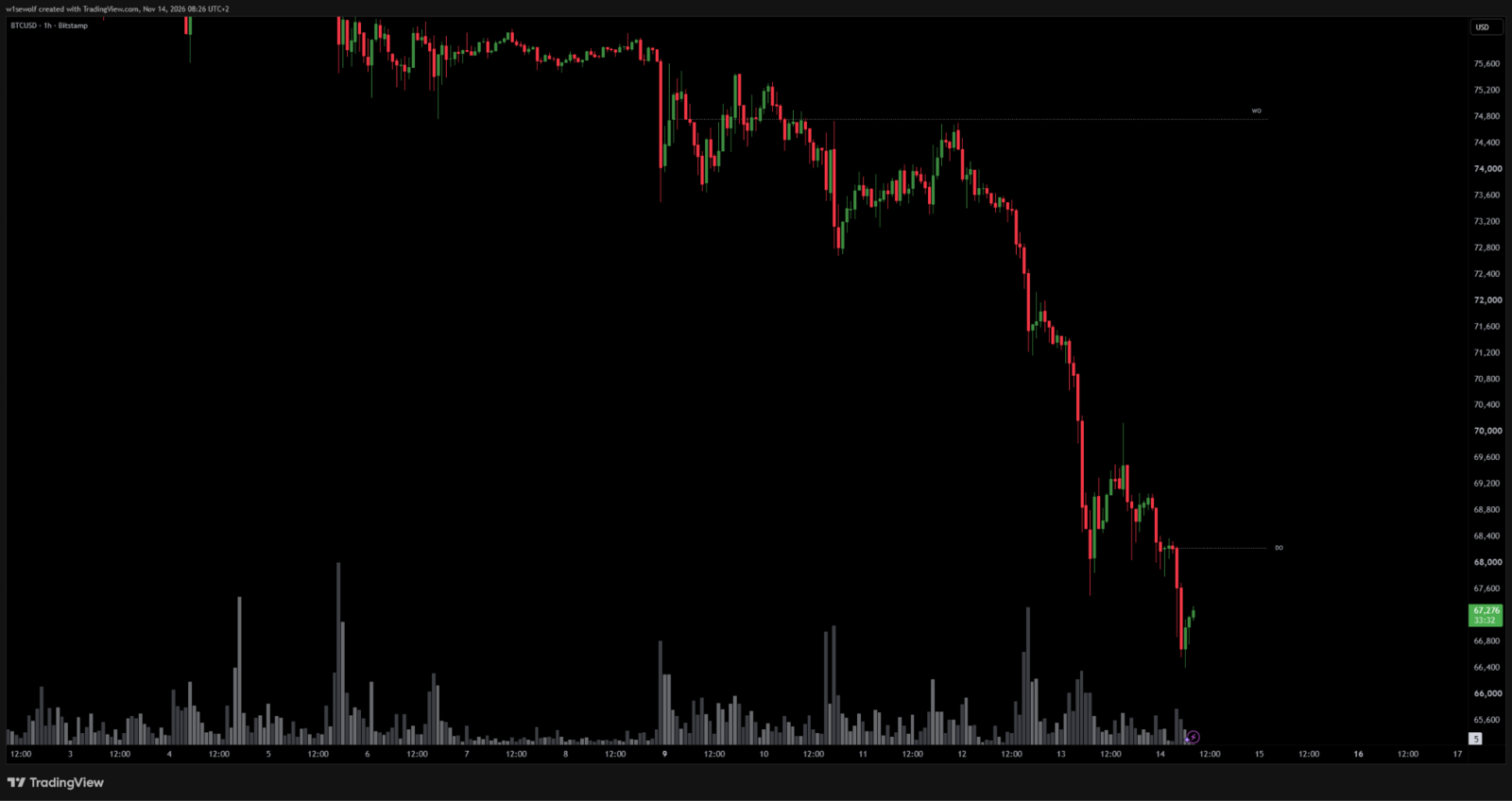
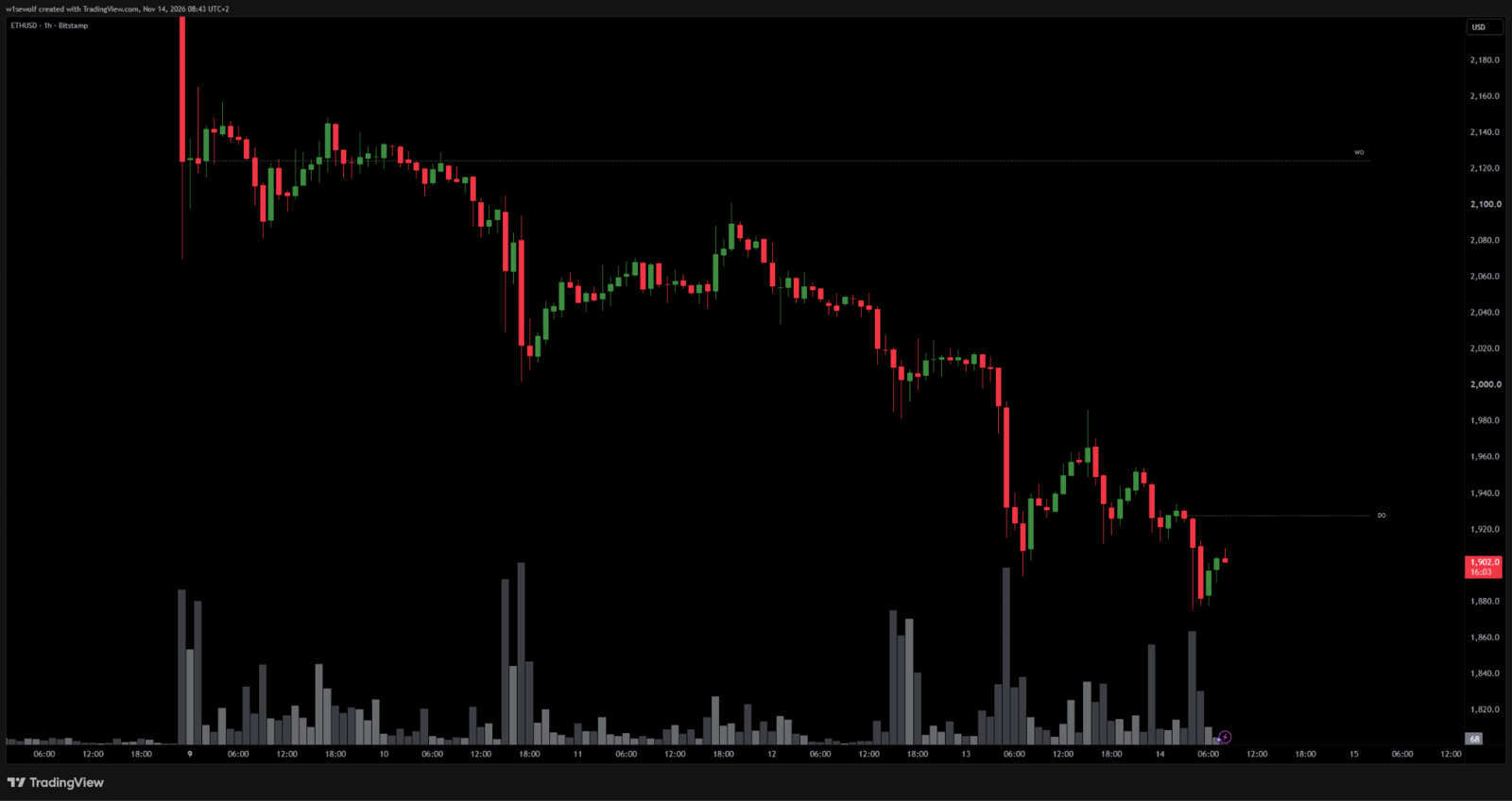
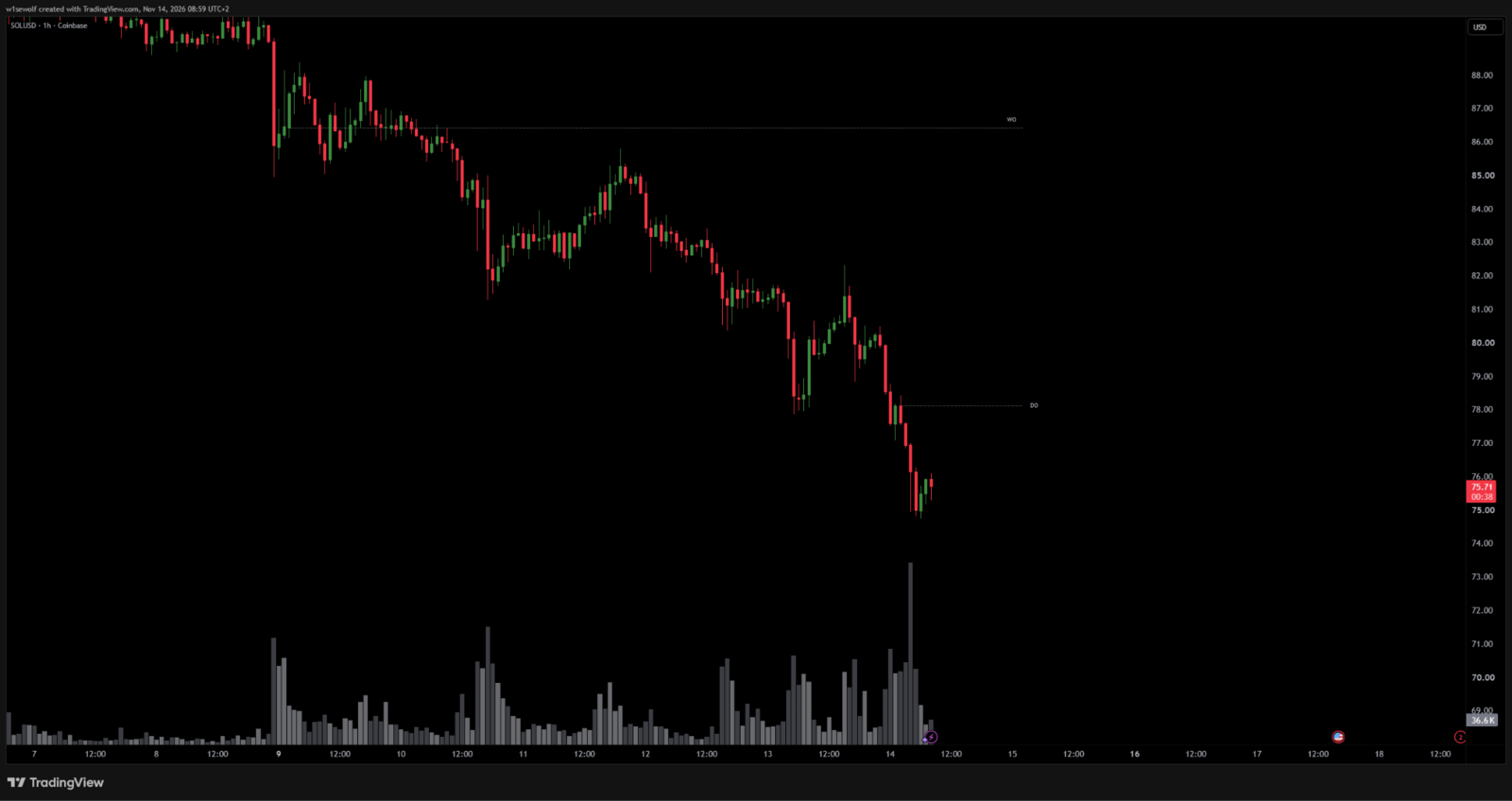
As of Nov. 14, Bitcoin (BTC) is trading near $67,000, Ether (ETH) near $1,900 and Solana () near $75.
U.S. spot Bitcoin ETFs recorded about $1.9 billion in net outflows from Nov. 5 to 13.
Data from Nov. 13 shows $1.64 billion in liquidations over 24 hours; longs accounted for nearly 89%.
Ethereum’s network fees fell, and DEX trading volume declined on Solana.
Zcash (ZEC) fell 28% over the past week: the steepest decline among the coins covered.
Signs of recovering demand include sustained ETF inflows, rising stablecoin supply and renewed spot buying.
What to Expect From Crypto: Will Crypto Go Down Again
Share this blog post
The Bitcoin crash accelerated on Nov. 13: BTC fellbelow $70,000, and Ether slipped below $2,000. The sell-off continued into the morning of Nov. 14, with crypto down and Bitcoin trading near $67,000, ETH just below $1,900 and around $75. Not long ago, a headline like “Bitcoin falls $80,000” would have shocked traders. Now, they would welcome a rebound to that level.
The current cryptocurrency market crash comes amid expectations of a Fed rate hike and outflows from spot Bitcoin ETFs. Sentiment weakened further after Jensen Huang stepped down as Nvidia CEO on Nov. 12 and the company’s shares fell. Liquidations of leveraged long positions accelerated the sell-off.
We examine what is driving Bitcoin falls and how the sell-off is affecting major altcoins, answering the question “Why crypto market is down today?”
Crypto Sell Off: Key Reasons Why Is Crypto Down
The market is pricing in a Fed rate hike. Inflation is one reason why crypto is down today: The Producer Price Index (PPI) report released Nov. 13 showed a 6.5% year-over-year increase, the largest since November 2022. The monthly reading was below forecasts, but rate hike expectations persisted.
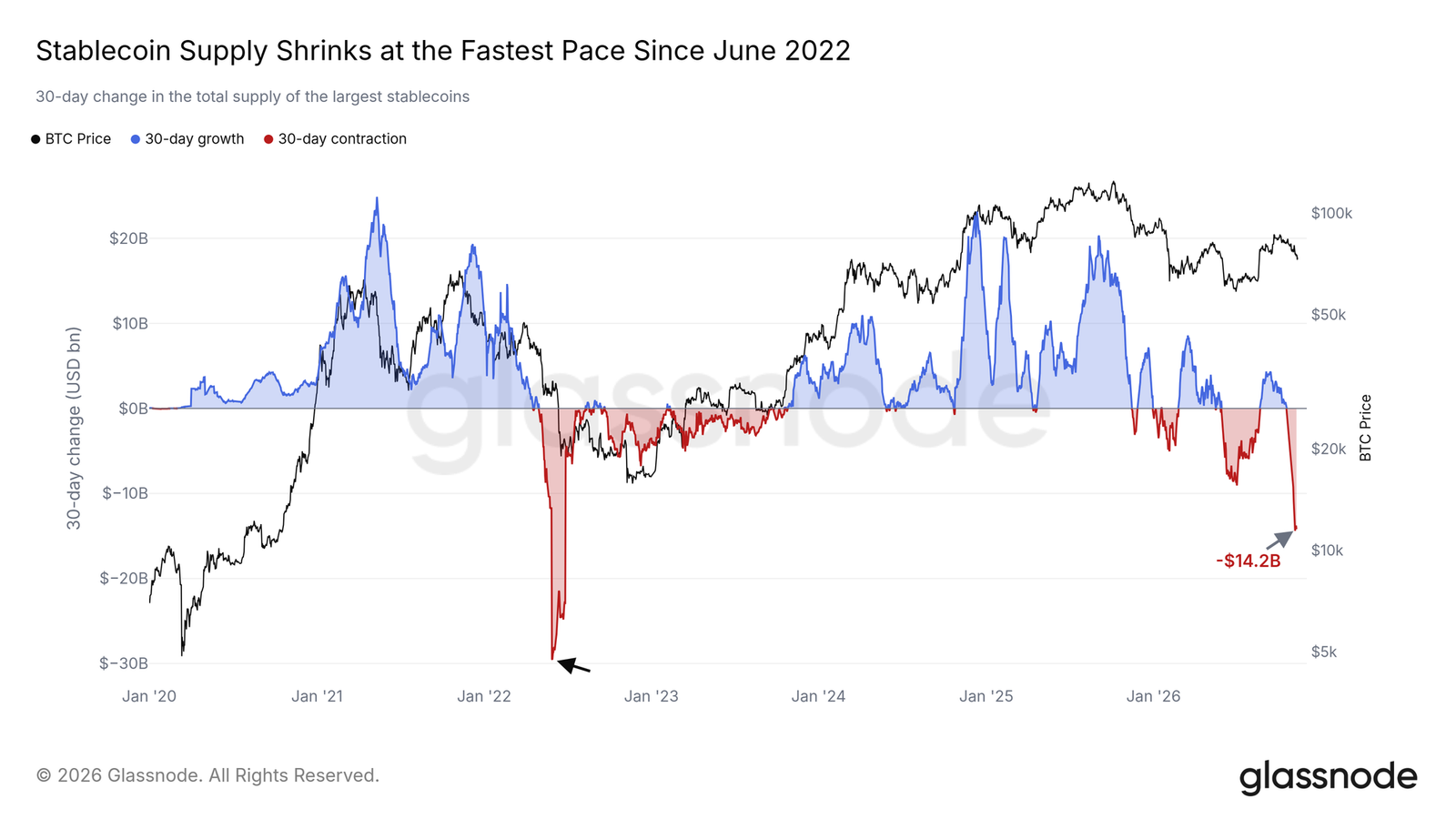
Capital is leaving the market. Fund outflows help answer the question “Why is crypto going down?” U.S. spot Bitcoin ETFs recorded about $1.9 billion in net outflows from Nov. 5 to 13. Stablecoin supply fell by $14.2 billion over the 30 days through Nov. 9, according to Glassnode.
Liquidations intensify the crypto sell off. The liquidation of longs after BTC broke below $70,000 helps answer “Why is crypto going down right now?” According to CoinGlass data collected Nov. 13, exchanges liquidated about $1.64 billion in positions over the previous 24 hours; nearly 89% were longs.
Why Is Bitcoin Going Down
As of Nov. 14, Bitcoin is trading near $67,200, down roughly 1.7% over the past 24 hours and 11.5% over the past week.
Panic over Nvidia intensified Bitcoin’s decline on Nov. 12 and 13, helping explain why Bitcoin is down. On Nov. 12, the company announced that Jensen Huang had resigned as CEO and left its board. Chief financial officer Colette Kress took over as interim CEO.
His resignation followed a scandal over his alleged relationship with Alice Huang, a former executive at Nvidia partner Megaspeed. Reuters reported that U.S. intelligence agencies suspected her of working for Chinese intelligence. Megaspeed had faced scrutiny over allegations that it supplied advanced chips to China in violation of export restrictions. Reports of an alleged relationship with a subordinate added to the pressure on Huang. As of Nov. 12, the U.S. Justice Department had not determined whether Alice Huang had been spying.
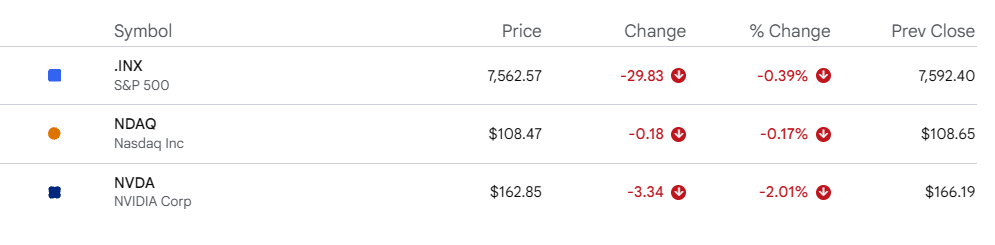
The Bitcoin dip deepened alongside a sharp sell-off in stocks. Nvidia shares fell more than 13% at the open on Nov. 12, then closed 4.3% lower. On Nov. 13, the stock lost another 2%; the Nasdaq Composite fell 0.91% and the S&P 500 lost 0.4%.
Nvidia, Nasdaq and S&P 500 price performance. Source: google.com
Bitcoin’s ties to the technology sector help answer “Why is Bitcoin price dropping?” Investors feared that Huang’s departure would lead Nvidia to cut financing for data centers and its customers, weakening support for the AI boom. That uncertainty has reduced appetite for risk across markets, including crypto.
The external shock hit an already weak market, which helps answer “Why is Bitcoin dropping more sharply than stock indexes?” Glassnode’s Nov. 11 report describes weaker U.S. demand and recent buyers sitting on losses. Some may use a rebound to exit their positions, limiting the recovery.
Two factors explain why Bitcoin is falling down today: The Nvidia shock intensified selling, and demand within crypto remains too weak to support a recovery. By the morning of Nov. 14, BTC was trading near $67,200, down roughly 11.5% over the past week.
Why Ethereum Is Going Down
As of Nov. 14, ETH is trading near $1,900, down roughly 13.8% over the past week. The price is little changed over the past 24 hours. Ether remains below $2,000 following the broader crypto sell-off.
Ethereum’s revenue problem helps explain why Ethereum is going down: Network activity is growing without a matching increase in revenue to support ETH’s value. Bitwise reports that average daily revenue from fees and maximal extractable value (MEV) fell 40.2% quarter over quarter in Q3, from 331 ETH to 198 ETH. Transaction count rose 35.3% from Q3 2025. Users are making more transactions but paying less for them.
Lower base fees mean less ETH is burned: This portion of each transaction fee is removed from circulation. More activity alone does not guarantee a reduction in ETH supply.
Falling fees have challenged the thesis that greater use of Ethereum should burn more ETH and make the coin scarcer. On Nov. 8, Vitalik Buterin offered a different argument: Trust in Ethereum’s security and decentralization could encourage people to buy and hold ETH, regardless of how little the network collects in fees.
Expanding on why I believe "ETH as store of value (SoV)" makes much more sense to focus on than "ETH as fee-burning token".
Three primary reasons:
1. ETH as fee-burning token never was as strong as it seemed 2. Optimizing for ETH as fee-burning token would demand Ethereum and…
Arca chief investment officer Jeff Dorman countered that this was not enough to justify ETH’s valuation. He compared roughly $6 million in monthly network revenue with a market capitalization of about $240 billion. His point: Apps and stablecoin issuers make money on Ethereum, but higher profits do not mean users need to buy more ETH.
Why Is Solana Going Down
As of Nov. 14, SOL is trading near $75.60, down roughly 4.9% over the past 24 hours and 13% over the past week. The price remains below $80 following the broader crypto sell-off.
SOL is moving with the broader market, but ecosystem data helps answer “Why is Solana going down?” According to DefiLlama, DEX trading volume on Solana fell25.3% to $8 billion over the past seven days compared with the previous week. Trading activity that had sustained interest in the ecosystem is weakening.
ETF flows provide another part of the answer to “Why is Solana down?” U.S. spot SOL ETFs recorded about $32 million in net outflows over the five trading sessions from Nov. 9 to 13. Demand through these funds has not been strong enough to offset withdrawals.
Pump.fun, a memecoin launchpad on Solana, has drawn attention in the discussion of “Why is Solana dropping?” On Nov. 13, it transferred64,666 SOL in fee revenue to Kraken. Those coins could be sold into an already weak market. The transfer alone does not prove the coins were sold or that it caused SOL’s entire decline.
Altcoins Drop: Worst Performing Altcoins Today
The TOTAL2 index shows the scale of the sell-off as altcoins drop. It tracks the combined market capitalization of the largest cryptocurrencies excluding Bitcoin, including ETH and stablecoins. As of Nov. 14, the index stands near $903 billion, down 2.5% over the past 24 hours and 8.7% over the past week.
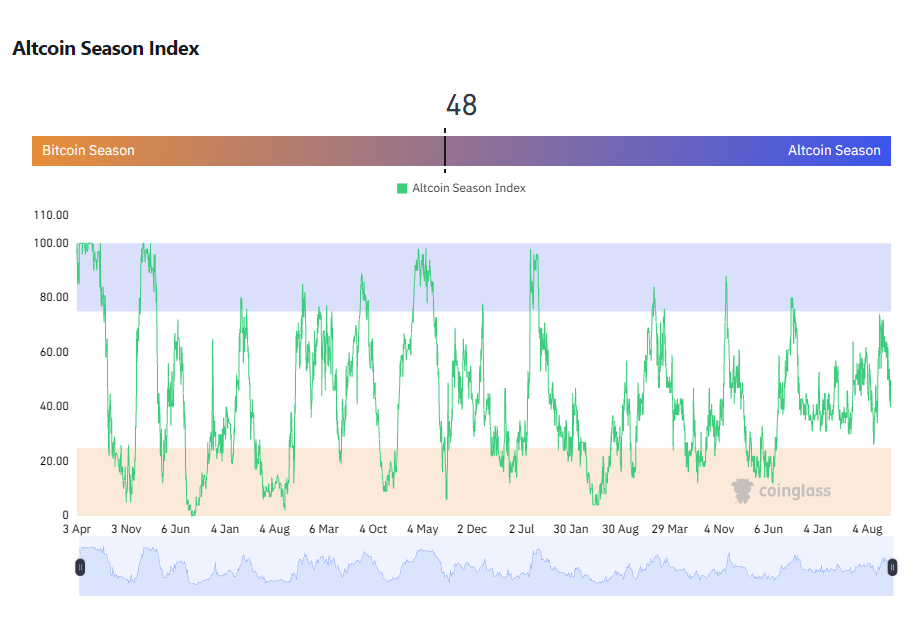
Altcoins are not broadly outperforming Bitcoin. BlockchainCenter’s Altcoin Season Index reads48 out of 100: About 48% of the largest altcoins have outperformed BTC over the past 90 days. The index needs to reach 75 to signal altseason. It remains in neutral territory.
Comparing the worst performing altcoins requires distinguishing 24-hour losses from weekly drawdowns. Next, we examine XRP, Dogecoin and Zcash, comparing their declines and the events that may have intensified selling in each.
Why XRP Is Going Down
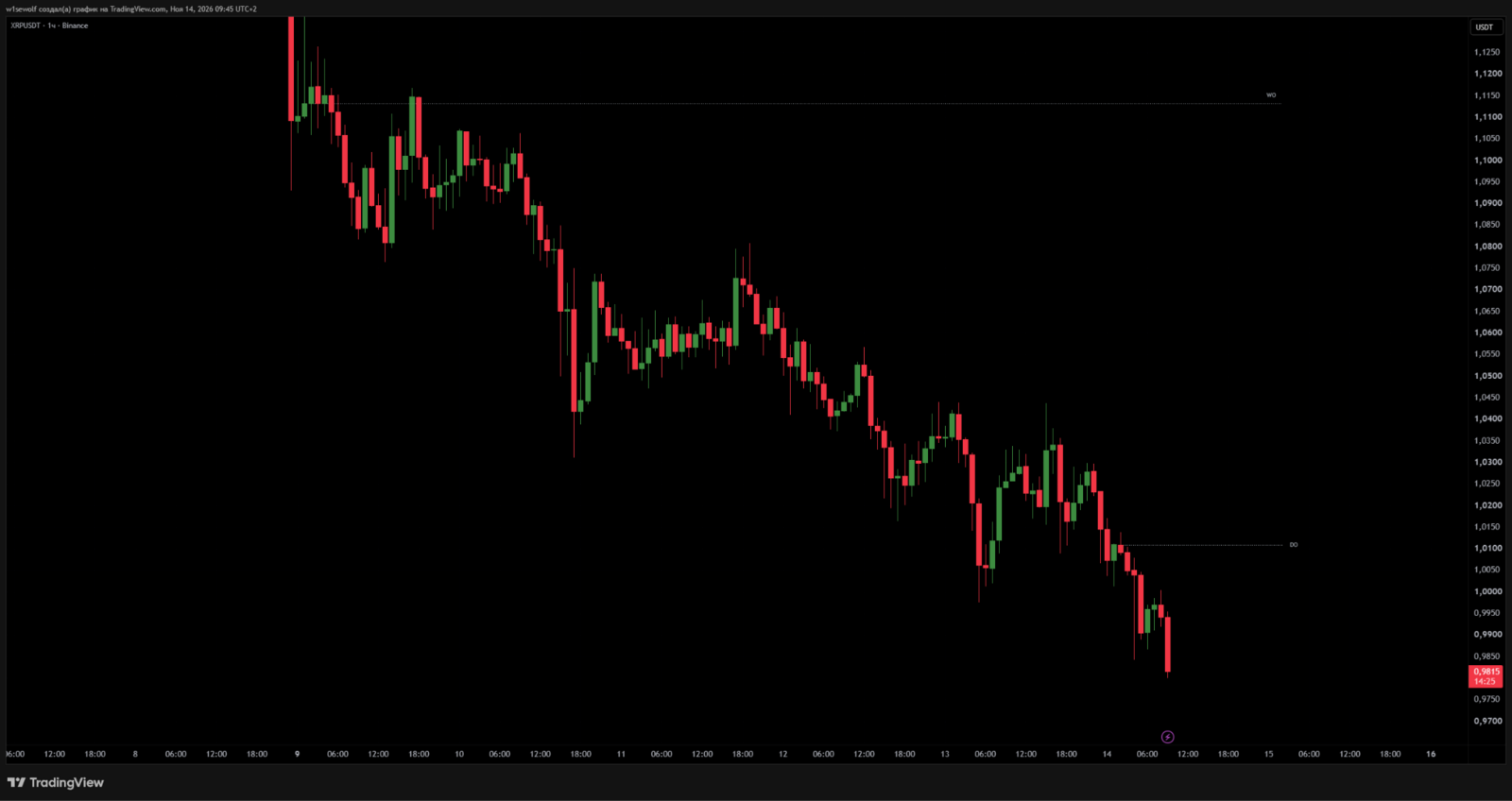
As of Nov. 14, XRP is trading near $0.99, down roughly 4.3% over the past 24 hours and 15.2% over the past week. The token fell below the psychological $1 level during the broader crypto sell-off.
Sales of coins stolen in the Oct. 29 Binance hack help explain why XRP is going down. Elliptic reports that by Nov. 12, the attackers had swapped another 51 million XRP worth about $53 million through THORChain, almost entirely for Bitcoin. These sales may have added pressure to XRP’s price during the week. Most of the stolen holdings had already been converted, leaving about 8.5 million XRP in the tracked wallets.
Liquidation data helps answer “Why is XRP going down today?” Over the past 24 hours, CoinGlass recorded$13.3 million in liquidations, with longs accounting for about 91%. Exchanges close losing leveraged long positions as prices fall, adding to selling pressure.
Why Is Dogecoin Going Down Today
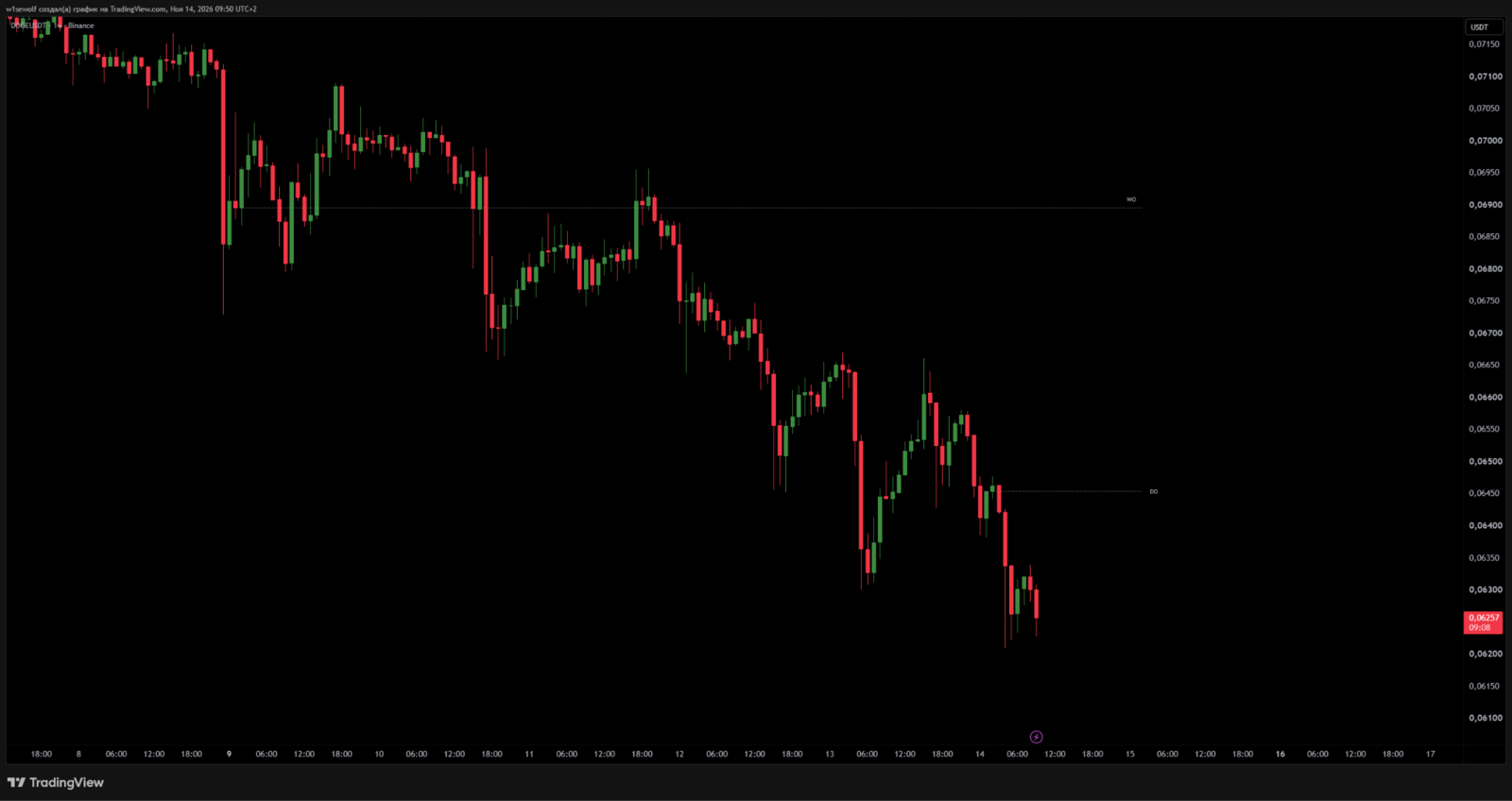
As of Nov. 14, DOGE is trading near $0.0625, down 3.4% over the past 24 hours and 12.6% over the past week. The broader crypto sell-off remains the main answer to “Why is Dogecoin going down?”
Declining balances in large wallets help explain “Why is Dogecoin down?” CryptoTicker cites Santiment data showing that addresses holding between 100,000 DOGE and 100 million DOGE reduced their combined holdings by roughly 750 million DOGE from Nov. 3 to 11. The decline could reflect selling by some holders, but transfers between wallets can affect the metric.
Weak ETF demand helps explain “Why is Dogecoin falling?” CryptoETF reports that Grayscale GDOG and 21Shares TDOG recorded zero net inflows each day from Nov. 9 to 13. These funds are not bringing in fresh capital to support DOGE as its price falls.
Why Is ZEC Going Down
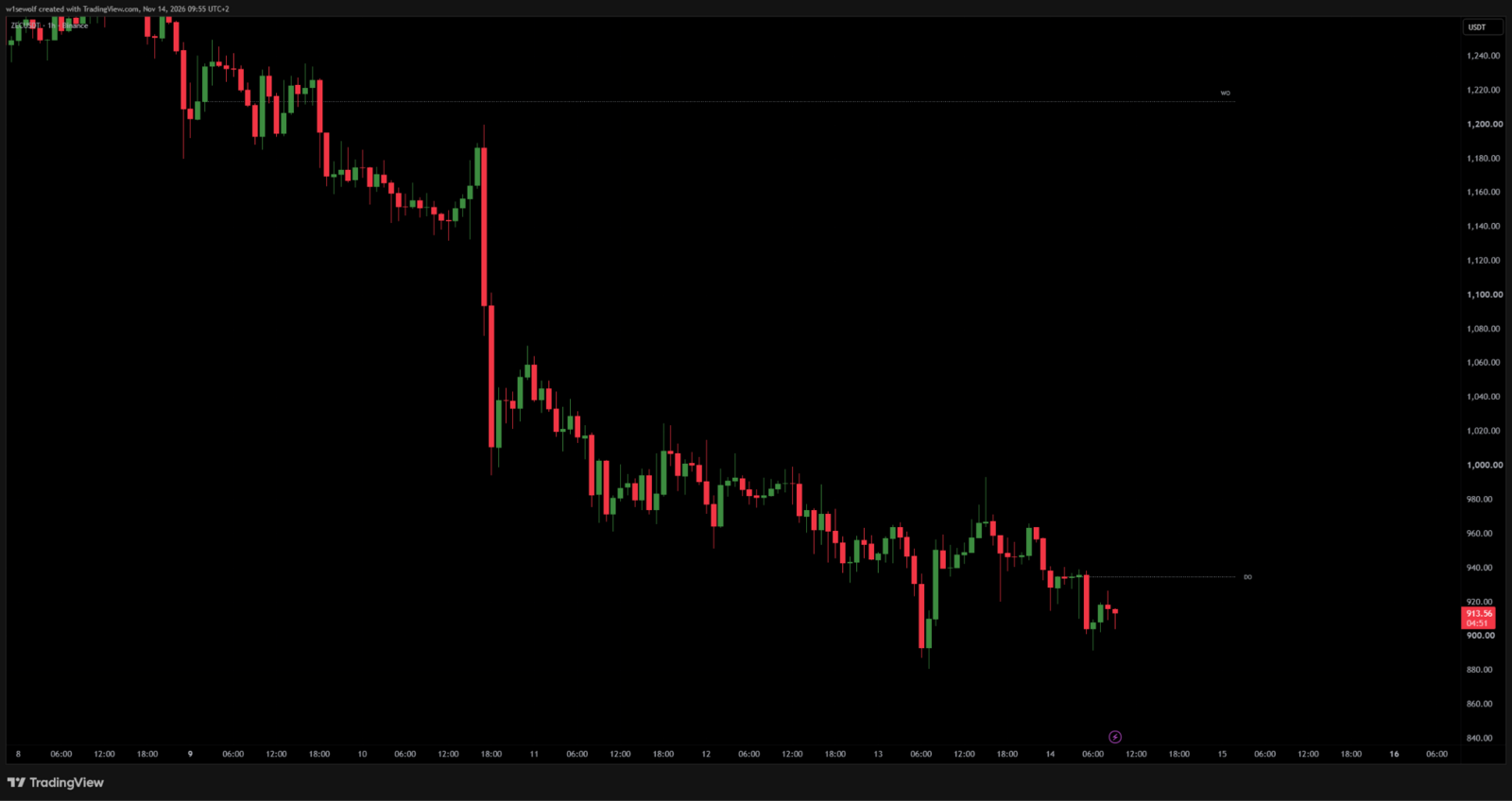
As of Nov. 14, ZEC is trading near $908, down 4.3% over the past 24 hours and 28% over the past week. Its weekly decline is far steeper than those of XRP and DOGE covered above.
Heavy selling from traders closing long positions helps answer “Why is Zcash going down?” Kairos Research found that on Nov. 10, one trader on Hyperliquid closed a long position of 12,500 ZEC in two seconds. Over the next 90 minutes, net market selling across four futures exchanges totaled roughly 160,000 ZEC, and the price fell from $1,193 to $1,001. Most of the selling on Hyperliquid came from traders closing longs.
Fresh exchange deposits after the sell-off weigh on the near-term ZEC outlook. By 6:00 pm UTC on Nov. 11, analysts had recorded additional deposits totaling 24,900 ZEC to Coinbase and Binance. Of that total, 9,800 ZEC came from three wallets that had been inactive since late 2025.
What to Expect From Crypto: Will Crypto Go Down Again
The risk of another drop persists as capital continues to leave the market. Stablecoin supply fell by $14.2 billion in the 30 days through Nov. 9, its largest decline since June 2022. Some capital is moving out of crypto and into dollars, reducing the funds available to buy dips. Rebounds remain vulnerable to renewed selling as long as those outflows continue.
30-day change in stablecoin supply. Source: glassnode.com
The base case for BTC remains prolonged, choppy trading in the $60,000-$90,000 range, with repeated tests of the lows, until demand or Fed rate expectations change significantly. Closer to current prices, the $62,00-$66,000 zone marks a cluster of purchases made around the August low.
Three changes would strengthen the case for a recovery:
Renewed growth in stablecoin supply
Sustained inflows into spot BTC ETFs
Stronger U.S. demand.
The Coinbase premium offers a way to track U.S. demand: BTC consistently trading above global prices on Coinbase would show buyers are willing to pay more again. These signals can confirm recovering demand, but they may appear after the price has already hit its low.
At CoinLaunch, we regularly publish market updates covering price gains and losses in BTC, ETH and other coins. Bookmark our site to stay up to date with the latest developments.