Everyone asks the same question when a mobile-first, community-governed L1 ascends into the crypto conversation: “What will the Pi Coin price prediction be?” Love it or not, Pi’s blend of massive grassroots adoption, app ecosystem onboarding, and evolving market structure makes for a price trajectory unlike any other of this Layer-1. This Pi Coin price report lays the groundwork: what could send PI price higher (network effects, listings, daily usable dApps) and what could hold it back (unlock schedules, liquidity, regulation, execution risk). We will step back from the hype, and link near-term technicals to a long arc of the fundamentals, and we will chart three scenario paths for 2025-2030.
Quick Pi Snapshot
Mobile-first network Layer-1 moved out of its enclosed stage to Open Network on February 20, 2025, allowing external integrations and free trading on the open market. At the time of writing, the PI network app coin is ranked within the top 50 by market cap (≈#43 on CoinMarketCap). The total PI in circulation is estimated at ~7.94B PI. Given the Pi coin latest news, the total supply is capped at 100B, the fully diluted valuation at $35.35B, and the market cap at $2.84B, these metrics matter to any pricing model.
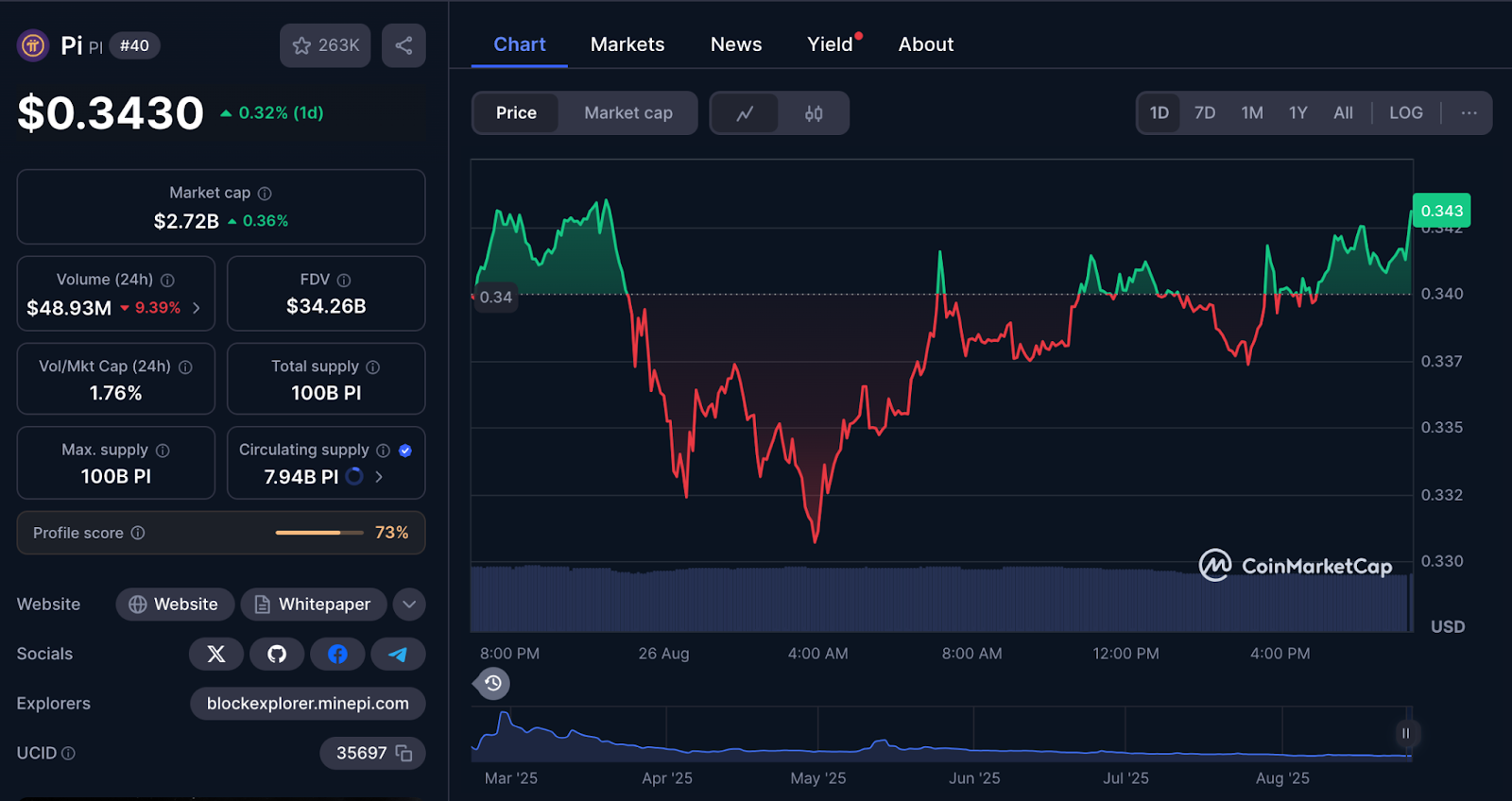
Pi Coin Price Chart (Source: CoinMarketCap)
Attention! Some trackers also show a different instrument called “Pi [IOU]” that was used in the pre-open-network era. This is not the same one as mainnet PI, nor should they be used to benchmark performance.
Why Pi Network Stands Out
Here are three Pi coin benefits that make it distinctive from other L1 networks.
- Onboarding at scale, mobile-first. Pi broke the norm of the usual L1 playbook by flushing “mining” into everyday life in a lightweight Pi app so that anyone can do without GPUs or sophisticated wallets. This lowered the bar of entry and attracted a mainstream audience that no other chains have reached.
- A massive community flywheel. Official materials and Pi coin news say “tens of millions” of Pioneers; third-party trackers now say total sign-ups are widely over 47M range. Regardless of whether you treat those as DAUs or casual miners, the sheer top-of-funnel size matters for whatever network effects/app discovery Pi can unlock in its Open Network era.
- Open Network since February 20th, 2025. The transition from the “enclosed” phase to Open Network finally connected Pi to the broader crypto stack: exchanges, external apps, and standard tooling, and shifted the narrative from “mobile experiment” to “real L1 with distribution.” Execution still matters, but the door is open.
Pi Coin Market Performance
What is pi coin worth right now? Pi Coin fell more than 2% this week and 22.6% in the last month. The price was down at $0.3434 at the time of writing, and trading volume also fell by 9.39% to $48.98M. The price drop caused it to fall from the top 30 in market cap to rank 41.
Pi reached an all-time low of $0.335 on August 6, shedding light on selling pressure in the market. Analysts cite multiple reasons for the price drop. Still, Pi Community authority Dr. Altcoin believes there is a generational split, whereby the pioneers of the project want a quick financial gain. The project development team is planning next steps based on long-term objectives such as inclusive access, security, sustainability, and ecosystem expansion.
Pi Coin Technical Analysis
The current price serves as the base for short-term technical levels. In June, technical indicators were revealing the formation of a classic volatility compression, which is the Bollinger Bands tightening on mid-timeframes. This type of setup typically precedes impulsive price movements, feeding both breakout speculation and short-term whipsaws as the social metrics began climbing.

Pi Network price chart (Source: TradingView)
The graph on TradingView showed a double-bottom structure, with resistance at a historical support zone around $0.585 and the neckline approximately $1.67. To interpret it technically:
- A reversal that is sustained requires a reclaim of the $0.58–$0.60 zone.
- Following that, it involves acceptance of above $1.00.
- A break of the prior high around $1.67 and maintaining below is confirmation for a change in trend.
Until those confirmations, rallies are susceptible to fading at the resistance. But what would turn the chart bullish?
- A daily close above $0.60 and successively higher highs.
- Increasing volumes on green candles and not just spikes from news.
- A breakout on a higher-timeframe above $1.00 and $1.67, and with follow-through momentum.
At this moment, almost all GoodCrypto indicators show that this token is in a good position to buy.
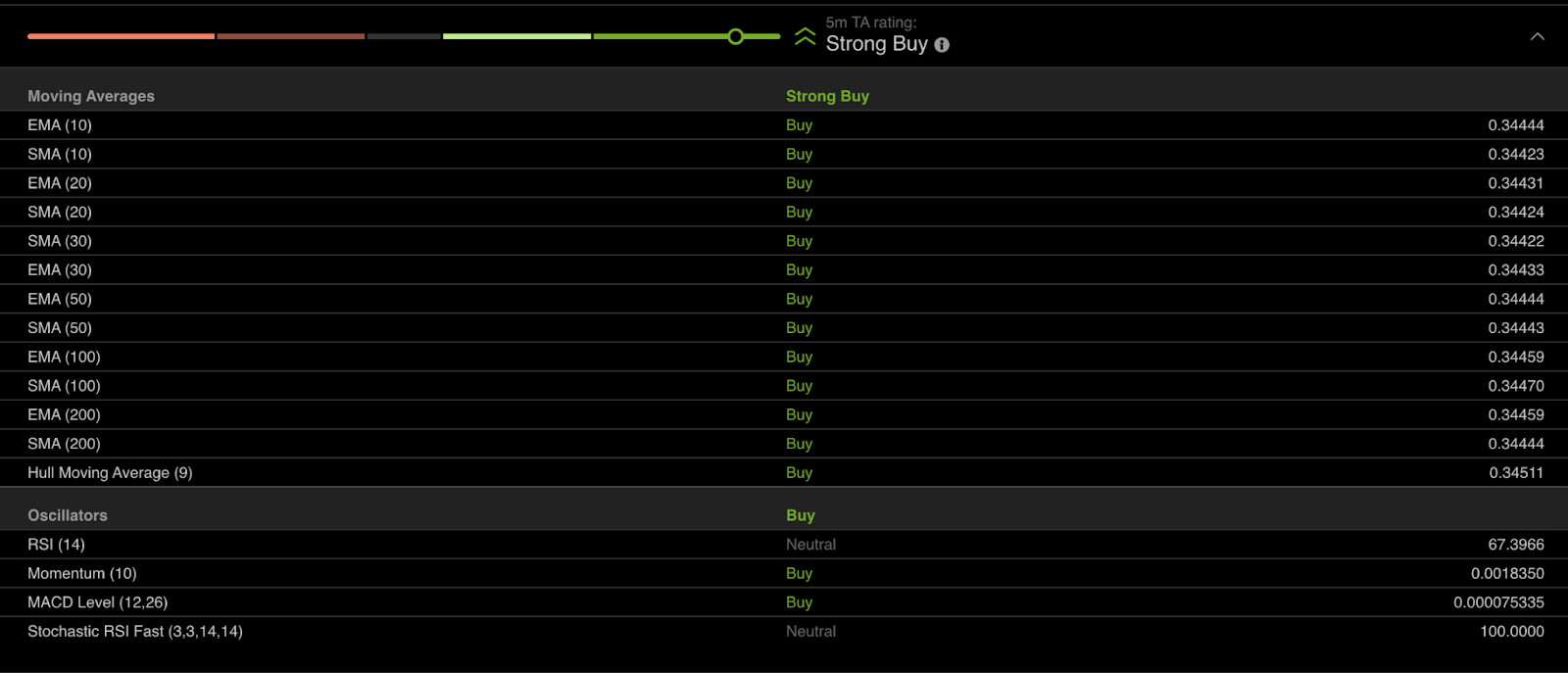
Pi Coin Technical Analysis rating (Source: GoodCrypto)
The Open Network Transition put Pi in a position to utilize schematics beyond speculation with listings, on-chain integrations, and legitimate liquidity. However, technically, there are milestones to hit yet: rallies can still fade quickly without reclaiming resistance levels.
Pi Coin Fundamental Analysis
Pi Coin is piloting a new way of mining through its mobile app, with the user confirming their day-to-day existence by tapping a button. Unlike traditional mining that relies on computing power and energy resources to mine, Pi Coin market simply distributes rewards through a process relying on user trust, while consuming negligible resources. The system is based on the Stellar Consensus Protocol, which is an energy-efficient alternative to proof of work. The protocol is built on user trust circles, verifying transactions through a method called a “trust graph.”
The ecosystem continues to grow and has added Pi Tools, including a Pi Browser and Pi Wallet, to make payments for goods and services directly within the application. Adoption and participation levels have skyrocketed to over 60 million participants, and events like PiFest 2025 have attracted more than 125,000 registered sellers, demonstrating the growing ecosystem.
However, according to ExplorePi, only 32,000 wallets demonstrate daily activity, highlighting a notable gap between reported and actual engagement.
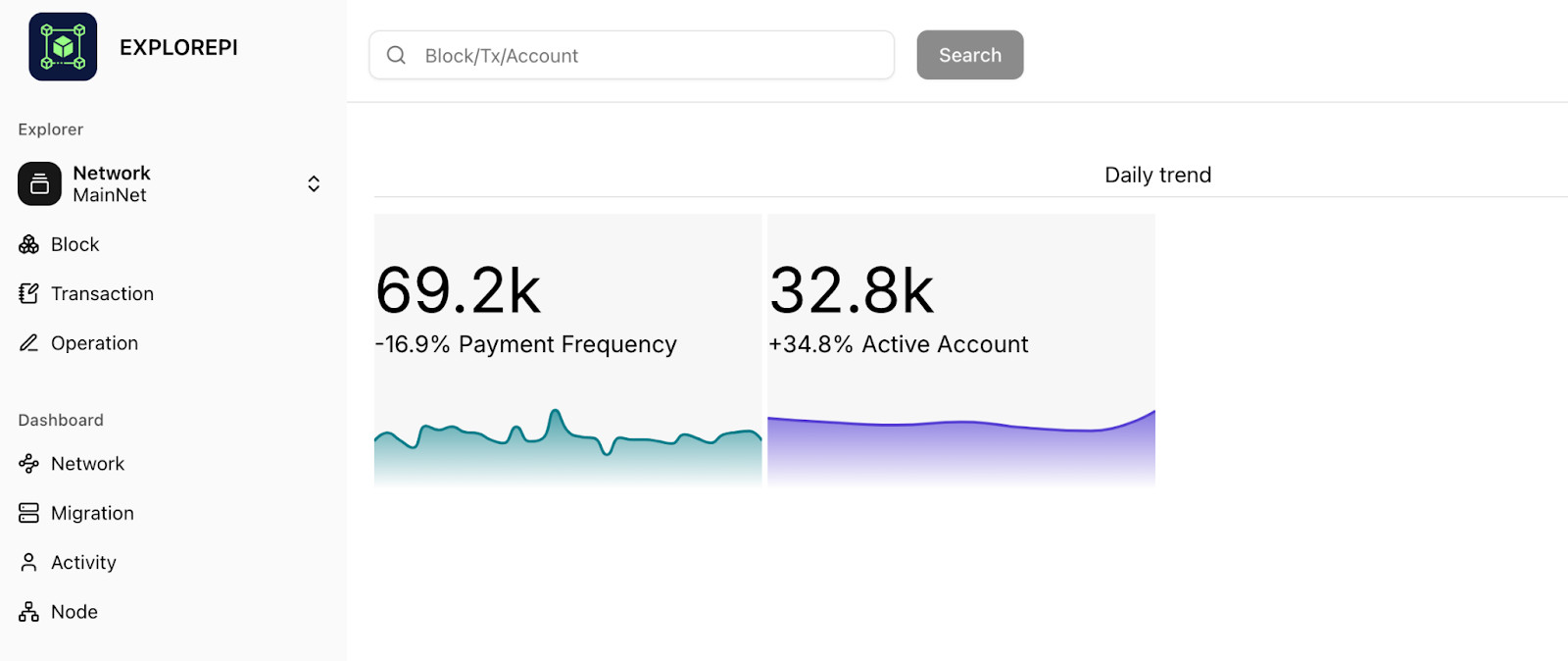
Pi Network daily activity (Source: ExporePi)
Still, the project is simply evolving: tokens remain on some platforms in an IOU phase, and the entire platform must implement KYC standards. The story behind the project, based in part on a “blessed” Mediterranean-Asian vision, is keeping some controversy in the community alive.
Pi Coin Price Forecast Scenarios
Given the info above, let’s review three possible scenarios for the Pi coin price.
Bull Case for Pi Coin
From the optimistic outlook, Pi enjoys additional Tier-1 regulated listings, while on-chain utility grows through apps, staking, and payments. Daily active users are converting to full main net activity, and liquidity continues to deepen.
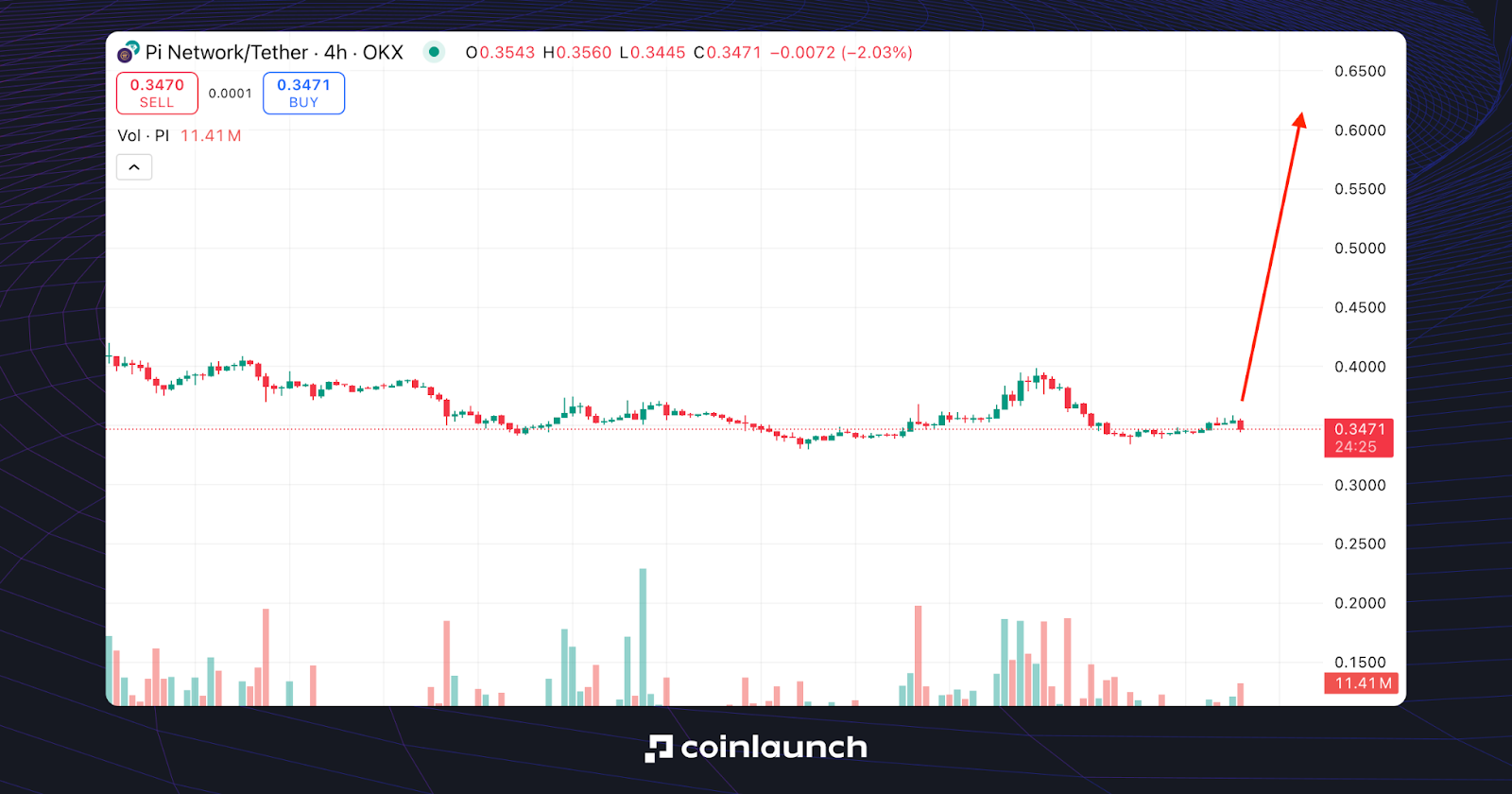
Pi Coin price prediction for a bull case (Source: TradingView)
The Pi price prediction for 2025 is in the $1.00 to $1.67 range. Users must quickly reclaim the $0.60 level, and after $1.00, then the $1.67 neckline. Some projections see further potential for Pi to stabilize in the $1+ zone if the momentum shows a positive trajectory.
For Pi network price prediction 2027, the range may be from $2.50 to $4.00 if Pi stays in the top 25 projects. That would require a higher total value locked (TVL), maintain demand for app usage, and reduce token emissions.
Base Case for Pi Coin
The middle-of-the-road scenario assumes that the ecosystem will continue its growth, but at an uneven pace. Typically, new listings are frequent, but the trading order books can have very little depth. Token unlocks and emissions are relatively predictable as well.
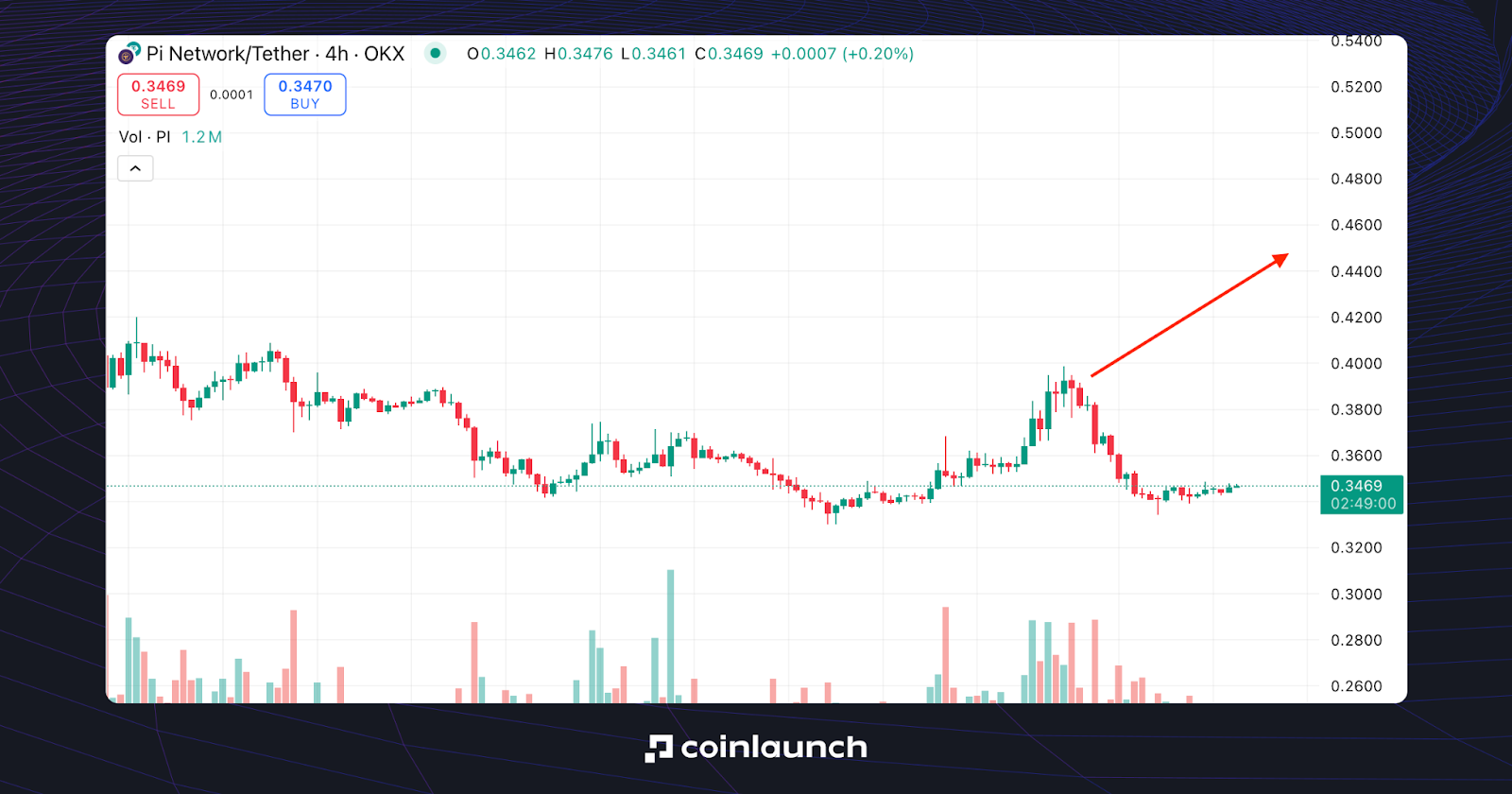
Pi Coin price prediction for a base case (Source: TradingView)
In this scenario, the Pi network price prediction 2025 is between $0.45 and $0.90. The price action may continue to oscillate below and around the $1.00 level, going through both failed and successful retests of the $0.60–$0.70 area.
By 2030, Pi may be reasonably expected to be between $1.20 and $2.00, as it fits into the profile of a “respectable L1” project. Though not in the top-tier grouping, it would be better than many others.
Bear Case for Pi Coin
In the bearish case, the activity in the ecosystem is short of expectations. Extensive listings slow, regulatory news reduces retail’s participation, and sell pressure from token migrations or unlocks exceeds incoming demand.
Should these conditions hold, the Pi Network coin price prediction for 2025 falls into the $0.25 to $0.40 range with a possibility of returning to previous cycle lows. The last analysis highlighted that an all-time low near $0.40 was a significant risk marker.
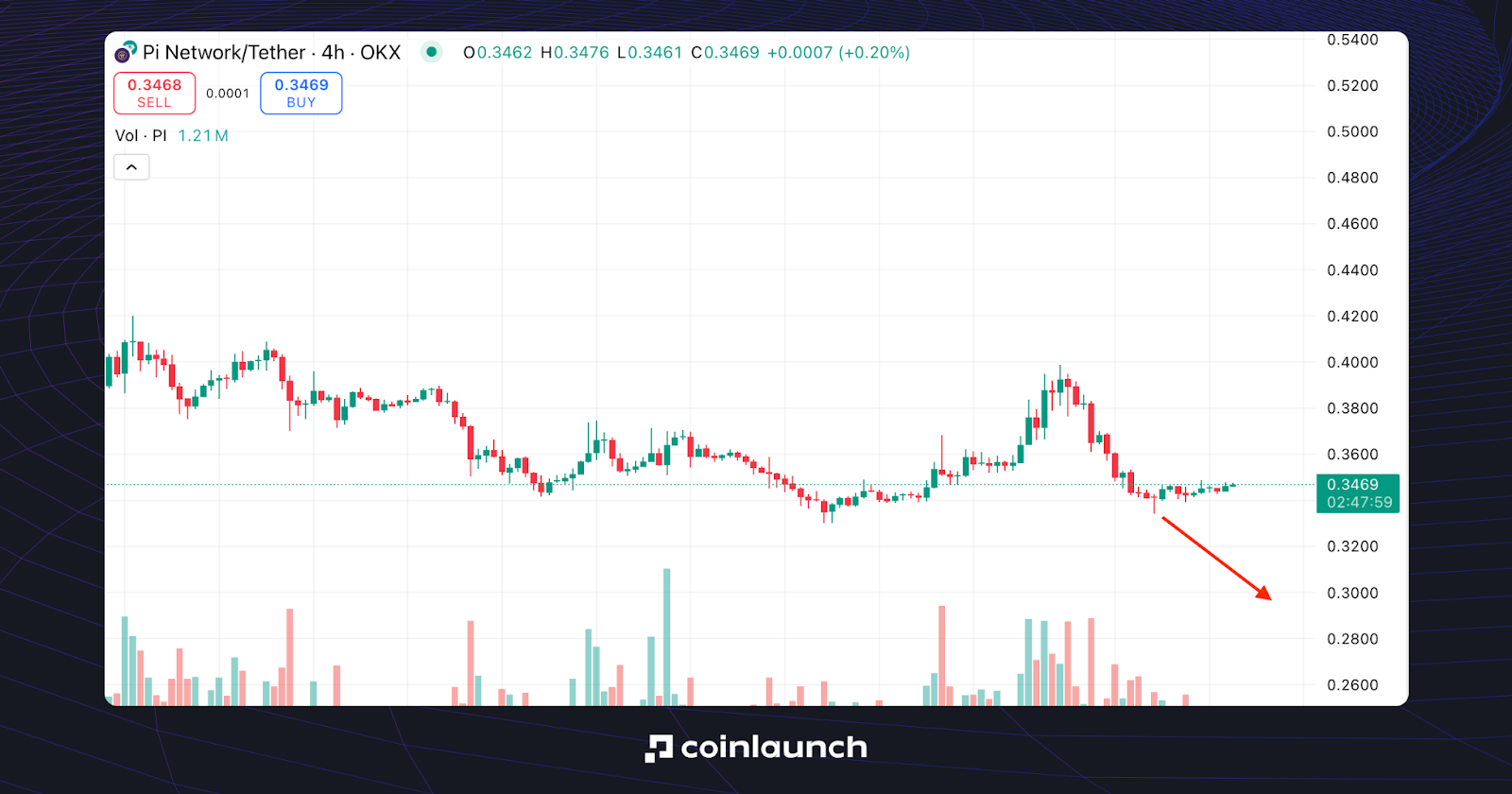
Pi Coin price prediction for a bear case (Source: TradingView)
The Pi network price prediction 2030 would shrink to $0.40 to $0.80 unless a new catalyst develops that restarts the market narrative.
Comparison vs. Other L1 Top‑50 Tokens
The contrast in maturity between Pi’s network and other large blockchains is stark. Other platforms like Solana, TON, Avalanche, Aptos, and Sui already show some measurable activity and total value locked (TVL) metrics on DeFiLlama dashboards. Pi’s Open Network launched on February 20, 2025, and is “the reason” its DeFi data is not yet available on DeFiLlama’s “Chains” view. This is an essential context to have when comparing Pi coin projections to more established projects.
For Pi, the significant challenges are not based on performance. The missing pieces of their network are the apps and liquidity. Solana and TON continue to break records for performance, and Avalanche is focused on fast finality through modular subnets. These platforms have already built a trade-off between strong throughput, developed apps, liquidity from multiple active pools, and developer infrastructures. Pi is still in the early stages of creating these layers, and it will take time to build them.
Key Catalysts and Risks to Watch
Let’s discuss the major positive and negative influences that could affect the future of PI coin.
Adoption and ecosystem growth
By 28 April, Pi Network boasts 60M+ engaged community users, and CoinMarketCap reported a valuation for the project of $4.2B, with full operational capacity. While a good community could impact demand positively, in other cases, particularly in use cases or unsustainable pricing multiples, it could result in contracting demand and sell-offs.
Tokenomics and supply control
According to the 2019 whitepaper published by the Pi project, PI has a maximum supply of 100B, with 80% allocated to community-wide use, and 20% going to the Core Team. The mining rewards decrease over time, representing a deflationary characteristic of the supply, to avoid oversupply and preserve long-term value. If implemented benevolently, fair and reasonable control of the tokenomics debate will represent a good constraint to selling PI; if users feel the economic situation is skewed towards perceived centralisation, Halal currency could be frustrated.
Market sentiment and speculation
The direction of price for crypto demand is primarily determined by sentiment. Situations such as PiFest 2025, where over 1.8M Pioneers shopped using PI, may encourage confidence. However, if there were delays and issues with KYC authenticity or simply unacceptable demand and poor predictions on adoption, then it would only take a shift in perception to tip the balance. Given that Pi is still a relatively ‘young’ project, as the blockchain sector matures, it would be exposed to pricing pressure from other, wider crypto assets like BTC and ETH.
Integration with DeFi
Integration with DeFi could further expand its potential role within the broad crypto economy. Tools such as Pi Bridge will likely support this further by providing cross-chain compatibility across multiple blockchains. Generating further use cases, however, navigation behaviour of potential users that accept the complexities of the mental constructs currently embedded in more innovative commercial methodologies will take on an entropic journey.
Final Thoughts
Pi Coin has created a unique space in both a social phenomenon and a bold experiment in blockchain technology. As the project approaches its full mainnet rollout and possible extensive exchange listings, it offers a uniquely enticing vision: the marriage of everyday adoption and real utility on the blockchain.
The next few months could be critical as Pi moves from theory to complete execution. As with any new digital currency development, anyone interested should proceed with caution and diligence, refer to trusted sources, and be sure to do your due diligence when traversing this fast-moving space. Stay alert and ready, you may not be delaying the beginning of the next chapter in Pi’s journey for long.