Table of Contents
- What Is a Solana DEX
- How to Choose the Best Solana DEX For Beginners
- Best Solana DEXs Comparison
- goodcryptoX
- Raydium
- Jupiter
- Orca
- Meteora
- Moonshot
- PumpSwap
- Final Thoughts: Which Solana DEX Is Best For You?
The beginning of summer 2026 marked a recovery of trading activity on Solana. On July 20, the network’s daily DEX volume reached approximately $1.2 billion, marking a three-month high.
This surge highlights a clear trend: traders' risk appetite is slowly but surely coming back, and so does the on-chain trading on Solana. But for you to succeed in Solana trading, it is essential to pick the best Solana DEX, one with fast execution, low fees, and access to new tokens directly on Solana.
Choosing the best DEX for Solana is harder than it may seem. To help you pick the best in this article, we will compare the top Solana DEXes by trading volume, TVL, fees, security, supported tokens, order types, and trading strategies.
A Solana DEX, or Solana decentralized exchange, is an exchange that operates without a central intermediary. Users do not need to create an account on a custodial platform, deposit funds into it, or surrender custody of their assets to the exchange. Instead, they connect a crypto wallet and trade from self-custody, with swaps executed through smart contracts.
Most Solana DEXs follow a Solana AMM DEX model. In this system, there is no traditional order book. Liquidity is provided through pools containing two or more assets, such as SOL and USDC.
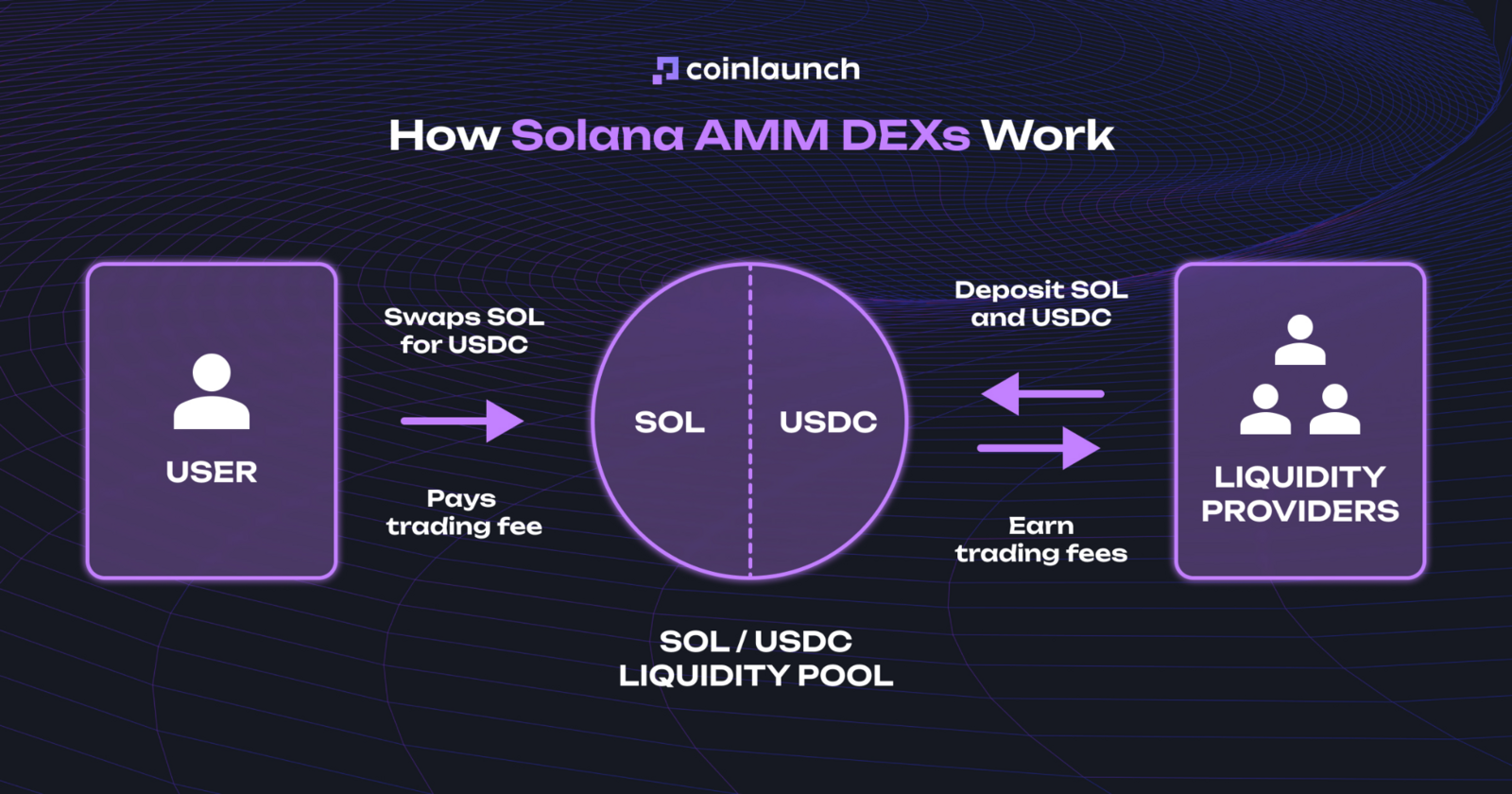
How AMM DEXs Work. Source: coinlaunch.space
Users provide liquidity to pools, and traders swap tokens against those reserves. The price is set by a formula built into the protocol. For example, when traders buy SOL from a SOL/USDC pool, the pool’s SOL reserves fall, making SOL more expensive relative to USDC.
Another type of platform is a Solana DEX aggregator. These platforms do not run their own trading pools. Instead, they compare prices across other protocols and route the trade through the best available rate.
DEXs usually operate on a specific network. Uniswap is traditionally tied to Ethereum and EVM networks, PancakeSwap to BNB Chain, while Raydium, Orca, Jupiter, and Meteora are tied to Solana. In this guide, we’ll explore how to choose the best Solana DEX.
Popularity should not be your only metric when choosing the best Solana DEX for beginners. Different platforms are built for different use cases: simple swaps, best-rate routing, limit orders, bots, or more advanced position management.
Start with trading volume and TVL. Trading volume helps identify the top Solana DEX by volume, while TVL shows how much capital is locked in the protocol. A Solana AMM DEX like Orca or Raydium has TVL because liquidity is held in its own pools. Aggregators like goodcryptoX or Jupiter require a different approach, since they route trades through third-party liquidity rather than holding it themselves.
Next, compare supported assets and fee structures. On Solana, most traded assets are SPL tokens, but some DEXs also support Token-2022 assets. Fees can vary as well: some are fixed, while others depend on the pool, route, or transaction size.
Also, evaluate each platform using these four criteria:
The best DEX on Solana depends on what you need. Aggregators and large AMMs are usually the easiest choice for simple swaps. If you trade meme coins, Moonshot or PumpSwap are more natural picks. Liquidity providers can turn to Orca, Raydium, or Meteora. For advanced trading, order types, and automation, goodcryptoX stands out.
The table below compares the best Solana DEXs across core metrics, from volume and TVL to fees, security, supported tokens, order types, and trading tools. It makes it easier to find Solana DEXs for simple swaps, liquidity pools, or advanced trading.
Platform | Monthly Trading Volume | TVL | Supported Swap Tokens | Security | Fees | Advanced Order Types | Algo Trading Strategies | Limits | Best For |
goodcryptoX | $22B aggregated from Jupiter | $1.548B aggregated from Jupiter
| All token types available on major Solana DEXs
| CertiK, no protocol hacks | 1% DEX swap fee that can be reduced by up to 92% (0.08%) | Limit, trailing, TP/SL, also TradingView webhooks | DCA, Grid, Sniper bot | No Limits | Beginners and advanced traders |
Raydium | $4.25B | $867M | SPL, Token-2022 | Sec3, Halborn, MadShield | 0.01%-1% | Spot: limited; Perps: yes | No | No | Swaps |
Jupiter | $22B | $1.548B protocol TVL | Solana tokens | Multiple audits | 0%-0.1% | Limit, TP/SL | DCA | $10 min. orders | Best swap routes |
Orca | $6.7B | $242M | SPL tokens, Token-2022, tokenized assets | Sec3 audit, no protocol hacks | 0.01%-1% | Range Orders | No | No | Swaps, LP fees |
Meteora | $4.6B | $300M | SPL, Token-2022 | Zenith, Offside Labs, OtterSec, Sherlock | Dynamic by pool | DLMM limit orders | LP strategies | No | Liquidity pools |
Moonshot | $13.44M | No | Solana memecoins | Ackee audit | 1% | No | No | Min buy 0.005 SOL; min sell 0.001 SOL | New memecoins |
PumpSwap | $1.5B | $222M | Migrated Pump.fun tokens | Cantina contest | 0.3%-1.25% | No | No | Regional restrictions | Memecoin trading |
We’ve rounded up a variety of Solana decentralized exchanges, from AMMs and DEX aggregators to trading terminals and meme coin platforms. Below, we break down how each platform works, its fees, core features, and what each one is best for.
goodcryptoX is not a traditional AMM. It is a trading terminal and algo (bot) provider for centralized and decentralized exchanges. Originally launched in 2019 as CEX terminal GoodCrypto, the platform expanded into DEX trading in 2024 and rebranded to goodcryptoX. To date, the app’s trading engine has processed over $5 billion in combined CEX, perp DEX, and spot DEX trading volume while onboarding more than 400,000 users. For traders looking for the best Solana DEX, goodcryptoX is one of the strongest options.
goodcryptoX doesn’t hold its own liquidity. As a Solana DEX aggregator, it provides the interface, order tools, and advanced trading strategies, while liquidity is sourced from third-party AMMs. On Solana, goodcryptoX executes user trades through the Jupiter router, which supports all major Solana DEXs - Jupiter, Orca, Raydium, and many more. The platform also supports Ethereum, Base, BNB Chain, and Arbitrum.
The main advantage of goodcryptoX is its trading toolkit. The platform offers users a CEX-like trading interface for DEXs with on-chart order visualization, advanced order types, and algo trading strategies - features that are common on Binance, Bybit, or other popular crypto platforms but unavailable for DEXs.
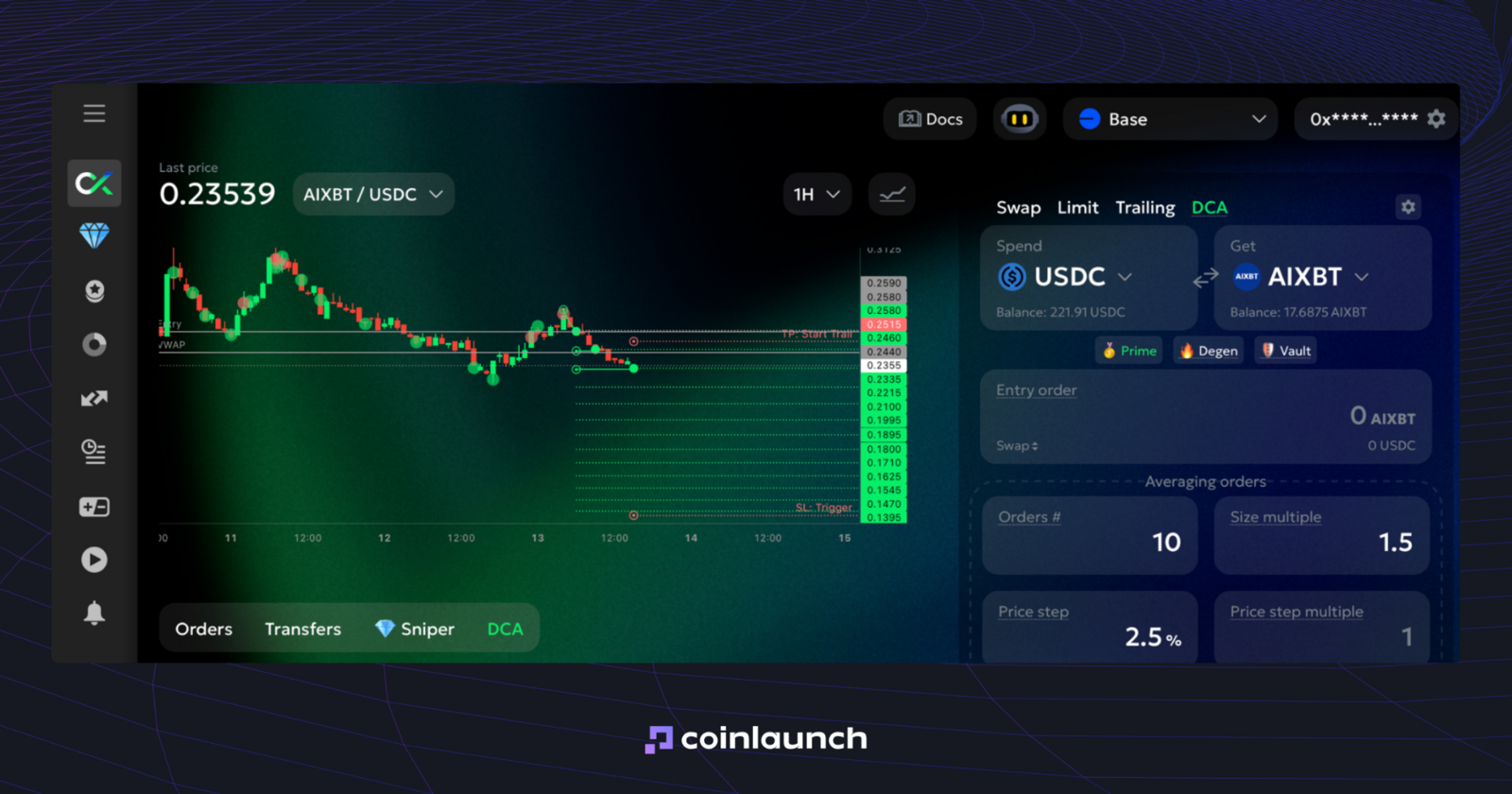
goodcryptoX DCA bot interface. Source: goodcrypto.app
Let’s review them in more detail:
More upcoming DEX trading features can be found here.
Security is backed by external audits. Since 2019, goodcryptoX has had no major security incidents, with CertiK among its external auditors.
For Solana trading, goodcryptoX applies a base fee of 1% with the ability to reduce fees up to 0.08% (by 92%) based on trading volume, GOOD token holdings, goodcryptoX subscription, referral status, and our exclusive NFTs ownership. 50% of the swap fees collected by goodcryptoX are distributed to GOOD token holders as part of the protocol’s revenue-sharing program.
Users do not need to verify their identity on goodcryptoX. Signing up only requires an email address.
Raydium Solana AMM DEX is one of the leading exchanges on Solana. According to DeFiLlama, Raydium has $867 million in TVL and $4.25 billion in 30-day DEX volume, making it one of the largest Solana DEXs.
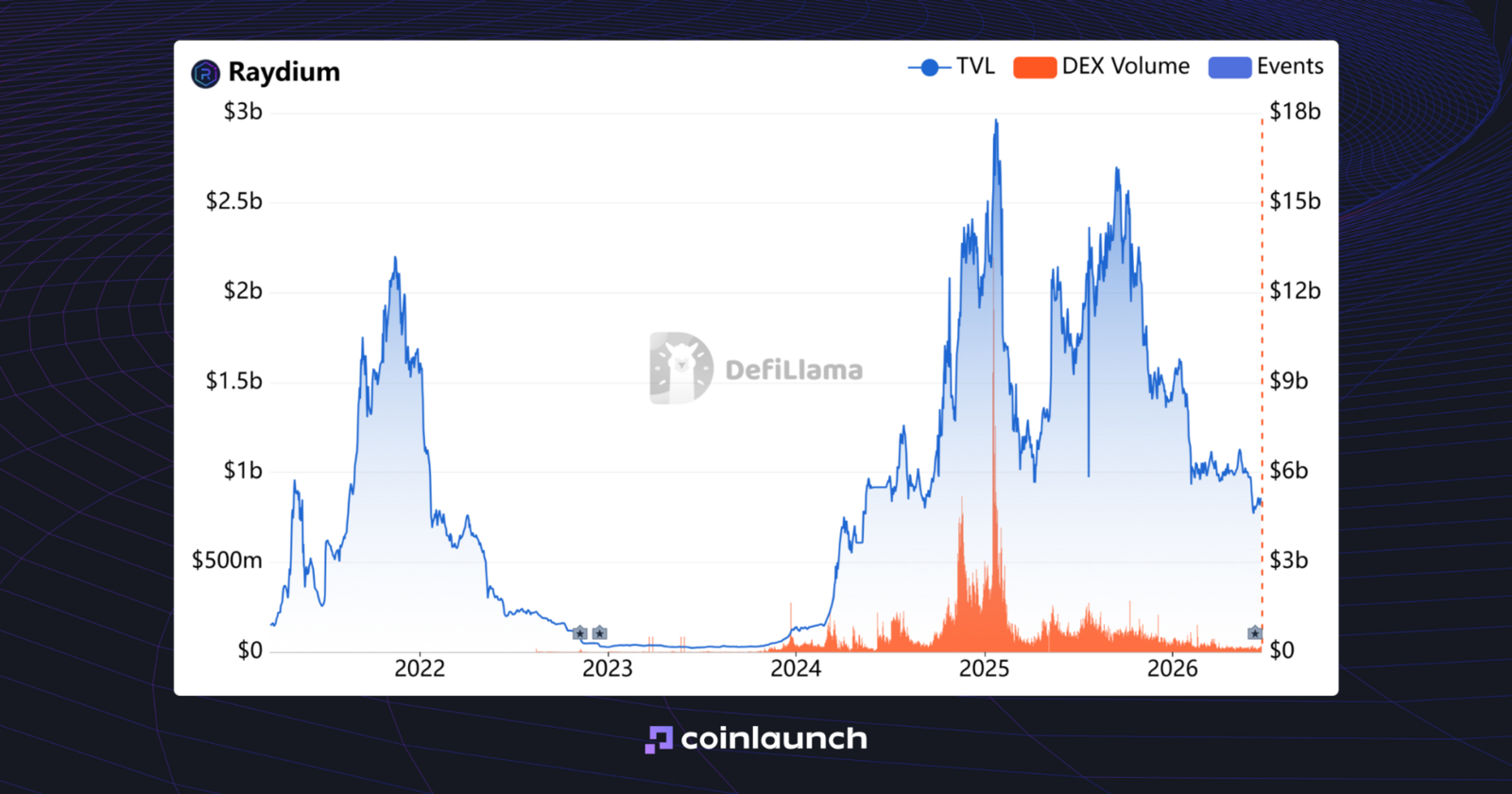
Raydium TVL Chart. Source: defillama.com
Raydium supports swaps for SPL tokens and Token-2022 assets as long as a liquidity pool exists. Its ecosystem spans AMM v4, CPMM, CLMM, farming/staking, LaunchLab, and Perps. CPMM is the default model for new pools, while CLMM is designed for concentrated liquidity within specific price ranges.
Fee structures at Raydium are tiered based on the pool type. CLMM pools support 0.01%, 0.05%, 0.25%, and 1% fee tiers. CPMM pools support 0.01%, 0.25%, and 1%, while legacy AMM v4 pools use a standard 0.25% fee. Fees are split between liquidity providers, RAY buybacks, and the treasury.
For spot trading, advanced order types are limited because Raydium is primarily an AMM rather than a full trading terminal. Its Perps product supports market, limit, stop-market, stop-limit, and scale orders, along with post-only and reduce-only settings, but this is separate from standard spot swaps.
Raydium has been audited by Sec3, Halborn, and MadShield. Its bug bounty program runs through Immunefi, with a maximum reward of $505,000.
Raydium is best suited for users who want to swap tokens on Solana, provide liquidity, or launch new pools but the lack of advanced functionality, like on goodcryptoX or any other platform makes it barely perfect for high-frequency on-chain trading.
Jupiter is a Solana DEX aggregator with over $22 billion in trading volume. It searches across the best Solana DEXs to find the best swap rates and gives users a single interface for routing trades across them.
Similar to goodcryptoX, Jupiter functions as an aggregator rather than a traditional AMM. While goodcryptoX emphasizes advanced trading tools and automation, Jupiter has carved out its own niche by building a broader product stack around swaps, lending, and perps. TVL across these Jupiter products stands at $1.548 billion.
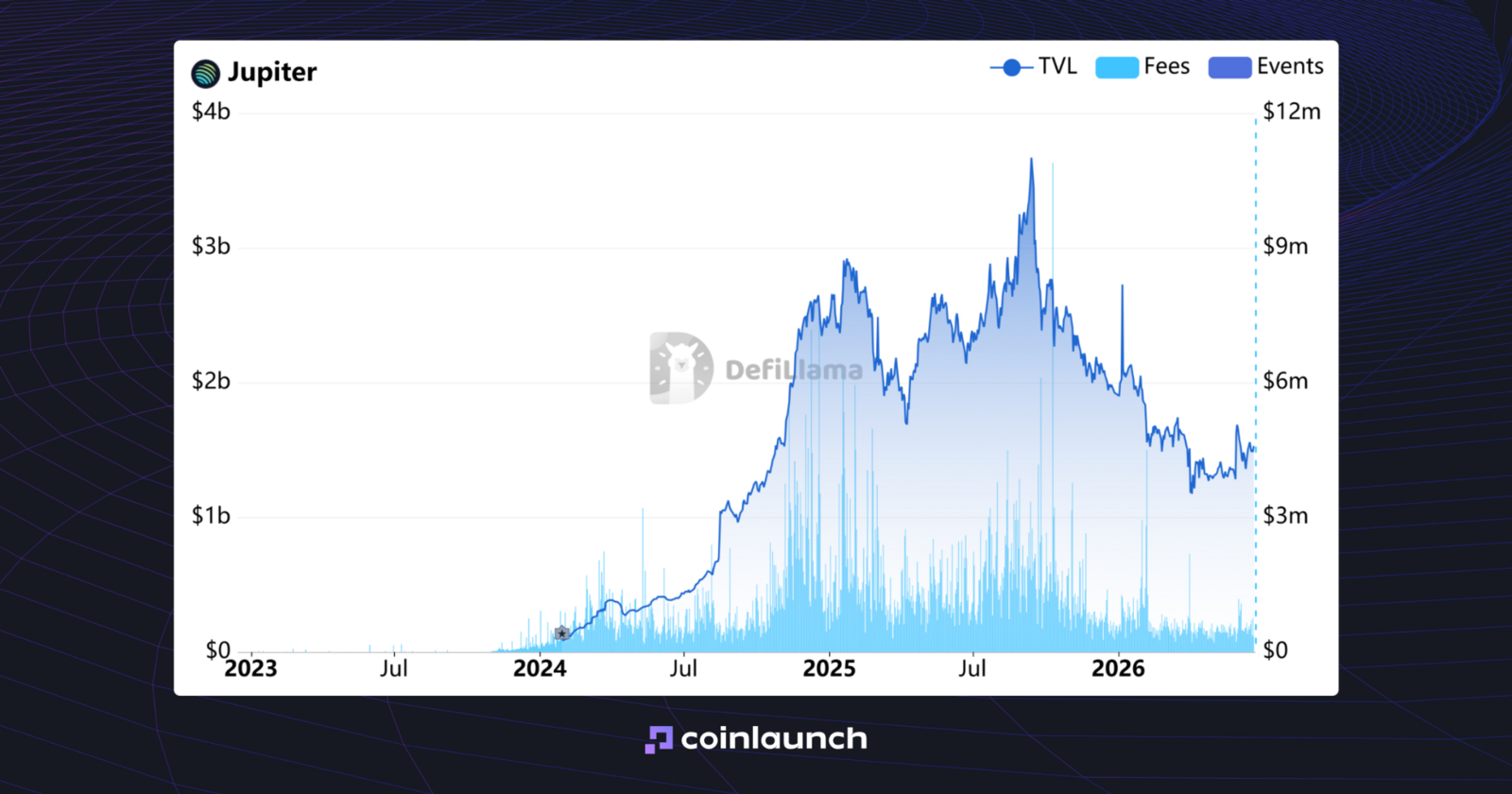
Jupiter TVL Chart. Source: defillama.com
Jupiter supports tokens on Solana. For standard swaps, users can choose between Manual Mode and Ultra Mode. Manual Mode has no Jupiter fee, while Ultra Mode charges from 0% to 0.5%, depending on the pair and volatility. Limit Orders V2 come with a 0.03% to 0.1% base fee plus an Ultra routing fee.
Jupiter moves well beyond the limits of standard swap interfaces by offering a set of more advanced order types. Limit Orders V2 support USD price triggers, buy or sell orders above or below a selected price, partial fills, Take Profit, and Stop Loss. However, trailing TP/SL is not available, and the minimum trigger order size is $10.
For algorithmic trading, Jupiter offers Recurring Orders, which are DCA orders executed on a regular schedule. In V2, the minimum order size is $10 per suborder, while Token-2022 assets are not supported.
Beyond swaps, Jupiter offers Crypto Lending and Offerbook. Lend allows users to supply, borrow, use Multiply, and run Strategies within Solana lending markets. Offerbook is a P2P marketplace for fixed-term USDC loans lasting from 1 to 30 days, backed by Solana-native assets.
Jupiter publishes audits from Offside Labs, Sec3, OtterSec, MixBytes, and Zenith.
Orca is a Solana AMM DEX built around Whirlpools, its concentrated liquidity pools. Unlike Jupiter, Orca is not just routing trades across third-party venues. It maintains liquidity in its own pools. In Orca v2, traders can swap through Orca’s pools or route trades via Solana DEX aggregators such as Titan, Jupiter, and DFlow.
According to DeFiLlama, Orca has $242 million in TVL and $6.7 billion in 30-day trading volume.
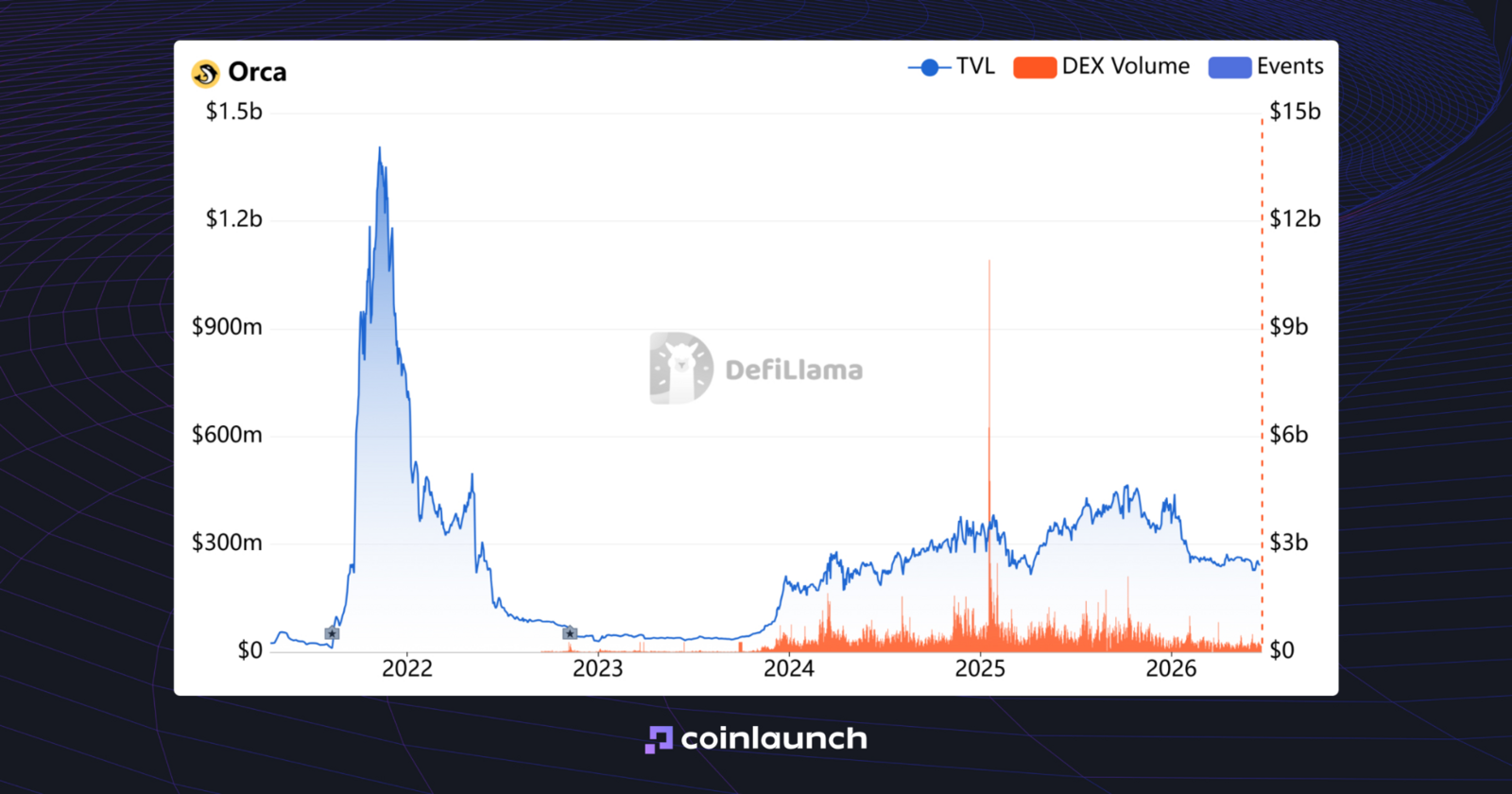
TVL Orca. Source: defillama.com
Fees vary by liquidity pool. Orca lists fee tiers from 0.01% to 1%, with lower fees for stablecoin pairs and liquid assets, and higher fees for more volatile tokens. There is no separate swap fee: users pay the pool’s trading fee and the Solana network fee.
Orca also supports Range Orders. These are liquidity positions set within a specific price range, allowing them to work like limit orders while still earning LP fees. However, Orca does not support DCA, sniper bots, or other ready-made algorithmic strategies.
Orca was last audited by Sec3 on January 14, 2026. The protocol has not experienced any hacks since launch.
Meteora is a Solana DEX for token swaps, pool creation, and liquidity provision. The project has $300 million in TVL and $4.6 billion in 30-day trading volume, placing it fourth among the top Solana DEXs by volume.

Meteora TVL Chart. Source: defillama.com
Meteora supports several pool types: DLMM, DAMM v2, DAMM v1, and Dynamic Bonding Curve. DLMM splits liquidity into separate price ranges, allowing trades within the same range to execute with zero slippage. DAMM v2 is better suited for standard pools and newly launched tokens, with NFT positions, customizable fees, and anti-sniper protection.
The platform supports SPL tokens and Token-2022 assets. New token launches can use a Dynamic Bonding Curve: the price initially follows the curve, and once the target threshold is reached, liquidity is transferred to a DAMM pool.
Fees depend on the type of pool:
In May 2026, Meteora added Limit Orders. However, the platform still lacks extra trading tools such as DCA, or sniper bots. Its strategy layer is mainly built for liquidity providers, with Spot, Curve, and Bid-Ask strategies. Meteora also runs LP Army, a liquidity provider community where users learn how to work with pools and LP strategies.
Meteora publishes audits from Zenith, Offside Labs, OtterSec, and Sherlock. The most recent audit was published in February 2026.
Moonshot is not a traditional DEX. It is a platform for creating and trading meme coins. The project describes itself as a blockchain interface: Moonshot does not issue tokens, custody them, or execute trades on its own behalf. The platform is currently transitioning to the Moonit brand.
Moonshot DEX has no TVL because it does not operate as an AMM with its own liquidity pools. However, its 30-day trading volume stands at $13.44 million, while revenue has reached $7.9 million.
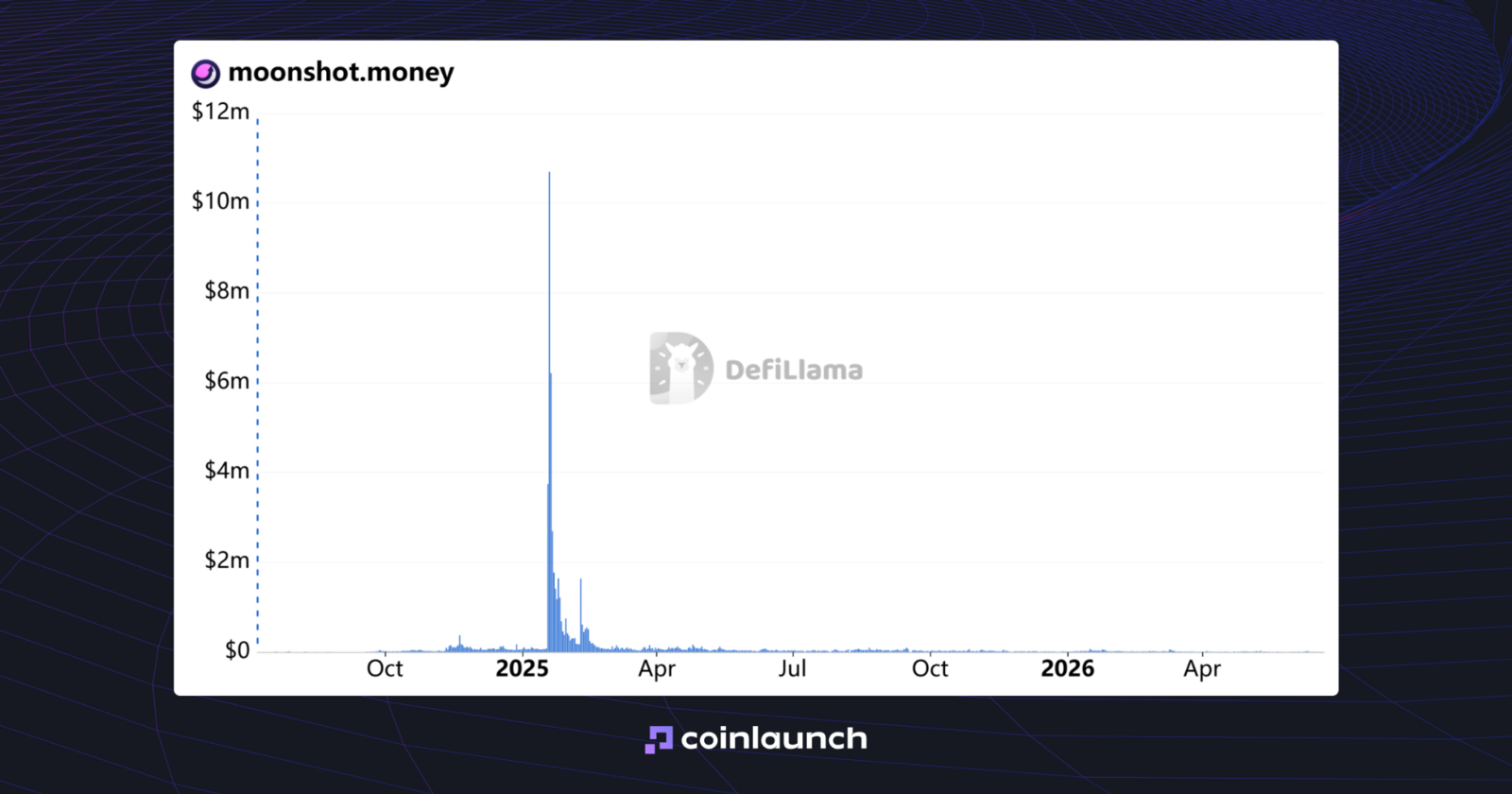
Moonshot TVL Chart. Source: defillama.com
Moonshot works more like a launchpad. A token initially trades on a bonding curve. Once around 80% of the supply has been sold, and the market cap reaches about 432 SOL, the remaining tokens and liquidity migrate to Meteora or Raydium. During migration, liquidity is locked, and trading is temporarily paused.
Moonshot charges a 1% fee on both buys and sells. On Solana, the minimum buy is 0.005 SOL, while the minimum sell is 0.001 SOL.
Moonshot does not offer advanced order types, DCA, or any other ready-made algorithmic strategies. It is better suited for meme coin traders than for regular token swaps.
Moonshot’s smart contracts have been audited by Ackee Blockchain.
PumpSwap is a Solana-based DEX developed by the Pump.fun team. It lists tokens after they complete the bonding curve phase: once the curve is filled, the tokens migrate to PumpSwap. In practice, it is a meme coin trading venue for assets that have already moved beyond their initial launch. The community often treats it as the best Solana DEX for meme coins in 2026.
PumpSwap’s TVL stands at $222 million, while its 30-day trading volume is $1.5 billion. Annualized fees total $550 million, and annualized revenue stands at $98.93 million.
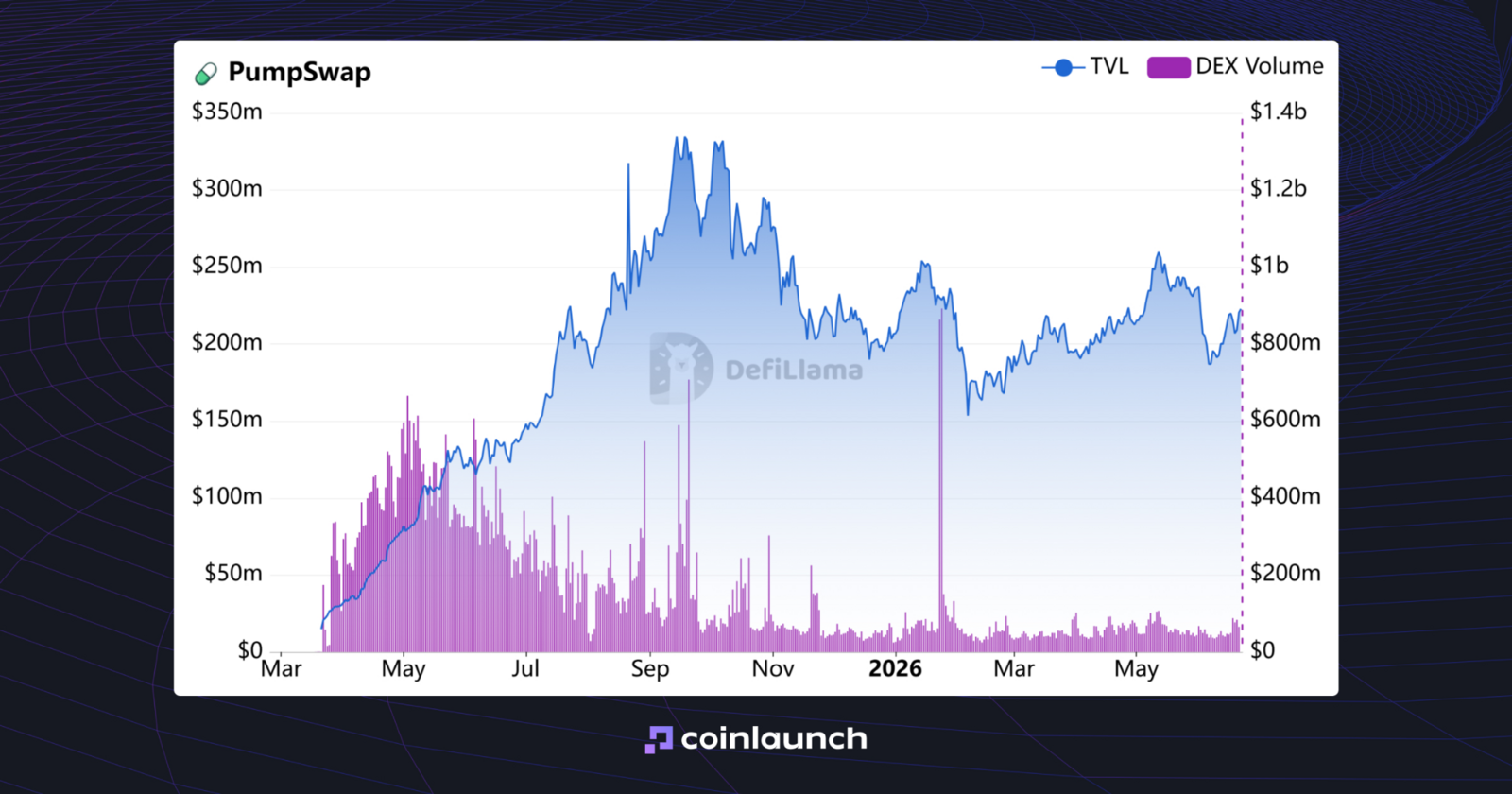
TVL chart for PumpSwap. Source: defillama.com
Fees depend on the token type and pool. Bonding curves charge a total fee of 1.25%. For canonical pools on PumpSwap, the fee decreases as the token’s market cap grows, starting at 1.25% for smaller tokens and falling to 0.3% for larger ones. All other PumpSwap pools charge a 0.3% fee.
PumpSwap does not support advanced order types, DCA, or any other algorithmic strategies. On the security side, the Cantina bug bounty contest for PumpSwap has concluded, with a $2 million prize pool and 185 submitted findings.
The right Solana DEX depends on how you trade. Jupiter is a strong pick for quick swaps and best-rate routing, while Raydium, Orca, and Meteora are better suited for liquidity pools and AMM trading. For early-stage meme coins, Moonshot and PumpSwap are more natural choices.
But if you are looking for the best DEX on Solana across multiple use cases, goodcryptoX stands out. The platform routes Solana DEX trades through Jupiter, but adds tools that standard AMMs and aggregators usually lack: limit orders, trailing orders, Take Profit, Stop Loss, DCA, Grid, Sniper Bot, and TradingView webhooks.
goodcryptoX also supports CEX trading, making it useful for traders who manage positions across Solana and centralized exchanges from one interface.