Coinlaunch was created by a team of crypto experts to help current and future crypto investors find the latest cryptocurrency ICOs and presales. All content follows a strict editorial policy that ensures factual accuracy, neutrality, and usefulness. We strive to provide insightful content that helps our audience make informed decisions, while emphasizing the importance of prioritizing safety and risk management. All information in our content is based on thorough research conducted by our team of copywriters and editors. We use proven sources to find relevant projects and ensure that all content is updated regularly. The information provided by Coinlaunch should be used for informational purposes only and should not be taken as investment advice.
Table of Contents
Current Crypto Narratives: September 2026 Market Overview
Bitcoin ETF Flows and Ethereum ETF Inflows in September 2026
Fed Interest Rates September 2026: Is the Rate Peak in Sight?
Bitget Hack: A $388M Hot Wallet Exploit and Staged Recovery
Robinhood Chain Ecosystem: Trading Slows After September’s Boom
Crypto Presales, New Launches and Market Products: Ondo Tokenized Stocks, Axis, Jumper and Umia
Ondo BlackRock Partnership: Tokenized Investment Portfolios
Axis Robotics Token Sale and Revised AXIS Unlock Schedule
Jumper Crypto Token Sale on Legion and JUMP Tokenomics
Uniswap CCA: Umia Token Launch Through a Continuous Clearing Auction
Variational Crypto Airdrop: VAR Tokenomics and Q4 TGE
X Money Payments: Jack Butcher Launches Credits NFTs
Web3 Venture Capital: Jeeves, Lake Energy and September’s Largest Funding Rounds
Top Crypto Gainers and Losers: HYPE, ZEC, UNI and ENA
Emerging Crypto Narratives 2026: September List
SEC Crypto News: Innovation Exemption for Tokenized Stock Trading
Hyperliquid HIP-3: Payward Plans Regulated Onchain Perps for US Clients
Quant Crypto and BlackRock Tokenization: RWA Portfolios and Tokenized Deposits
Zcash Halving Schedule and Block Time: NU7 Tokenomics Proposal
Upcoming Crypto Catalysts: VAR TGE, CME Futures and NFT Burns
Crypto Market Summary: What September’s Narratives Say About the Market
Share this blog post
September 2026 turned out to be an unexpectedly resilient month for the crypto market, defying macro headwinds and seasonal trends. Even as the Federal Reserve delivered an interest rate hike on Sept. 16, risk appetite quickly rebounded: Hyperliquid (HYPE) led the charge to hit an all-time high near $96, while ecosystem staples like Uniswap (UNI) and Ondo (ONDO) surged 40% and 26% over the same stretch.
Much of this momentum was sparked by a landmark regulatory shift, as the U.S. Securities and Exchange Commission (SEC) allowed eligible platforms to trade tokenized U.S. stocks without registering as exchanges, subject to specified conditions.
This opened more avenues for bringing stock trading onchain. At the same time, projects launched investment products and held token sales, putting September’s crypto narratives 2026 into practice through concrete launches and deals.
This review of emerging crypto narratives 2026 covers developments in tokenized stocks, the news around Hyperliquid, and the terms of the Axis, Jumper, and Umia token sales.
Current Crypto Narratives: September 2026 Market Overview
September extended the crypto market rally that began over the summer. Bitcoin (BTC) gained 6.4% for the month, Ethereum (ETH) rose 8.8% and Solana (SOL) added 14.6%. These crypto gains defied a broader downturn across traditional assets: The S&P 500 fell about 0.5%, and gold dropped 6.8%.
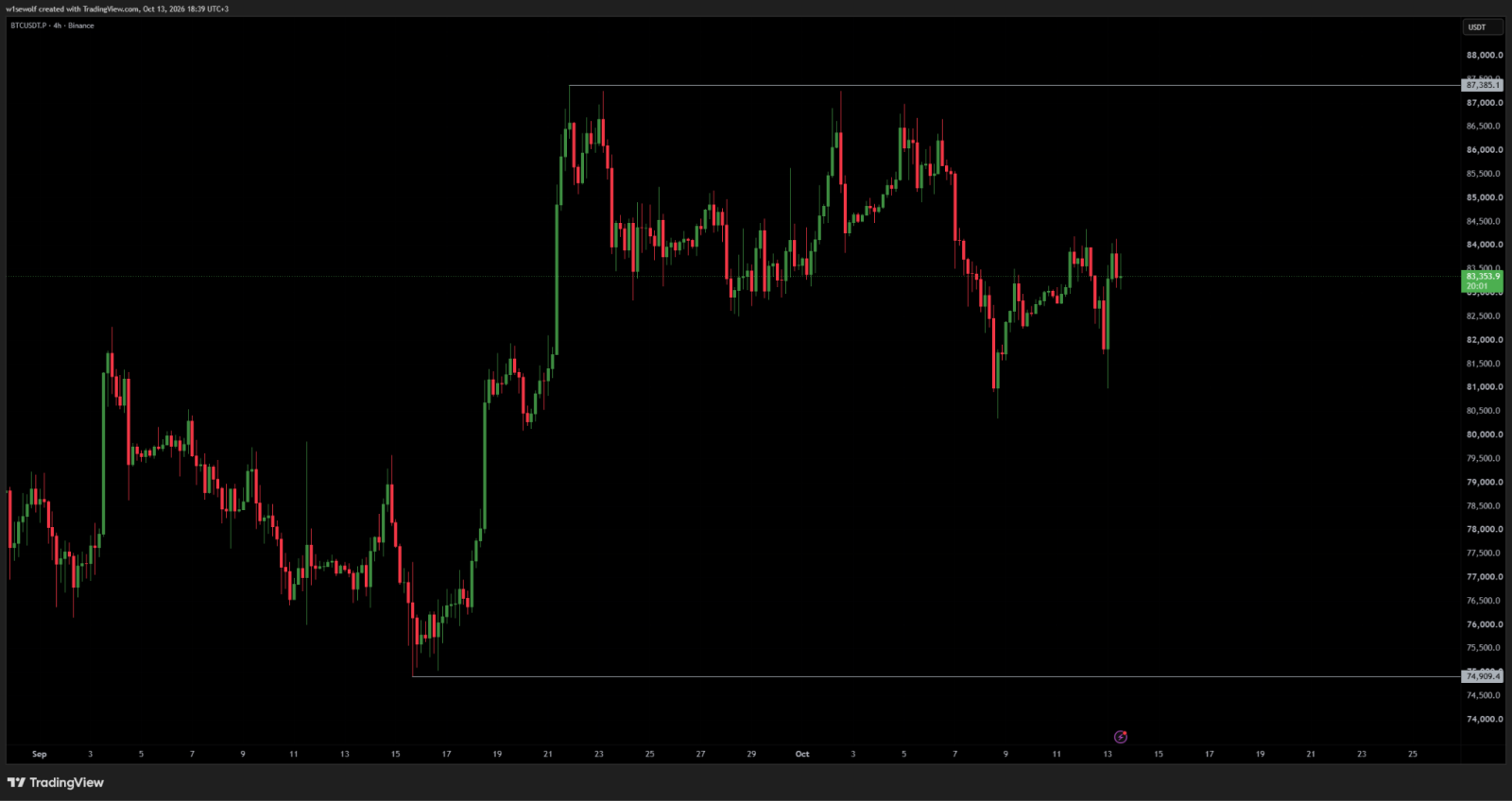
Bitcoin’s monthly gain included a sharp drawdown. Its price fell to around $75,000 in mid-September, then climbed above $87,000 before closing the month near $83,600. The recovery has been linked to inflows into spot exchange-traded funds (ETFs) and a temporary decline in energy prices.
By month-end, U.S. Treasury yields above 5% had capped further gains. The positive monthly return included a sell-off, a recovery and a pullback from the local high.
September’s altcoin rally extended to small-cap assets. The MarketVector Digital Assets 100 Small-Cap Index rose55% over the month. VanEck analysts link the move to decisions by the SEC and the Commodity Futures Trading Commission (CFTC), which granted certain market participants exemptions from registration requirements after the failed vote on the Digital Asset Market Clarity Act (CLARITY Act). As a result, in (which industry/industries) we’ve seen:
Tokenization and stablecoins stood out among September’s current crypto narratives.
The SEC introduced temporary provisions for trading tokenized stocks.
Nasdaq invested $100 million in Payward to develop infrastructure.
The Fed began developing rules for regulated payment stablecoin issuers.
These developments supported institutional crypto adoption. Bitcoin’s day-to-day price moves remained more sensitive to macroeconomic conditions and demand through ETFs.
Bitcoin ETF Flows and Ethereum ETF Inflows in September 2026
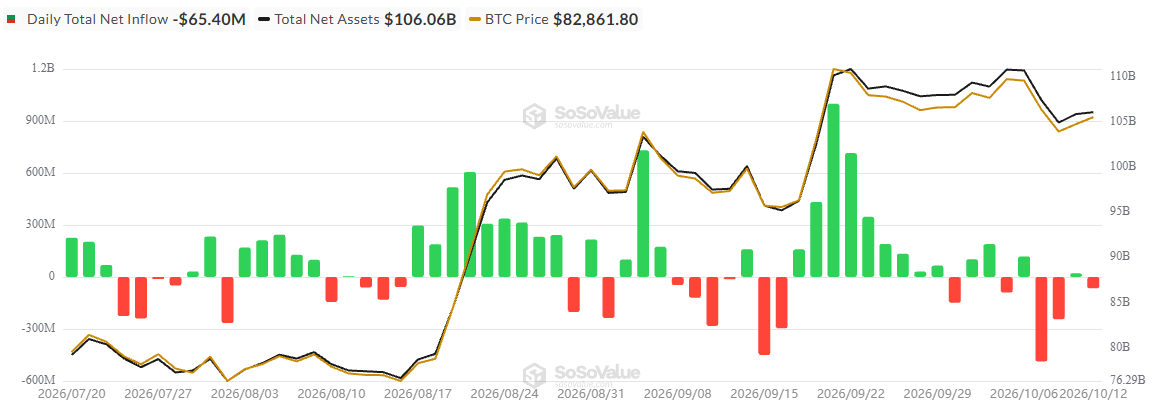
U.S. spot Bitcoin ETFs attracted about $2.65 billion in net inflows in September 2026, down from $3.52 billion in August. According to SoSoValue, September’s Bitcoin ETF flows were the second-highest monthly total since October 2025.
The strongest week was Sept. 21-25, when BTC ETF flows reached roughly $2.4 billion, the highest weekly inflow since October 2025. Those inflows erased the year’s cumulative net outflows. By Sept. 25, net flows for 2026 had turned positive at around $934 million. The funds had been $5.8 billion in the red as recently as mid-July.
Monthly ETH ETF inflows totaled about $832 million, down from $1.85 billion in August. Sept. 21-25 stood out here, too: Net inflows reached $690 million, reversing roughly $140 million in outflows the previous week. Ethereum ETF flows returned to positive territory, but monthly inflows remained below August’s total.
Zeus Research analyst Dominick John viewed positive crypto ETF flows as a sign of continued institutional demand and a more durable market recovery.
Fed Interest Rates September 2026: Is the Rate Peak in Sight?
The Federal Open Market Committee (FOMC) raised interest rates by 25 basis points to a target range of 3.75%-4.00% at FOMC meeting September 2026. The unanimous decision cited sticky inflation and the central bank's ongoing mandate to steer it back toward the 2% target, marking the Fed’s first rate increase since July 2023.
The move surprised few market participants: ahead of the release, CME FedWatch showed a roughly 92% probability of a quarter-point hike. Bitcoin absorbed the decision calmly, holding steady between $75,000 and $76,500 immediately following the announcement.
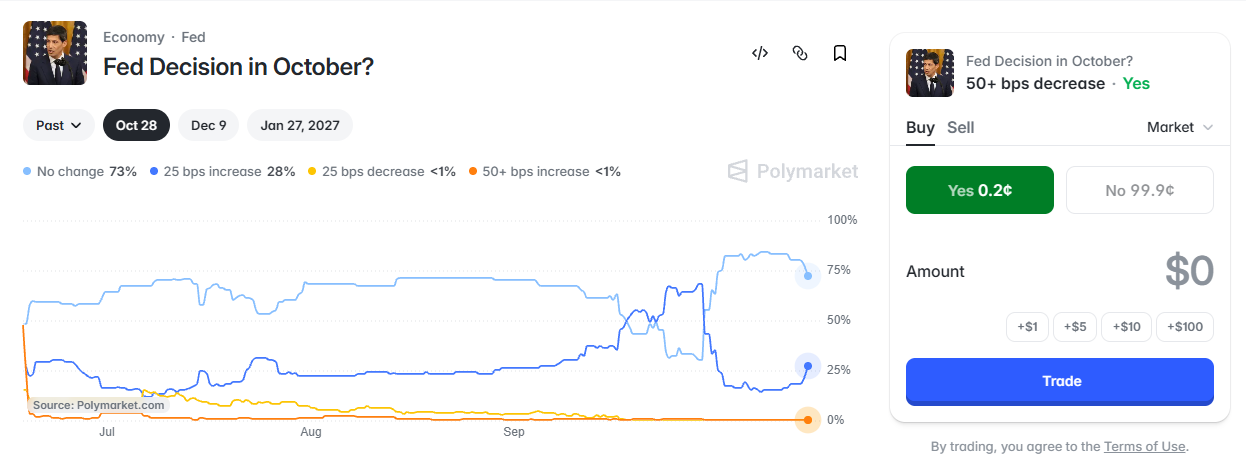
While the Fed’s updated dot-plot projections still left the door open for additional tightening, prediction markets suggest the hiking cycle is near its absolute limit. On Polymarket, traders priced in an over 70% probability of a pause at the upcoming November FOMC meeting, framing September’s hike as one of the cycle's final moves.
“Fed Decision in October?” Polymerket event. Source: polymarket.com
Looking further out, Polymarket odds project benchmark interest rates declining toward the 3.00%-3.25% range by the end of 2027, reflecting market confidence that disinflation will eventually force monetary policy back into an easing cycle.
Bitget Hack: A $388M Hot Wallet Exploit and Staged Recovery
On Sept. 24, crypto exchange Bitget confirmed an unauthorized exploit targeting its hot and warm wallets, resulting in an estimated loss of roughly $388 million in digital assets.
According to preliminary findings, attackers compromised a third-party security integration, using stolen internal credentials to generate unauthorized, forged withdrawal signatures. Bitget stressed that its core infrastructure, underlying private keys, and cold wallet reserves remained completely untouched.
Bitget CEO: $350M Hack Very Likely Linked to North Korea
On September 24, Bitget detected unauthorized transfers from several hot wallets. Bitget CEO Gracie Chen @GracyBitget said the team identified IP addresses whose VPN usage patterns matched those associated with a… pic.twitter.com/aF5WykjIp5
The exchange immediately suspended outgoing transactions to contain the breach and pledged to cover all losses via its Protection Fund, ensuring zero impact on user account balances. Platform deposits and spot trading remained fully functional, while withdrawals resumed in phases once security verifications were completed: Bitcoin withdrawals reopened on Sept. 28, followed by Ethereum on Sept. 29 and Tether (USDT) on Sept. 30.
Robinhood Chain Ecosystem: Trading Slows After September’s Boom
Following its July launch, Robinhood Chain became one of the summer’s hottest ecosystems, pioneering retail RWA trading while sparking explosive memecoin activity. However, that speculative frenzy proved short-lived, with onchain traction facing a noticeable slowdown throughout September.
Robinhood Chain lost trading momentum before month-end. Average daily transactions fell approximately 31%, from 11.24 million during Sept. 1-7 to 7.77 million during Sept. 24-30. Daily decentralized exchange volume dropped from $1.88 billion on Sept. 13 to $947 million on Sept. 28. Deposits in DeFi applications still stood near $1.02 billion on the latter date.
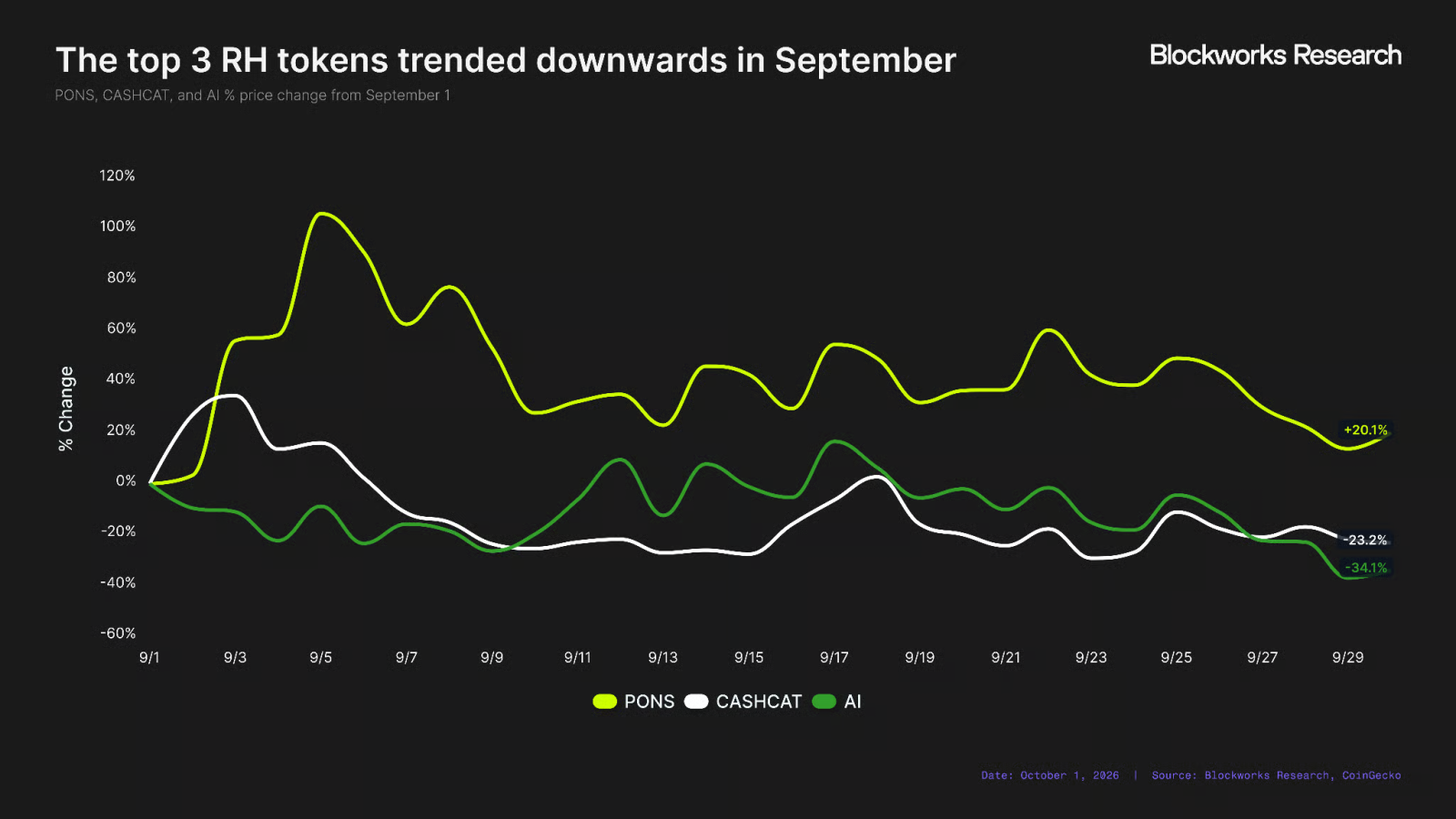
Leading ecosystem tokens came under pressure. An Oct. 2 snapshot showed AI and CASHCAT down 34% and 23%, respectively, from Sept. 1. PONS remained 20% higher over that period but traded about 45% below its peak, at $0.526.
The top 3 Robinhood Chain tokens price chart. Source: blockworks.com
Growth in tokenized stocks stalled too: Robinhood Stock Token TVL increased from $140.6 million on Sept. 1 to just $145.8 million on Oct. 1. Together, weaker trading activity, token drawdowns and slowing stock-token growth suggested fading speculative demand in one of the summer’s busiest new ecosystems.
Crypto Presales, New Launches and Market Products: Ondo Tokenized Stocks, Axis, Jumper and Umia
Among September’s new crypto launches, Ondo introduced tokenized investment portfolios based on BlackRock strategies. Each token tracks the value of a basket of assets, giving investors exposure to their chosen portfolio’s returns.
Sales of new crypto tokens took place through crypto launchpads and auctions:
Axis held a sale through Sonar and improved the unlock terms after it closed.
Umia completed its auction, with trading moving to Uniswap.
In this September roundup of new crypto projects 2026, we examine what Ondo portfolio token holders receive, how tokens were allocated in the sales, and when participants could begin trading them.
Ondo BlackRock Partnership: Tokenized Investment Portfolios
On Sept. 24, Ondo launched three investment portfolios based on BlackRock strategies. Each has a separate token tied to the value of its underlying assets, letting buyers invest in the entire basket through a single instrument.
The portfolios use Ondo Stocks - tokenized stocks and ETFs backed by actual securities. Their holdings and target weights are set in advance. Smart contracts automatically rebalance the portfolios on a fixed schedule, restoring assets to their target weights. Token holders do not need to perform these transactions themselves.
The initial lineup included:
Token
Strategy
BLKHIon
Income Generation
BLKDIGon
Diversified Growth
BLKGRWon
High Growth
The Ondo BlackRock collaboration assigns distinct roles to each company. BlackRock developed the model strategies, and Ondo handles implementation and rebalancing. Ondo Global Markets issues the tokens. BlackRock does not directly manage these portfolios.
Buyers of these BlackRock tokenized assets face restrictions based on jurisdiction and investor status. The products are available to eligible investors outside the United States. Tokens can be transferred between wallets and used in decentralized finance (DeFi). Portfolio holdings, asset weights and completed rebalancing transactions are visible onchain.
Axis Robotics Token Sale and Revised AXIS Unlock Schedule
Axis Robotics collects data to train robots: Participants control virtual robots and complete tasks, and the system reviews recordings of their actions and logs the results on Base. In September, the project opened a public AXIS sale through Sonar, Echo’s token sale platform.
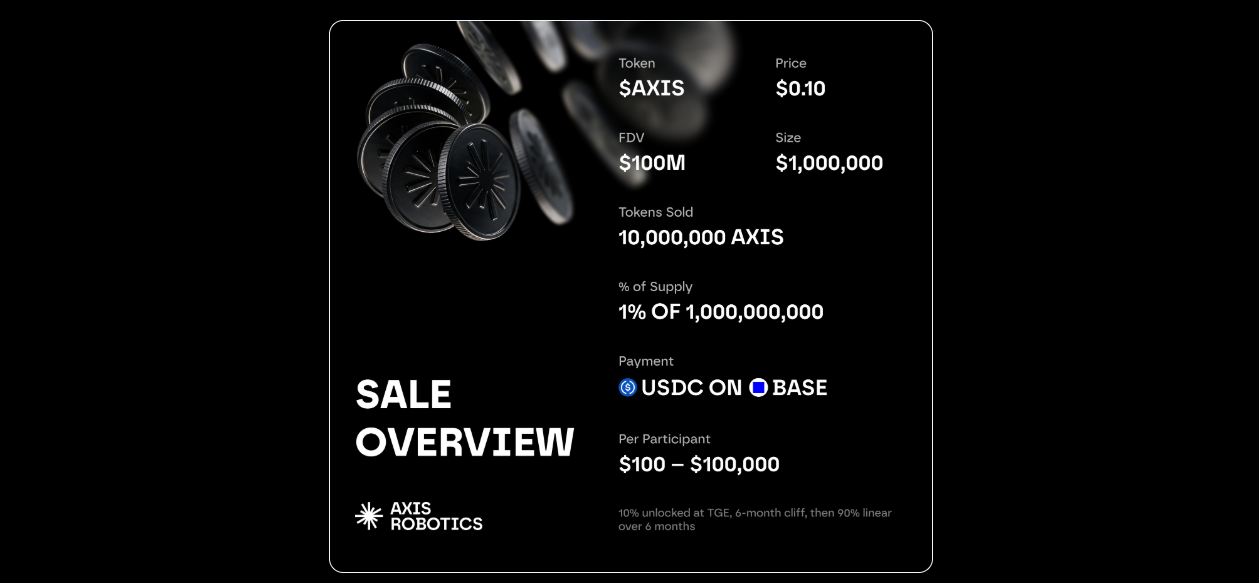
The AXIS token sale ran from Sept. 21-28 at a fixed price of $0.10, with a fully diluted valuation (FDV) of $100 million. The project allocated 10 million AXIS, or 1% of the total supply, to the $1 million round. Participants committed USDC on Base. If commitments exceeded the cap, allocations were prorated and unused funds refunded.
Original Axis sale terms, before the Sept. 29 update. Source: axisrobotics.ai
Buyers were initially set to receive 10% of their purchased AXIS at the token generation event (TGE). On Sept. 29, after the sale closed, the team increased that share to 25%. The remaining 75% retained a six-month cliff, followed by linear vesting over another six months.
Axis provided a bonus equal to 5%-25% of each participant’s final token allocation. The bonus will be fully unlocked at the TGE alongside the initial 25%. The bonus rate depends on the original commitment: Smaller commitments receive a percentage closer to the upper end of the range, and larger commitments receive one closer to the lower end.
Jumper Crypto Token Sale on Legion and JUMP Tokenomics
Jumper crypto grew out of a cross-chain swap and bridging service built within LI.FI. By September, the app had processed more than $40 billion and attracted over 100,000 monthly users. On Sept. 22, the team announced Jumper’s spinoff into an independent company and its first capital raise through a JUMP token sale. The proceeds were intended for product development and user acquisition, including a push into perpetual futures, tokenized stocks and yield strategies.
The @jumperapp ($JUMP) token sale will open on Tuesday, September 29 at 1 PM UTC on Legion.
Here's everything you need to know to participate 👇
Jumper is building the super-app for onchain finance: swaps, cross-chain transfers, yield and RWAs in one place.
Applications for the Legion token sale opened on Sept. 29, with a closing date of Oct. 2. The sale targeted $2 million, with a $3 million cap. Participants committed USDC on Ethereum.
Token allocations depended on Legion Score, previous Jumper usage and community participation. Users with high experience point (XP) totals and the top 500 participants on the waitlist leaderboard received priority. Applying did not guarantee an allocation: The team determined final allocations based on demand and the sale terms.
JUMP’s total supply was fixed at 1 billion tokens, with 4% allocated to the public sale. Buyers were set to receive 50% at the TGE, with the remaining half distributed monthly over four months. Investor and team tokens were fully locked at the TGE, with cliffs of 12 months and 24 months, respectively.
JUMP’s planned benefits included fee discounts, boosted rewards, and additional app features for users who stake or lock their tokens. The token grants no governance rights. Fee, buyback and staking mechanisms were still being developed, subject to the final model and regulatory review.
Uniswap CCA: Umia Token Launch Through a Continuous Clearing Auction
On Sept. 2, project launch and funding platform Umia completed its UMIA token auction through Uniswap’s continuous clearing auction (CCA). The sale distributed 17.3 million tokens, roughly 43% of the supply at launch. The auction opened at $0.12 and closed at $0.36 per UMIA, with the closing price determined by buyers’ bids.
The Uniswap CCA mechanism distributes tokens gradually, block by block. Buyers specify a budget and the maximum price they are willing to pay. Each block sets a single clearing price for eligible bids based on demand and the available token supply. If that price exceeds a buyer’s limit, their bid stops filling, and unused funds can be reclaimed. Participants do not need to time purchases manually during the auction.
Umia opened early access to verified participants on Aug. 26, followed by the public phase on Aug. 29, with a limit of 5,000 USDC per wallet. Early access required proof of participation in an ETHGlobal hackathon, an Echo funding round or a MetaDAO decision market. The team used additional bot protection during the public phase. According to the team, bids covered the available sale allocation in about seven minutes, but the auction continued until Sept. 2.
After the auction, liquidity moved to a new Uniswap v4 pool, where trading began at the closing price of $0.36. Tokens purchased in the auction had no lockup period.
Variational Crypto Airdrop: VAR Tokenomics and Q4 TGE
Variational crypto is a derivatives trading protocol behind the Omni platform. In September, the team moved VAR’s launch to the fourth quarter of 2026, citing preparations for major strategic partnerships. The points program had been scheduled to end in late Q3, with the token launching shortly afterward. Points will now accrue until the Variational TGE, with 150,000 points distributed to users each week.
The team allocated32% of VAR’s total supply to the Variational airdrop. Tokens will be distributed in proportion to accumulated points and fully unlocked at the TGE. Eligibility requires at least one point and acceptance of VAR’s terms of use. Unclaimed tokens will be burned.
The remaining supply was split between the ecosystem reserve, the team and investors. September’s announcement outlined the following tokenomics:
Category
Share of Supply
Terms and Conditions
Airdrop for Point Holders
32%
Full unlocking at TGE
Ecosystem Reserve
18%
Distribution as determined by Variational Foundation
Team and Investors
50%
Locked for 12 months, followed by a gradual unlocking over a minimum of 3 years
The team said it intended to use 100% of revenue flowing into the treasury to buy back and burn VAR. It promised to disclose detailed buyback terms and token utility before the TGE. Before launching VAR, the team planned to end Omni’s closed testing, open the platform to all users and release an application programming interface (API) for trading.
X Money Payments: Jack Butcher Launches Credits NFTs
To receive a nonfungible token (NFT) from the Credits collection, participants sent the artist $8 through X Money, including an Ethereum address in the payment note. On Sept. 20, artist Jack Butcher launched the project with this payment mechanism: Each eligible payment corresponded to one Credit, and the transfer data determined the artwork’s appearance. The payment served as both the purchase and the source material for the image.
The algorithm behind this generative art NFT collection converts a transaction ID into 256 bits, then into four 8 × 8 color grids: cyan, magenta, yellow and black. The payment time determines which layers appear in the finished work. Occurrences of the digit “8” in the transaction ID are reflected in the image. The result depends on the individual payment rather than the buyer choosing a finished image.
Butcher planned a next step for collectors: burning 80 Credits to create one Statement artwork. The feature was scheduled to open on Oct. 1, with a maximum of 1,526 Statements. Owners could keep individual Credits or combine them into a new work, destroying the original NFTs.
Web3 Venture Capital: Jeeves, Lake Energy and September’s Largest Funding Rounds
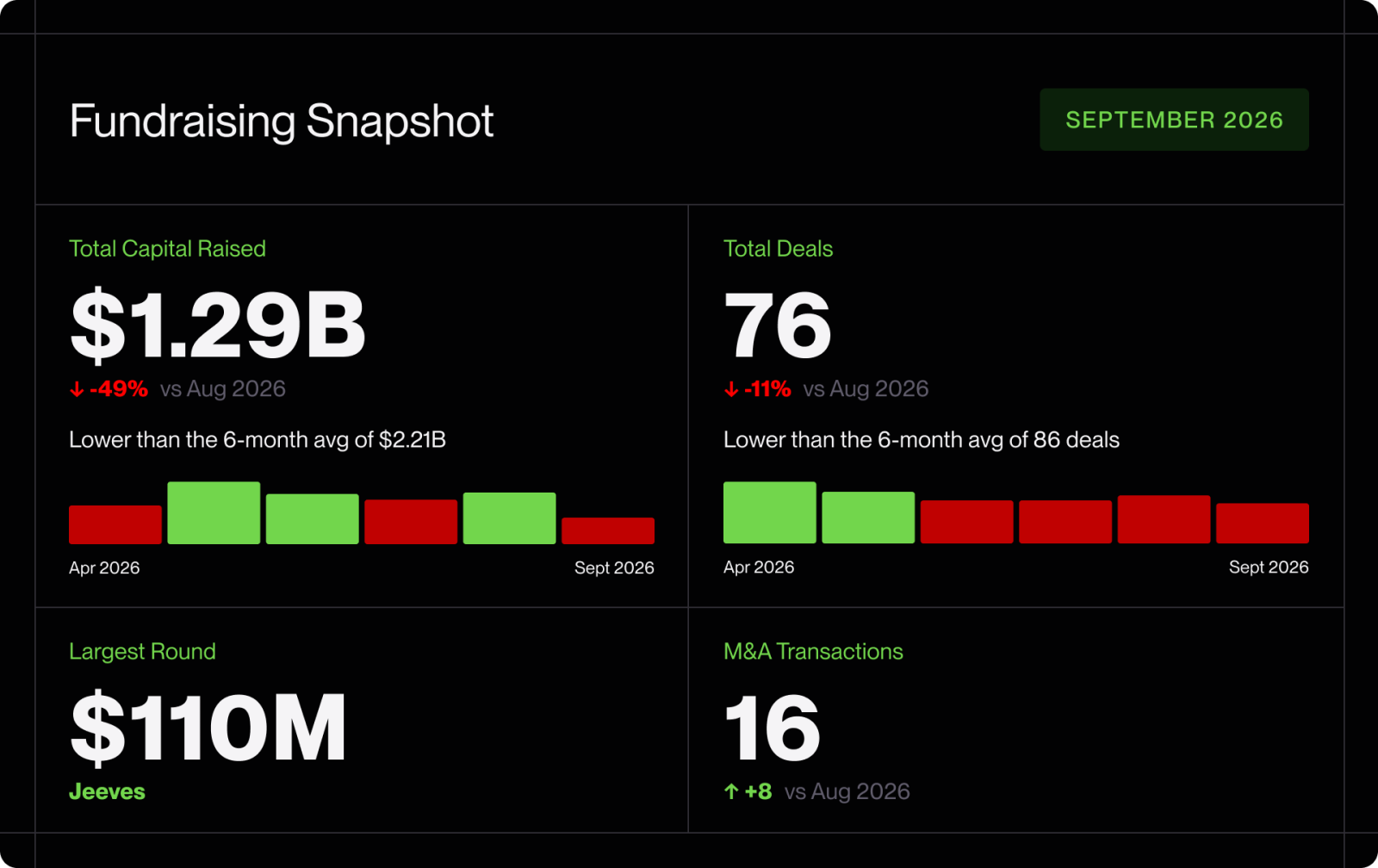
September’s crypto fundraising fell57.3% from August to $680.5 million across 52 rounds, the lowest monthly funding total in April-September. Projects raised approximately $8.8 billion over that six-month period, averaging $1.47 billion per month, putting September 53.6% below the average. Funding peaked at $2.81 billion in May and stayed between $1.5 billion and $1.6 billion from June through August before September’s sharp decline.
Over the medium term, this is an ominous signal: starved startup funding inevitably drains future liquidity from the broader ecosystem.
Key crypto fundraising metrics for September and August. Source: thetie.io
Jeeves secured one of the largest Web3 venture capital rounds. On Sept. 29, the company raised$110 million in a round led by CoinFund, with participation from Andreessen Horowitz, Coinbase Ventures, AllianceBernstein and other investors. Jeeves offers businesses corporate cards, bill payments and expense management with stablecoin settlement. Alongside the round, it introduced a stablecoin wallet supporting payouts to 190 countries. Within eight months, its stablecoin transaction volume reached an annualized $1.5 billion.
On Sept. 15, Lake Energy raised$80 million to build solar plants, energy storage systems and related infrastructure in the United States. A week later, it launched an energy asset tokenization platform with a minimum investment of $100. The tokens represent rights to income distributions from the underlying facilities, with terms depending on each asset and its agreements.
In blockchain venture capital, Lake Energy’s financing was September’s largest deal in the RWA sector. Projects in the sector raised$98.75 million across five rounds, compared with $11.6 million across the same number of rounds in August.
Other major crypto startup funding deals included Nasdaq’s $100 million investment in Kraken’s parent company, Payward. Coinbase was the month’s most active investor by deal count, participating in seven investments, including funding for Jeeves and market data provider Kaiko.
Top Crypto Gainers and Losers: HYPE, ZEC, UNI and ENA
On Sept. 23, UNI and Zcash (ZEC) ranked among the top crypto gainers across major altcoins, rising 18.1% and 8.4%, respectively, as Bitcoin remained largely unchanged. September’s crypto gainers and losers shifted throughout the month: Rallies to new highs gave way to pullbacks, and weekly returns differed significantly from full-month results.
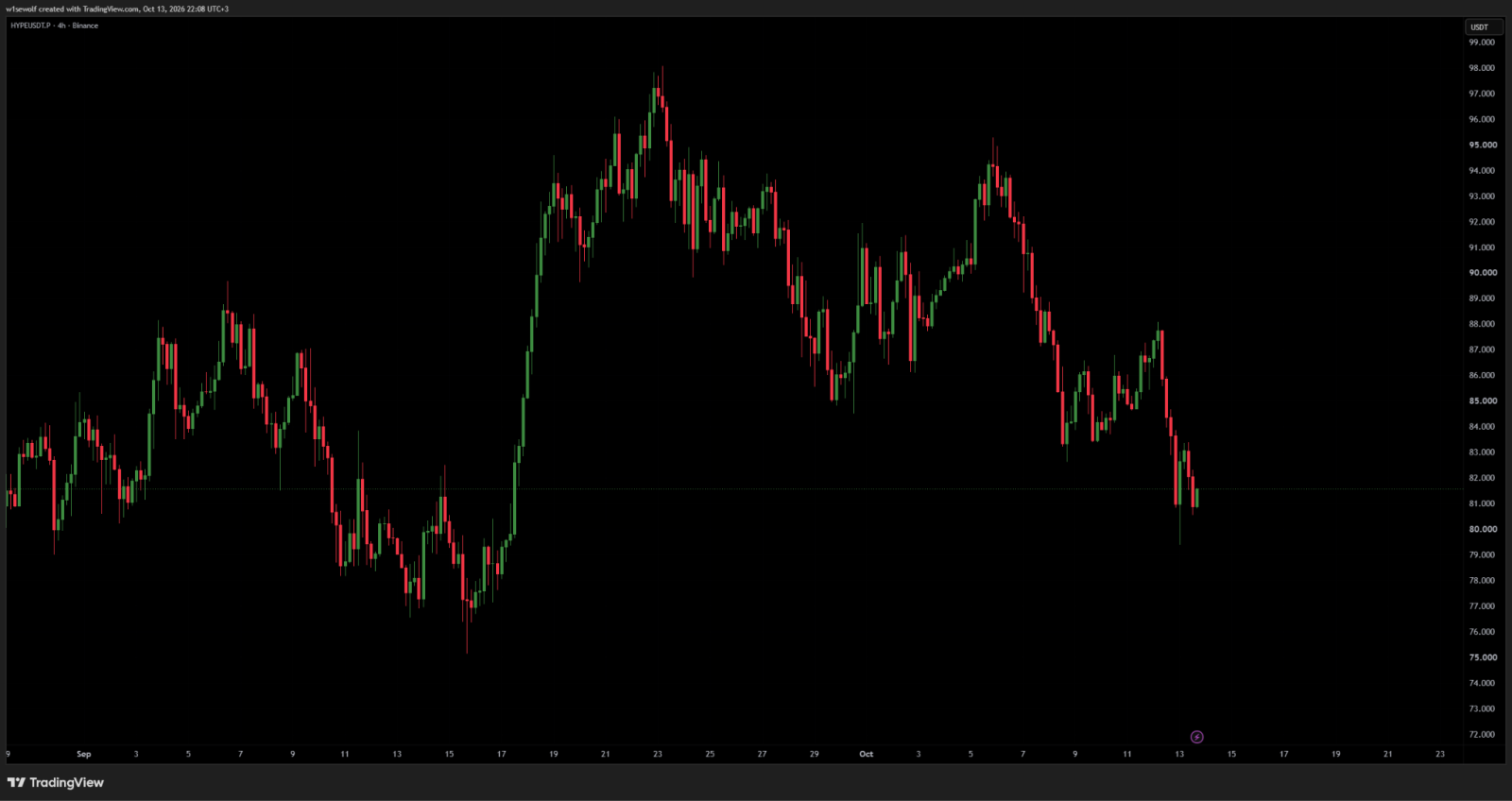
The Hyperliquid price recovered from $78 to an all-time high near $96, which HYPE reached on Sept. 21. On its way to the record, the token broke through previous highs in the 87-90 range. The HYPE price gained about 8.2% over September - a much smaller return than its climb from the local low to the record.
Zcash continued to rise as exchange-traded products (ETPs) broadened access. On Sept. 22, 21Shares launched a ZEC-backed product on Euronext Paris and Amsterdam. It gives investors price exposure through a brokerage account without requiring them to custody crypto themselves. The next day, the ZEC price reached $1,643. Net inflows into spot Zcash ETPs totaled nearly $250 million in September.
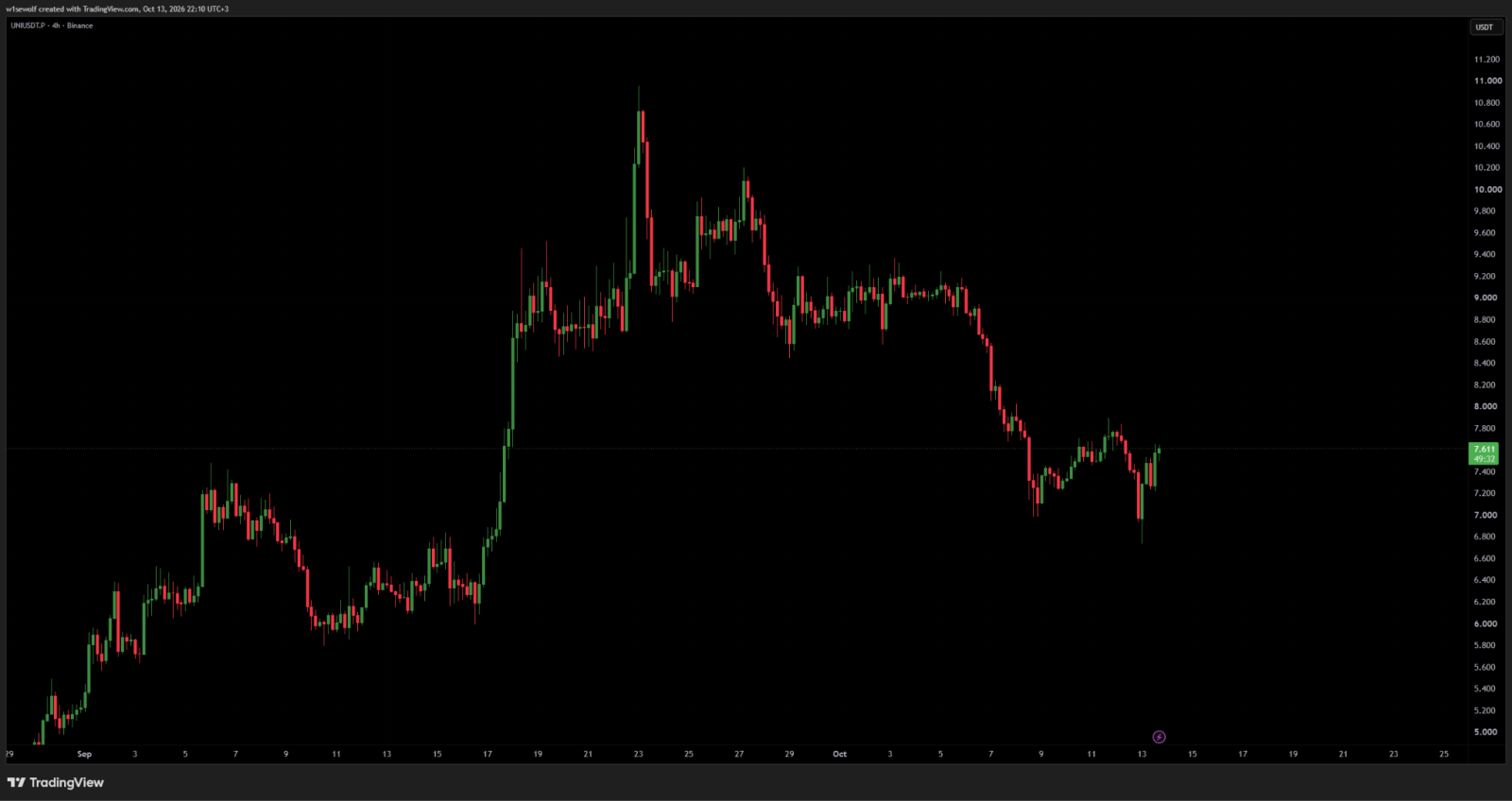
Gains in the Uniswap price coincided with increased use of the protocol for tokenized stock trading. By Sept. 18, Uniswap was handling around 80% of Robinhood Stock Tokens trading volume - more than $10 billion. UNI traded near $10 on Sept. 23 but gave back some gains by month-end: The UNI price closed at $8.88 on Sept. 30.
For ENA crypto, a strong weekly rally gave way to declines. By Sept. 20, Ethena (ENA) had gained nearly 49% over the week. The ENA price later fell from $0.2722 at the Sept. 27 close to $0.2566 at the Sept. 28 close, a drop of roughly 5.7%. It closed September at $0.2648. The decline was a daily pullback within the month; the 49% weekly gain covered a separate period, rather than September as a whole.
Emerging Crypto Narratives 2026: September List
September’s new crypto narratives 2026 included plans to bring traditional financial activities onchain. Payward announced plans to offer U.S. clients perpetual futures trading on Hyperliquid through regulated brokerage accounts. The Clearing House selected Quant for a settlement network using tokenized bank deposits. The network aims to support instant payments and automatically execute transfers when agreed conditions are met.
In this emerging crypto narratives 2026 roundup, we examine the SEC’s conditions for tokenized stock trading, Payward’s planned access to Hyperliquid and what Quant is preparing for banks. We then look at Zcash’s proposed Network Upgrade 7 (NU7), which would cut block times from 75 seconds to 25 seconds and retain halvings.
SEC Crypto News: Innovation Exemption for Tokenized Stock Trading
In September’s SEC crypto news, the regulator granted eligible platforms a temporary exemption from the definition of an exchange. The Sept. 17 decision permits tokenized stock trading through automated market makers (AMMs) and liquidity pools, subject to specified conditions. The exemption lasts five years from publication.
The regulator required tokenized shares to retain standard shareholder rights, including dividends and voting. Synthetic instruments do not qualify. When an independent third party tokenizes a stock, the underlying issuer has an opportunity to object to its trading on the platform.
The new SEC crypto regulation framework requires controlled participant access and public, auditable smart contracts. Platforms must halt trading in a tokenized stock when trading in the underlying stock is halted on its primary exchange. Rules against fraud and market manipulation remain in force.
Hyperliquid HIP-3: Payward Plans Regulated Onchain Perps for US Clients
On Sept. 16, Kraken’s parent company, Payward, announced plans to offer U.S. clients perpetual futures on Hyperliquid. It plans to use Hyperliquid Improvement Proposal 3 (HIP-3) with controlled participant access. Trades will be matched and recorded in the order book on Hyperliquid’s public blockchain.
Under the Payward Hyperliquid model, Bitnomial, a CFTC-regulated exchange and clearing organization, will launch and manage the markets and handle clearing and settlement. Registered futures broker NinjaTrader Clearing will service client accounts.
Access to crypto perpetual futures US will require a futures account through NinjaTrader and inclusion on both NinjaTrader’s and Bitnomial’s allowlists. U.S. clients will be able to trade the new Hyperliquid contracts through a regulated intermediary. Listing the contracts depends on regulatory approval.
Quant Crypto and BlackRock Tokenization: RWA Portfolios and Tokenized Deposits
September’s BlackRock tokenization news centered on Ondo’s investment portfolios based on BlackRock strategies, which Ondo launched on Sept. 24. Bank settlement infrastructure progressed in parallel: That same day, The Clearing House selected Quant for its On-Chain Money Initiative.
The new network is intended for settlement using tokenized deposits - digital representations of bank deposits that retain conventional deposit regulation but are recorded and transferred onchain. Quant will connect participants, manage transactions and provide links to existing payment systems: Real-Time Payments (RTP) and the Clearing House Interbank Payments System (CHIPS). Banks will be able to connect to shared infrastructure.
The programmable money model supports instant settlement and automatic transfers when agreed conditions are met. The network is intended for corporate treasury management, cross-border payments and settlement of tokenized assets. Access for participating financial institutions is expected in the first half of 2027.
Zcash Halving Schedule and Block Time: NU7 Tokenomics Proposal
In September, Zcash developers agreed on NU7’s scope, including a reduction in Zcash block time from 75 seconds to 25 seconds. This should cut the average wait for a transaction’s first confirmation to one-third of its current duration - particularly useful for small payments and services that require only one or two confirmations.
To prevent faster blocks from increasing ZEC issuance, the proposed Zcash tokenomics change would reduce the subsidy per block to one-third of its current level. The number of blocks between halvings would triple. The Zcash halving schedule would retain its existing time intervals, and planned daily issuance would remain virtually unchanged.
The plan published on Sept. 17 scheduled Zcash NU7 activation for Oct. 6 on testnet and Nov. 5 on mainnet. Developers planned to make the final mainnet activation decision and set the block height on Oct. 20, based on test results. In September, these changes were still being prepared for deployment.
Upcoming Crypto Catalysts: VAR TGE, CME Futures and NFT Burns
At the end of September, Variational remained among crypto projects with upcoming catalysts. The team scheduled VAR’s token generation event for the fourth quarter of 2026, without setting an exact date. Distributions of 150,000 points per week will continue until the token launch, with points determining participants’ airdrop allocations.
CME Group announced plans to launch Bitcoin Cash (BCH) and Uniswap futures on Oct. 19, subject to regulatory review. Standard contracts will represent 250 BCH or 10,000 UNI; Micro contracts will represent 25 BCH or 1,000 UNI. They will give regulated-market participants additional tools to manage price risk and trade these assets.
In NFTs, the upcoming crypto projects calendar included the next stage of Jack Butcher’s Credits. Butcher scheduled the launch of Statement minting, letting holders burn 80 Credits to receive one new work. Statements are capped at 1,526 NFTs, and the Credits used to create them will be destroyed.
Crypto Market Summary: What September’s Narratives Say About the Market
September pointed to closer ties between crypto and traditional finance. Tokenization covers bank deposits, stocks and ready-made investment portfolios, with access to onchain products taking shape through regulated intermediaries. This broadens blockchain’s use as infrastructure for issuing, trading and settling familiar financial instruments. Some September initiatives still needed approval or preparation before launch.
Token markets showed no equally clear direction. Rallies in individual assets came alongside pullbacks, and new projects offered different participation terms, unlock schedules and revenue-sharing arrangements. Product development and benefits for token holders remained separate questions.
The month’s overall takeaway was broader financial use of crypto infrastructure, with substantial differences in how tokens function and capture value within these products.