How to Evaluate Crypto Presales Before Joining a Solana Sale
Solana ICO Launchpad or Direct Presale: How to Participate
Conclusion: What Are the Best Solana Presales?
Share this blog post
Around 140% above the token sale price: That is the average current return CryptoRank’s six-month sample of MetaDAO launches shows as of Oct. 27, 2026. The average return at each token’s peak price is 327%.
These figures show the profit potential of Solana presales. Capturing it takes careful project selection and risk management. You manage your capital; we help with the research by reviewing each project’s product, sale terms, tokenomics and risks.
Our November 2026 roundup of the best Solana presales covers five projects you can buy into through the Solana network or its native launchpads. We close with a guide to preparing your wallet and participating in presales on Solana.
Top Solana Presales: Quick Comparison
We selected five projects with participation routes through Solana or its launchpads. We compared their products, team transparency, token utility and sale terms. These criteria help assess each offering and the risks of buying. The table below summarizes the key details.
$0.1501-$0.3499 across the stages listed in the white paper
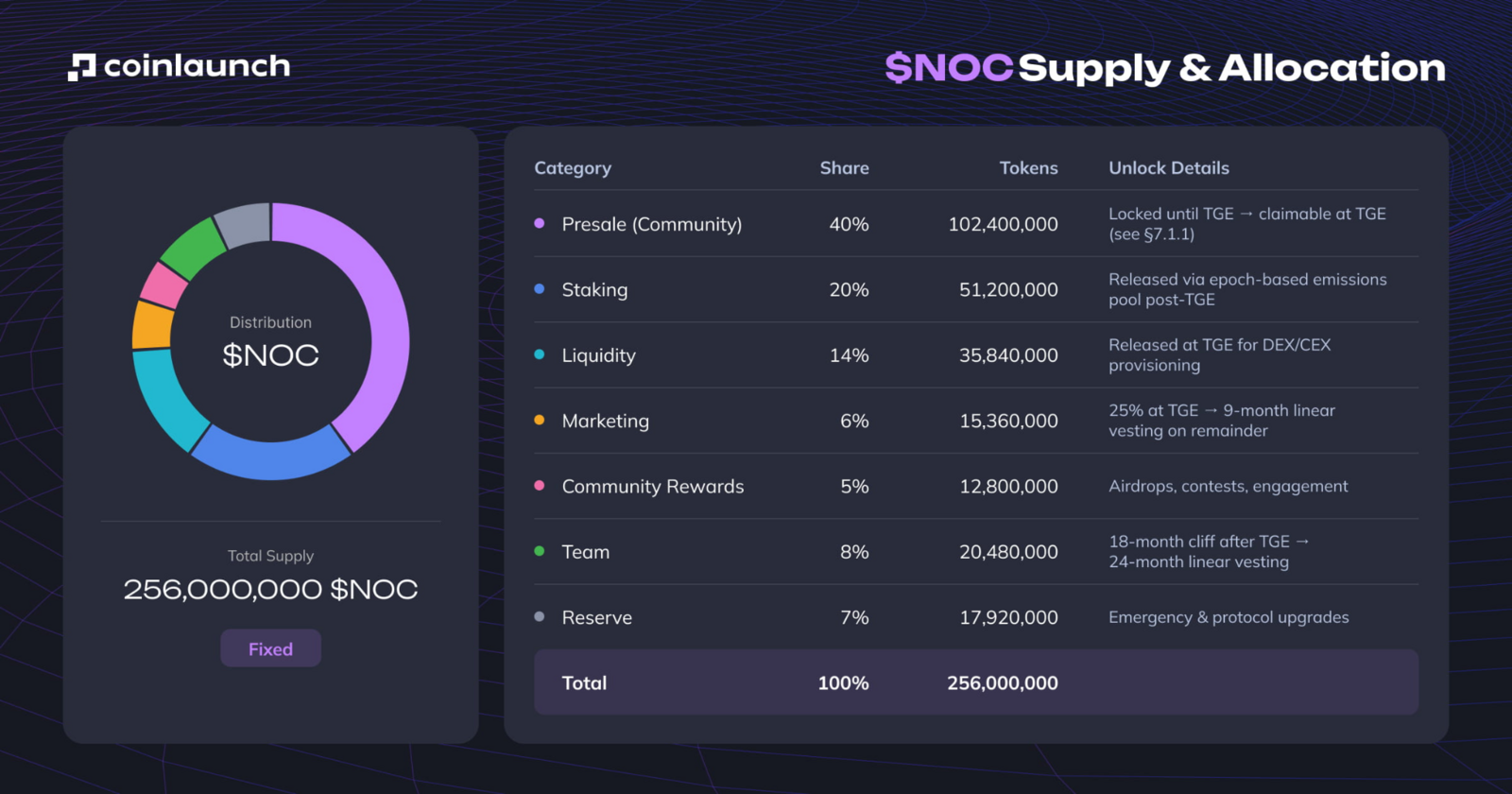
256 million NOC
OVER stands out for its publicly identified team and straightforward revenue model based on traders’ daily fees. AURS offers a practical use: holders receive a discount on copy trading performance fees. We suggest starting with these two projects for deeper research.
Over Computer (OVER)
Over Computer is a prop trading platform on Solana that offers simulated trading accounts with real payouts in USD Coin (USDC). Users choose their account size and loss limit, then pay a daily fee to keep the account open. Trades are simulated using market prices - no account funds are sent to an exchange.
Traders keep 80% of profits and can request payouts every five days, subject to the account’s rules. Over Computer earns revenue from daily fees: The longer a user keeps trading, the more the platform earns. Its documentation specifies accounts of up to $100,000 at launch, with sizes of up to $1 million planned for a later stage.
Open House is its next planned product. Approved partners will be able to create their own trading challenges, set the rules and fund rewards. Over plans to provide the infrastructure for assessing results and processing payouts. The feature is still in development.
The team reports an October soft launch: More than 200 traders helped refine the product, and several thousand people joined the waitlist. Li Feyerabend and Noah Haufer are listed as co-founders, with Komorebi among the project’s backers. These figures reflect early testing. The sale page does not yet disclose revenue or retention among paying users.
We're excited to announce that @overdotcomputer will be the next curated raise on October 29th.
MetaDAO initially announcedOct. 29, 2026, as the opening date for OVER’s sale. The launch was later postponed, and the sale page now lists the opening date as TBA. The minimum fundraising target is $250,000. The team plans to allocate 30% to user acquisition, another 30% to a payout reserve and the remaining 40% to the team and infrastructure.
As of late October, the MetaDAO sale page remains preliminary. It does not disclose OVER’s price, project valuation or token unlock schedule. The launchpad team flags risks including insufficient collateral to cover payouts, exploitation of trading rules and reliance on external price feeds. Assessing the sale’s investment potential requires final terms and details of OVER holders’ rights.
Bitcoin Hyper (HYPER)
Bitcoin Hyper is developing a layer-two network for Bitcoin (BTC) using the Solana Virtual Machine (SVM). The team plans to support fast BTC transfers and applications such as exchanges, lending services and games. A bridge would let users move BTC into and out of the network. HYPER is intended for transaction fees, staking and protocol governance.
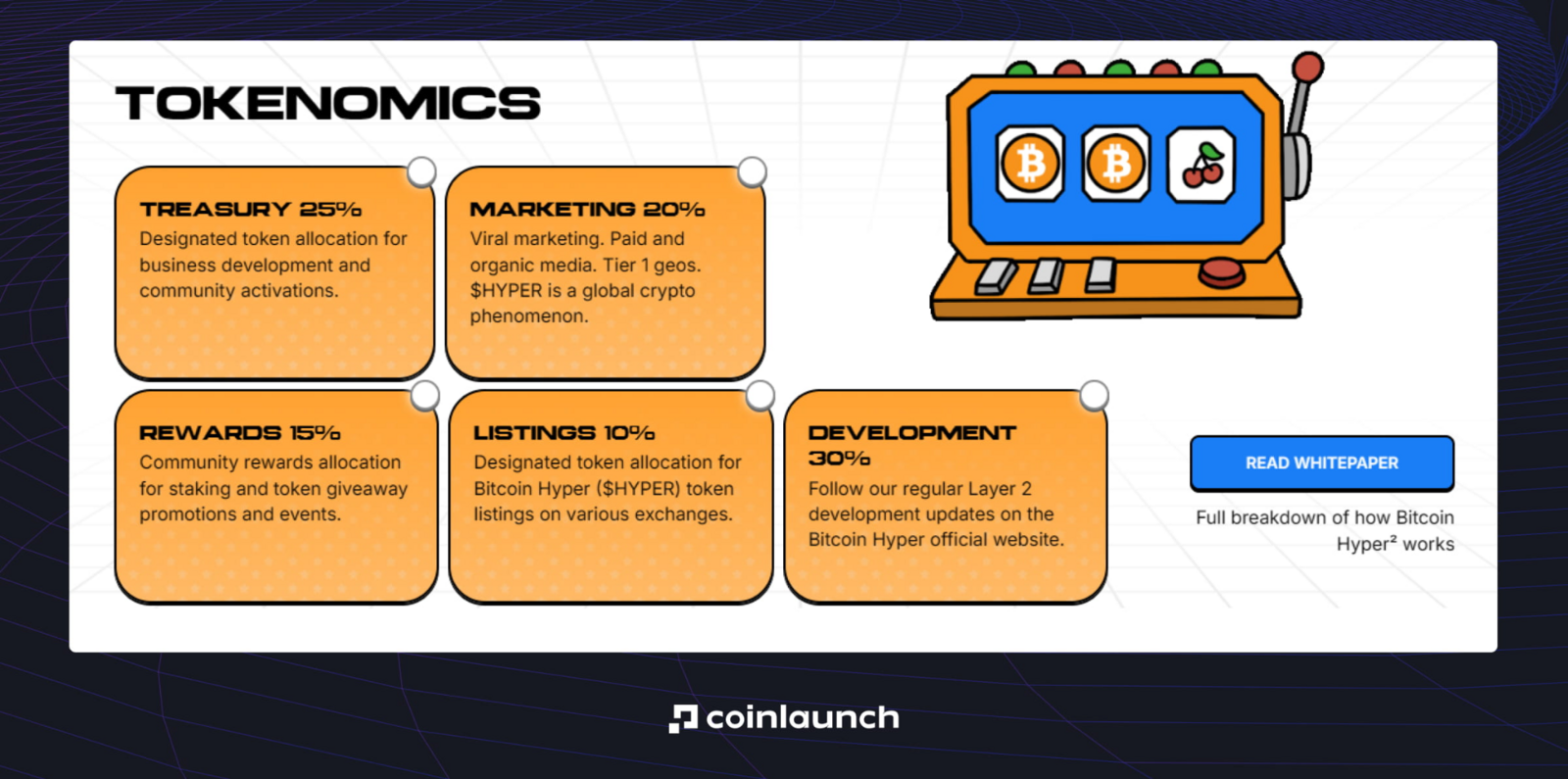
HYPER has a maximum supply of 21 billion tokens. The team has allocated30% to development, 25% to the treasury, 20% to marketing, 15% to rewards and 10% to listings. These allocations explain how the tokens will be used but do not specify when they will enter circulation.
The planned Bitcoin Hyper launch date is Nov. 26, 2026, which the team announced on its official X account. The Bitcoin Hyper presale is scheduled to end on Nov. 26.
Where to buy Bitcoin Hyper? The project offers a dedicated presale page for SOL payments. In its FAQ, the team clarifies that buyers paying with SOL will receive HYPER on Solana. Buyers paying with Ether (ETH), BNB or a bank card will claim their tokens on Ethereum.
How to buy Bitcoin Hyper? Connect a compatible wallet to the sale page, choose an amount and confirm the transaction. Phantom is commonly used for Solana purchases. Claiming purchased tokens after launch is a separate step. Check the claim terms before paying.
In our separate Bitcoin Hyper review, we note the anonymous team, missing token release schedule and lack of confirmed major investors. Assessing the sale requires examining network and bridge readiness, token claim terms and future liquidity. An announced launch date does not establish that every component of the product is ready.
AURA DEX (AURS)
AURA DEX combines a decentralized exchange on Solana with trading bots and copy trading. Users can swap tokens manually or automate their trades. Grid Bot, for example, places buy and sell orders at preset price levels. Copy trading mirrors a selected trader’s trades through a separate wallet assigned to the user.
Auradex charges a performance fee on realized net profits from copy trading. The rate depends on AURS holdings: 30% for balances of up to 999 tokens, falling to 20% for holdings of 100,000 AURS or more. If losses follow profitable trades, the platform says those losses must be recovered before it charges further performance fees.
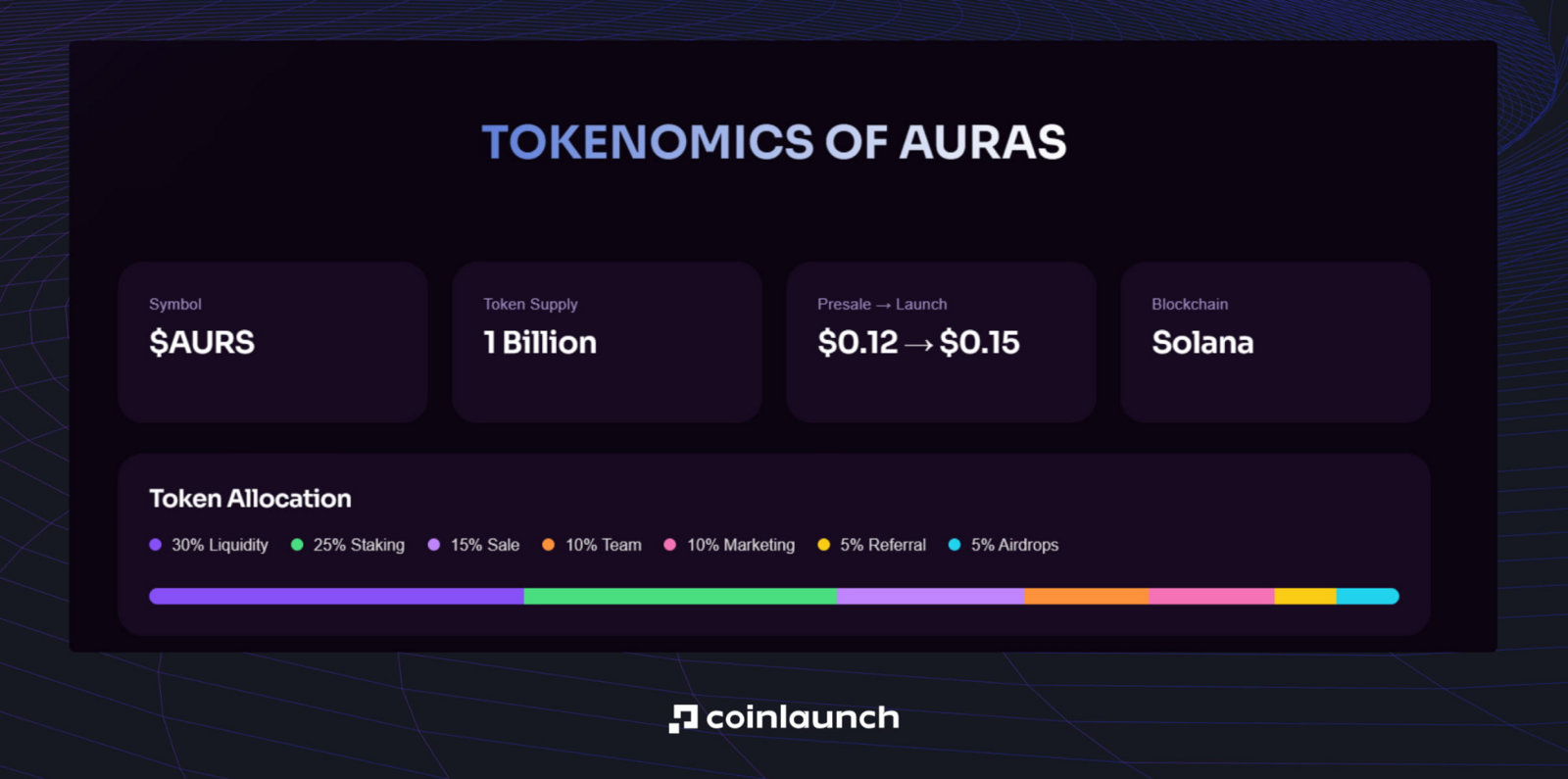
The AURS token is intended for fee discounts, staking and access to additional tools. The team says holders may receive USDC rewards, with amounts and availability depending on platform activity and program terms. Total supply is 1 billion AURS: 30% is allocated to liquidity, 25% to staking, 15% to token sales, 10% to the team and the remaining 20% to marketing, referrals and airdrops.
As of late October, the website lists a presale price of $0.12, implying a fully diluted valuation (FDV) of $120 million. Purchases are made in USDC through AURA BOT. The white paper specifies linear vesting over 24 months for tokens distributed through sales. Buyers will be able to claim AURS through the official portal after the token launches.
Vibranium Audits confirmed that it audited AURA DEX’s smart contracts. We still rate the project 28 points (Low), citing the absence of known major investors and weak marketing performance. The sale’s end date has yet to be announced.
WheCoin (WHE)
WheCoin is a Web3 development and marketing project. Its planned services include token creation, project analysis, branding and launch support. Its Solana token, WHE, is intended for payments across selected services and access to products. The commercial arm, Build with WHE, is intended to bring these services together, from concept development to technical implementation and promotion.
The team describes its separate WHE Analysis / Verified service as reviewing projects against public criteria: token supply distribution, admin permissions, liquidity, vesting and documentation. Artificial intelligence (AI) tools for analysis and automation remain on the roadmap. Integrating WHE into products and services is planned for a future stage.
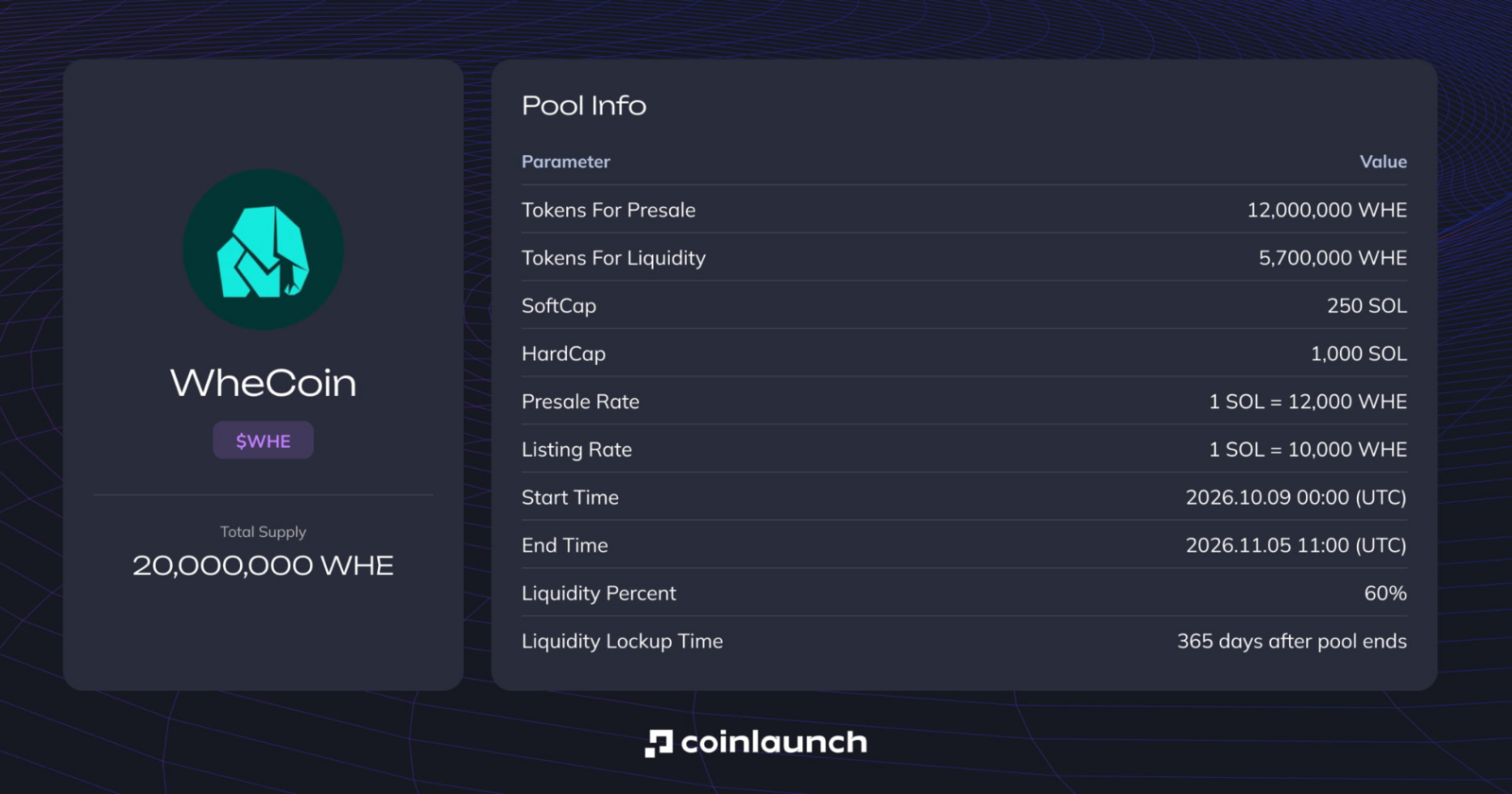
The presale is running on PinkSale and is scheduled to end on Nov. 5, 2026, at 11:00 am UTC. The minimum fundraising target is 250 SOL, and the raise is capped at 1,000 SOL. Participants can contribute 0.5 to 10 SOL at a rate of 12,000 WHE per SOL. The minimum contribution buys 6,000 tokens.
WHE has a maximum supply of 20 million tokens. The project has allocated12 million WHE, or 60% of supply, to the sale. PinkSale lists Raydium as the trading venue, with an initial rate of 10,000 WHE per SOL. Under the pool’s terms, 60% of funds raised is allocated to liquidity, which will be locked for 365 days after the pool ends. Unsold tokens will be burned.
The main uncertainty is whether the team can deliver its proposed services and get clients to use WHE. The roadmap still lists service launches, token integration and further growth as planned milestones. The materials reviewed provide no verified figures for revenue or demand for these services.
As of late October, the sale had raised 50 SOL ($5,000) against a cap of 1,000 SOL ($100,000).
NOCtura (NOC)
NOCtura is developing a wallet and a protocol for private transactions on Solana. Public mode is intended to support standard transfers and applications on the network. In private mode, zero-knowledge proofs verify transfers without revealing the sender, recipient or amount. Proposed uses include personal payments, payroll and corporate treasury management.
The team has included selective disclosure for interactions with auditors and counterparties. Users will be able to share access to an individual transaction or prove they hold funds without revealing their full wallet history. These permissions do not grant control over assets. This would let companies verify individual transactions and keep other payments private.
NOC is intended to pay private transaction fees, reward participants who generate proofs and relay transactions, and support staking and protocol governance. Total token supply is fixed at 256 million NOC. The presale allocation is 40%, or 102.4 million tokens, with 20% allocated to staking and 14% to liquidity. The team receives 8%, locked for 18 months after the token launches, followed by linear vesting over two years.
The sale is split into 10 stages of 10.24 million NOC each. The first-stage price is $0.1501, rising to $0.3499 in the final stage. Payment options include SOL, USDC and Tether (USDT) on Solana, plus assets on Ethereum and BNB Chain. Under the published model, buyers will be able to claim their full allocation at the token generation event (TGE).
The NOCtura presale end date remains unconfirmed. In version 3.0 of the white paper, the team planned to close the sale in July 2026, with the TGE in September or October. However, the project’s website still features a presale dashboard and participation options.
In our more detailed NOCtura review, we note that the team’s identities are not public and no major investors are known.
How to Evaluate Crypto Presales Before Joining a Solana Sale
Before joining a presale, understand what you are buying and what could drive the token’s price higher. Research the product, assess the entry terms and find out when your tokens will be available to sell. These checks help you compare offerings and identify each project’s crypto presale risks.
A token’s price is meaningful only in relation to its supply. AURA DEX, for example, lists a price of $0.12 and a supply of 1 billion AURS, giving it an FDV of $120 million. You can then compare that valuation with competing projects, their products, user bases and revenue.
Investors are increasingly focusing on that last metric. A promising idea may once have been enough to attract investors. Today, they also assess actual revenue and its connection to the token. Growth in platform revenue should benefit token holders.
Hyperliquid and Pump.fun offer good examples of this approach. Hyperliquid uses trading fees to buy back HYPE, while Pump.fun allocates around 50% of revenue to PUMP buybacks and burns. This links product revenue to token demand: Over the past 12 months, HYPE rose approximately 104%, while PUMP fell 19.4%, a smaller decline than the broader market.
An unlock schedule determines when buyers can move or sell their tokens and how many tokens other participants will receive at the same time. AURA’s white paper specifies 24-month vesting for tokens distributed through sales. Your return estimates should account for the portion available to sell and future team and investor unlocks.
Check what could drive demand for the token. If it is used to pay fees or access a service, examine how much that service is used. Compare promised features with the available product and verify partnerships against announcements from both sides.
For technical crypto presale risks, examine the team’s permissions and the audited code. An audit report should show the scope of the review and the status of any findings. On Solana, retained permissions can allow additional tokens to be minted or token accounts to be frozen. Check who controls those permissions and what limits apply.
Solana ICO Launchpad or Direct Presale: How to Participate
If a project runs its sale on a launchpad, you participate through that platform. For a direct presale, you use the project’s official website. Some sales allow participation without KYC verification, but check each sale’s requirements before joining. Weeks or months may pass between payment and receiving your tokens, depending on the launch and vesting schedules.
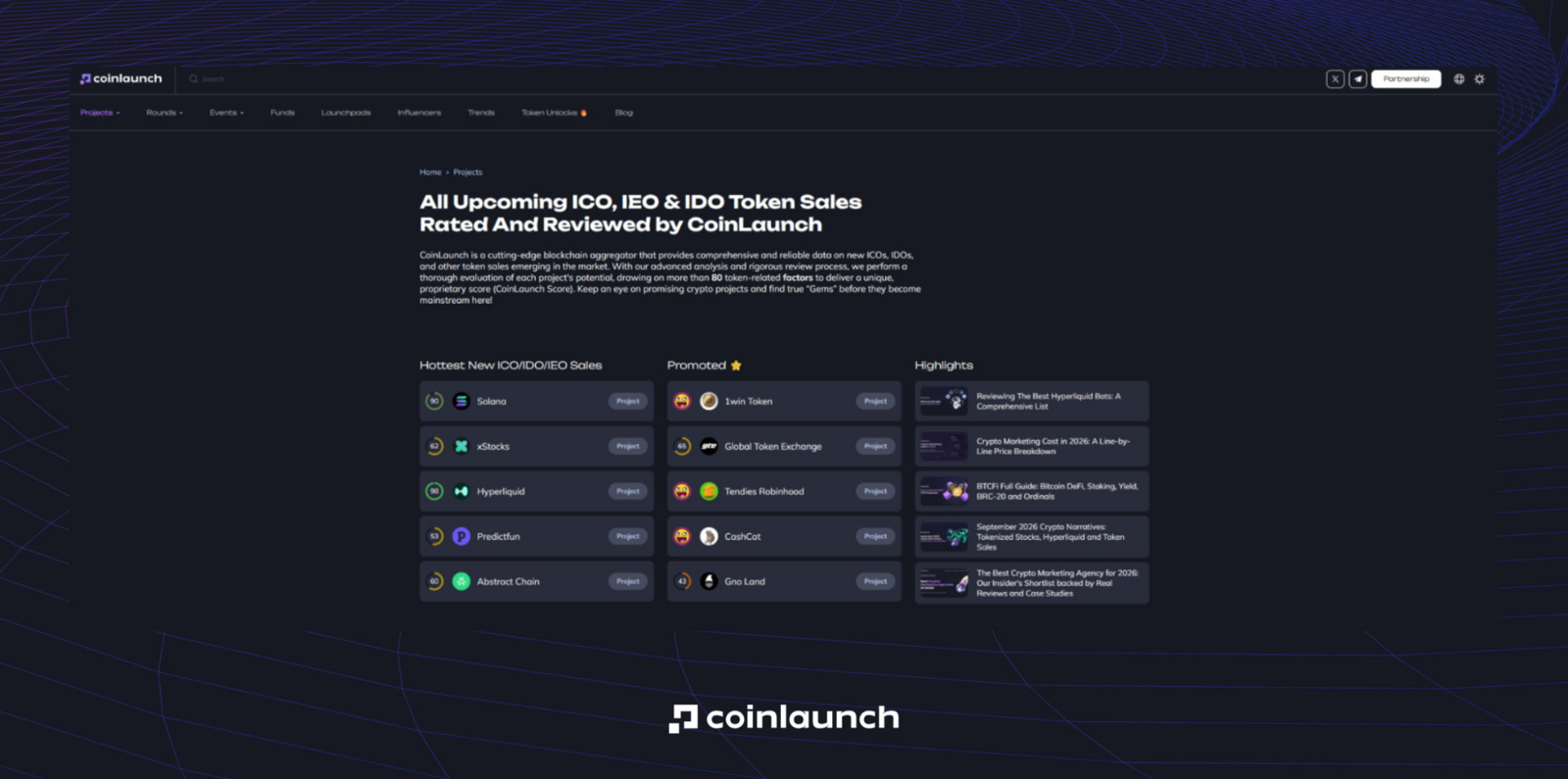
If you are wondering where to find Solana presales, start with launchpad calendars and project profiles on CoinLaunch. These bring together project descriptions, sale dates and terms, tokenomics and links to official resources, helping you compare offerings and choose projects for further research.
On a Solana ICO launchpad, you buy through the platform’s interface; in a direct presale, you connect your wallet to the project’s application. Check registration, verification and wallet allowlist requirements in advance.
Use a wallet supported by the platform and fund it with the payment asset on the correct network. For example, buying with USDC on Solana requires USDC on that network and a small SOL balance for network fees.
Connect your wallet, enter the amount and review the terms before confirming the transaction. Save the sale round’s link and a record of your purchase. If allocation depends on demand, your final allocation will be confirmed after the sale closes.
After the token launches, follow the platform’s instructions. PinkSale, for example, enables token claims after a pool has ended successfully and been finalized. Return to the sale page with the same wallet and confirm the Claim transaction. If tokens are vested, claiming later installments may require separate transactions.
Conclusion: What Are the Best Solana Presales?
Of the five projects in this roundup, Over Computer (OVER) is our first pick for deeper research. Its team is publicly identified, and its revenue model is straightforward: Users pay daily for access to trading accounts. The team reports that more than 200 traders have tested the product. This provides a concrete basis for assessing demand and the service’s economics. Judging the token sale’s investment appeal still requires the final OVER purchase terms.
We suggest starting with OVER for its team transparency and business model. The final decision is yours.