Coinlaunch was created by a team of crypto experts to help current and future crypto investors find the latest cryptocurrency ICOs and presales. All content follows a strict editorial policy that ensures factual accuracy, neutrality, and usefulness. We strive to provide insightful content that helps our audience make informed decisions, while emphasizing the importance of prioritizing safety and risk management. All information in our content is based on thorough research conducted by our team of copywriters and editors. We use proven sources to find relevant projects and ensure that all content is updated regularly. The information provided by Coinlaunch should be used for informational purposes only and should not be taken as investment advice.
Table of Contents
What is Yield Farming in Crypto?
Top 5 Best Yield Farming Crypto List
$HYPE (Hyperliquid) Yield Farming
$GOOD (goodcryptoX) Yield Farming
Stablecoin Yield Farming Strategies
$BANANA (Banana Gun) Revenue Share Yield Farming
$SOL (Solana) Yield Farming
Conclusion: What’s the Best Yield Farming Crypto?
Share this blog post
The blockchain industry is rapidly growing and evolving, slowly becoming more than just a speculative space. This has become especially clear in recent years as the decentralized finance, aka DeFi, landscape gains more and more attention among crypto users. It all started with the release of Uniswap - the first decentralized exchange and automated market maker on the Ethereum chain.
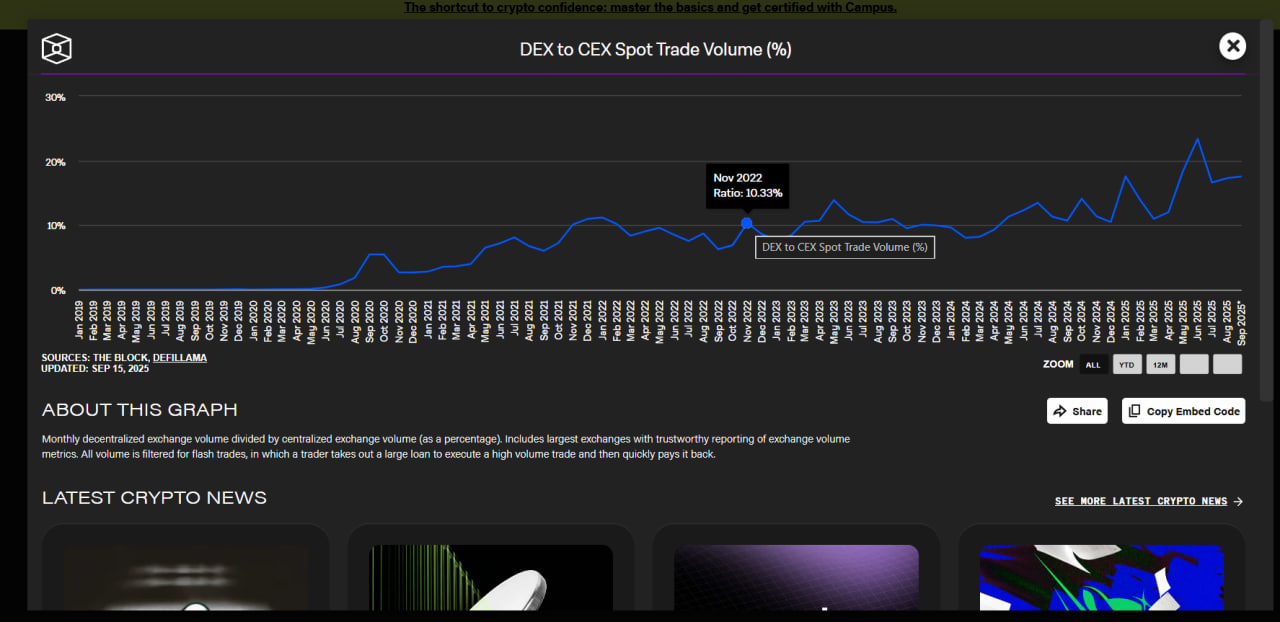
Uniswap was the first platform to allow complete “exchange of tokens” directly on-chain in a fully non-custodial way, without relying on a centralized platform. Then, it was called “token swap”. A year later, this innovative technology gained massive traction after the collapse of FTX.
Now, DeFi tools have expanded beyond DEXs and AMMs. We have seen the rise of lending protocols such as AAVE, decentralized stablecoin protocols like Ethena, and even perpetual DEXs, like Hyperliquid.
This opened up a diverse range of new ways for crypto investors to capitalize on the crypto market, without relying on price speculations and, more importantly, to mitigate risks of using centralized exchanges and lending protocols. This allowed users to gain more stable returns on their capital. But what exactly are crypto yield farming strategies?
In this article, we’ll cover the best yield farming crypto list and the different ways you can earn yield on them.
What is Yield Farming in Crypto?
First, let’s clarify: “What is crypto yield farming?” Yield farming in crypto is a general term for most activities in the Web3 industry that involve earning rewards from crypto protocols. The methods vary across platforms, but they can be divided into five main categories:
Liquidity Provision on DEXs: One of the oldest and most widely used yield farming strategies. The core concept is to deposit funds in token pairs to let the DEX use this liquidity for token swaps. In return users receive a share of the fees generated from those swaps.
Lending: Lend your assets to the specific DeFi platforms, where they can be borrowed by other users. In exchange, you earn a share of the borrowing interest that users pay to the lending platform.
Liquid staking/restaking: Liquid staking and restaking protocols are common for blockchains tokens of which have a large market capitalization, such as Ethereum, Sui, BNB Chain, or Solana. They allow you to participate in the consensus mechanism of the network using your funds as collateral to earn a share of rewards paid by the platform. At the same time, you can use these assets in synthetic form while retaining control over your funds through the yield-bearing liquid staking token, whose value is initially tied to the deposit asset and grows over time.
Delta-neutral strategies: A new type of crypto yield farming, which gained attention in 2024 with the release of Ethena, a synthetic dollar protocol. These strategies let you deposit your stablecoins to provide liquidity, which the protocol uses to implement delta-neutral hedging and funding farming strategies, allowing you to earn the yield.
Revenue-sharing: Another emerging but solid way of earning yield is profit sharing crypto. Essentially, some Web3 projects enable you to earn a share of their revenue by holding or staking their native token.
Now, moving to our list of best crypto yield farming tokens 👇
Top 5 Best Yield Farming Crypto List
To help you better understand which yield farming crypto is best for you, we took into consideration five main metrics, including:
APR: A current APR from the yield farming of the token;
Risk: Any technical-related risks that may result in losing funds (hacks, depegs, etc.);
Token Dump risk: Risk of losing funds when holding a specific token for yield farming purposes;
Token upside potential: The chances for the token to increase in value and bring you additional returns;
Complexity: An assessment of how difficult it is for users to earn yield on this token using the suggested methods.
These metrics will help you not only explore the tokens with APR rates, but also understand which type of yield farming, in terms of risk/reward/complexity, is best for you.
Here’s a comparative table of the top yield farming crypto we picked for this article:
APR
Risk
token upside potential
Token dump risk
Complexity
$HYPE
~50%
Medium 🟠
Medium 🟠
Medium 🟠
High 🔴
$GOOD
~67%
Low 🟢
High 🟢
Medium 🟠
Low 🟢
Stablecoins
~9%
Medium 🟠
No 🔴
Low 🟢
Low 🟢
$BANANA
~6%
Low 🟢
Low 🔴
Medium 🟠
Low 🟢
$SOL
~8%
Low 🟢
Medium 🔴
Medium 🔴
Low 🟢
Now moving to the detailed review.
$HYPE (Hyperliquid) Yield Farming
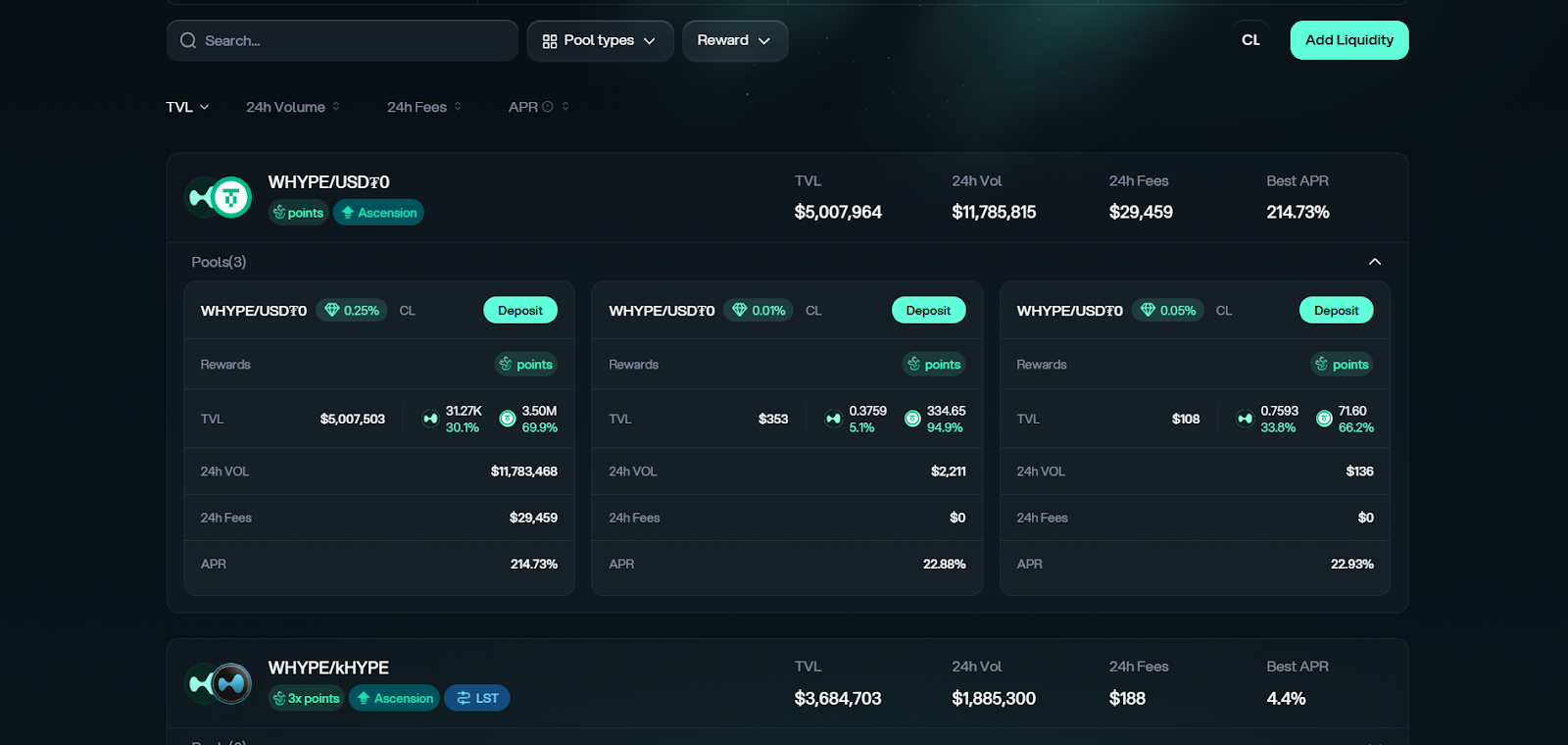
Hyperliquid is a rapidly growing perp DEX and L1 chain with an emerging ecosystem of dApps and DeFi protocols built on HyperEVM. There, DeFi apps offer a solid APR rate for $HYPE/stablecoin pools, as demand for the token is currently high. For example, Hybra Finance provides concentrated liquidity pools on the $HYPE/USDT0 pair with yields of up to 200% APR.
Source: Hybra Finance
Risks:Medium 🟠. While there was no reported exploit within the ecosystem yet, most of the DEXs on HyperEVM are new, which adds to the risks of potential exploits in the future.
APR: High 🟢. Concentrated $HYPE/stablecoin liquidity pools on HyperEVM DEXs could bring you up to 200% APR. However, it is most likely that the “actual return” will be smaller, as the price may often move out of the LP range, leaving you without yield for some time. We suggest expecting an actual APR of around 50-60%.
Token upside potential:Low 🔴. Hyperliquid is currently one of the biggest crypto companies by revenue, part of which is used for token buybacks and burns. However, $HYPE already has a large market capitalization (~$18.4B), which means limited upside potential for the token.
Token dump risk:Medium 🟠. $HYPE is a high market capitalization token backed by millions of the protocol’s revenue. It makes the project “too big to fail.” The token supply also doesn’t like to be dominated by crypto whales, indicating a healthy market for $HYPE. However, considering how most altcoins have performed over the past few years, they remain a risky investment, with a high chance of losing value in the event of a bear market. The token supply also doesn’t look like to be controlled by crypto whales, suggesting healthy market and decent potential
Complexity:High 🔴. Managing concentrated LP farming on volatile pairs requires you to constantly monitor the $HYPE price and deep understanding of how V3 LP works to earn yield consistently.
$GOOD (goodcryptoX) Yield Farming
goodcryptoX is a multi-chain DEX and CEX terminal supporting over 40 exchanges. Its native token $GOOD features a revsharing program for holders with ~67% revshare APR (with auto-compound on). The most impressive part is that less than 20% of the DEX trading functionality has been released so far. This leaves plenty of room for the platform to grow its revenue and, in turn, boost token APR.
Among these is the upcoming Hyperliquid DEX integration, which will make goodcryptoX the first terminal to offer algo trading tools for perpetual DEXes, a move that could significantly boost the platform’s trading volume and revenue.
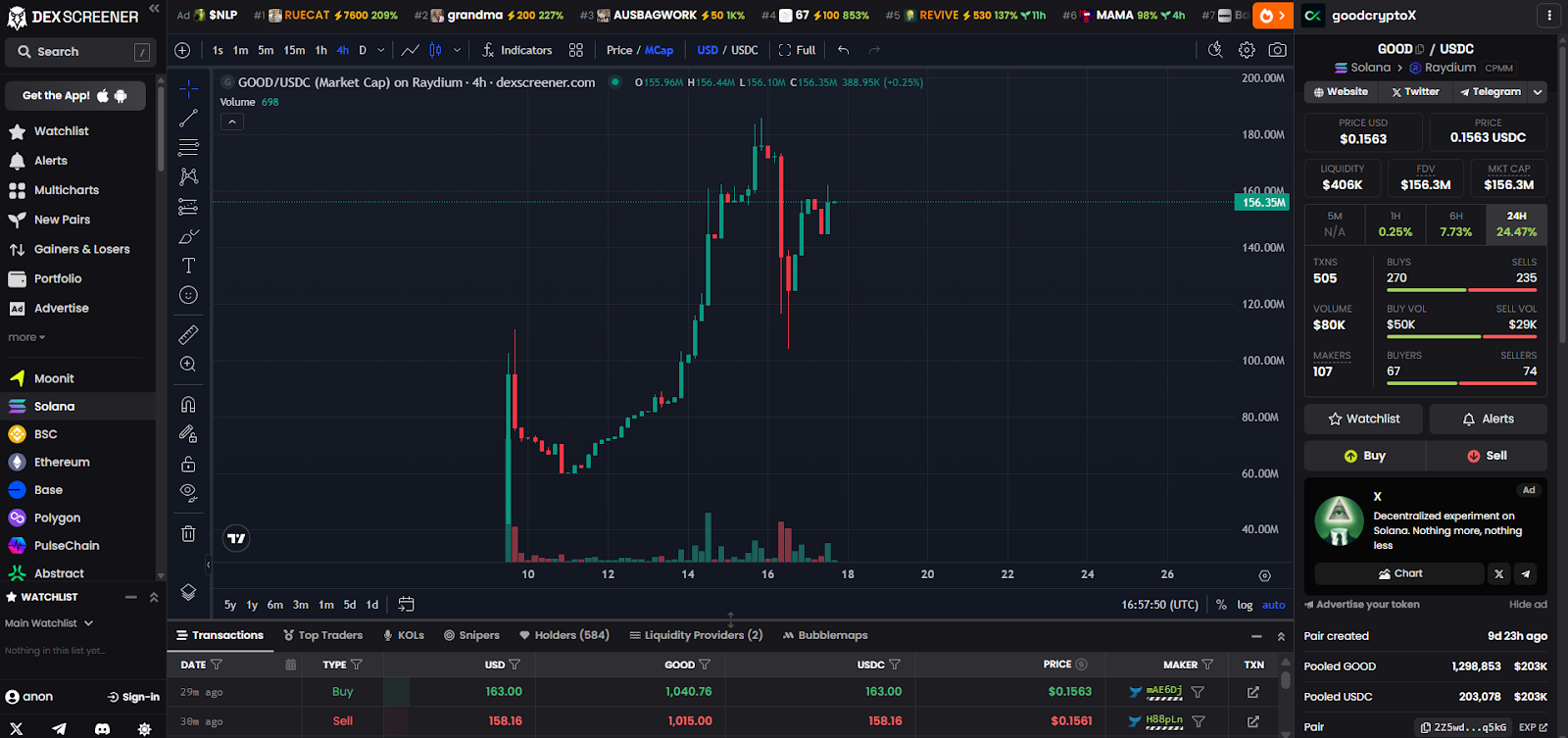
Within the first week of launch, the GOOD token has managed to grow by ~6.77x, as the revshare APR and boosted LP farming yield keep pulling in new investors.
Source: DEXScreener
Risks: Low 🟢. To participate in the goodcryptoX revshare program, all you need to do is hold GOOD tokens in the protocol’s wallet - the only app you’ll ever need is goodcryptoX. The platform itself has also been audited by CertiK, a leading security company in Web3.
APR: High 🟢. The projected APR rate for $GOOD is currently ~67%. But if you turn on auto-compound, your revshare rewards will be automatically converted into GOOD tokens and used in the next revshare epochs, boosting your APR to roughly 67%. What’s more, with upcoming features like the Hyperliquid integration, trading volume, and subsequently revshare APR, is expected to surge.
Token upside potential: High 🟢. GOOD has already delivered an impressive performance, rising roughly 6.77x from its launch price. Yet its market capitalization remains relatively low at around $3M.
Token dump risk: Medium 🟠 . $GOOD has a strong utility, similar to the $BANANA token. What’s more, any insider token allocations will be locked for 6 months at launch, reducing the risks of token dumping.
Complexity: Low 🟢. To participate in the revshare program by goodcryptoX, you have to hold at least 10,000 $GOOD, with no lock, while rewards will be shared daily either in $USDC or $GOOD.
Stablecoin Yield Farming Strategies
Stablecoins are one of the safest options for yield farming crypto. Their prices are tethered to a specific “stable currency” such as fiat or gold (e.g., $USDC, $USDT, $PAXG). This means that when you are yield farming with stablecoins, you are not exposed to the crypto market at all. You do not depend on the market volatility as the price for your stablecoins remains the same in fiat terms. There are two main options for farming yield with stablecoins: staking and liquidity pool farming.
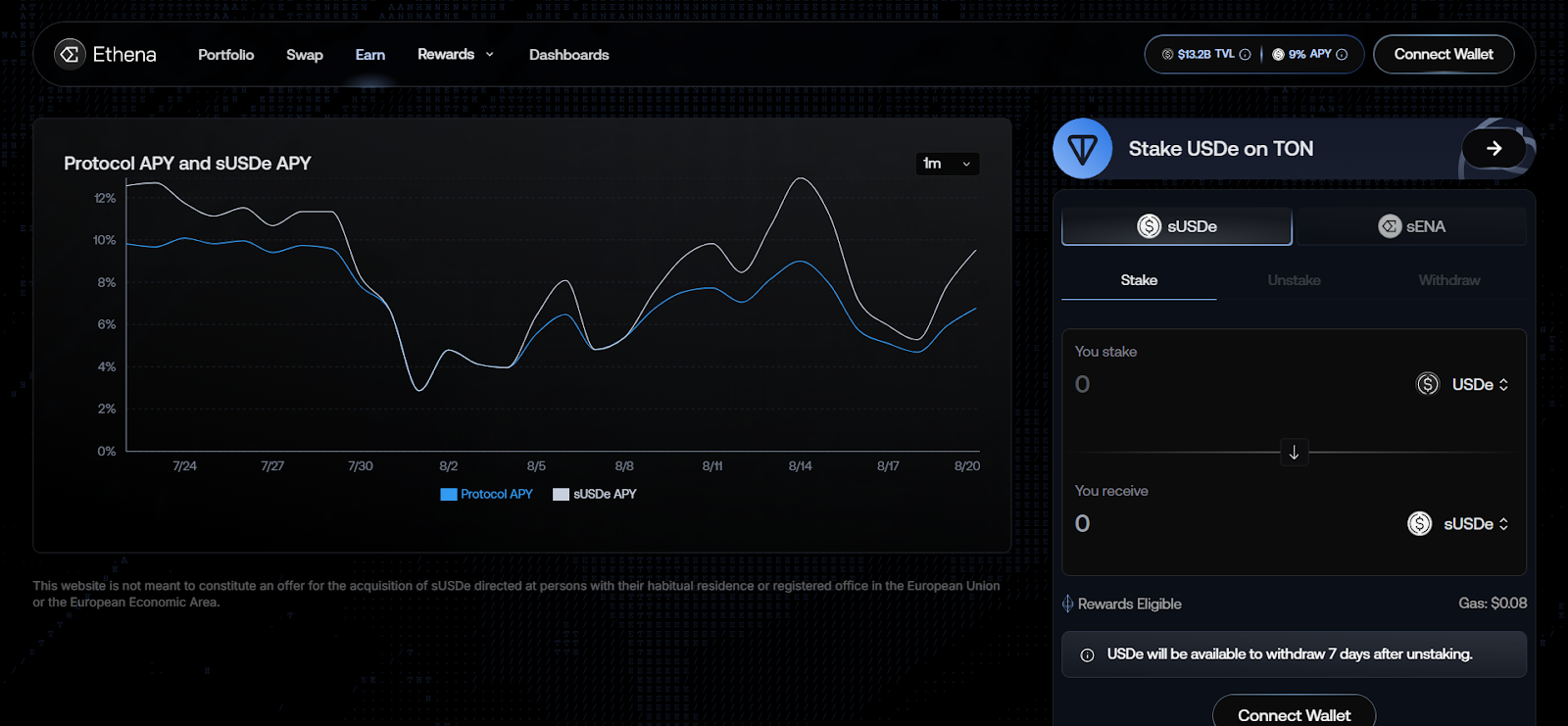
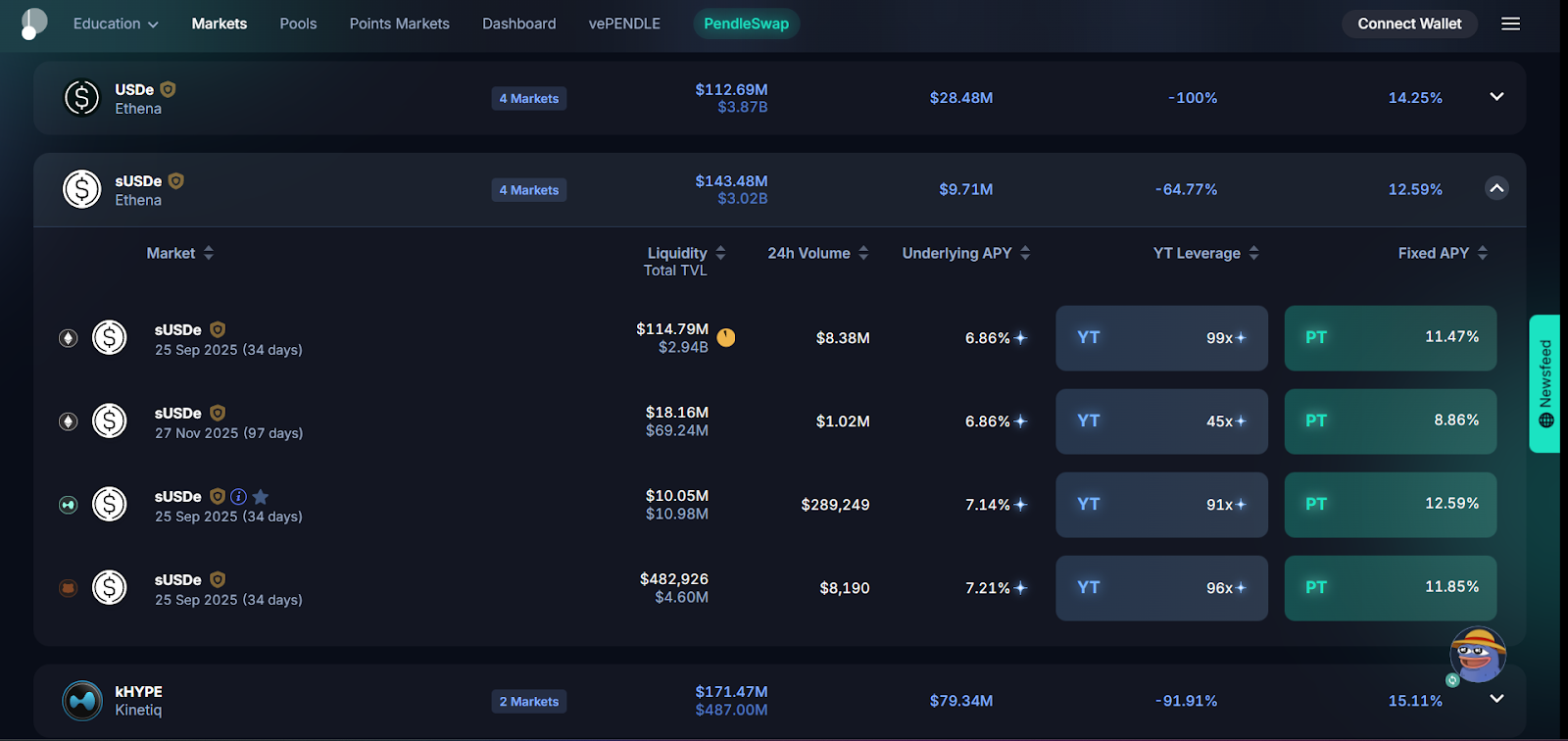
Staking is usually offered by neutral delta-hedging protocols that allow you to stake the stablecoins in return for a yield-bearing, liquid staking version of the token that can be used among other DEXs. The clearest example of it is Ethena’s $USDe. By staking $USDe, you can start earning ~9% and receive back $sUSDe, a LST version of the token.
Source: Ethena
It can also be deposited in DEXs, such as Pendle, to get an additional APR of ~12%, at the time of writing.
Source: Pendle
However, when using such extended staking routes, you are exposed to the risk of exploits across multiple protocols at once, such as Ethena and Pendle. Additionally, when staking $USDe, you allow the protocol to use it in its delta-neutral strategy, which means that in the event of protocol liquidations, you could incur losses.
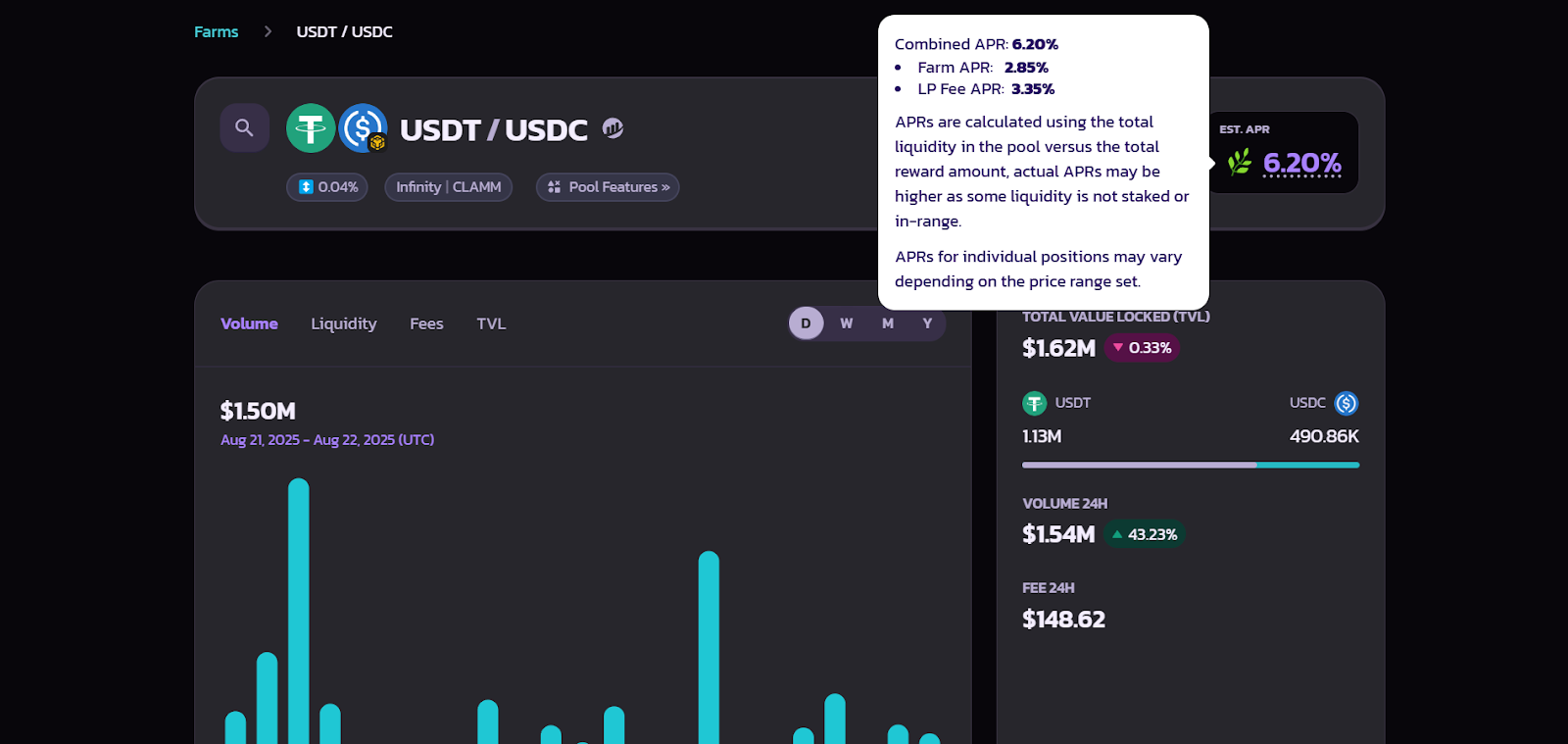
Liquidity pool farming is another option to put your stablecoins to work. The core idea is to deposit funds into a “stablecoin-stablecoin” token pair on-chain and earn a share of fees. This way, you are carrying less risk, compared to staking stablecoins, but earn a lower APR. For example, the $USDT/$USDC liquidity pool on Pancakeswap generates around ~6% APR.
Source: Pancakeswap
APR:Medium 🟠. Usually, stablecoins yield farming rates are lower than those for more “volatile” crypto assets.
Risk. Medium 🟠. Yield farming stablecoins with liquidity pools is considered one of the safer ways to earn yield. The main risks include potential protocol exploits and the risk of the stablecoin losing its peg to fiat. Therefore, it’s important to carefully evaluate both the protocol and the stablecoin you choose for yield farming.
Token upside potential:None 🔴. Stablecoins are pegged to a specific asset, which means they cannot appreciate in value over time. Moreover, as the underlying fiat currency experiences inflation, the stablecoin is also subject to inflation, in other words, its real value decreases.
Token dump risk: Low 🟢. Stablecoin prices are always tied to another currency, which means there’s no risk of the token significantly losing its value.
Complexity: Low 🟢. Yield farming stablecoin is a user-friendly option for putting your money to work. Usually, you don’t need to monitor and manage your yield farming positions.
$BANANA (Banana Gun) Revenue Share Yield Farming
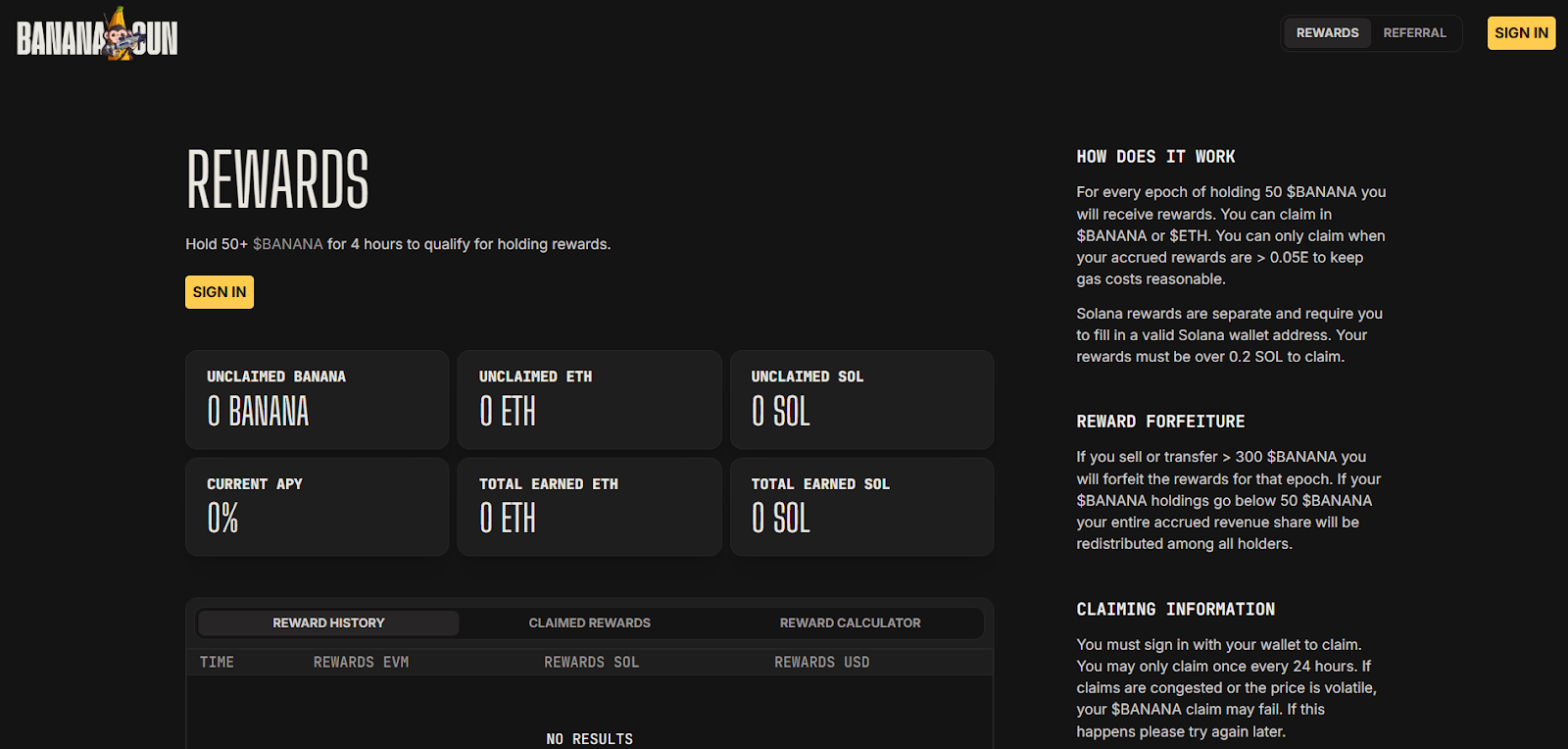
Banangun is a cross-chain DEX trading terminal with a utility token $BANANA, that offers a new way of earning yield through revenue-sharing. The platform distributes 40% of the revenue generated from DEX swap fees to users who hold at least 50 $BANANA (~$1,100 at the time of writing) in their Web3 wallet.
Source: Bananagun
Risks: Low 🟢. You do not interact with any protocol when participating in the Bananagun revsharing program.
APR: Low 🔴. According to the Dune Analytics dashboard, the average $BANANA APR is around ~6%.
Token upside potential: Medium 🟠. $BANANA has some upside potential as it isn’t even in the top 300 cryptos by market capitalization. However, the $BANANA token is already the largest revenue sharing crypto by market cap in the DEX trading terminal industry. This makes it harder to attract new buyers and push the token price higher.
Token dump risk: Low 🟢 . The token has a relatively large market capitalization, reducing the risk of whale-induced sell-offs. At the same time, $BANANA’s strong utility helps support its price during market dips. Since the revshare APR depends on both the platform’s trading volume and the token price, any price correction naturally increases the APR, pulling in new buyers.
Complexity: Low 🟢. To participate in the Bananagun revshare program, you only need to hold 50+ $BANANA tokens (~$1100). It is one of the simplest and user-friendly types of yield farming.
$SOL (Solana) Yield Farming
$SOL is a utility token of the Solana blockchain, one of the largest alternative L1 chains and “Ethereum killer”. It offers quite a decent $SOL yield farming rate of around 7%-10%.
You can also expand your Solana yield farming strategy by using Solana liquid staking or restaking protocols. These allow you to generate the same yield as from Solana staking, while keeping your funds liquid in the form of LST or LRT and farm airdrops from liquid staking/restaking protocols.
The most successful example of Solana yield farming is Solayer. Shortly after its mainnet launch, Solayer enabled users to earn an 8% APR from SOL restaking while depositing their LRT into the Sonic SVM chain. Both protocols later rewarded early users with airdrops, providing Solayer restakers with additional returns on top of their staking yield.
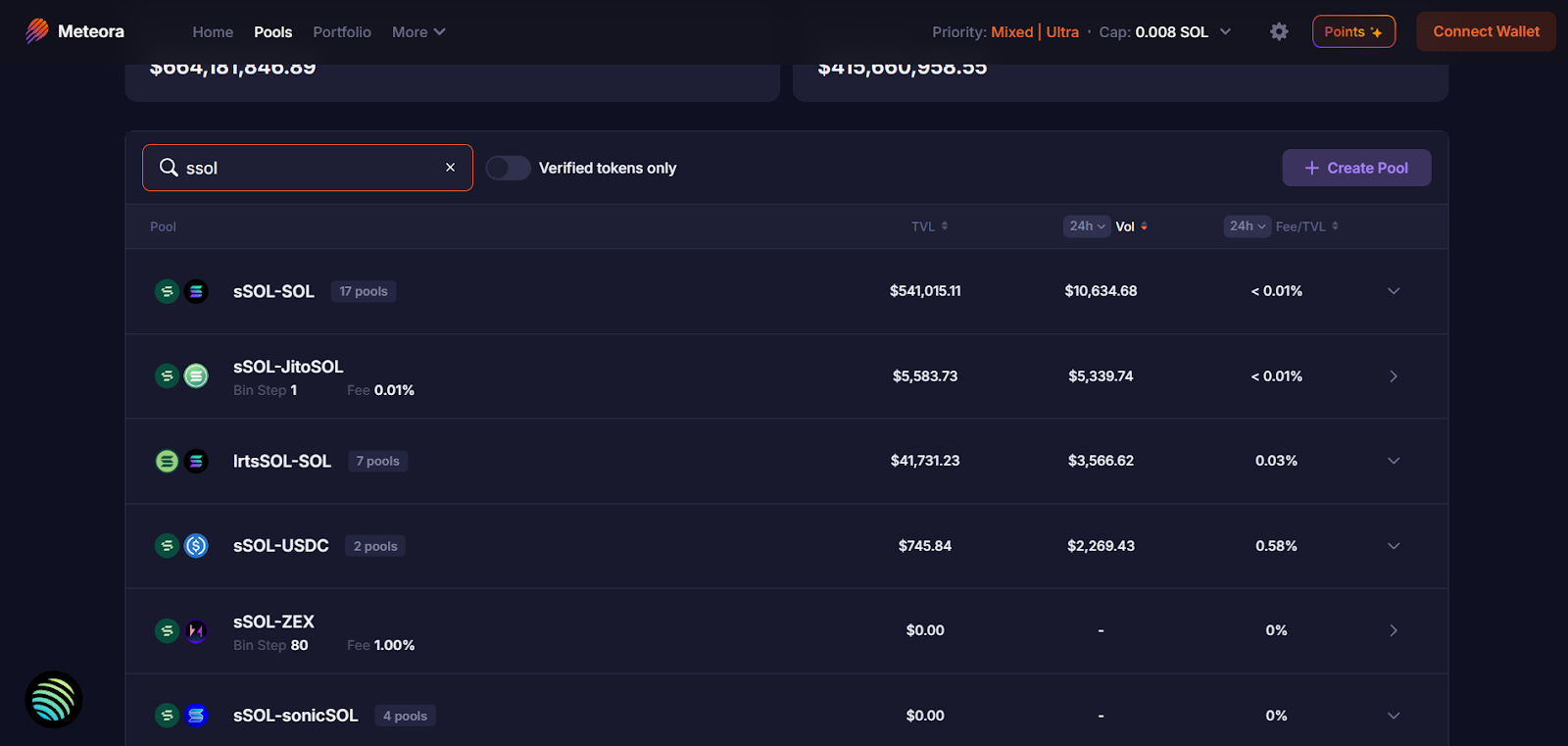
What’s more, you can add those LSTs or LRTs to the DEX protocols, for example, Meteora Finance, to get an additional yield from Solana DeFi yield farming there, and farm airdrops from those DEX protocols.
Source: Meteora Finance
Risks: Low 🟢. Native staking is one of the safest options to earn yield on-chain. However, if you use liquid staking protocols, the risk increases as there’s always a chance for LSTs to depeg.
APR: Low 🔴. Solana staking brings you a not high annual return of about 6-10%.
Token upside potential: Low 🔴. Solana chain is one of the most actively used chains due to the ongoing on-chain trading season, which garners massive attention for the $SOL token. At the same time, it is already in the top 5 cryptos by market capitalization (~$130B), which limits its upside potential.
Token dump risk: Medium 🟠. SOL is the sixth-largest cryptocurrency by market capitalization, making it one of the “too big to fail” projects. However, even major cryptocurrencies are not immune to sharp corrections when market sentiment turns bearish.
Complexity: Low 🟢. Staking is one of the simplest ways of earning yield on-chain. However, if you switch to liquid staking, it might complicate the process.
Conclusion: What’s the Best Yield Farming Crypto?
As you can see, there’s no perfect token for yield farming in crypto, which means the final decision of which crypto to farm is up to you. To help you make a decision, we created five major metrics to consider when selecting the best token from our list. However, you can always take into account more factors that may be personally important for your yield farming strategy.
That said, based on our five metrics, the best crypto yield farming option currently is the $GOOD token and $HYPE with its rapidly growing ecosystem. It offers the highest APR with the simplest type of crypto yield farming and relatively small token downside risk. On top of that, its market capitalization at launch and strong utility indicate high upside potential, which could provide additional returns on top of the yield farming income.