May 2026 failed to provide the crypto market with a clear direction. Investor activity was spread across different crypto narratives, while the broader market remained weak: the Fear & Greed Index stayed in the fear zone, capital continued to flow out of Bitcoin ETFs, and local rallies were often followed by sell-offs.
At the same time, individual sectors continued to attract attention. HYPE surged alongside the growth of Hyperliquid, ZEC brought privacy coins back into focus, ONDO reacted to developments around tokenized stocks and the DTCC, and VVV (Venice AI) emerged as one of the month’s leading AI tokens.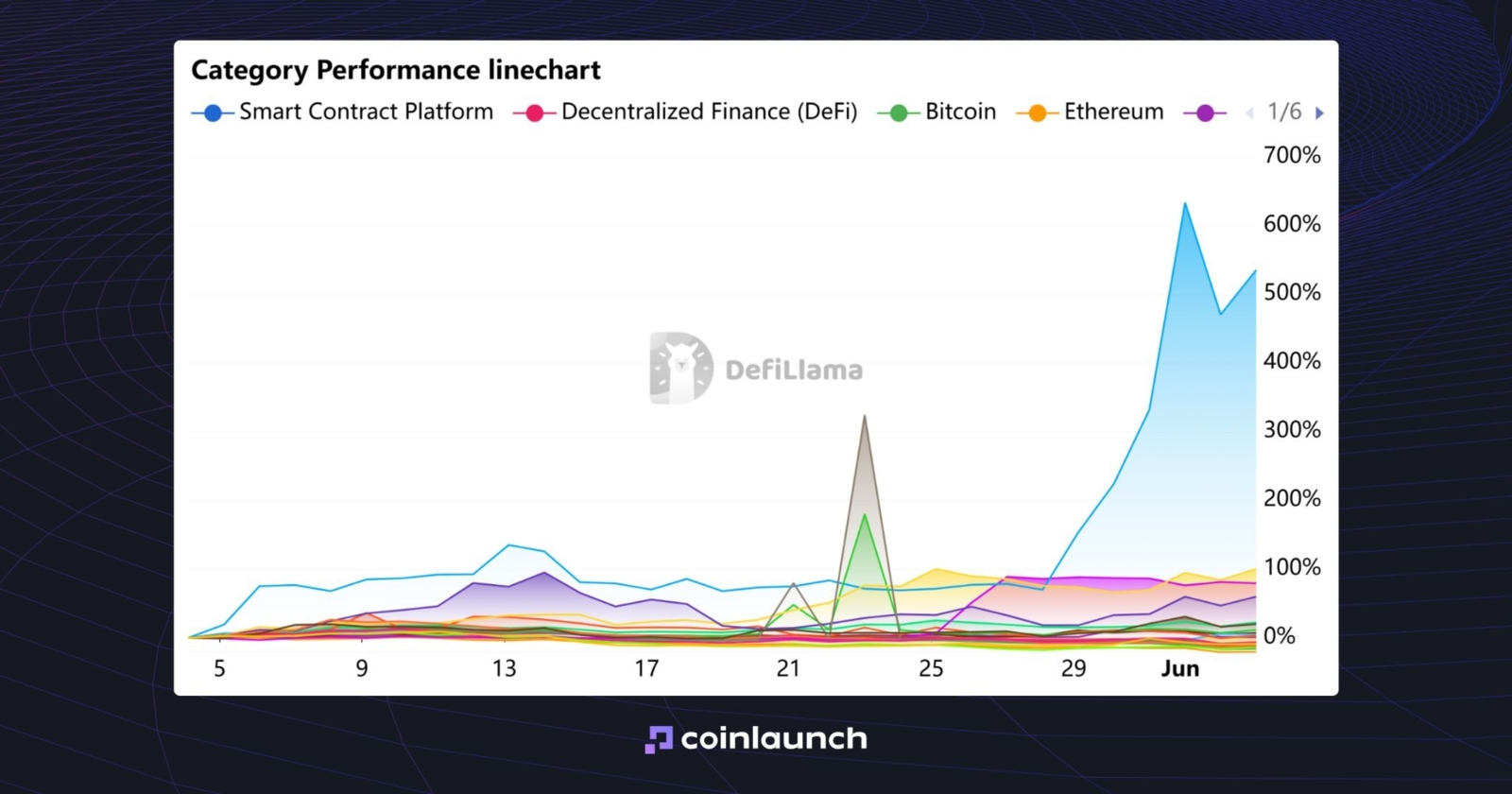
MCap-Weighted Category Performance. Source: defillama.com
It would be inaccurate to say that the market simply rose or fell in May. The main crypto tendency was rotation across separate clusters. Therefore, it is more important to look not at the crypto industry as a whole, but at specific segments: which tokens attracted the most demand, which projects launched, and where venture capital flowed.
In this report, we break down the main crypto narratives of May: token launches, fundraising rounds, top performing altcoins, key events, DeFi activity, and early-stage projects worth keeping an eye on.
Market Overview: What Happened in Crypto Today
May 2026 was marked by an unstable recovery. The market was not in a full-blown bear phase or consolidation, but it also did not transition into the long-awaited altseason. No one knows for sure what happen in crypto today, as the market still lacks a clear direction.
As of May 29, the total crypto market cap stood at around $2.5 trillion, and the Crypto Fear & Greed Index was at 34. The market remained cautious rather than euphoric: traders still showed risk appetite, but not enough to hold risky positions for long.
Throughout the month, there were regular large liquidations, outflows from BTC ETFs, and discussions surrounding Iran and the Strait of Hormuz. The rise of certain assets was quickly followed by the fall of others, and strong movements were more often concentrated in specific segments and tokens rather than across the entire market.
Current crypto narratives are centered around a small number of sectors:
- HYPE gained traction amid interest in Hyperliquid and its buyback mechanism. The token is up 52% since early May.
- VVV confirmed interest in AI infrastructure. The asset gained 80% in May
- ZEC brought privacy coins back into the spotlight. The coin surged 65%, hitting a new all-time high of $676 in May.
ONDO and related RWA assets rose on news about tokenized equities. ONDO posted a 40% gain in May.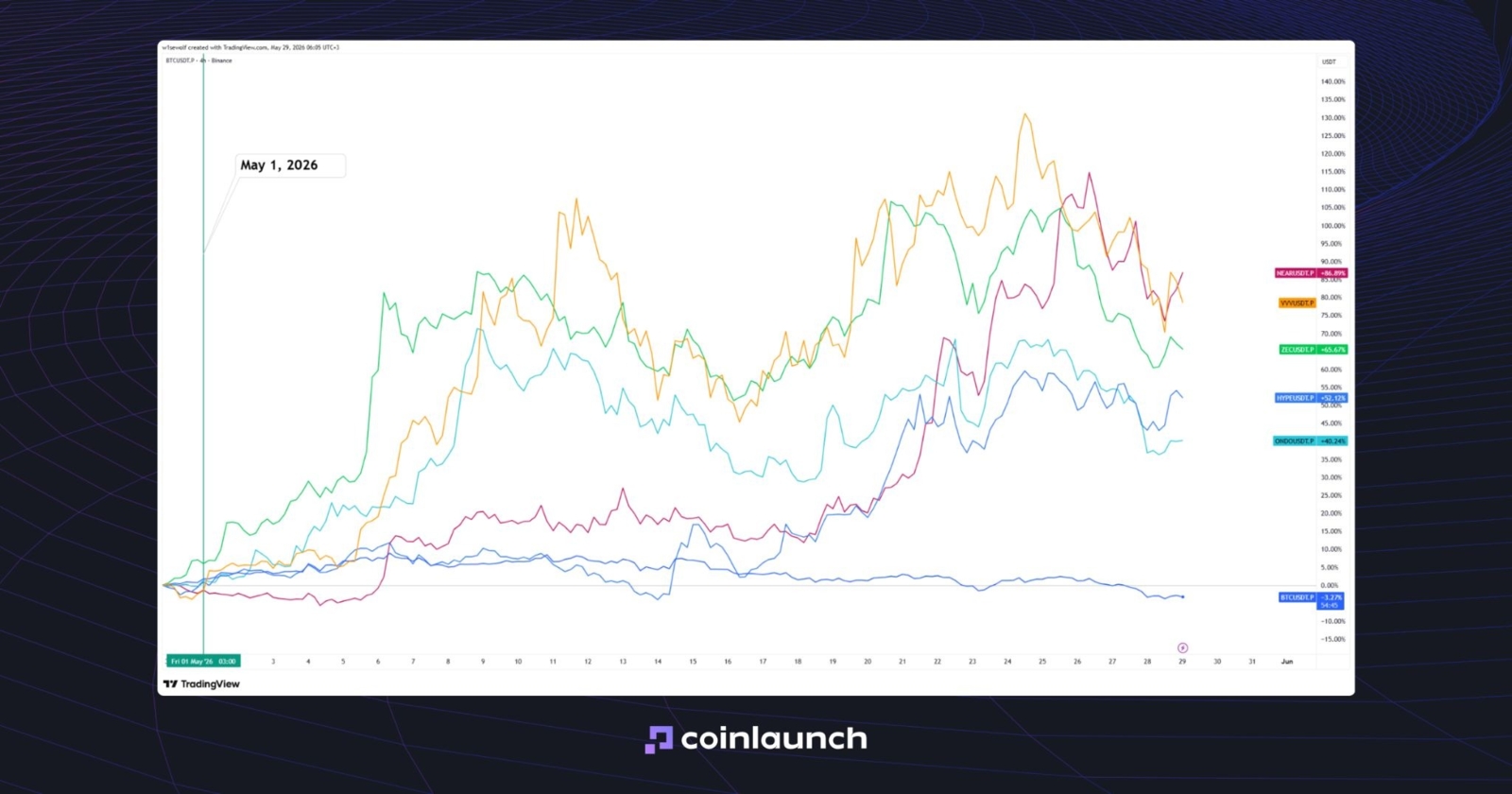
Price performance of the most significant tokens in May vs. BTC. Source: tradingview.com
The defining feature of May was sector rotation. Even the hot narratives in crypto failed to maintain a firm grip on investor interest. The market shifted rapidly between on-chain trading infrastructure, privacy, AI, RWA, stablecoin yield, the Solana/Mantle/MegaETH ecosystems, airdrops, and early farming campaigns.
New Crypto Launches: MEGA, BILL and AIGENSYN Lead May Crypto TGE
May TGEs revealed the dark side of the market. Some token launches looked like orchestrated Pump&Dump schemes: supply was concentrated among a small group of investors, followed by a rapid CEX listing and a sharp sell-off after launch. A similar pattern appeared around LAB Terminal.
The token had been trading since October 2025, but drew renewed attention after allegations of market manipulation. ZachXBT accused the project of opaque OTC deals, changes to vesting terms, coordination with a market maker, and unclear circulating supply.
The LAB price is currently $17.50, marking a new ATH.
The two main new crypto launches in May were MEGA and BILL. They showcased two different sides of the same market: a hyped launch backed by a strong brand, and a less high-profile crypto TGE, for which the market had not yet built up anticipation.
MEGA launched on April 30, but the bulk of its price action occurred in May. MegaETH entered the month as one of the most anticipated launches of the year: an Ethereum L2 focused on high-performance execution, with strong pre-market interest and a clear technical track record.
In addition, the project raised $37.73 million from DragonFly Capital, Vitalik Buterin, and Santiago R. Santos. According to CoinLaunch, the sale’s ATH ROI is 22.49x.
But following the Mega ETH token launch on тApril 30, 2026, the token failed to meet expectations: MEGA traded at an FDV of over $800 million after launch, even though its pre-market valuation had reached $2 billion FDV. The reason lay not only with the project but also with the sector: in May, traders were unwilling to buy yet another L2 token based solely on a technical thesis.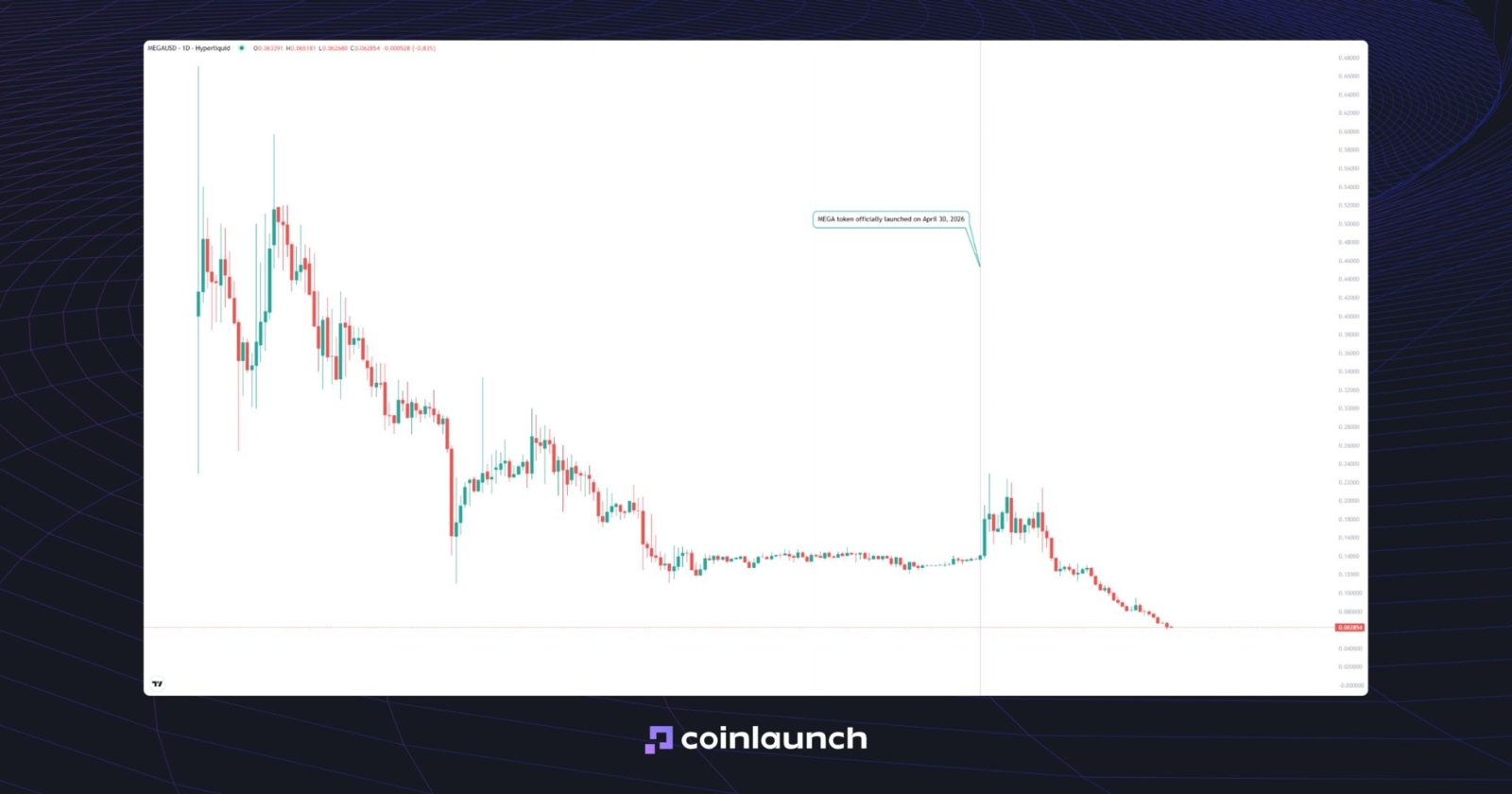
MEGA price chart before and after the TGE. Source: hyperliquid.xyz
BILL (Billions Network token ticker) presented the opposite scenario. The project did not enter the market with the same level of hype, so the token had more room to move. In August 2025, the team raised $30 million in a private round led by Polychain Capital and Coinbase Ventures. ATH ROI is 11.6x.
BILL launched below a $600 million FDV, then surged roughly 4x to nearly a $2.4 billion FDV, and subsequently corrected by 50%.
This does not make BILL fundamentally stronger than MEGA, but it shows that in May, the market was more receptive to less crowded launches with lower initial valuations. Those who knew where to find new crypto launches likely invested in both projects. With proper risk management, they were still able to earn a moderate return.
To stay ahead of new crypto coin launches, follow our platform. The CoinLaunch team monitors the market 24/7, selects projects, and publishes analytical reports on each one.
AIGENSYN, the Gensyn token, is also worth noting. The project launched in late April but received a Binance spot listing in May. After the listing, the token surged 66% to an FDV of more than $500 million before beginning to decline. ATH ROI is 1.79x
Not every TGE turns into a successful launch. Some projects launch with inflated marketing, a weak product, or signs of a scam. ZachXBT described this pattern: if a project is promoted by questionable KOLs rather than actual builders, there may be no real technology behind the hype.
For example, SLX launched on Binance Alpha on May 25, 2026, and lost more than 40% of its value in the first few hours as airdrop recipients immediately began selling the token.
Although the token later rallied nearly 3x and reached a new ATH ROI 2.3x by June 1, 2026, most of those gains have since been erased. It is now trading only 11% above its TGE price. So, a listing, a marketing campaign, and community attention do not guarantee demand.
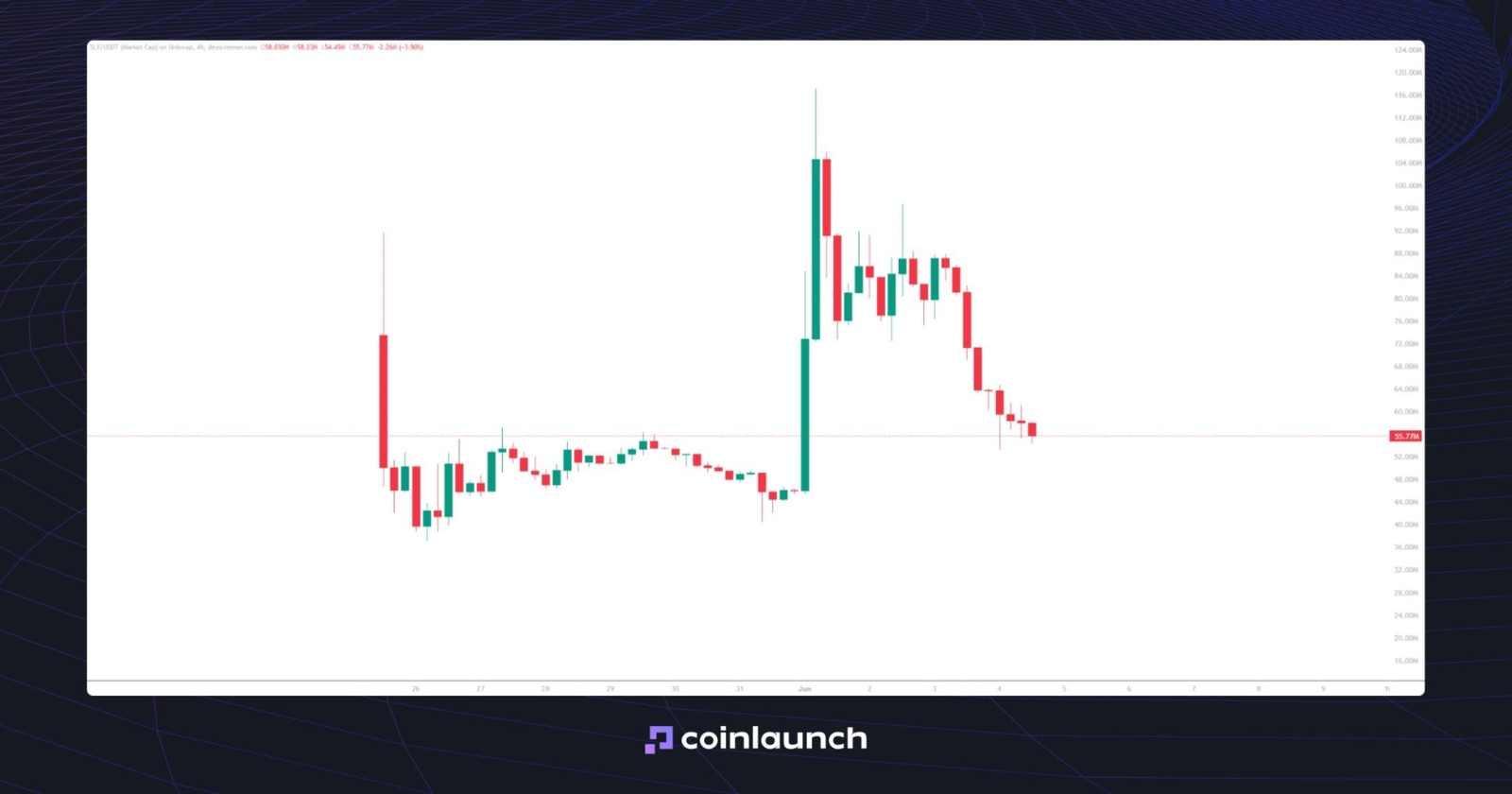
SLX price chart on the D1 timeframe. Source: dexscreener.com
It is important to look at the data before a sale: the team, investors, tokenomics, sale terms, unlock schedules, and similar launches. CoinLaunch collects this data in one place and adds projects to its upcoming list only after analyzing the profile, public information, and market metrics.
Highest Crypto Funding Rounds
The crypto funding rounds in May did not signal a mass return of crypto venture capital. Funding remained targeted, flowing into stablecoin infrastructure, on-chain derivatives, real-world assets (RWAs), and payments.
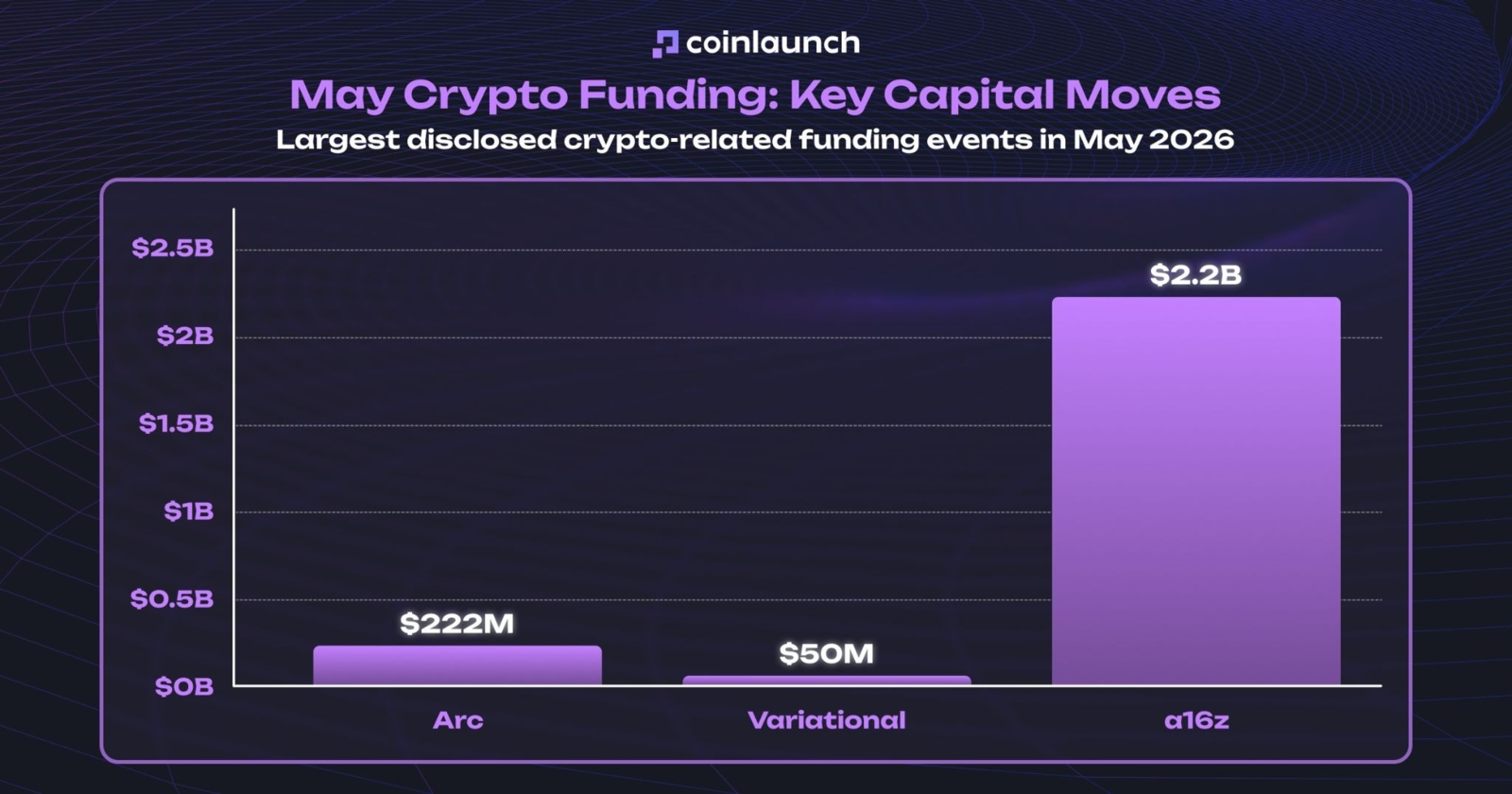
May Crypto Funding: Key Capital Moves. Source: coinlaunch.space
The largest crypto-related funding round was raised by Arc. The project raised $222 million at a network valuation of approximately $3 billion. Arc is built as a stablecoin-focused blockchain for institutional finance: settlements, payments, and USDC integration within financial products.
Variational was the second major case. The perpetual DEX raised approximately $50 million in a Series A round led by Dragonfly, with participation from Bain Capital Crypto and Coinbase Ventures. The project focuses on on-chain derivatives and RWA markets, including perpetual contracts tied to commodities such as oil, silver, copper, and gold.
Separately, a16z announced Crypto Fund 5, a new $2.2 billion fund for crypto startups. In other words, major venture capital firms continue to look to crypto.
Top Crypto Gainers: HYPE, ZEC, VVV and ONDO
The list of top crypto gainers for May includes HYPE, ZEC, TON, VVV, ONDO, INJ, JTO, and STRK. Rather than covering all of them, we’ll focus on a few notable examples: HYPE, ZEC, VVV, and ONDO.
HYPE was one of the crypto top gainers of the month. On May 14, news broke that USDC would become the default quote asset on Hyperliquid, with part of the yield from USDC reserves routed to the protocol. This could add roughly $150 million to Hyperliquid’s revenue.
On the back of this news, HYPE rallied from $39 to $47 in less than a day and later reached a new all-time high (ATH) of around $62.
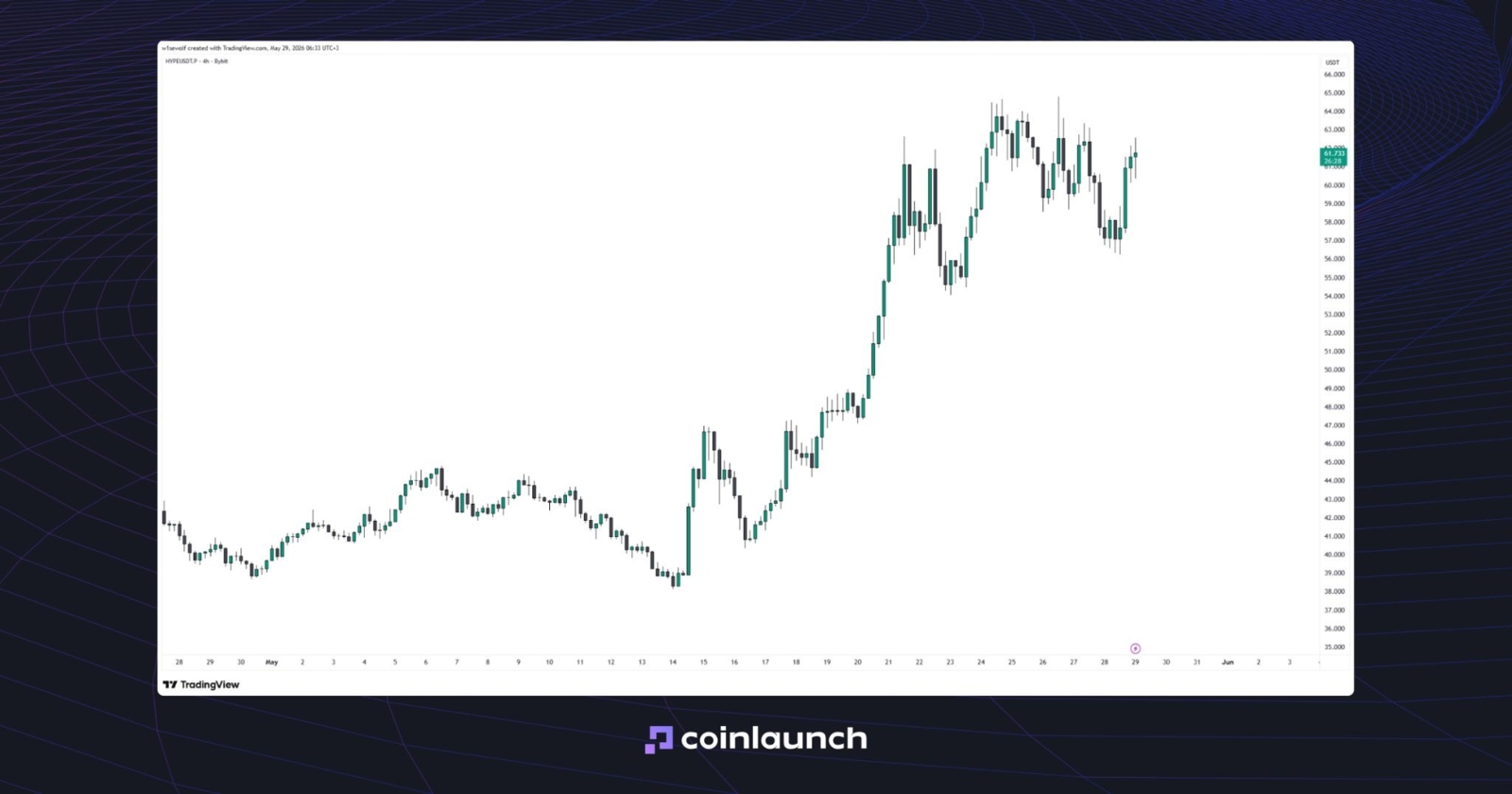
HYPE price chart for May 2026. Source: tradingview.com
ZEC brought privacy coins back into the spotlight. In the first week of May, the Zcash rally nearly doubled the token’s price, from $340 to $640. The momentum quickly spread to related privacy-focused assets: DASH rose 70%, while DUSK has nearly doubled over the past two months.
VVV became the leading AI performance case. In April, the token consolidated below $10 for several weeks, then surged to $18 within a week after breaking out. On May 12, VVV received an Upbit listing, triggering a crypto short squeeze that pushed it to $19.5 before the token dropped 33% to below $13.
IO, AKT, and NEAR were also active in the same AI cluster.
ONDO showed how the RWA narrative can drive momentum through news. On May 4, the project announced that it had joined the DTCC Industry Working Group on tokenization services for U.S. capital markets.
Following this, ONDO broke through its three-month resistance level around $0.29 and rose approximately 70% over the course of the week. The token then corrected by 30% before gaining new momentum on expectations of an SEC innovation exemption for tokenized stocks.
May also saw many short squeezes: SAGA rose 250% in a single day, NIL by 150% in a day, BABY roughly doubled in two days, and B3 surged 8x from its monthly low to high. Most of these moves quickly retraced.
Top Crypto Narratives List in May 2026
It is best to analyze May’s top crypto narratives through specific catalysts. Significant price movements appeared where three factors converged: news, sector, and a liquid token.
This month’s crypto narratives list includes Hyperliquid and on-chain trading infrastructure, privacy coins, tokenized stocks and RWA, AI x crypto, and stablecoin yield. Each one played out not through a single event, but through recurring patterns: token growth, new products, listings, funding rounds, farming opportunities, and regulatory news.
Hyperliquid and Onchain Trading Infrastructure
HYPE emerged as one of May’s top performers. The token’s rise was driven by a series of key developments: USDC integration, anticipation of a buyback mechanism, growth of the Assistance Fund, expansion of the active validator set, and the launch of pre-IPO markets, RWA perps, and outcome markets.
In May, Hyperliquid expanded beyond the traditional perp DEX model: a pre-IPO market for SpaceX, outcome markets, prediction markets settled in USDC, RWA perps, and an expansion of the active validator set from 24 to 27 validators. Hyperliquid HIP-3 markets are particularly noteworthy: weekly open interest in RWA perp markets reached $2.6 billion.
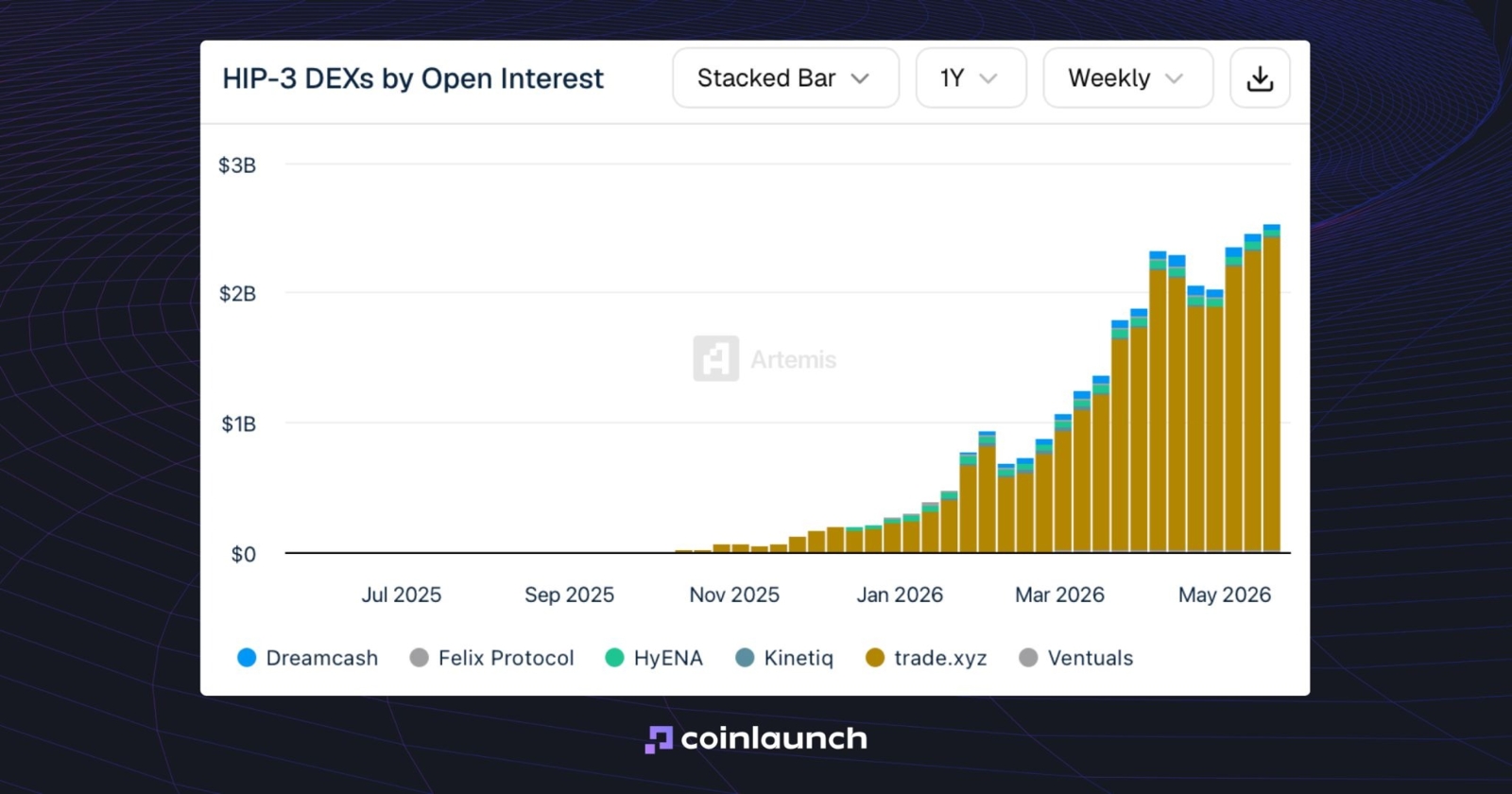
HIP-3 DEX by Open Interest. Source: artemis.ai
In addition, Circle announced that USDC would become an Aligned Quote Asset on Hyperliquid and remain the primary collateral asset for HIP-1, HIP-2, HIP-3, and HIP-4 markets. Following this, the market began pricing in more USDC-based settlements on Hyperliquid and potential support for the buyback mechanism.
As a result, HYPE traded not as a typical perp DEX token, but as an asset with several simultaneous catalysts: HIP-3 volumes, new market types, USDC settlement, the Assistance Fund, and the expansion of Hyperliquid’s infrastructure.
Crypto Privacy Narrative: Top Privacy Coins and Zcash Rally
The ZEC rally became the main catalyst for the crypto privacy narrative in May. In the first week of the month, the token nearly doubled, rising from $340 to $640. After that, attention shifted to other privacy coins: DASH gained about 70%, and DUSK roughly doubled over two months.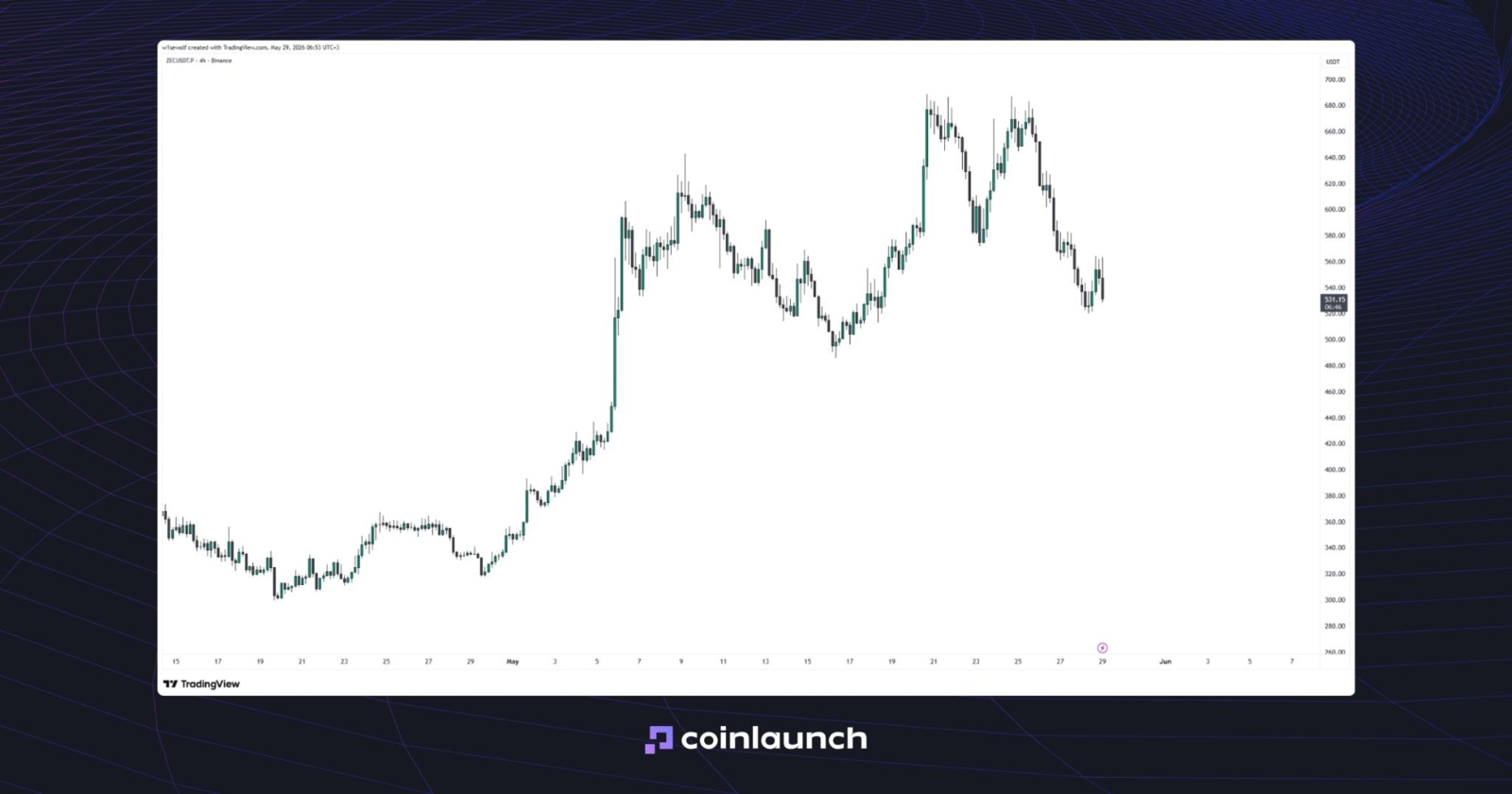
ZEC price chart for May. Source: tradingview.com
This was not a new story for the market. Privacy coins have been around for a long time, but in May, the sector regained liquidity thanks to strong price action in ZEC. Traders initially bought the market leader, then began looking for related assets with a similar thesis and smaller market capitalization.
Separately, the privacy narrative supported the overall tone of the month. Posts about Zcash transactions, privacy coins to watch, and the 2026 ZEC thesis began appearing on crypto Twitter. Additionally, NEAR was developing Confidential Intents.
In May, privacy was an old narrative with new momentum. The market was not creating a sector from scratch. It re-evaluated a familiar theme after ZEC’s strong rally and shifted some attention to DASH, DUSK, and projects with privacy features.
Tokenized Stocks and RWA
The RWA sector was fueled in May by a series of news stories from traditional finance. The DTCC announced the development of a DTC tokenization service and a working group comprising more than 50 companies. Ondo announced that it had joined this group to promote tokenization in U.S. capital markets. Following this, ONDO gained momentum and once again became one of the key tickers for the RWA narrative.
At the same time, major financial players continued to test on-chain solutions:
- JPMorgan worked on a tokenized money market fund on Ethereum.
- Coinbase developed perpetual-style equity index futures.
- Mastercard received approval to operate a stablecoin in New York.
- SoFi launched its own crypto stablecoin.
- Japan discussed accepting foreign crypto stablecoins as legal tender.
The tokenized assets market cap was roughly $1 billion–$1.6 billion, while the broader RWA market stood around $33 billion–$34 billion. Compared with the overall crypto market, this is still a small sector. But in May, it reacted quickly to news that gave investors concrete reasons to buy RWA tokens again.
AI x Crypto: AI Agents, VVV and NEAR Lead the AI Crypto Narrative
The AI crypto narrative in May was driven by two key areas: liquid tokens and agent infrastructure. The main first-layer AI tokens were VVV, IO, AKT, NEAR, TAO, and RENDER. VVV became the clearest price-action case: after breaking through $10, the token rose to $18 in a week, squeezed up to $19.5, and then pulled back below $13.
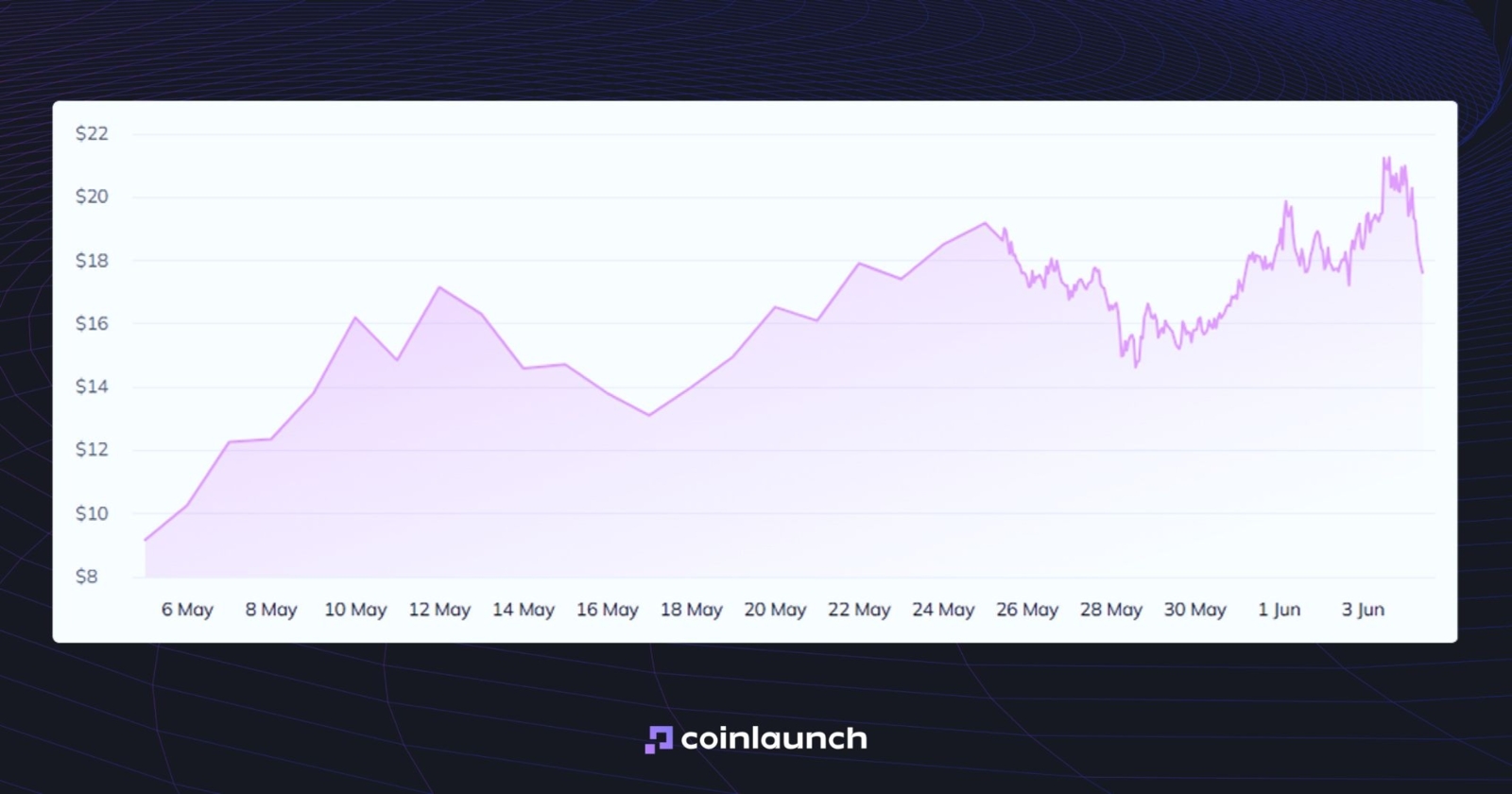
VVV price chart. Source: coinlaunch.space
The second layer was crypto AI agent infrastructure: autonomous agents, the AI landscape on Base, agent memory, early protocol research, and Hermes as a real-time analyst.
In this context, NEAR looked the strongest. Following NEARCON, the project promoted Intents, Confidential Intents, NEAR AI Cloud, Private Chat, Agent Market, and a confidential GPU marketplace. According to the project, NEAR Intents already supported 39 blockchains, processed approximately 20 million transactions worth $15 billion, and generated $26 million in fees.
What to Expect From Crypto in the Coming Months
At the start of summer, Hyperliquid remains one of the top crypto trends to watch. Key metrics include USDC yield, RWA perpetual markets, pre-IPO exposure, prediction markets, growth in the validator set, and the potential reaction from regulators. If product development continues, HYPE will remain one of the leading assets.
AI agents are also expected to be part of upcoming crypto narratives. If VVV, NEAR, AKT, and agent tooling continue to develop, AI could become the next big crypto narrative: not as another AI coin pump, but as an infrastructure, automation, and research stack.
New narratives usually emerge through crypto catalysts: early applications built around strong ecosystems. Among the potentially interesting new projects are PaperTrade and Hypezion; Piggybank, OpenFi, AquaFlux, and Eva Markets; Monolith Market and Xeno Money; Brix Money and Nerona.
DYOR!
Crypto Market Summary: What May’s Narratives Say About the Market
May did not produce a single dominant market trend. However, liquidity remained strong within individual sectors. The key takeaway from May is that the market was buying catalysts, not categories.
Overheated TGEs and L2 narratives looked weaker. MEGA showed that a project’s popularity does not guarantee demand for its token if the market has already grown tired of the sector or its valuation. Therefore, May is best described not as the start of sustained growth, but as a market of rapid narrative rotations, where attention shifted to themes with clear catalysts, liquidity, and the potential for continued momentum.
May also saw an uptick in Pump&Dump schemes. LAB served as the prime example: the project came under heavy scrutiny after ZachXBT alleged opaque OTC deals, insider supply control, market maker coordination, and other practices pointing to price manipulation. Similar risks exist in tokens that launch via rushed TGEs and aggressive exchange listings, such as BILL.
Traders must exercise extreme caution with both long and short positions in such assets. When supply is highly concentrated and price action is dictated by a handful of players, predicting the token's next move becomes nearly impossible.