June was not a fully bullish month. On the contrary, for most of the month, crypto traded like a risk asset: first, prices came under pressure from uncertainty around the end of the U.S.-Iran conflict, and later from interest rate expectations, spot Bitcoin ETF outflows, and weakness around Strategy. June felt like a market hangover: the party was over, but the headache was still there.
Crypto narratives are not just buzzwords on X. They are themes around which the market gathers liquidity, attention, and new trades. Sometimes a narrative begins with a token. Sometimes it starts with an IPO, a security vulnerability, a regulatory decision, or a product that gives traders a new way to trade an old idea.
June’s crypto market narratives today trending sectors were not limited to a single direction. The market rotated between SpaceX and tokenized stocks, Strategy and the Bitcoin treasury trade, the Zcash vulnerability, stablecoins, Hyperliquid prediction markets, and Solana memecoins.
Current Crypto Narratives: June Was Risk-Off, But TradFi-Led Stories Took Over
If you thought early summer in crypto was boring, chances are you were sipping cocktails by the pool instead of trading. In June, several market events unfolded at the same time:
- BTC fell below $60,000;
- BTC monthly trading volume reached approximately $990 billion.
- ETH was once again trading around mid-2025 levels;
- The Fear and Greed Index dropped into the “extreme fear” zone;
- Strategy first time sold BTC in an attempt to recover its STRC stock;
- TradFi and SpaceX IPO ironically were the most-watched events in the space.
To sum up June 2026, at the center of current crypto narratives were Strategy and its first Bitcoin sale in several years, the Zcash vulnerability, SpaceX’s record-breaking IPO, pre-IPO perpetuals, tokenized stocks, HYPE, stablecoins, and a new wave of Solana memecoins after the launch of ANSEM.
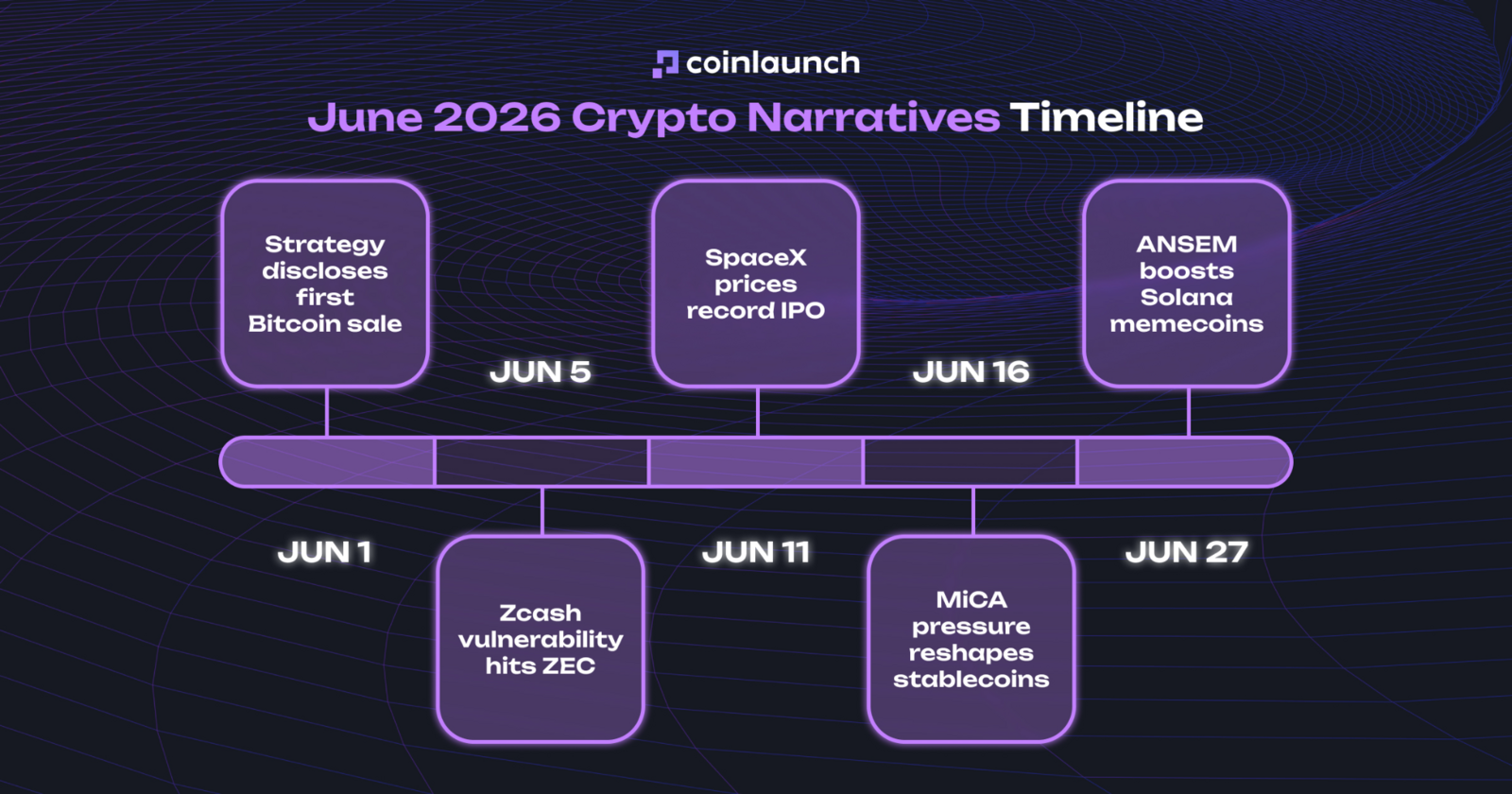
June 2026 crypto narratives timeline. Source: coinlaunch.space
SpaceX became an example of how the crypto market is trying to trade Wall Street events faster and more freely than the traditional market. Strategy showed that the Bitcoin treasury narrative is no longer seen as a “buy-only” story. Zcash reminded the market that privacy coins depend not only on demand for privacy, but also on the technical security of the projects behind them. ANSEM brought attention back to Solana memecoins and set the trend for creator fees and airdrops.
The list of new crypto narratives 2026 for June was not limited to a single sector. The news cycle moved quickly from one event to another. In this article, we’ll look at which topics became the main narratives of June and how they affected the market.
New Crypto Launches and Market Products: SpaceX, SPCX and Tokenized Stocks
June’s new crypto launches featured not only tokens but also tokenized stocks, primarily TradFi assets, with SpaceX as the highlight. In just one month, major exchanges added about 170 crypto listings and 602 stock listings. For example, Bitget listed 452 new instruments, with 432 being stocks and just 20 crypto. Binance added 94 instruments: 58 stocks and 36 crypto pairs. OKX had a more even split: 85 crypto listings and 77 stock-related instruments.
Hyperliquid leaned most heavily into TradFi: of its 36 new markets, 35 covered stocks, indexes, or commodities, with only a single crypto addition.
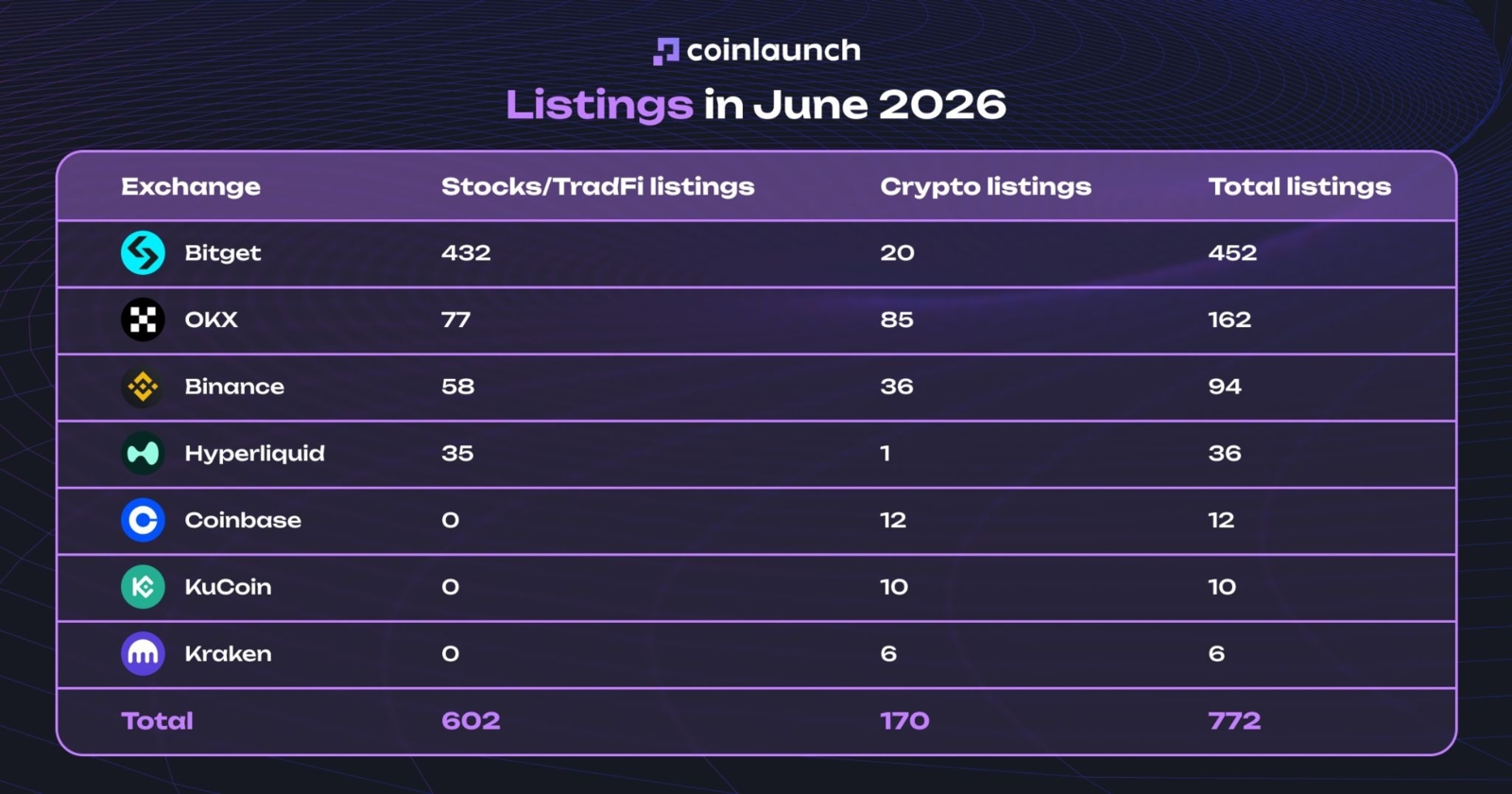
Source: goodcryptoX listing alerts
Everything in the crypto market built around SpaceX IPO: pre-IPO perpetuals and the ability to give retail traders exposure to shares without needing a Wall Street brokerage account.
SpaceX (SPCX) priced its IPO at $135 per share and raised $75 billion. For the traditional market, this was a record-breaking IPO. For the crypto market, it marked the first trading of one of the largest tokenized stocks.
Markets formed around SPCX. On Hyperliquid, Binance, Coinbase, and other platforms, traders were trading pre-IPO perps: derivatives based on the future price of SpaceX stock. These were not actual shares, nor were they tokenized securities with ownership rights. The contracts did not give traders an ownership stake in SpaceX. They simply allowed them to trade the potential SpaceX stock price even before trading began on Nasdaq.
From May 17 to June 10, SpaceX pre-IPO perpetuals generated approximately $3.2 billion in volume across eight exchanges, with $2.1 billion of that coming from Binance over 18 days. At its peak, the SPCX price was above $200, although the SpaceX IPO price was $135. Before the listing, the price pulled back to around $160.
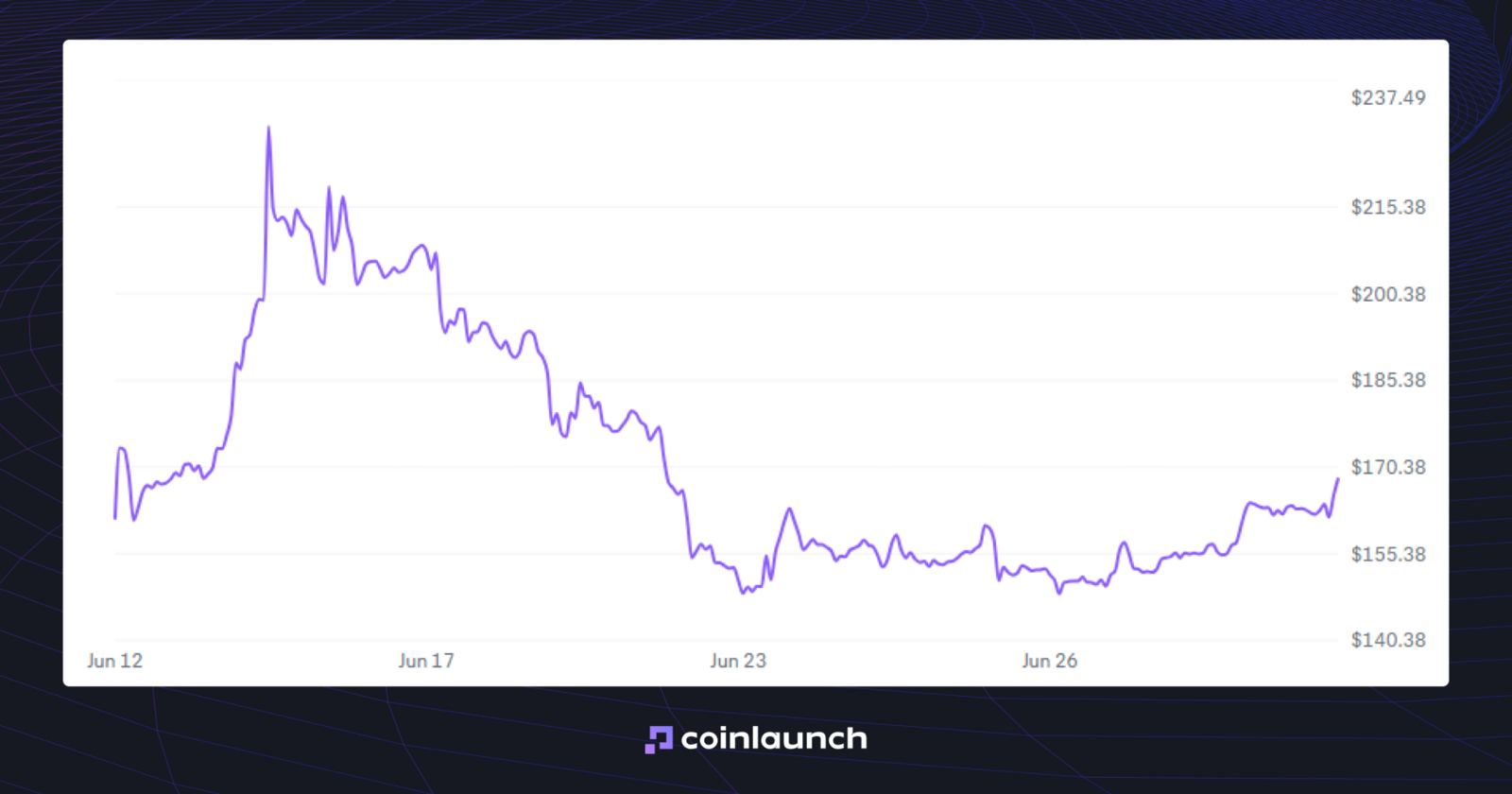 SpaceX (SPCX) price chart before and after the IPO. Source: kraken.com
Kraken also became a talking point in the community. The exchange opened access to the SpaceX IPO for clients in more than 110 regions through xStocks. After allocation, users were supposed to receive SPCXx, a 1:1-backed tokenized representation of SpaceX equity. Bybit also announced access to tokenized IPOs, starting with SpaceX.
The launch also revealed a weakness in the market. Binance Wallet, Bybit, and Bitget Wallet later canceled some of the SpaceX pre-IPO offerings and refunded users because they did not receive the underlying shares through xStocks. The problem was access to the underlying asset.
Despite this, tokenized stocks became one of the leading new crypto products 2026.
Highest Crypto Funding Rounds: Canton, Morpho, Framework, Allium
In June, crypto funding rounds were mainly focused on institutional DeFi, RWA infrastructure, tokenized finance, and blockchain data infrastructure.
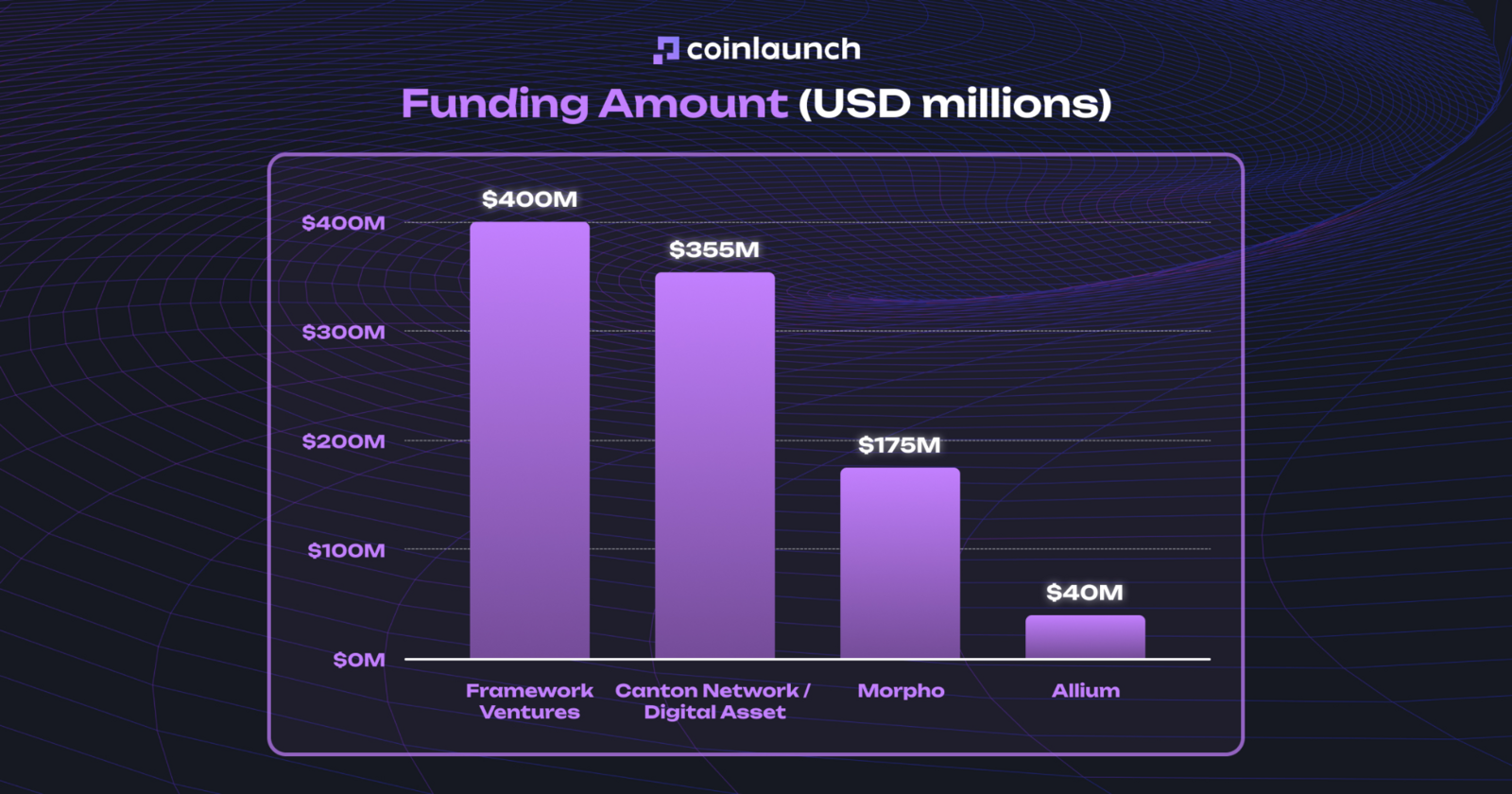
Highest crypto funding rounds in June. Source: coinlaunch.space
The largest funding round came from Canton Network. Digital Asset, the company behind Canton, raised $355 million, driving the project to a massive market capitalization of approximately $5.49 billion. The round was led by a16z crypto, with participation from Coinbase Ventures, Polychain Capital, HSBC, BNP Paribas, CME Ventures, and other players from the traditional finance (TradFi) and crypto markets.
This was not a typical crypto startup funding round. Canton is developing a technology foundation for regulated financial markets: tokenized assets, private transactions between institutions, and on-chain capital. So Canton Network funding fit into June’s broader trend, where tokenized stocks and private market exposure became one of the main topics.
The second major funding round went to Morpho. The lending protocol raised $175 million at a valuation of approximately $2 billion. The round was led by Paradigm, Ribbit Capital, and a16z crypto. Other participants included Apollo Funds, Circle Ventures, VanEck, Ledger, and other investors.
This round demonstrates that institutional DeFi has not disappeared following past cycles. Today, investors are developing the crypto lending market through infrastructure, market creation, and access to on-chain credit.
Framework Ventures did not lead a project funding round. Instead, it raised $400 million for its new fund. Framework is best known in crypto for DeFi and crypto VC funding, but the new fund focuses on AI, robotics, energy, fintech, and blockchain infrastructure.
Another similar crypto fundraising story was Allium funding. Allium raised $40 million in Series B funding to scale its blockchain data infrastructure for institutional clients.
UPD: On July 1, Venice AI raised $65 million in a Series A round at a $1 billion valuation. The round was led by Dragonfly, with participation from Coinbase Ventures, North Island Ventures, and other investors.
Top Crypto Gainers and Losers: HYPE, AAVE, ZEC, ANSEM, MSTR/STRC
Among June’s top crypto gainers, HYPE took the lead. The project saw a sharp rise in popularity due to the buzz around SpaceX pre-IPO perpetuals. On IPO day, SpaceX perps generated about $1.4 billion in trading volume on Hyperliquid and accounted for roughly 30% of total HIP-3 trading volume during the session. Against this backdrop, the HYPE price rose by about 10% over the day.
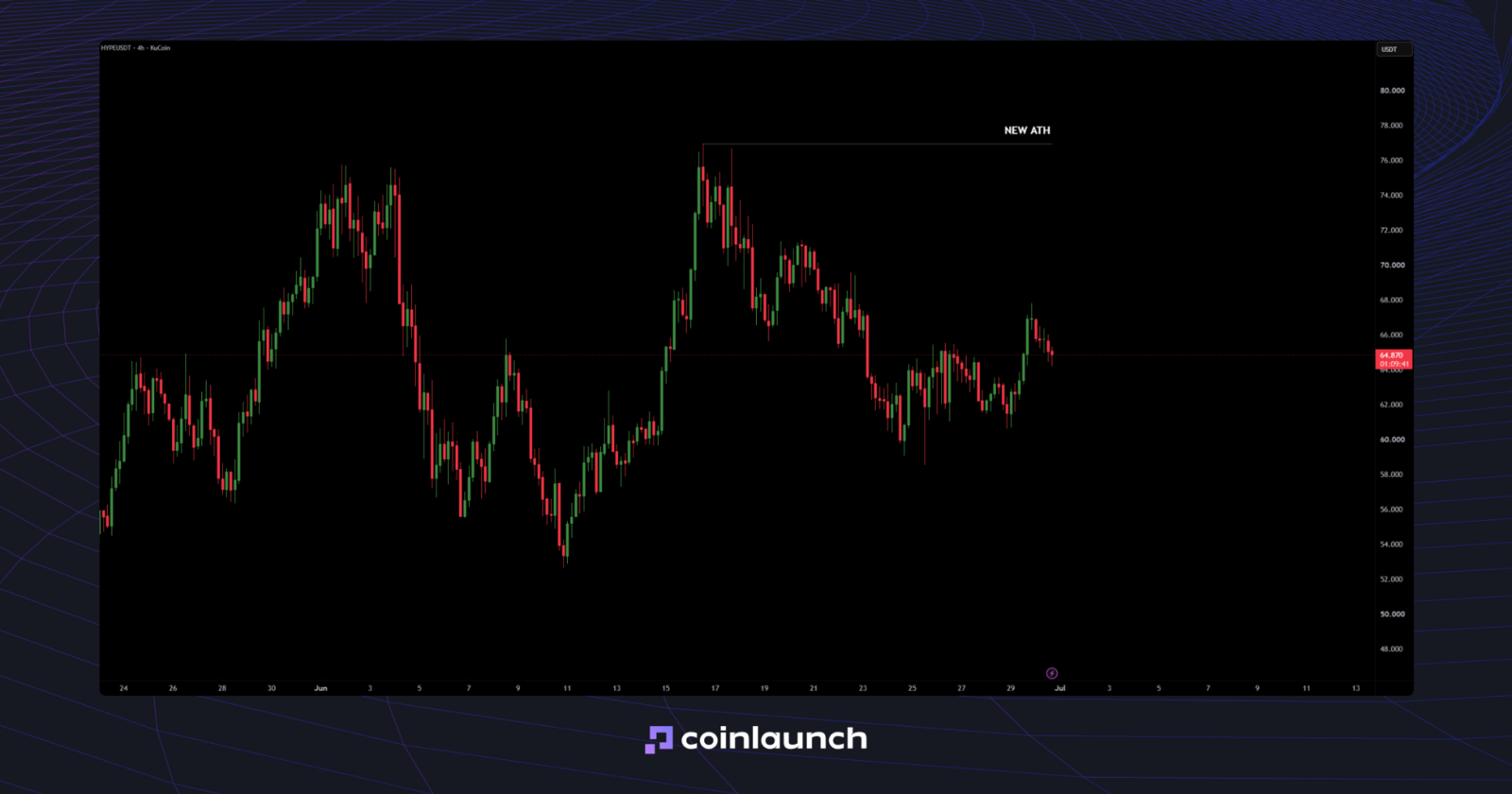 The price of HYPE reached a new all-time high in June 2026. Source: tradingview.com
AAVE also made the list of top crypto gainers. The token rose amid renewed interest in DeFi and news around Aave as a lending protocol: AAVE jumped 19% in 24 hours, while BTC held steady around $60,000 after the sell-off. Additional interest came after reports that Kraken was exploring a strategic investment in an Aave-related entity, while Standard Chartered released a bullish case for AAVE, projecting the token’s price to reach $3,500 by 2030.
ANSEM brought fresh attention to Solana memecoins. ANSEM crypto surged nearly 20x in a week after blogger Ansem promised to distribute creator fees through weekly airdrops. Its 24-hour trading volume exceeded $80 million, while FDV peaked at approximately $189 million.
 ANSEM’s market cap reached a record $189 million. Source: dexscreener.com
ZEC was the biggest loser of the month. The Zcash price plunged after the Orchard vulnerability was disclosed. The bug could have allowed an unlimited number of counterfeit ZEC to be created within a shielded pool.
Read more: Zcash Vulnerability Dumps ZEC by 60%
The team fixed the vulnerability, but because of Zcash’s privacy mechanisms, it is impossible to cryptographically prove whether it was exploited before the fix. As a result, most Zcash news headlines pushed a negative narrative. ZEC is currently trading about 40% below its pre-incident level.
Investors were also watching the MSTR stock price and STRC. Strategy sold 32 BTC for approximately $2.5 million to fund dividends on STRC. Although the sale was small, the fact itself was significant for the market. This time, the Bitcoin treasury narrative faltered.
Top Crypto Narratives List in June 2026
Looking at launches, funding rounds, and growth leaders, one conclusion stands out: June’s top crypto narratives were not concentrated in a single sector. The market saw activity around IPOs, tokenized stocks, Bitcoin treasury companies, privacy risks, on-chain derivatives, and a new format of memecoins at the same time.
So it is better to view the June crypto narratives list not as a simple list of trends, but as a set of events that attracted liquidity and attention. Below, we’ll take a closer look at the top crypto narratives of 2026 that had the biggest impact on the market in June.
SpaceX IPO, Pre-IPO Perps and Tokenized Stocks
The SpaceX IPO was one of June’s major events, not only for crypto but also for traditional finance: Musk’s private company entered the market with a valuation comparable to the world’s largest public companies.
SpaceX filed documents with the SEC and set the SpaceX IPO price in advance at $135 per share. This differed from a traditional IPO, where the price is usually determined after a roadshow and the collection of bids from major funds. The company had planned in advance to sell approximately 555.6 million shares and raise $75 billion.
In addition, SpaceX allocated about 30% of the offering to retail investors. For an IPO of this size, this was an unusual move: institutional investors usually receive the largest allocations, while retail investors enter the market after trading has already begun.
SPCX began trading on Nasdaq on June 12. The stock opened at around $150, above its IPO price, and rose even higher during the first trading session. By the end of its debut, SpaceX’s market capitalization exceeded $2 trillion. Later, as the stock continued to rise, market participants began comparing the company not only to Tesla, Nvidia, and Apple, but also to Bitcoin.
At its peak, SpaceX’s market capitalization exceeded Bitcoin’s. At the same time, Elon Musk’s net worth rose above $1 trillion following the IPO. Forbes named him the first trillionaire in history, and most of his wealth is now tied to SpaceX.
Against this backdrop, SBF became a topic of discussion on X again. Before FTX’s collapse, Alameda and its affiliated entities had made venture bets on Anthropic, SpaceX, Cursor, Robinhood, Solana, and other assets. If the bankruptcy had not happened, these venture bets could have been worth tens of billions more. After the SpaceX IPO, this topic went viral again in the community: SBF had identified and closed deals with 100x return potential.
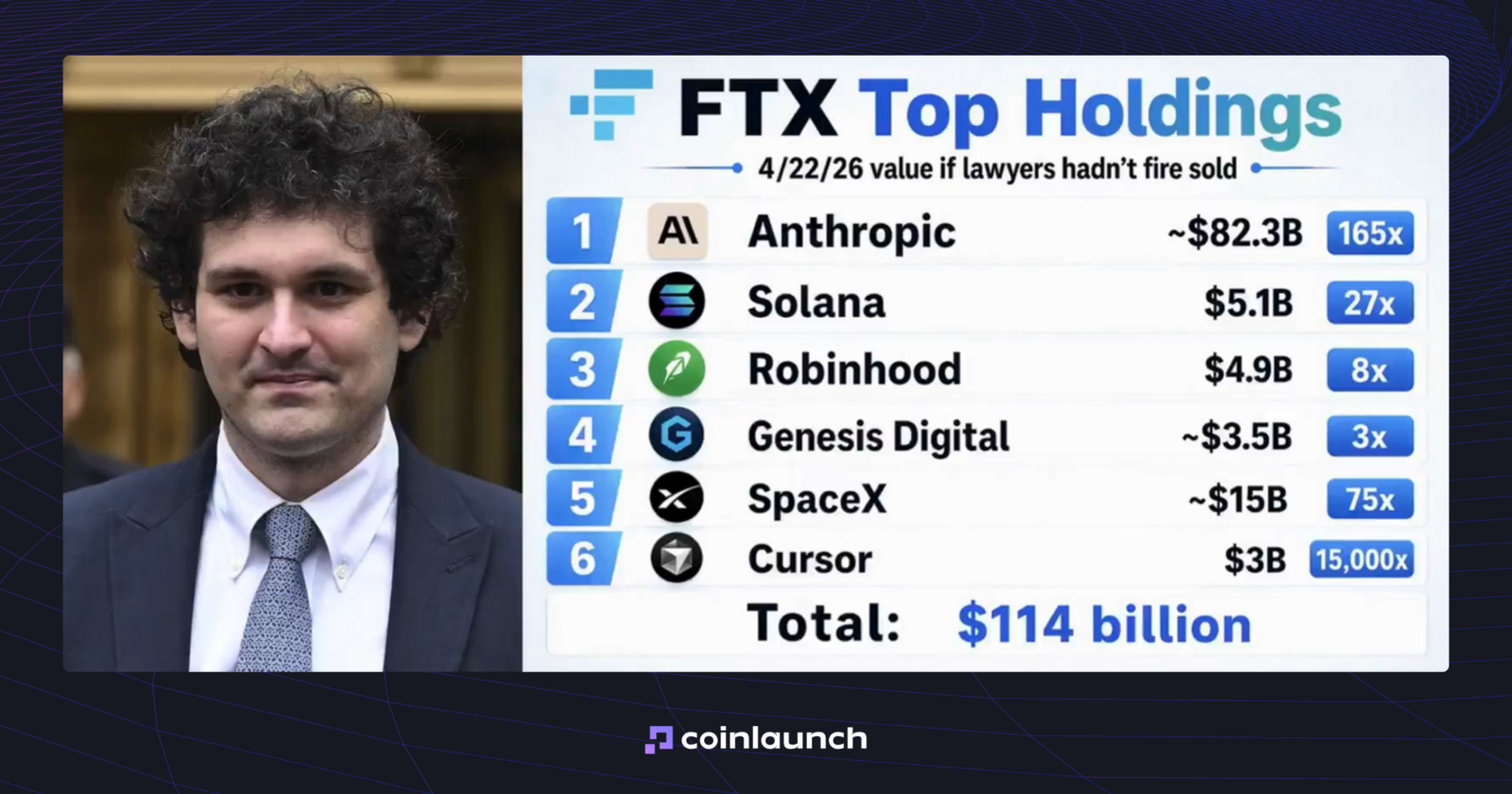 Potential value of FTX’s largest holdings if they had not been sold after the bankruptcy. Source: x.com
So the SpaceX IPO became part of the crypto narrative. The market gained a new target for speculation: SpaceX stock, SPCX, tokenized stocks, pre-IPO exposure, and the idea that the next big new crypto product might not be a new coin, but access to the stock market.
This access was made possible in part by xStocks. Kraken, Bybit, and Bitget provided access to SPCXx via the protocol.
However, Kraken was the only platform to receive an allocation of SPCXx, as it owns xStocks. This strengthened its position in bringing IPO access to Web3. On July 1, 2026, Kraken opened access to the new Bending Spoons IPO through IPO Access.
According to the xStocks Official Dashboard, the protocol reached new highs in June. Cumulative volume hit $30 billion, on-chain AUM for tokenized stocks stood at approximately $232 million, and the number of on-chain holders surpassed 84,000. It’s safe to say that tokenized equities have outgrown the 'small RWA niche' label.
However, xStocks’ IPO access also revealed a limitation of the model: demand vastly outstripped the available underlying assets. On Binance Wallet, subscription demand reached $557 million USDC, with 27,689 wallets participating in the campaign. Due to limited allocation, some platforms received only a fraction of their requested shares, and some users received a refund instead of SPCXx.
Ultimately, this served as the first major stress test for tokenized stocks. While the SpaceX case proved a massive retail appetite for IPOs and stock tokens via crypto channels, it also highlighted a core challenge: without sufficient underlying supply, platforms will continue to struggle with allocation limits, refunds, and issuer trust.
Strategy, STRC and the Bitcoin Treasury Stress Test
Until June, Strategy looked like the most promising Bitcoin treasury trade. The company issued shares and other securities, bought Bitcoin, and the MSTR stock price traded as a leveraged bet on BTC.
But in June, the model faced its first visible setback: Strategy sold 32 BTC for approximately $2.5 million to fund STRC dividends. In terms of size, it was a small transaction for a company with substantial Bitcoin holdings. But what mattered to the market was the fact itself: an exception had appeared in the “never sell Bitcoin” narrative.
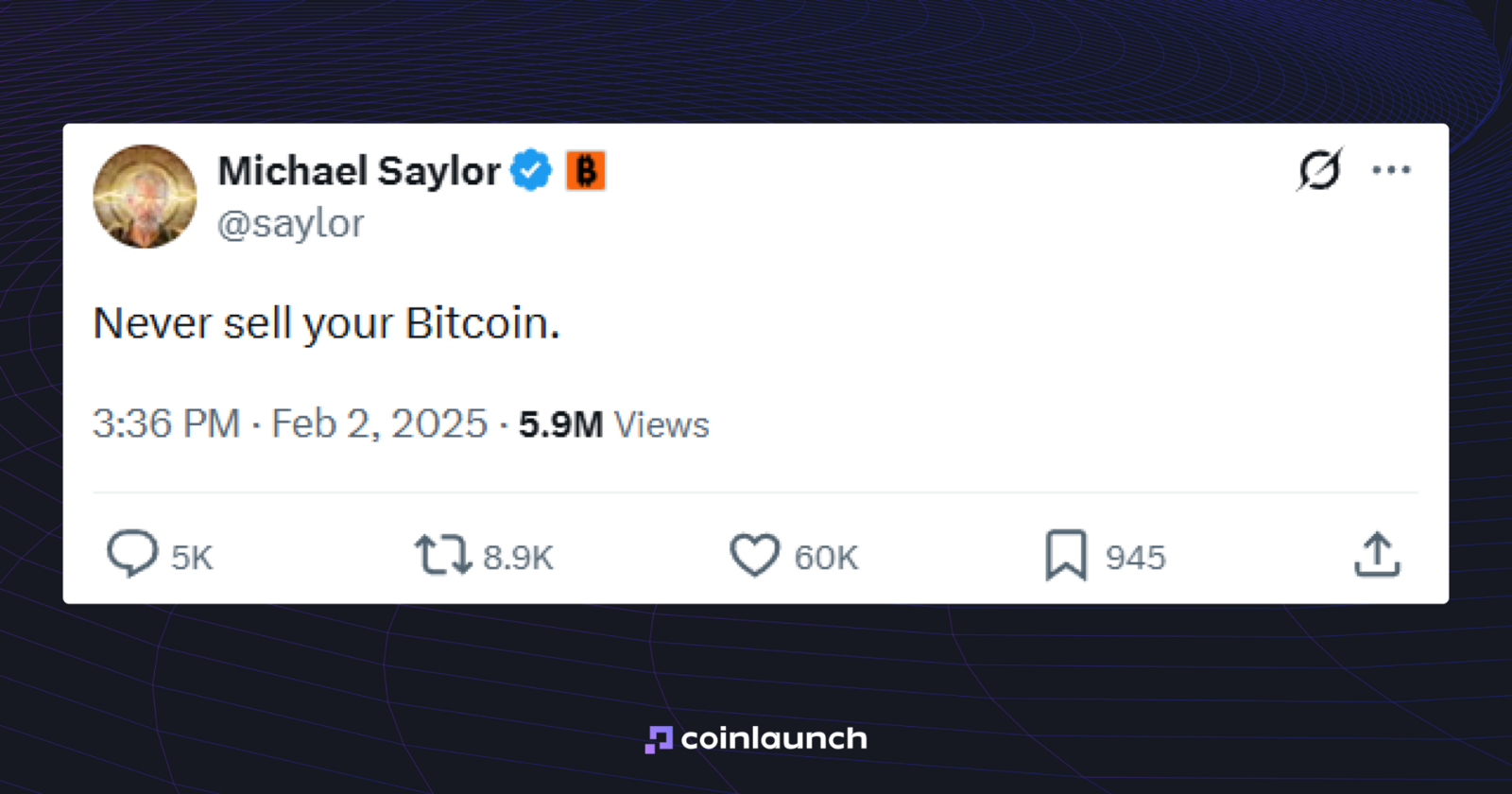 Michael Saylor: “Never sell your Bitcoin”. Source: x.com
After that, the market began to focus not only on the size of Strategy’s Bitcoin holdings, but also on the capital structure built around them. A key component was STRC, a preferred stock with a floating dividend and a target price of around $100.
Strategy raised capital through STRC, paid yields to holders, and could use the proceeds to invest in Bitcoin or service its obligations. As long as STRC stayed near par value, the model seemed to work: investors received yield, Strategy raised new capital, and the Bitcoin treasury narrative continued to thrive.
The problems began when STRC fell below $100. In June, STRC dropped to record lows, first below $90 and then below $83. As a result, Strategy had to limit the issuance of new STRC shares through its at-the-market program. Issuing preferred shares below par value became less attractive: the company raises less capital, while the market demands a higher yield for the same level of risk.
So the June stress test affected not only the price of BTC, but also other related instruments: Bitcoin was falling, MSTR was losing its premium, STRC was trading below par, the cost of capital was rising, and it became harder for Strategy to issue new securities to buy Bitcoin.
Strategy itself tried to maintain confidence in the model. Saylor publicly defended STRC and called it potentially “the best credit instrument.” But in June, investors were looking not at the rhetoric, but at the math: could the Bitcoin treasury company keep buying BTC if its own funding instruments began to weaken?
UPD: June 29, Strategy unveiled its 'Digital Credit Capital Framework' and BTC Monetization Program. The company explicitly outlined the specific conditions under which it may liquidate Bitcoin holdings: to bolster USD reserves, service preferred stock, cover interest obligations, or execute share repurchases. Between June 29 and July 5, the firm sold 3,588 BTC for approximately $216 million to allocate capital for upcoming dividend payments.
Zcash Vulnerability and the Privacy Coin Repricing
Zcash became another major crypto narrative in June, but from the other side of the market. While SpaceX showed demand for new products, ZEC showed how quickly the market can reprice an old privacy coin when trust is at stake.
After the Orchard vulnerability was disclosed, ZEC fell by nearly 60%. The bug could have allowed counterfeit ZEC to be created within a shielded pool. The main problem was that, because of Zcash’s private architecture, the team cannot cryptographically prove whether the vulnerability was exploited before the fix was implemented.
Arthur Hayes dealt a significant blow to the narrative. After the bug was disclosed, he closed his ZEC position, even though he had previously called ZEC part of his “Holy Trinity” of investments. This intensified the sell-off and made Zcash one of the month’s biggest losers.
There’s more to the story than just “ZEC crashed because of a bug.” It involves Orchard, the risk of counterfeit claims, a similar case from 2019, and the role of AI in identifying the vulnerability. We covered this in detail in a separate article about the Zcash vulnerability and ZEC’s 60% drop.
Hyperliquid Prediction Markets
On May 2, 2026, Hyperliquid prediction markets went live. This added another item to the crypto narratives list and became possible after the launch of HIP-4, an update the team had announced back in February, deployed to testnet, and announced for mainnet three months later.
Previously, Hyperliquid was primarily a perpetual DEX offering crypto and stock contracts. HIP-4 added the ability to trade event-based contracts.
At first, Hyperliquid offered simple BTC markets: whether BTC would trade above a specified price and which price range it would fall into. On May 25, the first off-chain event markets appeared: the Fed’s rate decision, CPI, the NBA Finals, and the World Cup champion. As a result, prediction markets made it onto the June crypto narratives list: Hyperliquid began trading not only asset-related events, but also real-world events.
As of this writing, these markets are still relatively small. Hyperliquid has approximately $270 million in notional volume. By comparison, Kalshi has $125 billion, Polymarket has $100 billion, and Opinion has $25 billion. In other words, Hyperliquid accounts for less than 0.1% of the combined notional volume and currently lags far behind the major prediction market platforms.
In May, BTC price markets accounted for most of the trading volume on Hyperliquid prediction markets. By the end of June, however, activity had shifted to question markets, particularly the World Cup Champion market.
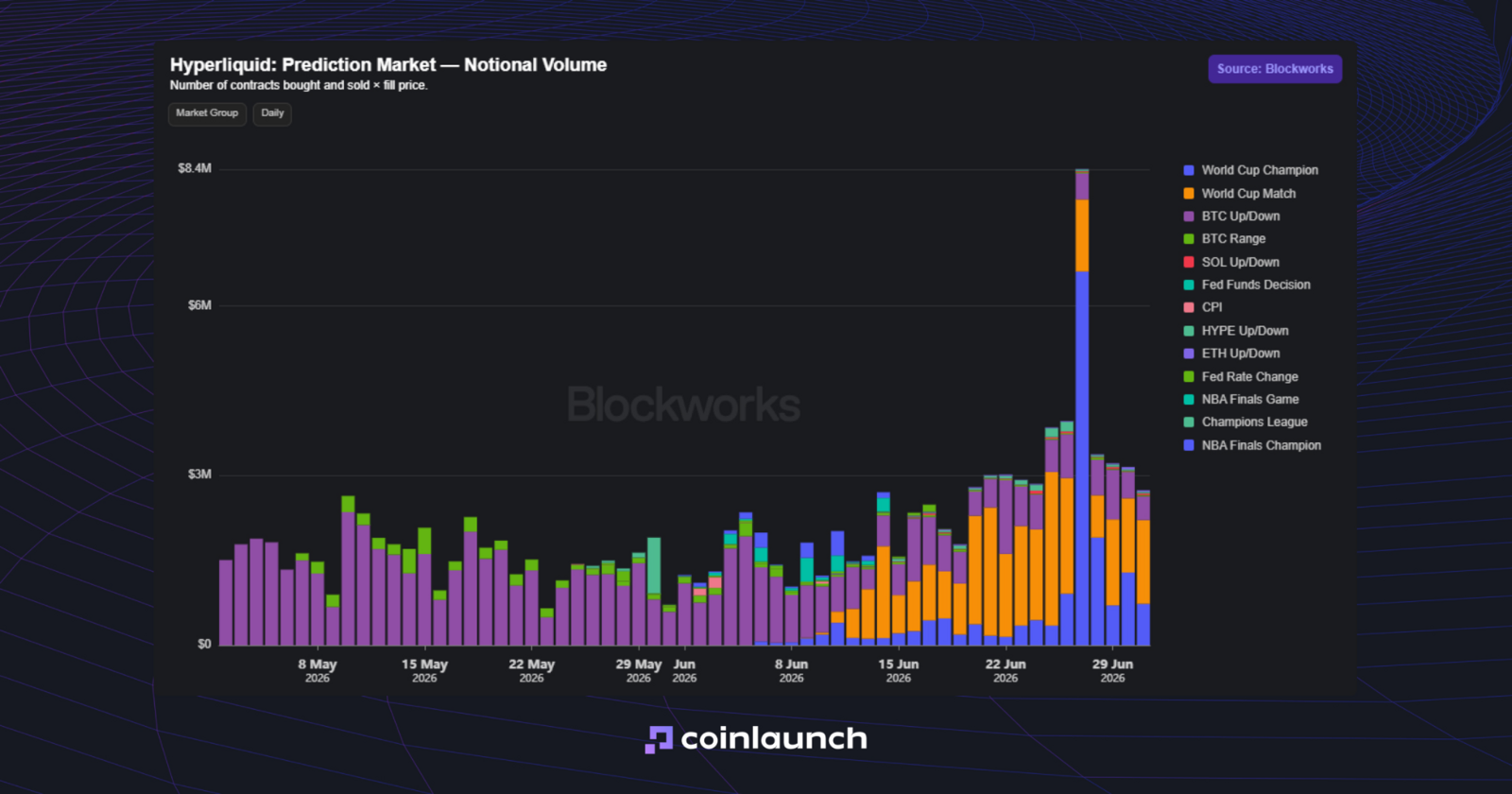 Number of transactions in Hyperliquid prediction markets by category. Source: blockworks.com
HIP-4 is viewed in the community as a third model for prediction markets: Polymarket excels in consumer discovery, Kalshi in regulated U.S. access, and Hyperliquid in execution infrastructure and unified margin. Hyperliquid’s advantage is that traders can hold prediction contracts alongside crypto, pre-IPO assets, and RWAs on a single platform.
ANSEM Memecoin and the Creator-Fee Meta
On June 27, crypto influencer Ansem announced that he would distribute Pump.fun creator fees through weekly airdrops. After that, the ANSEM memecoin became the top Solana memecoin by the end of the month.
Important: Ansem himself did not launch the token. The memecoin creator set up a separate wallet around June 17, bought most of the supply, sent about 650 million ANSEM to the real Ansem’s wallet, and later exited with a small profit. After that, the blogger picked up the token and turned it into a story about fee redistribution.
Creator fees are the portion of Pump.fun’s trading fees that goes to the token creator or the holder of fee rights. Typically, this is simply income for the deployer.
In the case of ANSEM, this mechanism was adapted to benefit the community: the fees did not remain with the creator, but were allocated to weekly airdrops. As a result, the token began to trade not only as a meme, but also as a bet on ongoing airdrops and the attention around them.
In fact, it can be described as “revenue-sharing” token utility - this is a new meta of tokens where users receive funds for staking/holding tokens not via token emission but based on the real revenue generated by the project. Some of the most famous coins with such a feature are $GOOD (goodcryptoX), $USUAL (Usual Money), and others. Read more about revsharing tokens in our comprehensive revsharing review.
The price of ANSEM rose 20x in seven days, and its 24-hour trading volume exceeded $80 million. ANSEM has already distributed approximately $8 million worth of ANSEM to more than 700 wallets and aims to increase the number of holders from about 25,000 to 1 million.
 ANSEM is now among the top 3 Airdrops on Solana this year. Source: x.com
At the time of writing, the token’s market cap stands at $180 million.
That is how the creator-fee memecoin meta emerged. The token trades, fees accumulate, part of those fees is returned through airdrops, and the airdrops themselves reignite interest in the token. After a slump, Solana memes received a new lease on life: not just a launchpad and a random ticker, but a meme with a creator-fee loop.
As a reminder, Ansem is one of the most prominent Solana traders on X, with over 1 million followers. His username is a reference to a character from Kingdom Hearts, one of his favorite games as a child.
What to Expect From Crypto in the Coming Months
After June, the crypto trends to watch became clearer. The market will be watching not only the BTC price, but also which sectors are driving volume: tokenized stocks, pre-IPO markets, regulated stablecoins, on-chain perpetuals, prediction markets, and Solana memecoins with creator-fee mechanics.
The main question is: what will be the next big crypto narrative? If traders’ risk appetite strengthens, capital will flow toward areas with clear demand: stock market access through crypto, stablecoin payments, exchanges with deep liquidity, and projects that can offer users not only a token, but also a product.
Looking ahead, market sentiment is coalescing around three core drivers: policy, liquidity, and broader macro risks. Key variables include the end of the FIFA World Cup and liquidity rotation from prediction markets, the U.S. CLARITY Act, potential Fed rate cuts following the U.S.-Iran conflict, and inflationary pressures from energy costs - all compounded by the overheated AI sector.
If inflation remains sticky, the Fed’s room for rate cuts will tighten, creating headwinds for risk assets. Furthermore, should the AI bubble begin to deflate, crypto could face additional volatility as liquidity retreats from traditional financial markets.
So what to expect from crypto in 2026 is not one overarching narrative for the entire market. Rather, it is several upcoming crypto narratives that will quickly follow one another.
Crypto Market Summary: What June’s Narratives Say About the Market
The June crypto market summary is straightforward: BTC and ETH fell, ETFs saw outflows, and fear returned, but there were still several standout crypto catalysts. Stocks dominated market sentiment in June. SpaceX catalyzed this shift, transforming the appetite for pre-IPO exposure into a powerful crypto narrative through tokenized equities. Strategy exposed a weakness in Bitcoin treasury companies. Zcash dealt a blow to privacy coins. ANSEM reignited interest in meme coins.
The main takeaway is that the top crypto narratives of 2026 no longer always start with a new token. In June, the strongest themes emerged at the intersection of markets: traditional stocks through crypto rails, regulated stablecoins, prediction markets, on-chain derivatives, and creator-fee meme coins. This is the current crypto sector rotation: while there is FUD on crypto assets, capital does not rotate from crypto entirely but looks for an alternative way to wait out the bear market end. And once a new narrative is formed, it may quickly move back to crypto assets and rotate risk-on.
So upcoming crypto catalysts should be sought in: Fed rate policy easing, end of the FIFA World CUP, prediction market decline, AI bubble burst, Clarity Act, and recovery of the financial situation on Strategy.