What Is a Crypto Airdrop? How Crypto Airdrops Work
Polymarket Airdrop 2026: Token, Eligibility, and Farming Guide
GOOD Token Airdrop: How to Earn $GOOD on goodcryptoX
Variational Airdrop: Points, Token Launch, and Farming Strategy
Pacifica Airdrop: Points and Token Launch Guide
Nado Crypto Airdrop: Points, Token, and Farming Guide
TxFlow Airdrop: Crypto Points and Farming Guide
Robinhood Chain Crypto: Airdrop, Token, and Retrodrop Guide
Upcoming Web3 Airdrops 2026 Pre-TGE Projects: How to Find Crypto Airdrops
Conclusion: What Are the Best Airdrop Farming Opportunities 2026?
FAQ
What are the best crypto airdrops to farm in 2026?
Are free crypto airdrops really free?
What is an airdrop checker and how does it work?
Is the Polymarket airdrop confirmed?
Do points guarantee an airdrop or any allocation?
Share this blog post
Crypto airdrops regained momentum after several large token distributions rewarded early users with hundreds of millions of dollars. Three of the largest recent examples came from perpetual decentralized exchanges (DEXs). Hyperliquid distributed 31% of the HYPE supply to early adopters, an allocation valued at more than $1.2 billion on launch day.
Aster’s second season distributed320 million ASTER worth around $600 million. In December 2025, Lighter allocated250 million LIT to points program participants. The tokens were worth more than $825 million during the opening hours of trading.
These distributions renewed interest in airdrop farming across the crypto market. However, the best crypto airdrops are not limited to perp DEXs. Projects use different mechanics, including points programs, trading campaigns, liquidity provision, testnet activity, and rewards for early ecosystem users.
Today’s airdrops can also involve significant costs. The period when simply using Uniswap netted each eligible wallet $1,200 in UNI is long gone. Trading campaigns require fees, funding payments, and capital to generate volume, while points provide no guarantee of an allocation after a Token Generation Event (TGE). Choosing among the best crypto airdrops 2026 has to offer requires careful evaluation, especially when farming costs can reach $1,000 to $1,500 without any guarantee that the drop will materialize or cover the expenses.
This guide compares seven candidates for the best crypto airdrops to farm 2026: goodcryptoX’s active campaigns, points programs from Variational, Pacifica, and Nado, as well as potential distributions from Polymarket, Robinhood Chain, and TxFlow. For each project, we outline its current status, farming requirements, estimated costs, and available details on future token allocations.
Best Crypto Airdrops: 7 Airdrops to Farm in 2026
Project
Fundraise
Stats
CoinLaunch Score
Difficulty
Priority
goodcryptoX
$657K
400,000+ users
91/100
🟡 Medium
🔥 Very High
Polymarket
$2.5B
$50B+ cumulative volume
91/100
🟡 Medium
✅ High
Variational
$11.8M
$70M+ TVL
76/100
🟡 Medium
✅ High
Pacifica
N/A
$116B+ cumulative perp volume
65/100
🟢 Easy
✅ High
Robinhood Chain
N/A
$4B+ cumulative DEX volume shortly after mainnet
65/100
🟡 Medium
🟡 Medium
Nado
N/A
$4M+ revenue in Q1 2026; $50M+ TVL
60/100
🟡 Medium
🟡 Medium
TxFlow
N/A
$80K monthly revenue
41/100
🟡 Medium
🔴 Low
What Is a Crypto Airdrop? How Crypto Airdrops Work
The simplest answer to what is an airdrop in crypto is the distribution of tokens to users based on past activity. An airdrop in crypto helps projects attract early adopters, drive product usage, and distribute tokens to the community. For users, it provides a way to acquire assets without participating in an initial coin offering (ICO) or other public sales.
Chasing potential payouts makes it easy to lose sight of a basic question: what is crypto airdrop and what a project actually promised users. To understand how crypto airdrops work, it helps to break campaigns down by their level of certainty.
Project Status
What Is Known
No token, no airdrop announced
Farming is fully speculative
Future token confirmed
TGE is expected, but deadlines may shift, and rewards for early users are not guaranteed
Token already exists
Having a token does not guarantee another airdrop
Airdrop confirmed
Distribution is expected, but eligibility criteria may be announced later
Points program with public rules
Users can track points, multipliers, and campaign conditions, but these do not guarantee an airdrop. Projects may still shut down, as happened with Dango Exchange.
Crypto communities often assume tokenless projects are guaranteed to drop tokens. But understanding the question “how do crypto airdrops work” in practice makes one thing clear: transactions, points, or testnet activity guarantee nothing until the team makes an official announcement.
Farming one project can also qualify you for a secondary airdrop. Wormhole is a prime example: its Wormhole (W) token distribution rewarded activity beyond its native protocol, paying out to Monad Community members and the top 10,000 PYTHstakers. A single set of on-chain actions can easily span multiple connected ecosystems.
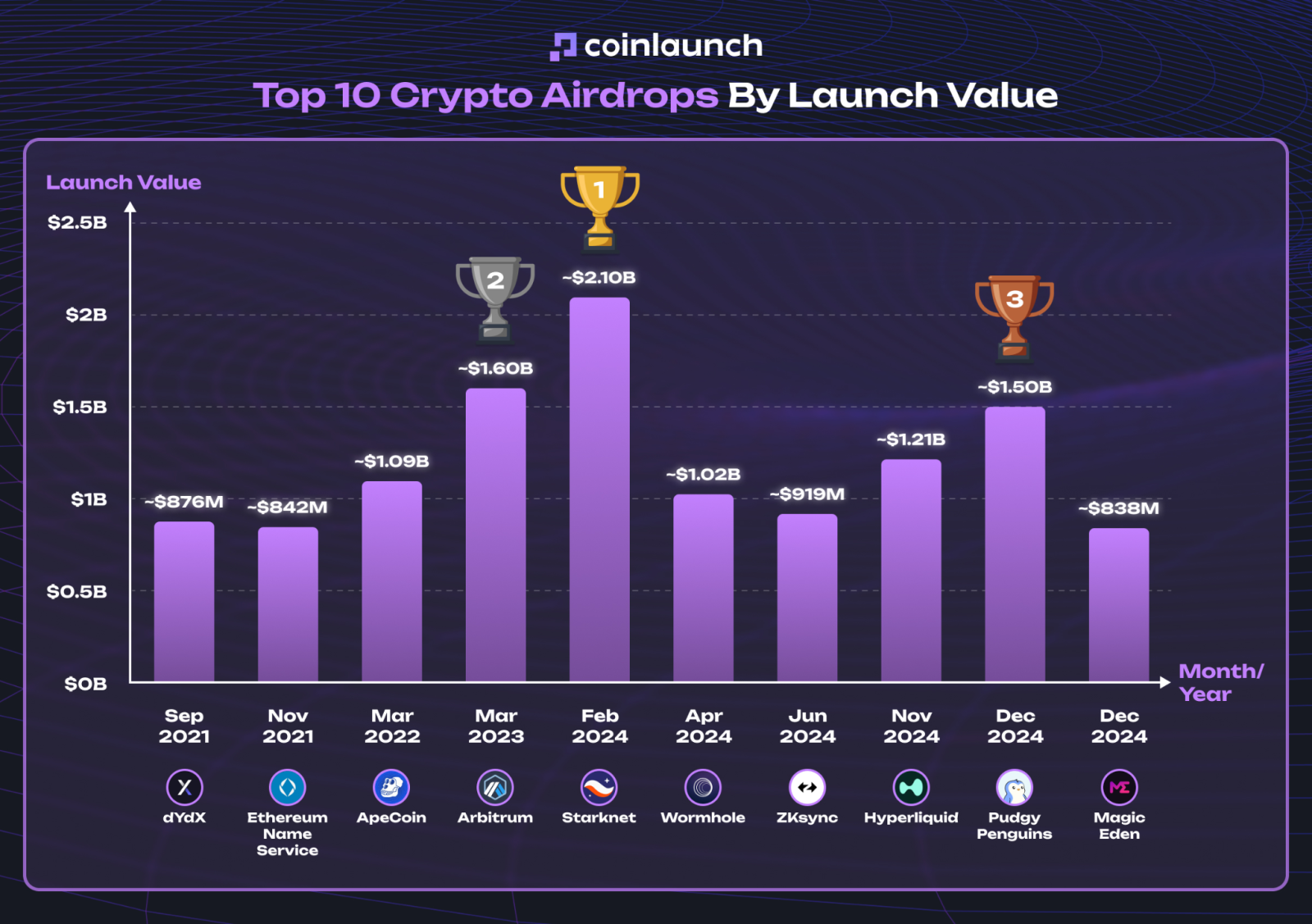
Payouts can be massive. In 2024, Jupiter, Starknet and Notcoin distributed roughly $1 billion each. Hyperliquid later dropped310 million HYPE, representing 31% of its supply, valued at over $1.2 billion on launch day.
Top 10 crypto airdrops by launch value. Source: coinlaunch.space
In 2026, much of airdrop farming centers on perpetual DEXs. Platforms like Variational, Pacifica, and Nado run points programs that reward trading activity. Several of these projects made our list, alongside other campaign types detailed below.
Polymarket Airdrop 2026: Token, Eligibility, and Farming Guide
Polymarket is the largest prediction market in the crypto space and the only rival to Kalshi that lets users trade on the odds of election outcomes, political and sports events, crypto prices, and other real-world events. In 2026, monthly prediction market volume topped$20 billion, with unique wallets reaching 800,000.
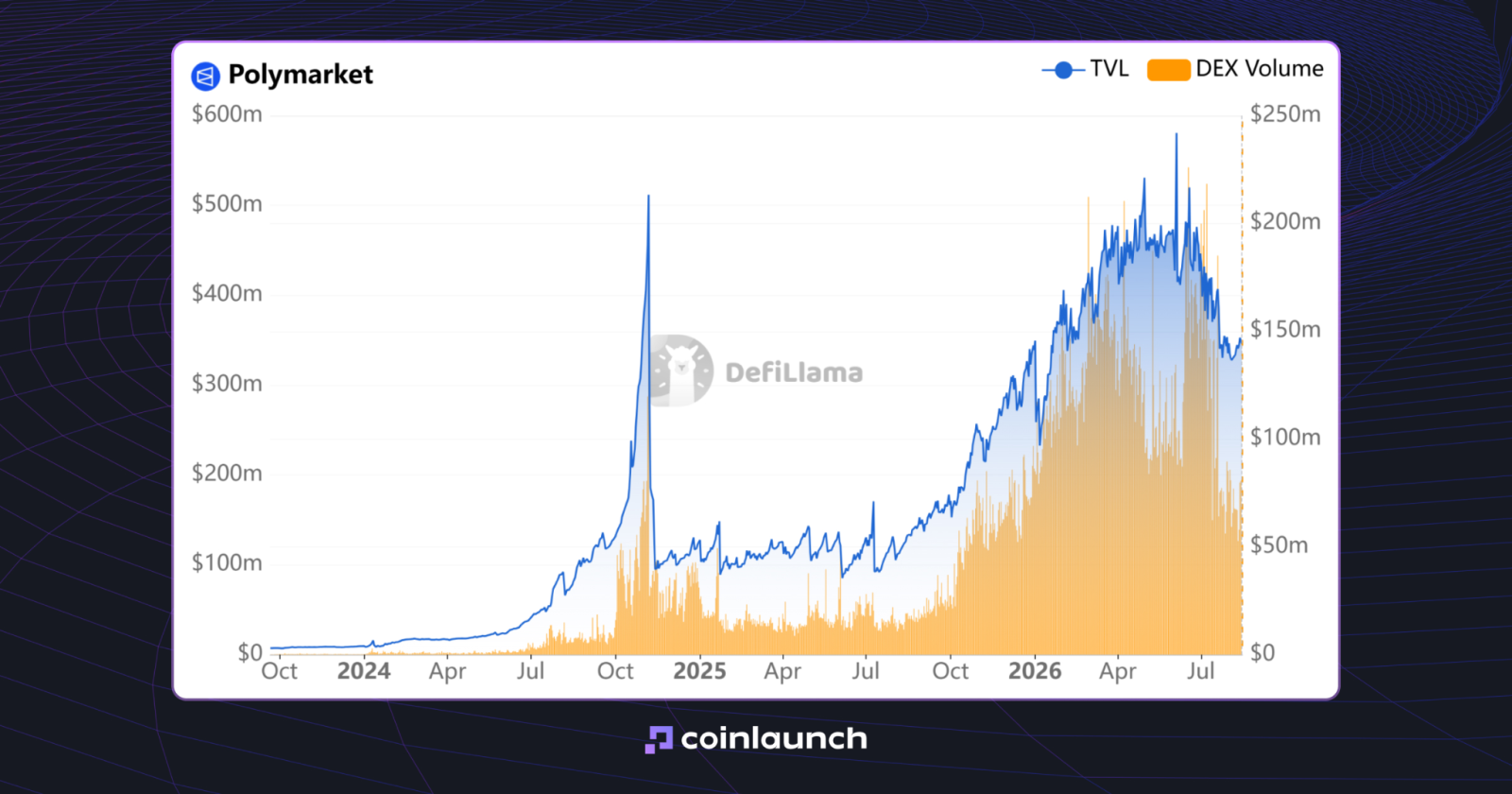
Within this category, Polymarket crypto accounts for roughly $343 million in total value locked (TVL) and remains the sector's largest on-chain platform.
Polymarket TVL and trading volume. Source: defillama.com
Beyond interest in the platform itself, users remain focused on a potential Polymarket token. In October 2025, founder Shayne Coplan hinted at POLY, while chief marketing officer Matthew Modabber confirmed plans for both a token and an airdrop. However, an official Polymarket token launch has not been scheduled, with the team making no announcement regarding a TGE or airdrop as of August 2026.
Despite these statements, recent developments have raised doubts about the Polymarket token launch. JPMorgan reportedly ended its banking relationship with the platform over regulatory concerns while considering underwriting a potential IPO. The question may no longer be when POLY will launch, but whether it will launch at all.
Pinpointing an exact Polymarket token launch date is impossible, and the question “does Polymarket have a token” currently has a simple answer: no. Fake POLY tokens and claim pages should be treated as potential scams until an official announcement.
As for will there be a Polymarket airdrop, the picture is clearer: the chief marketing officer publicly confirmed it, but the team has not disclosed actual Polymarket airdrop eligibility criteria. Any speculation remains guesswork.
Those exploring how to get Polymarket airdrop typically build organic activity history on the platform by trading across various markets, providing liquidity, and using different order types. These order types also earn points through the Liquidity Rewards and Maker Rebates programs.
No universal Polymarket airdrop farming guide 2026 exists. Drop hunters typically trade high-probability outcomes to build volume, hedging opposing positions to capture price spreads between Polymarket and exchange order books.
Ways to Farm the Polymarket Airdrop:
Trade on different markets
Provide liquidity
Use limit orders
Trade high-probability events
Hedge positions
Exploit price discrepancies
Track the Polymarket airdrop status 2026 on CoinLaunch's airdrop page, which covers platform updates, shares news, and refines its guides.
GOOD Token Airdrop: How to Earn $GOOD on goodcryptoX
Trading app goodcryptoX serves more than 400K users across both centralized and decentralized exchanges. In September 2025, the platform launched its native GOOD token on Solana. Tokenholders receive a share of fee revenue, swap discounts, and extra trading rewards.
Unlike most projects on this list, goodcryptoX has two active airdrops. The platform is currently running GOOD Airdrop Two with a 2 million GOOD pool. Distribution triggers once cumulative spot volume through the goodcryptoX DEX terminal reaches $100 million. Reward size depends on each user's share of total trading volume. Participants must also hold an average of at least 10,000 GOOD prior to the snapshot. Holding 100,000 GOOD or more unlocks a 1.25x multiplier, rising to 1.5x for balances of 1 million or higher.
Key Details
Explanation
Duration
25 Sep 2025 - 31 Dec 2026
Reward Pool
2M $GOOD (~$200K)
Distribution
TBA, after $100M DEX spot volume milestone
Eligibility
Average holding of 10K+ $GOOD during the campaign
Allocation
Based on total trading volume from Sep 9, 2025 until the $100M milestone
How to Participate:
Create and fund your DEX trading wallet in goodcryptoX.
Hold 10,000+ $GOOD on average throughout the campaign (25 Sep 2025 - 31 Dec 2026).
Boost your allocation by holding more $GOOD: 100K+ avg hold = 1.25x boost; 1M+ avg hold = 1.50x boost.
Grow your DEX spot trading volume.
Keep trading until goodcryptoX reaches $100M in total DEX spot volume.
Wait for the snapshot: rewards are distributed after the milestone is reached.
The platform is also running GOOD Airdrop Three, which will distribute 3 million GOOD among the most active perp DEX traders. The campaign will trigger once cumulative DEX futures trading volume through goodcryptoX reaches $1 billion. Each user’s allocation depends on their share of the total futures volume. The campaign tracker now shows more than $36.7 million in volume.
Airdrop Three has the same holding requirements and multipliers as Airdrop Two. Participants must hold an average of at least 10,000 GOOD until the snapshot. Users who join later can still qualify by holding a larger balance. An average balance of 100,000 GOOD provides a 1.25x multiplier, while 1 million GOOD increases it to 1.5x.
Key Details
Explanation
Duration
19 Nov 2025 until the $1B milestone
Reward Pool
3M $GOOD
Distribution
TBA, after $1B in DEX futures volume
Eligibility
Hyperliquid perp trading and an average holding of 10K+ $GOOD
Allocation
Based on individual perp DEX volume and average GOOD balance
How to Participate:
Create and fund your DEX trading wallet in goodcryptoX.
Trade Hyperliquid perpetuals through goodcryptoX. Every trade counts toward your allocation.
Hold an average of 10,000+ $GOOD from 19 Nov 2025 until the snapshot.
If you join late, hold more GOOD to bring your average balance above 10,000.
Boost your allocation by holding more $GOOD: 100K+ avg hold = 1.25x boost; 1M+ avg hold = 1.50x boost.
Keep trading until goodcryptoX reaches $1B in total DEX futures volume.
Wait for the snapshot.
Looking back at Airdrop One, early traders split 1 million GOOD, with the largest single wallet allocation exceeding $20,000. Airdrop Two doubled the reward pool to 2 million GOOD, while Airdrop Three tripled it to 3 million GOOD.
Farming primarily relies on organic platform activity, requiring users to maintain a balance and build DEX spot volume through goodcryptoX. Participation requires no Know Your Customer (KYC) verification.
There is another way to earn GOOD: LP farming. An active goodcryptoX LP Farming Campaign for GOOD/USDC liquidity providers features a pool of 2.5 million tokens. Users deposit GOOD and USDC into the liquidity pool to earn trading fees alongside extra GOOD rewards.
Variational Airdrop: Points, Token Launch, and Farming Strategy
Variational is a derivatives trading protocol on Arbitrum. Its core product, Omni, offers zero-fee perpetuals across approximately 500 markets, including cryptocurrencies, stocks, indices, and commodities. Variational Omni serves as the project's main trading interface, so when you hear discussions about Variational crypto or a Variational crypto exchange, they are most often referring to Omni.
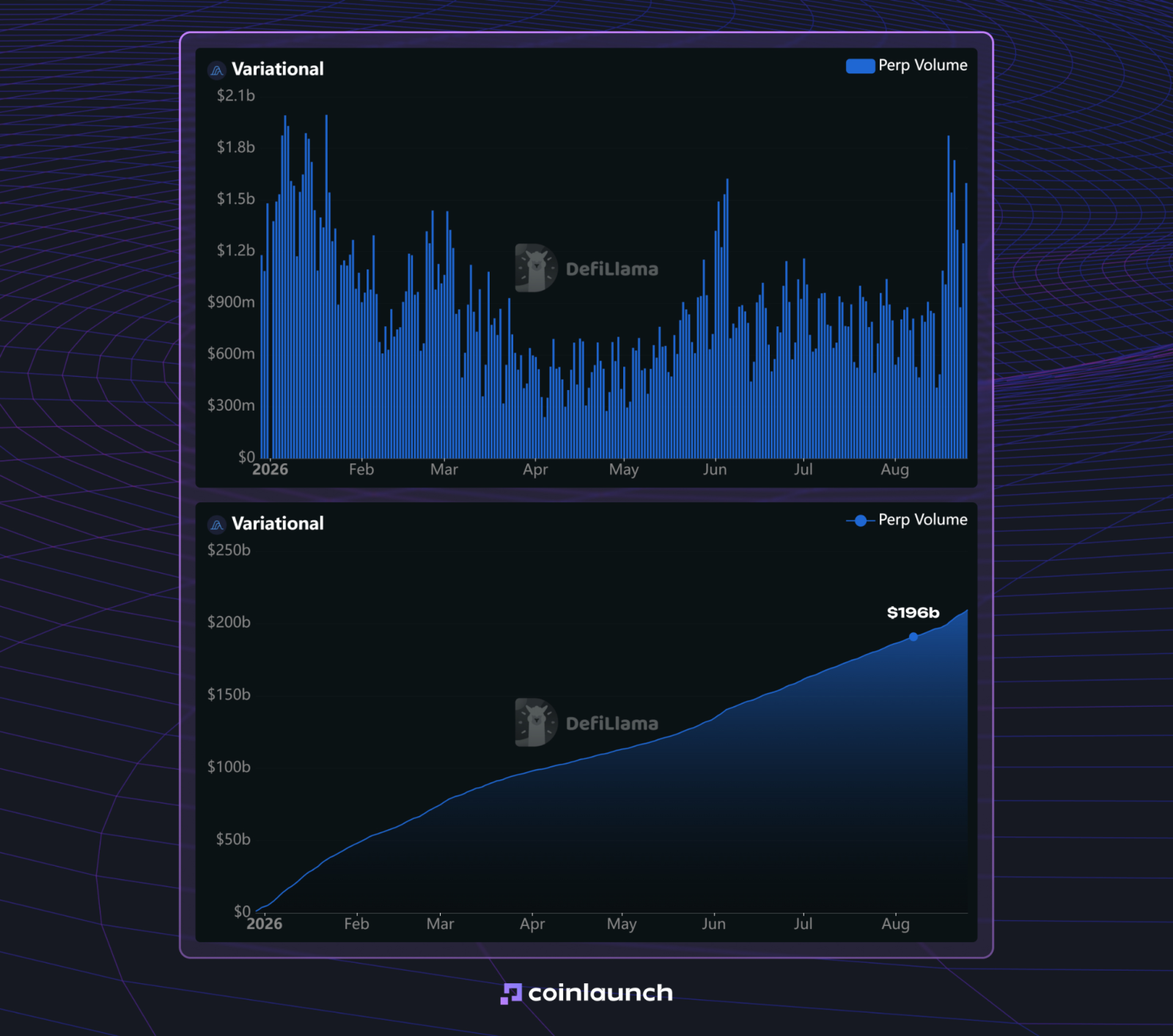
In the first six months following the launch of its points program, the platform processed$196 billion in volume, and in May 2026, the team secured an additional $50 million from Dragonfly, Bain Capital Crypto, Coinbase Ventures, and other investors.
Variational processed $196B in trading volume in less than 6 months. Source: defillama.com
The main argument for a Variational airdrop 2026 is the active points program and the team's plans to launch VAR. Variational points are distributed weekly based on organic trading activity, and the campaign is scheduled to run through the end of Q3 2026.
The project's roadmap includes a Variational token launch, but a specific Variational token launch date has not been announced yet and remains under "Undated Roadmap Items." Consequently, converting points into tokens is not officially confirmed.
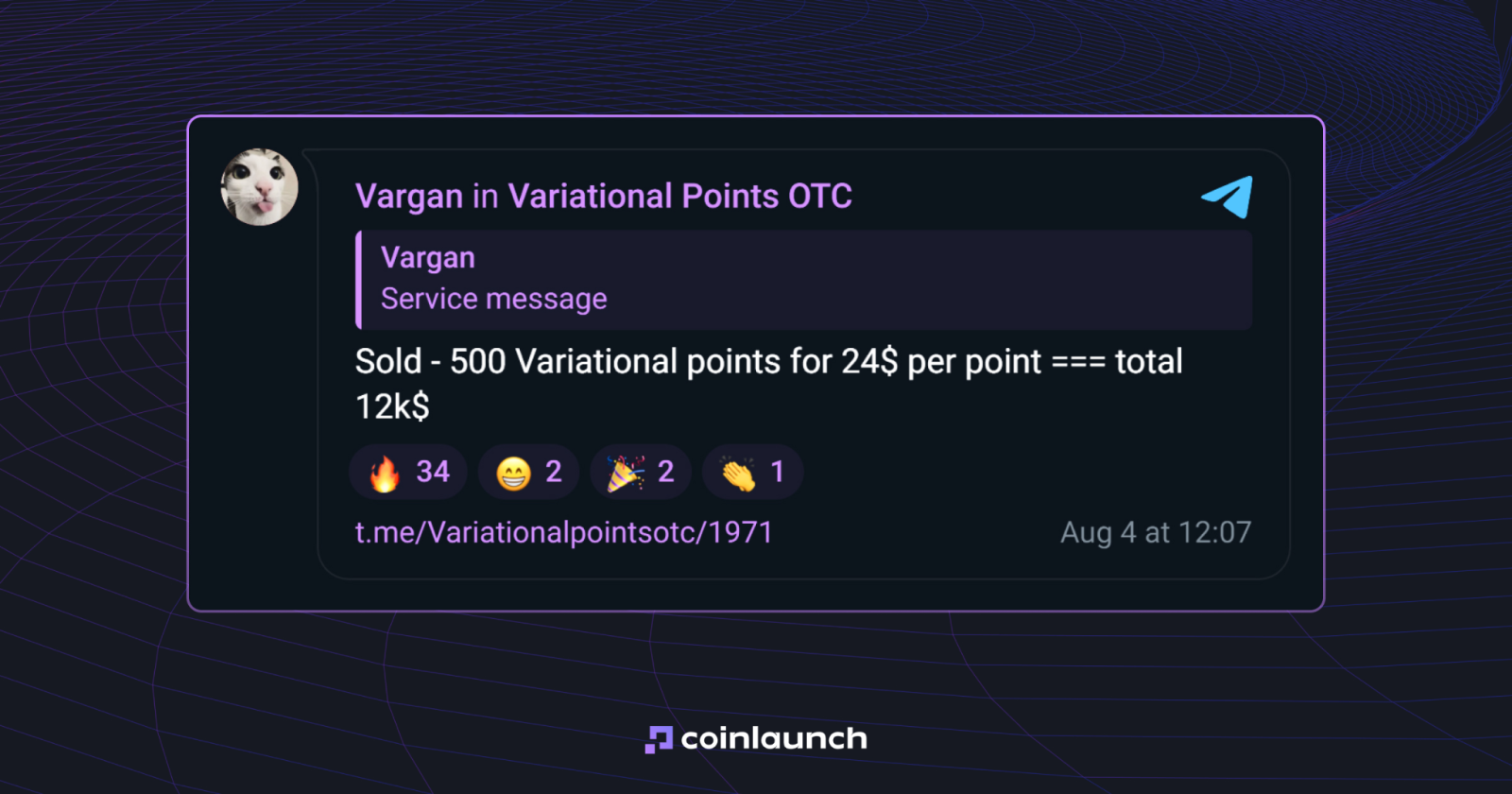
Interest in a potential Variational crypto airdrop is fuel for speculation on OTC platforms like Variational Points OTC, where trades are taking place. In mid-July, transactions were reported around $21 per point, with bids reaching approximately $24 by the end of the month. While the Variational points price offers retrohunters a rough baseline for estimating the token's worth, it is not an official valuation of future rewards.
The basic Variational Omni farming strategy involves making an early deposit and trading regularly. A more capital-efficient strategy used by some airdrop hunters is a delta-neutral approach: opening a position on Variational and an opposing one on another perpetual DEX. This method reduces market risk and accumulates points, while also allowing users to earn extra yield from funding rate spreads if conditions are favorable.
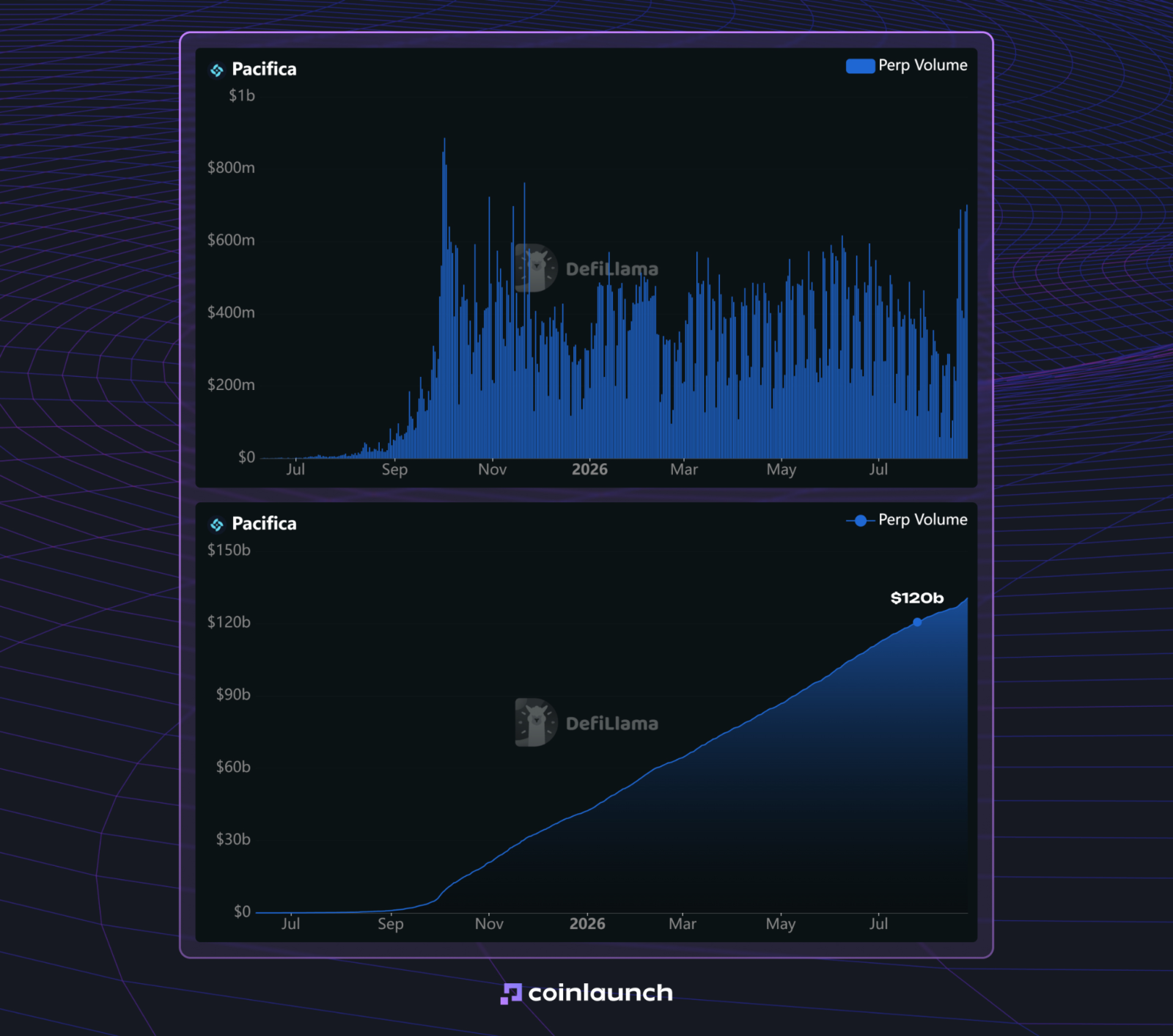
Pacifica is a Solana-based perpetual DEX launched in 2025 by a team with experience at FTX, Binance, Coinbase, Jane Street, and other industry firms. Operating without external funding, the project has already processed over $120 billion in cumulative perpetual volume. Pacifica currently supports more than 65 markets, with open interest exceeding $100 million.
Pacifica daily and cumulative perp volume. Source: defillama.com
The main target for farming is the active Pacifica points program. Each week, 10 million Pacifica points are distributed among users. The allocation formula is intentionally hidden and dynamic, with the team factoring in organic trading alongside other activities. Points cannot be purchased directly, and Pacifica does not support secondary market trading for them.
For Pacifica points farming, users need to deposit USDC and trade regularly. Upon reaching $10,000 in cumulative volume, traders can unlock a referral link to earn 10% of their invitees' points. Participating in the Market Maker and Builder Programs is also beneficial.
However, a Pacifica airdrop is not officially confirmed. The same applies to a Pacifica token: the team has not yet disclosed tokenomics or plans for a Pacifica token launch.
Nado Crypto Airdrop: Points, Token, and Farming Guide
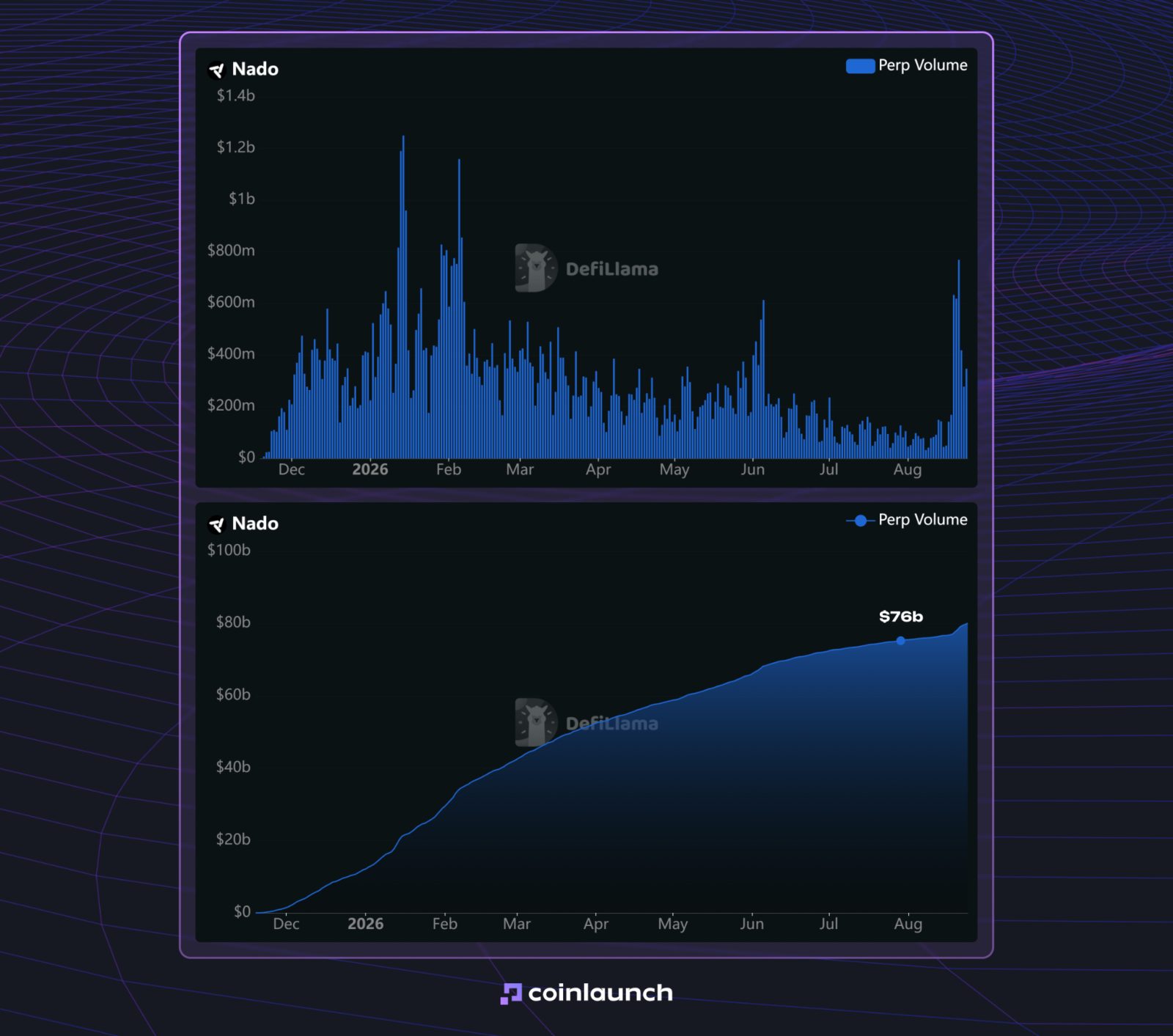
Nado is a CLOB exchange for spot and perpetual trading on Ink, an L2 network by Kraken. Over the past 30 days, Nado Perps processed roughly $2.7 billion in volume, bringing cumulative volume since launch to over $76 billion.
Nado daily and cumulative perp volume. Source: defillama.com
Nado points form the basis of a potential Nado airdrop. Each week, the protocol distributes 950,000 points for trading activity, market making, liquidations, NLP Vault participation, and referrals. Wash trading and self-matching can result in forfeited rewards. Templars of the Storm NFTs provide an added advantage, boosting the points multiplier and reducing trading fees based on their rarity.
The Nado DEX token has not yet been announced, making it premature to expect a specific Nado DEX token launch date. However, Kraken has confirmed the upcoming launch of the $INK token and an INK airdrop for active users and ecosystem participants. This makes activity on Nado one way to gain exposure to the future $INK distribution, though converting Nado points into any future asset is not guaranteed.
Farming the Nado DEX airdrop relies on regular trading, the NLP Vault, and referrals. As with other DEXs, traders can hedge perpetual positions on another platform to minimize the risk of trading losses.
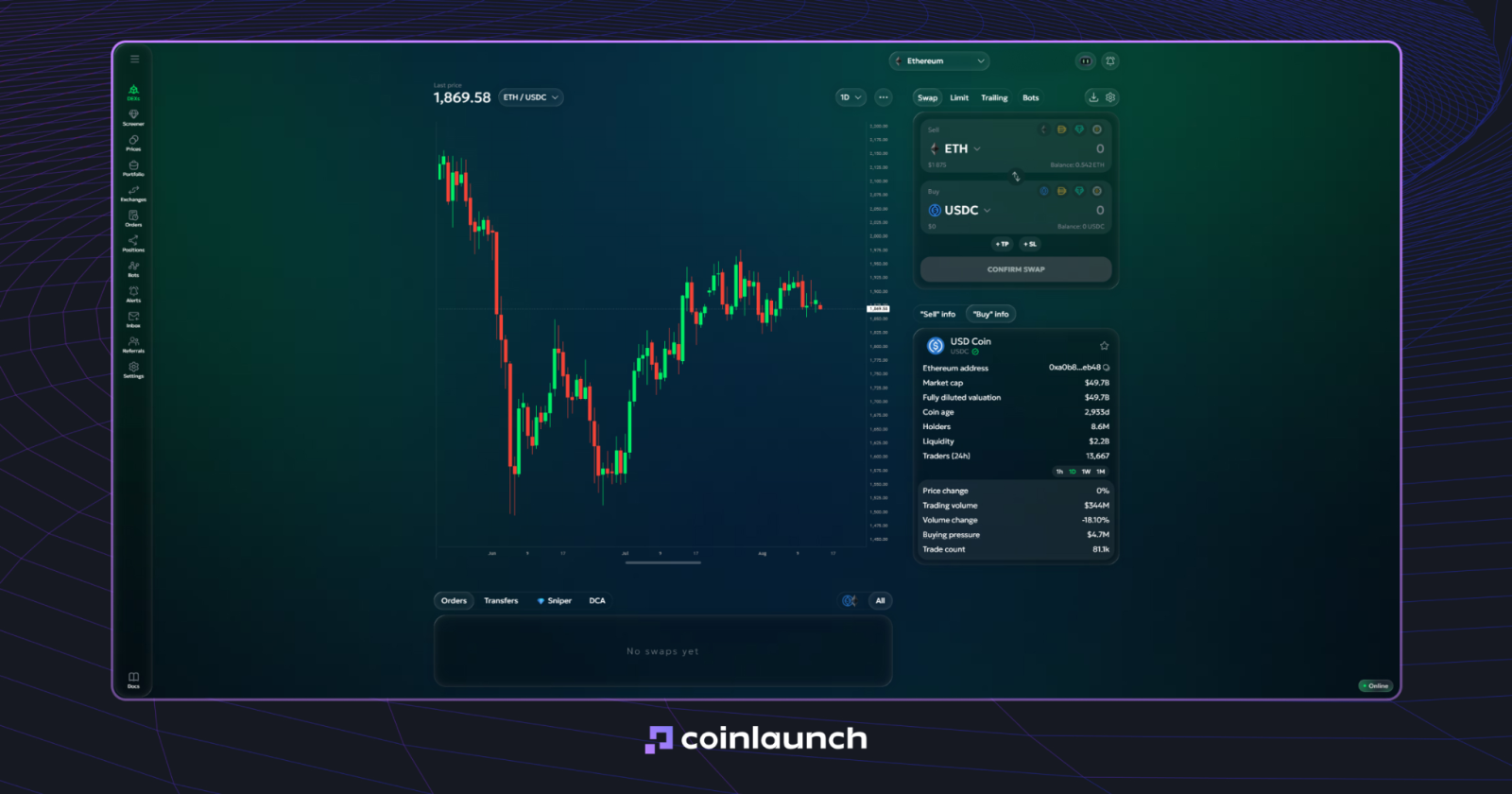
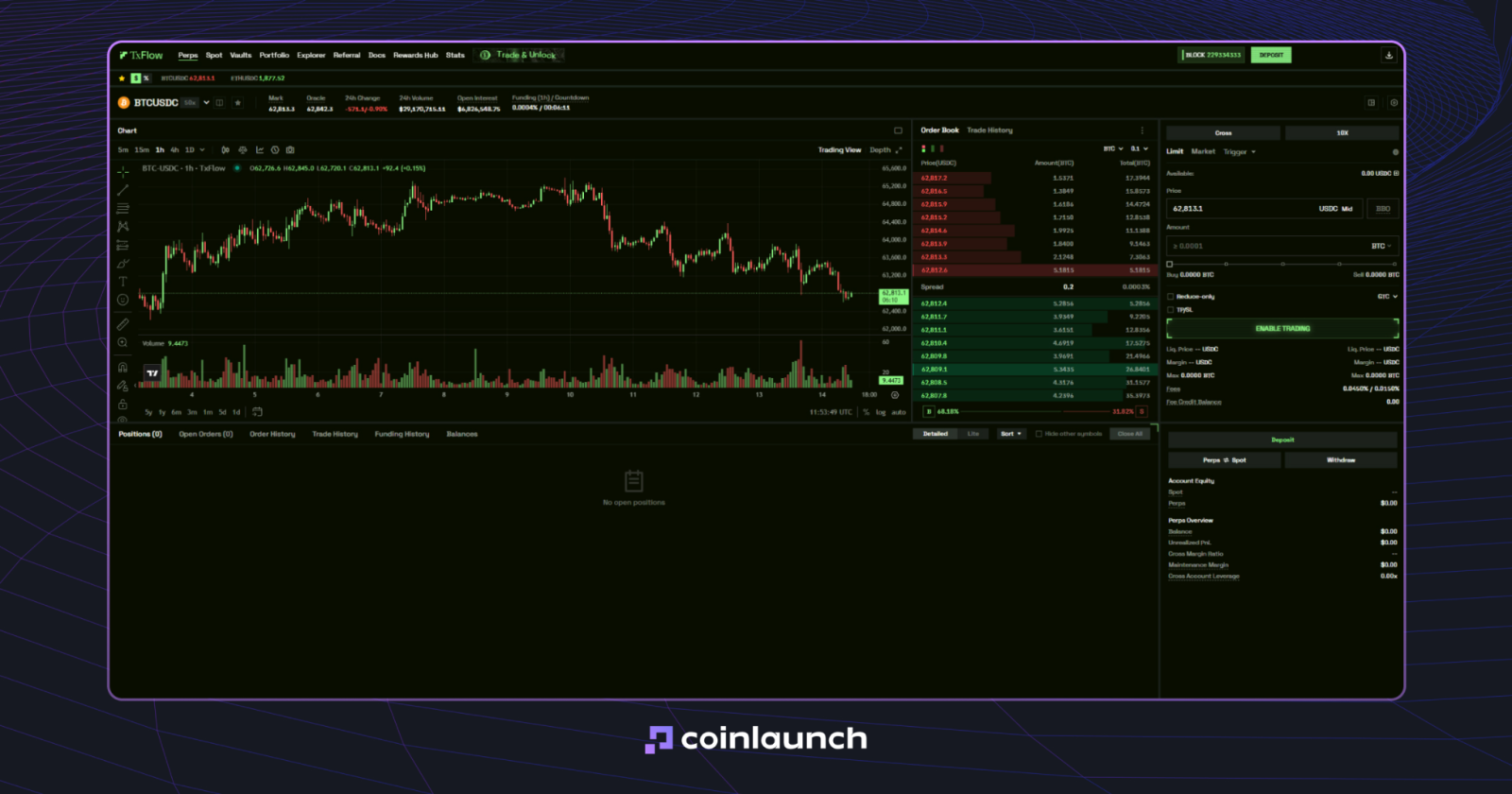
TxFlow is an L1 blockchain designed primarily for trading and financial applications. Its ecosystem is developing perpetual DEXs, spot trading, RWAs, and prediction markets. One of the network's first products is TxFlow DEX, featuring perpetual contracts.
TxFlow App home screen interface. Source: txflow.com
A potential TxFlow airdrop is not yet officially confirmed. The team has not released distribution terms, a TGE date, or eligibility criteria for early users to qualify for tokens. It is also worth noting the project's statements regarding no pre-mint and no insider allocation. While this leaves room for a community distribution, a future drop is not guaranteed.
Farming comes down to organically using TxFlow crypto products: depositing funds, trading on the perp DEX, and building an activity history. One option is a delta-neutral strategy, as previously mentioned in this article.
Another potential multiplier is participation in the referral program. Users earn Fee Credits from the trading activity of referred accounts. However, there is currently no public points distribution, nor a confirmed link between Fee Credits and a future token.
Robinhood Chain Crypto: Airdrop, Token, and Retrodrop Guide
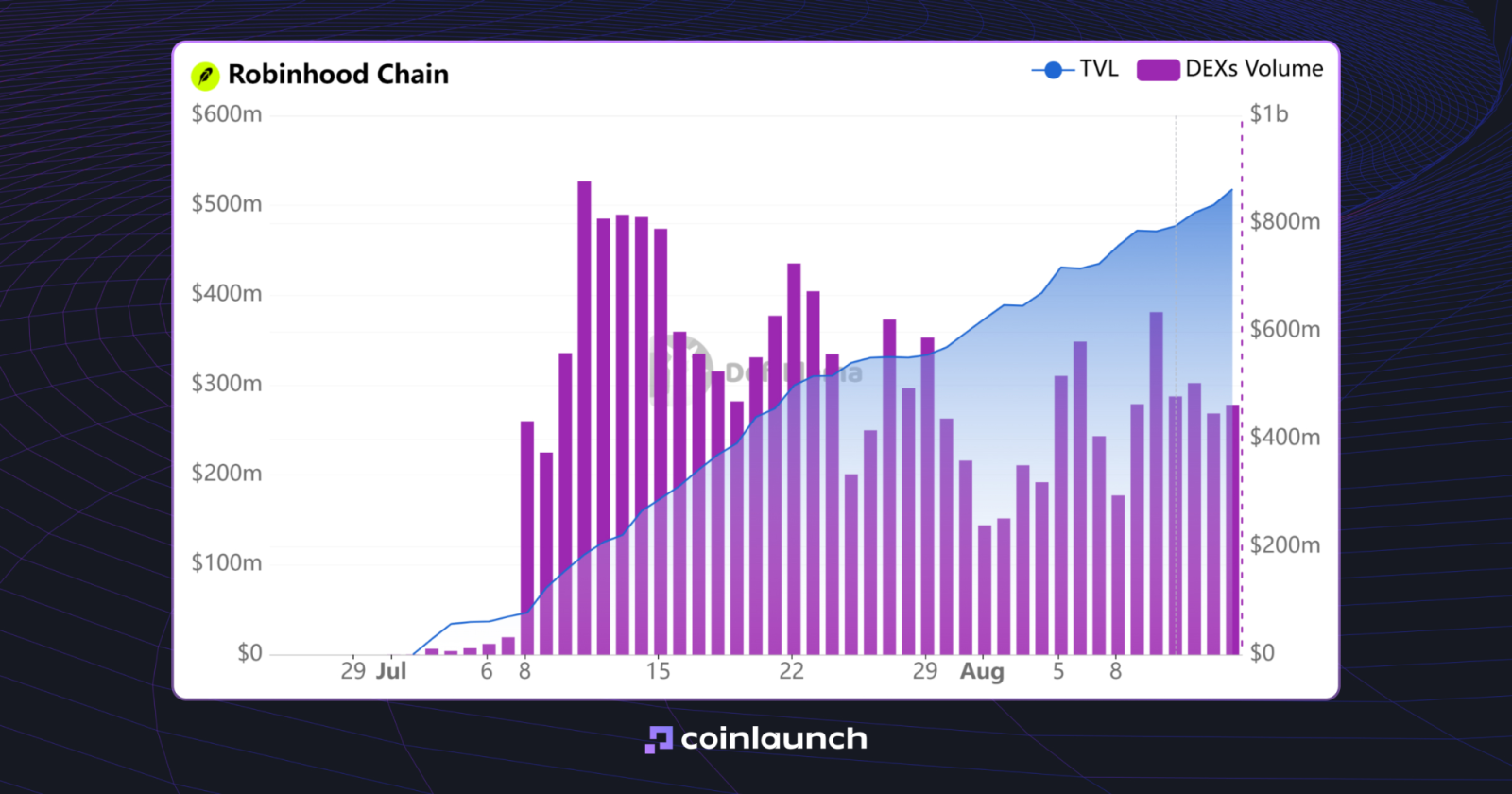
Robinhood Chain is an Ethereum L2 by Robinhood focused on tokenized stocks, RWAs, and DeFi. The network was first introduced in June 2025, the public testnet launched in February 2026, and the mainnet went live on July 1. The launch saw strong momentum: according to DefiLlama, by August, TVL reached around $494 million, bridged TVL stood at $1.53 billion, and weekly DEX volume reached $3.38 billion.
Robinhood Chain TVL and DEX Volume chart. Source: defillama.com
A Robinhood Chain token has not yet been announced, as the network uses ETH for gas fees. Consequently, a potential Robinhood airdrop remains purely speculative. If a native asset does eventually emerge, it could theoretically be used for governance or activity incentives; however, Robinhood has not confirmed either a token launch or its intended functions.
Retrohunters targeting a potential Robinhood chain airdrop 2026 are currently building an activity history on the mainnet:
bridge assets;
perform swaps;
use lending protocols;
trade via ecosystem applications.
Prior to the mainnet launch, a similar approach was applied toward a potential Robinhood Chain testnet airdrop by interacting with faucets and test applications. None of these actions currently serve as official eligibility criteria.
However, a potential Robinhood airdrop is not limited to a native network token; projects within the ecosystem can also launch their own assets. For instance, Lighter allocated11 million LIT to Robinhood users, with trades made via Robinhood Wallet earning 2x points. Arcus also plans to distribute a portion of its future tokens to the dYdX community. Other potential campaign candidates include Rialto, Morpho, and additional early Robinhood Chain applications.
Upcoming Web3 Airdrops 2026 Pre-TGE Projects: How to Find Crypto Airdrops
If your goal is to figure out how to find crypto airdrops before the broader market catches on to a campaign, relying on a single source is not enough.
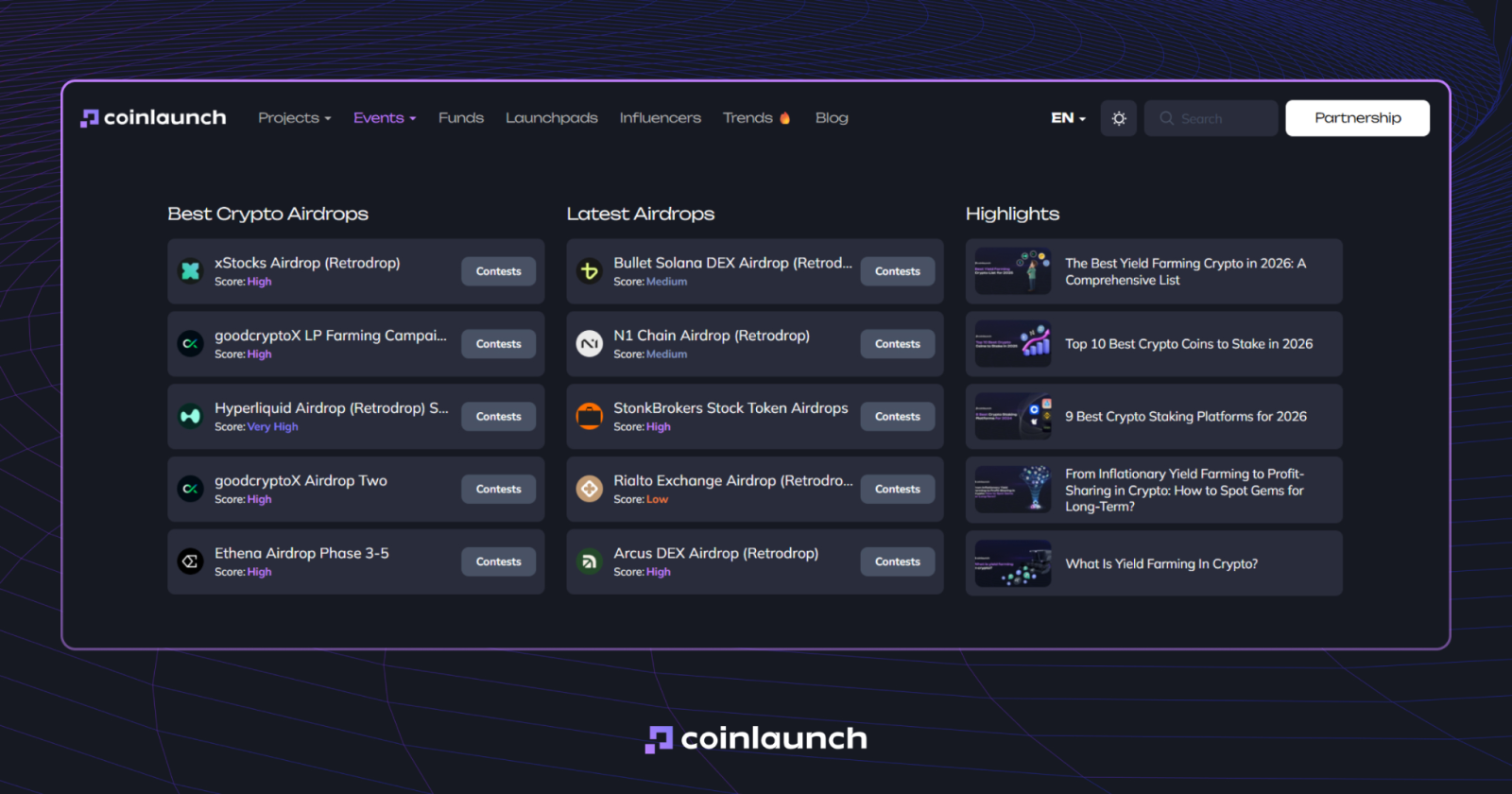
The first option is specialized aggregators. For example, the CoinLaunch Airdrop section tracks the latest crypto airdrops, points programs, and potential retrodrops, providing a CoinLaunch Score, status, and start date for each campaign. You can also subscribe to the calendar and read up-to-date guides there. The page serves as a convenient, constantly updated crypto airdrop list.
CoinLaunch also publishes regular updates on active campaigns through its official X account and researcher Jason Shaw’s profile. These posts cover new activities, campaign changes, and upcoming deadlines.
The second source is the project itself. Teams publish crypto airdrop news and other announcements through their official website, X, Discord, and Telegram. This is especially relevant for projects you are already tracking, as seasons, multipliers, eligibility criteria, and snapshot dates can change.
You can also search within a specific ecosystem. This is currently evident on Robinhood Chain: following its mainnet launch, the network began filling with individual applications. Consequently, a potential upcoming crypto airdrop may come not only from the network itself, but also from one of the applications built within it. Influencers can also help you keep track of such launches.
Another way to search for upcoming airdrops is by tracking fund investments. A new pre-TGE project without a token does not automatically become an airdrop candidate just because it raised a VC round. However, fundraising helps discover early-stage projects, after which you can evaluate the product, the presence of a points program, and the token distribution model. The CoinLaunch Funds section compiles 900+ funds alongside their investments, portfolios, and Scores, ranging from Paradigm and Coinbase Ventures to Polychain Capital and Pantera Capital.
Think of an upcoming crypto airdrop list not as a fixed ranking. New campaigns emerge constantly, and the status of existing ones shifts. Aggregators help gather them in one place, official channels allow you to verify the terms, while ecosystems, influencers, and fund activity help you discover projects even before a full-fledged farming campaign appears.
Conclusion: What Are the Best Airdrop Farming Opportunities 2026?
Among the seven projects in this article, goodcryptoX appears to be the most predictable: Airdrop Two is already live, the pool stands at 2 million $GOOD, and the participation terms have been published. Variational comes right after: its points program is already running, and the launch of $VAR is outlined in the roadmap. Pacifica and Nado also award points, but their conversion into future tokens has not yet been confirmed.
Polymarket, Robinhood Chain, and TxFlow offer less clarity. Polymarket has made public statements about a future token and an airdrop, but the distribution criteria have not been published. Robinhood Chain and TxFlow do not yet have a comparable points mechanic or a confirmed reward scheme.
Airdrop farming in 2026 can still yield results, but it requires expenses. Perp DEXs charge trading fees, and holding a position adds funding fees into the mix.
For context, prior to the Aevo airdrop, the maximum 4x farming multiplier was granted after reaching $5 million in trading volume over seven days. With base fees at the time set at 0.03% for makers and 0.05% for takers, generating that volume cost roughly $1,500 to $2,500 in trading fees alone. Funding was calculated separately and depended on the position and its holding duration.
So, it makes sense to prioritize goodcryptoX and Variational, followed by Pacifica and Nado. The remaining projects are better suited for limited early activity rather than full-time farming.
FAQ
What are the best crypto airdrops to farm in 2026?
In 2026, most campaigns are concentrated around perp DEXs. These include Variational, Pacifica, and Nado, with the top option being goodcryptoX, which has already launched its Airdrop Two. When choosing, it is worth considering the reward conditions and farming costs.
Are free crypto airdrops really free?
In most cases, no. Farming requires fees, trading capital, and, on perp DEXs, funding costs as well. As a result, campaign costs can sometimes reach $1,000 to $1,500.
What is an airdrop checker and how does it work?
An airdrop checker verifies a wallet's eligibility for a distribution. The user enters a public address and receives information about available allocations or unclaimed tokens.
Is the Polymarket airdrop confirmed?
In 2025, Polymarket CMO Matthew Modabber stated that the project would have a token and an airdrop. However, the distribution criteria, snapshot date, and TGE date have not yet been published. Until they are released, it is impossible to determine future allocation. Recent developments have also raised doubts about whether the token and airdrop will happen at all.
Do points guarantee an airdrop or any allocation?
No. Points may be taken into account during an airdrop, but their amount does not mean a predetermined number of tokens. Token distribution criteria are published later.