Coinlaunch was created by a team of crypto experts to help current and future crypto investors find the latest cryptocurrency ICOs and presales. All content follows a strict editorial policy that ensures factual accuracy, neutrality, and usefulness. We strive to provide insightful content that helps our audience make informed decisions, while emphasizing the importance of prioritizing safety and risk management. All information in our content is based on thorough research conducted by our team of copywriters and editors. We use proven sources to find relevant projects and ensure that all content is updated regularly. The information provided by Coinlaunch should be used for informational purposes only and should not be taken as investment advice.
Table of Contents
What is Bitcoin DeFi? BTCFi Explained
The BTCFi Ecosystem: Bitcoin-Native and BTC-Based DeFi
BTC-Based DeFi
Bitcoin DeFi Lending and Borrowing
Bitcoin Yield: How to Earn Yield on Bitcoin
Bitcoin-Native BTCFi
Is DeFi on Bitcoin Possible?
How Does Bitcoin DeFi Work: Core Tech Solutions
Asset Layer: Bitcoin Token Standards and Tokens on Bitcoin
Execution Layer: Bitcoin DeFi Platforms
Application: Bitcoin DeFi Protocols and Apps
Bitcoin Staking: Rewards and Economic Security
Bitcoin Token Standards and Protocols
What Are Bitcoin Ordinals and What Is BRC-20?
What Are Bitcoin Runes?
Bitcoin Light Pools
Conclusion
FAQ
What are Bitcoin Ordinals?
How to earn yield on Bitcoin?
What is BRC-20?
What is Bitcoin DeFi?
What is Bitcoin staking?
Share this blog post
The US launched spot Bitcoin ETFs in 2024. While this made it easier for institutional investors to buy BTC through traditional exchange infrastructure, the asset remains “passive” largely treated by investors as "digital gold." To put it simply, you just buy and hold it, rather than putting it to work within its native ecosystem.
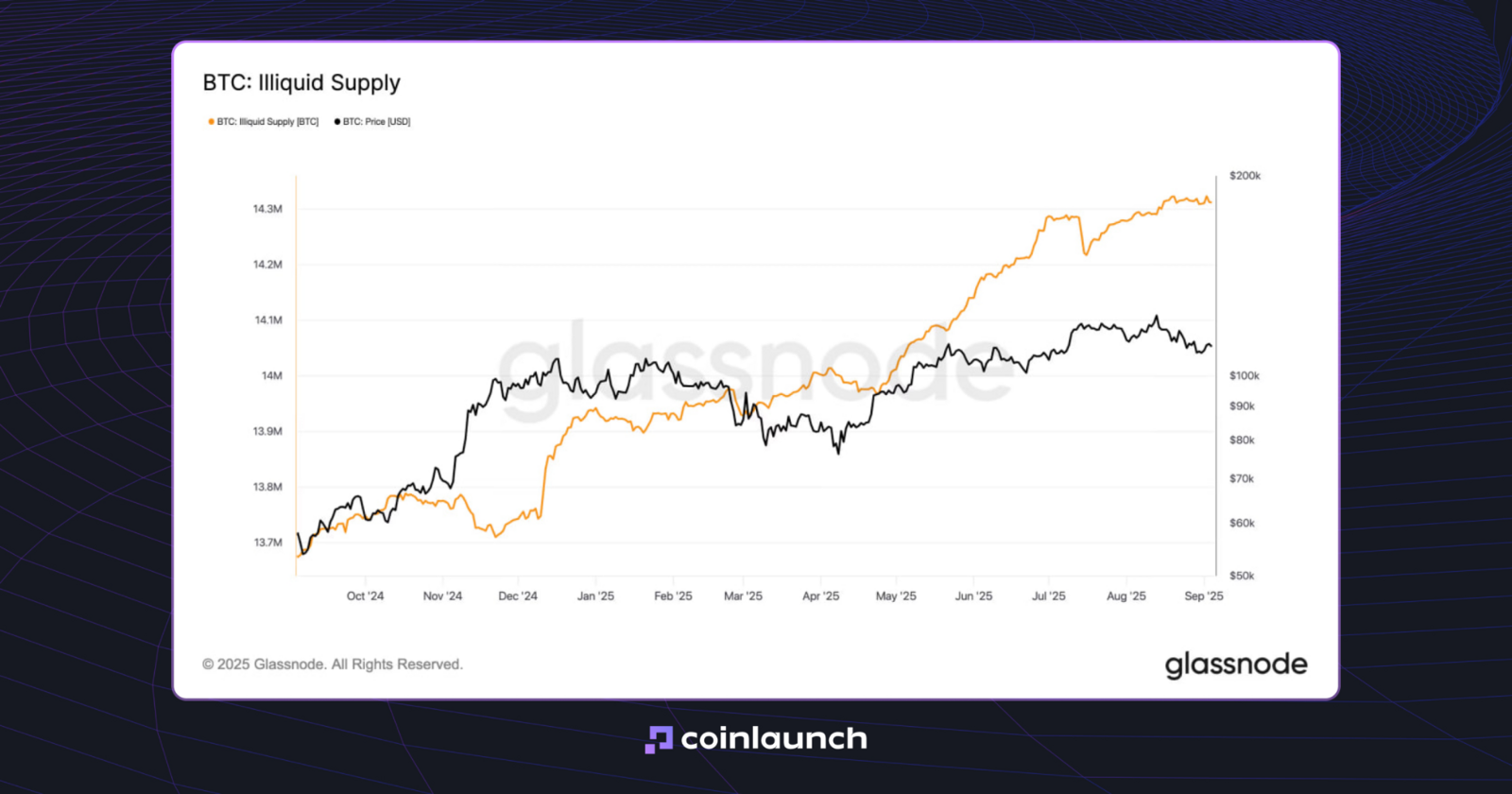
Glassnode data backs this up: today, 13 million BTC sit dormant in wallets and cold storage. That accounts for 65% of a network with a market cap exceeding $1 trillion. Ultimately, the most valuable digital asset in history is sitting idle instead of generating utility within its own ecosystem.
Bitcoin’s illiquid supply stands at 13 million BTC. Source: glassnode.com
For years, such an approach by both traditional and crypto investors wasn’t a problem at all. But as more “utility” tokens like ETH, SOL, HYPE, etc, emerged, holders started to look for ways to earn yield for holding BTC. This is how the BTCFi movement, also known as BitcoinFi or Bitcoin DeFi, emerged. It transformed the asset from a mere store of value into a foundational layer for decentralized finance. Under this paradigm, the asset unlocks a massive new source of liquidity.
This article breaks down exactly what is BTCFi, explores the technologies that make DeFi on Bitcoin possible, and highlights where BTC is already being put to work. We will also examine Ordinals, BRC-20, Runes, Bitcoin Bridge, and the core differences between native BTC and wrapped BTC.
What is Bitcoin DeFi? BTCFi Explained
Bitcoin DeFi, or BTCFi, is a collection of protocols and applications that utilize BTC or the Bitcoin infrastructure for decentralized financial operations.
In its conventional sense, BTCFi is not a standalone blockchain, technical standard, or single project, even though some specific projects bear that name. Instead, it serves as an umbrella term for the broader financial infrastructure built around Bitcoin.
This sector encompasses applications on the Bitcoin base layer, L2 networks and sidechains, alongside bridges and protocols that deploy BTC across other blockchains. Using Bitcoin in DeFi can involve operations with native BTC as well as its wrapped or tokenized versions.
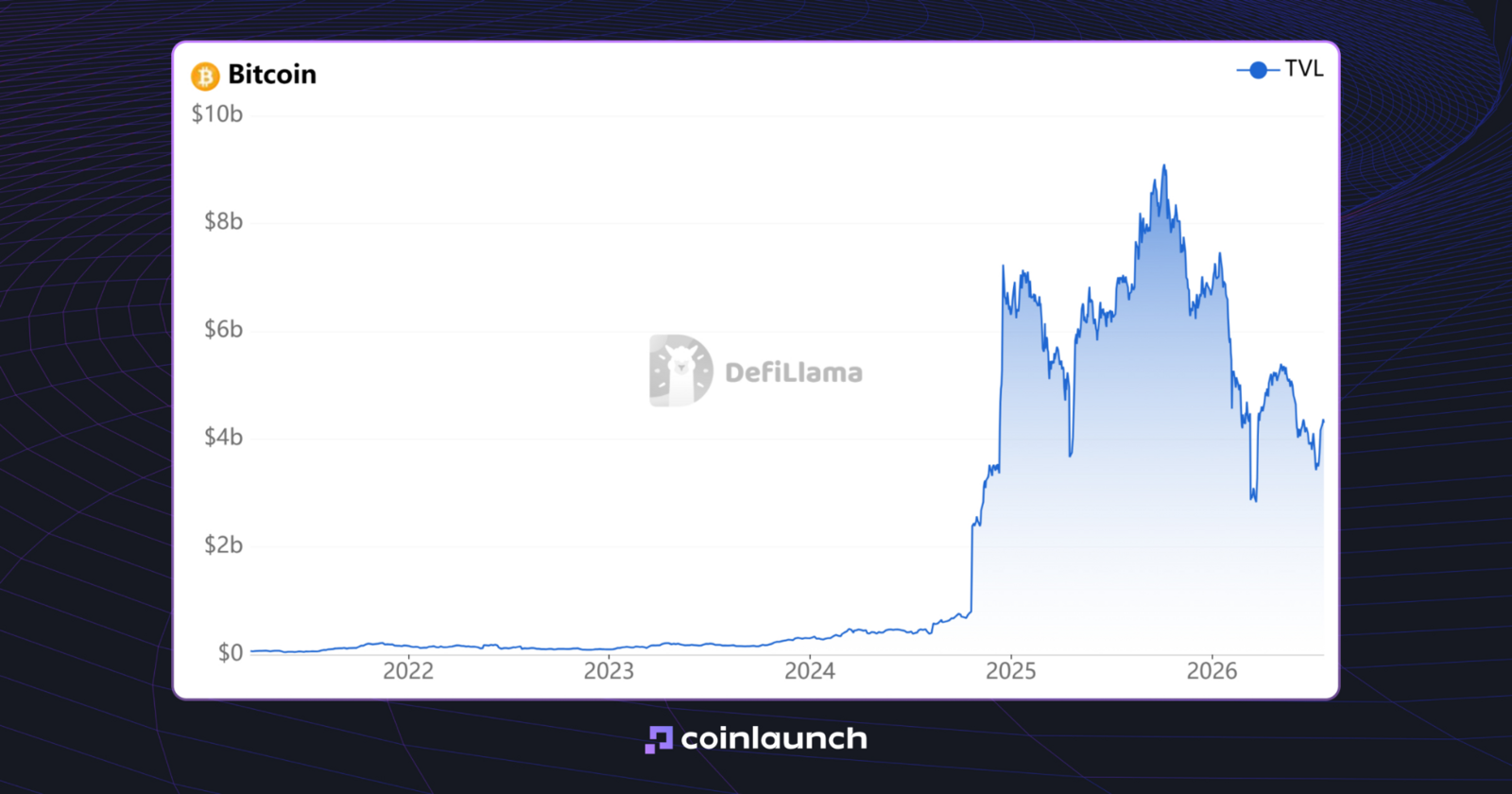
According to DeFiLlama data as of July 2026, Bitcoin TVL stands at roughly $4.3 billion, with Babylon leading the space at approximately $3.37 billion. By comparison, Ethereum's TVL sits at $41 billion.
It is also worth highlighting tokens within the BTCFi category. Their total market capitalization sits at roughly $590 million, while 24-hour trading volume reaches around $274 million.
The BTCFi Ecosystem: Bitcoin-Native and BTC-Based DeFi
In practice, BTCFi has developed through two main models. The first uses BTC as an asset within existing DeFi ecosystems. Bitcoin is represented by tokens such as WBTC, cbBTC, LBTC, and tBTC, which can be supplied as collateral, added to liquidity pools, or deployed in yield strategies on Ethereum and other smart contract networks. This is currently the more developed side of Bitcoin DeFi.
The second model focuses on infrastructure connected directly to Bitcoin. Native solutions use Bitcoin transactions, UTXOs, Bitcoin Script, or BTC-backed security for settlement, asset issuance, and staking. Ordinals and Runes operate on the Bitcoin base layer, while Stacks, Rootstock, Core, and Babylon execute additional logic through networks linked to Bitcoin.
Comparison
BTC-Based DeFi
Bitcoin-Native BTCFi
Infrastructure
Ethereum and other smart-contract networks
Bitcoin-linked L2s, sidechains, and security protocols
Role of BTC
One of the supported financial assets
Part of the protocol’s liquidity, security, or settlement model
BTC staking, smart-contract execution, and Bitcoin-linked applications
Examples
Aave and Morpho for lending; Curve for liquidity; Ethena for USDe backing
Babylon and Core for BTC staking; BOB, Stacks, and Rootstock for application infrastructure
The difference was already visible in February 2022, when Ethereum DeFi held roughly ten times more BTC than Bitcoin DeFi itself. By July 2026, the broader TVL gap remained similar: Ethereum DeFi held $49.3 billion, compared with approximately $4.3 billion in the Bitcoin category.
Ethereum also held $8.36 billion in WBTC and $4.01 billion in cbBTC, or $12.4 billion combined. These figures represent the value of tokenized BTC on Ethereum rather than the amount deposited in individual DeFi protocols. However, they show that a significant share of programmable Bitcoin liquidity still exists within the EVM ecosystem rather than on Bitcoin-native infrastructure.
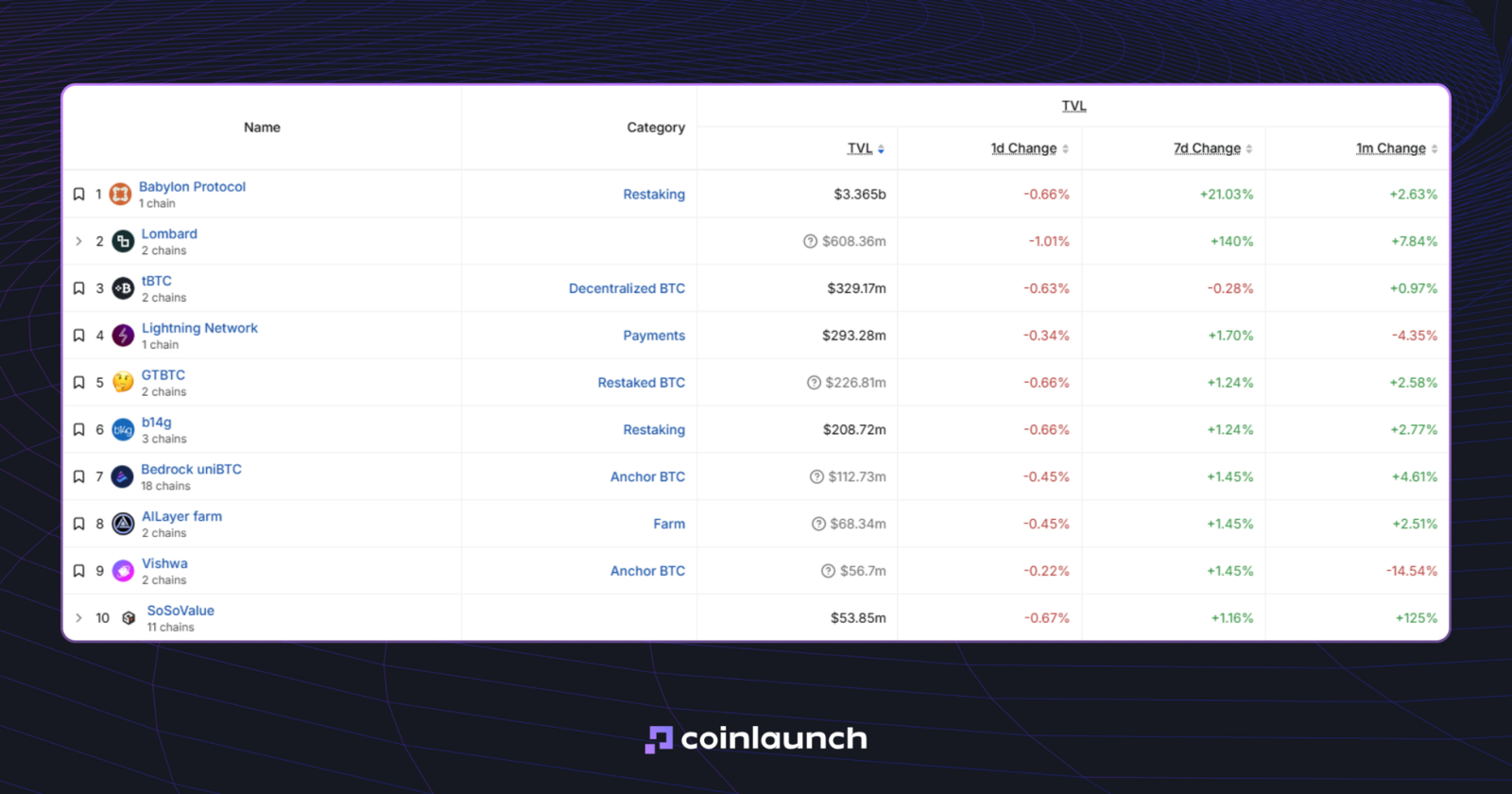
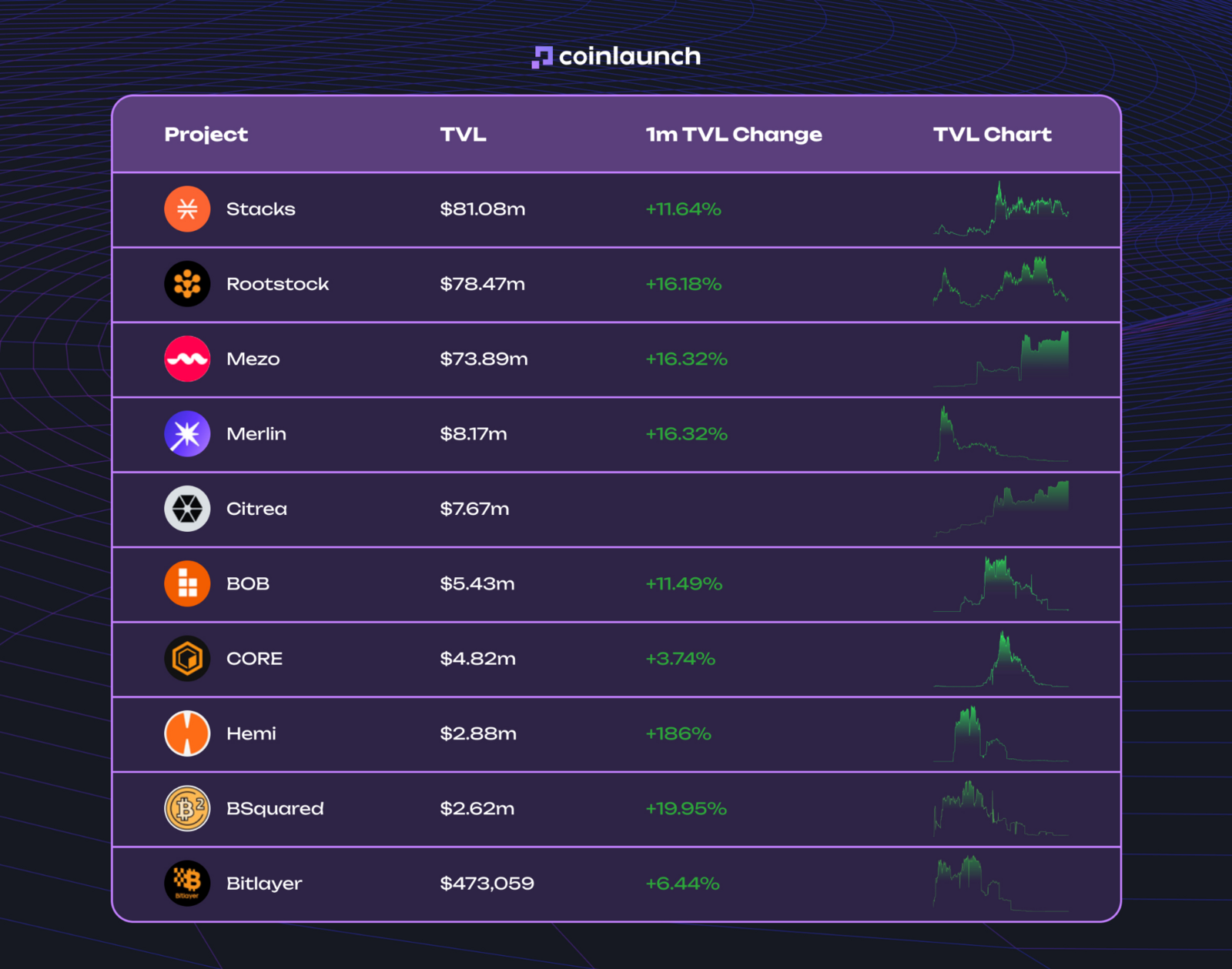
As noted earlier, the TVL of the BTCFi ecosystem stands at approximately $4.3 billion. This capital breaks down as follows:
Babylon Protocol accounted for roughly $3.37 billion;
The ranking also features b14g, THORChain, Solv Protocol, Templar Protocol, Zeus Network, Yala, and numerous other projects.
Top 10 Bitcoin DeFi protocols by TVL. Source: defillama.com
BitcoinFi projects can be categorized by their core functions. Stacks, Rootstock, Core, and BOB provide execution environments for applications and smart contracts. Babylon and b14g utilize BTC to secure external networks. Lombard, tBTC, Bedrock, and Solv issue different representations of Bitcoin. THORChain, Sovryn, ALEX, Templar, and Yala handle trading, lending, and the issuance of BTC-backed assets.
BTC-Based DeFi
BTC-based DeFi covers protocols that use Bitcoin as a financial asset without relying on its blockchain for execution. BTC is typically locked with a custodian or bridge, then issued on Ethereum or another network as a tokenized asset such as WBTC, cbBTC, or tBTC.
Tokenized Bitcoin can serve as collateral on Aave and Morpho, provide liquidity on Curve, or enter yield strategies. This model remains the most developed segment of BTCFi.
Bitcoin DeFi Lending and Borrowing
Bitcoin DeFi lending enables users to borrow funds against BTC without selling the underlying asset. A borrower locks Bitcoin as collateral and receives stablecoins in return. Other users can supply assets to lending pools to earn interest paid by borrowers.
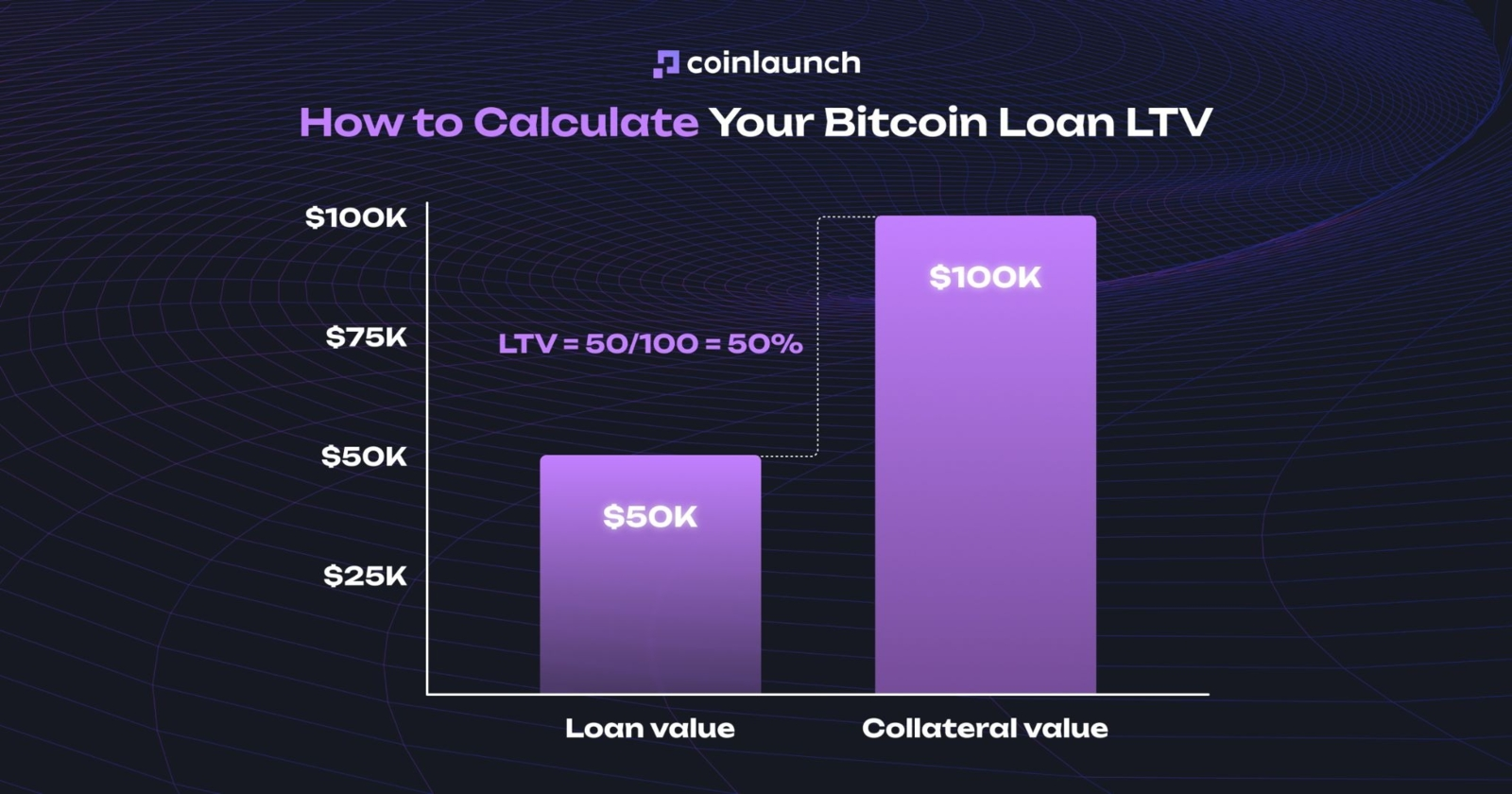
The available loan amount depends on the loan-to-value (LTV) ratio: the proportion of debt relative to the collateral value. At a 50% LTV, a user with $100,000 in BTC can borrow up to $50,000. If Bitcoin's price declines, the LTV ratio increases, requiring the borrower to add more collateral or repay part of the debt. Otherwise, a smart contract automatically triggers liquidation to sell a portion of the locked BTC.
Protocols employ different operating models, acting either as direct lending platforms or as yield aggregators. Among the best Bitcoin lending platforms are Nexo, Sats Terminal, Ledn, Lava, and Debifi.
Bitcoin Yield: How to Earn Yield on Bitcoin
Bitcoin yield is the income an asset owner generates while continuing to hold BTC. In the context of BTCFi, this usually refers to additional returns on top of Bitcoin's price appreciation: loan interest, trading fees, rewards for securing networks, or income from automated strategies.
One way to earn yield on Bitcoin is to deposit BTC or its tokenized version into a lending protocol. Borrowers pay interest for using the capital, and liquidity providers receive a portion of these payments. On DEXs, yield is generated from swap fees: users deposit assets into a trading pool and earn a share of the collected fees. The size of these returns depends on borrowing demand and trading volume.
Another option for how to get yield on Bitcoin is to use yield-bearing versions of BTC. For instance, when depositing Bitcoin into Lombard, a user receives LBTC. The underlying BTC is staked through Babylon to secure other networks, and the rewards are converted back to BTC. The LBTC balance itself does not increase; instead, the exchange rate at which the token can be redeemed for Bitcoin appreciates over time.
Users can also deploy LBTC across Aave, Morpho, Spark, Curve, and other DeFi protocols to generate additional BTC yield.
Bitcoin-Native BTCFi
Bitcoin-native BTCFi brings together networks and protocols that use the Bitcoin blockchain or native BTC as part of their infrastructure. This category includes Layer 2 networks, sidechains, bridges, and Bitcoin staking mechanisms.
Stacks, Rootstock, and BOB provide execution environments for smart contracts and applications. Babylon and Core use locked BTC to help secure other networks. Most activity can take place outside the base layer but remains connected to Bitcoin through asset custody, settlement, or transaction finality.
Is DeFi on Bitcoin Possible?
The short answer to the question of is DeFi on Bitcoin possible is simply yes.
Historically, decentralized finance evolved on Ethereum and other smart contract platforms. Bitcoin natively lacks smart contracts, but it does feature a built-in programming language known as Bitcoin Script. This language dictates the conditions for spending BTC, such as requiring multiple signatures or time-locking coins until a specific date. However, its capabilities fall short when it comes to supporting complex financial applications.
Bitcoin DeFi truly began to gain traction with the emergence of separate computing networks built around the core blockchain:
In 2023, developer Robin Linus introduced the BitVM concept for verifying complex computations on the base layer.
Today, DeFi on Bitcoin is evolving through networks like Rootstock, Stacks, Babylon, Core, and BOB. To achieve this, projects leverage sidechains, L2 networks, bridges, tokenized versions of BTC, Taproot, and BitVM. These technologies already power lending protocols, DEXs, yield tools, and BTC staking solutions.
We will dive deeper into the key projects and technical solutions powering BTCFi below.
How Does Bitcoin DeFi Work: Core Tech Solutions
The Bitcoin blockchain handles BTC custody and transaction settlement. More complex operations, such as token swaps, lending, or yield calculations, typically execute on separate protocols and networks connected to Bitcoin. Technically, one could end the explanation of how does Bitcoin DeFi work right there.
Every BTC balance is stored as an Unspent Transaction Output (UTXO). Users can attach specific spending conditions to these outputs, dictating who can move the coins, how many signatures are required, and when the funds unlock. The native Bitcoin Script language defines these parameters. Babylon, for instance, locks BTC via a special on-chain transaction and leverages those assets to secure other networks.
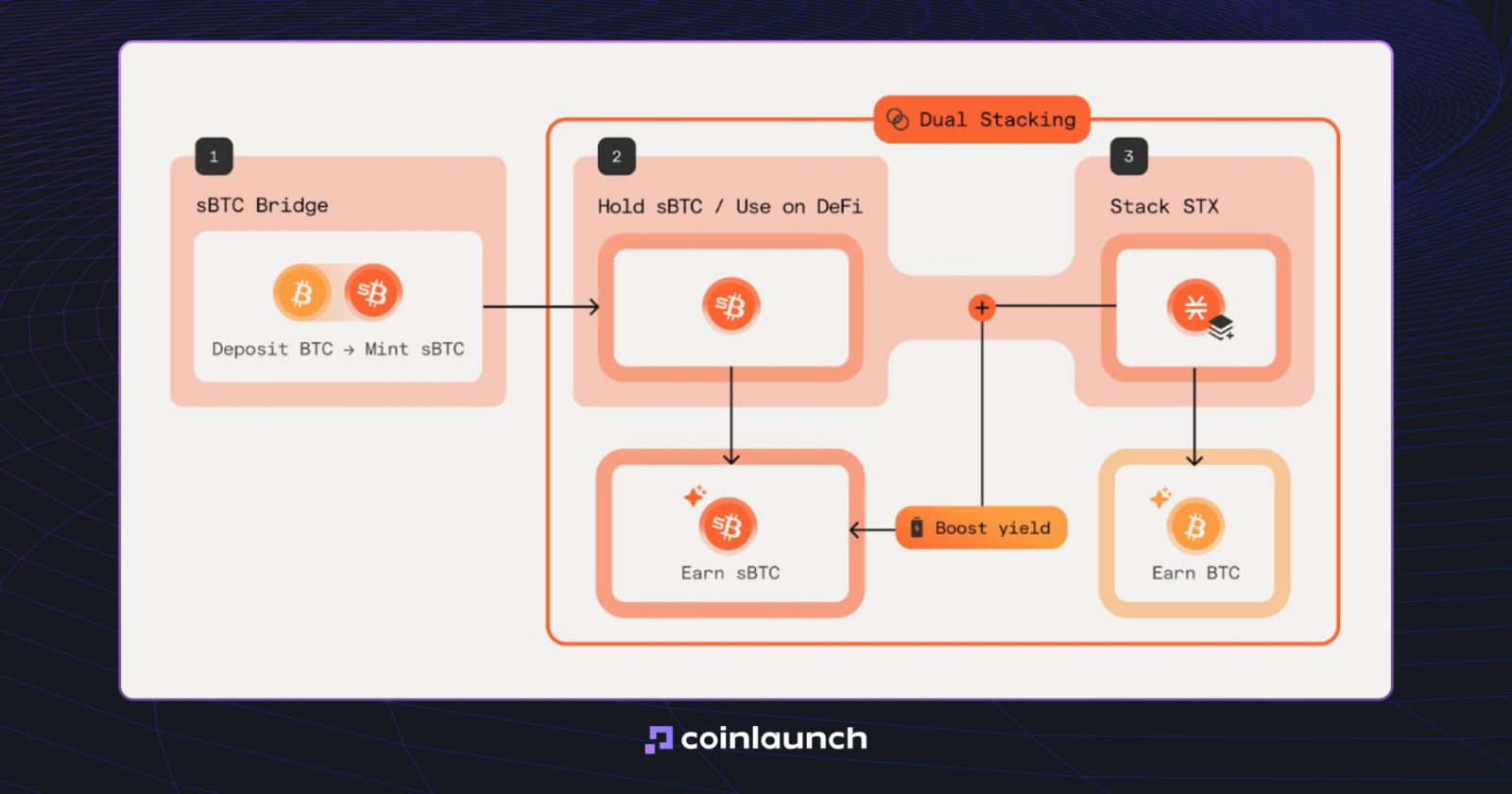
Lending and trading, however, require highly flexible smart contracts. To facilitate this, users lock their BTC in a cross-chain bridge and receive a pegged asset on an alternative network. This is exactly how sBTC operates on Stacks, where every sBTC is backed 1:1 by native BTC. Once minted, users can deploy this asset across DEXs, lending protocols, and other decentralized applications. When swapping back, the protocol burns the sBTC and unlocks the original BTC on the base layer.
Simplified diagram of Stacks workflow in Bitcoin DeFi. Source: x.com
Beyond this, Bitcoin DeFi leverages L2 networks, sidechains, bridges, and tokenized versions of BTC. For instance, Rootstock supports EVM smart contracts and connects its network to Bitcoin through the PowPeg mechanism.
Asset Layer: Bitcoin Token Standards and Tokens on Bitcoin
The Asset layer encompasses all assets utilized within BTCFi. This includes native BTC, tokens on Bitcoin, tokenized representations of Bitcoin across other networks, and stablecoins backed by BTC or issued within the Bitcoin ecosystem.
Bitcoin originally lacked a dedicated token standard comparable to ERC-20 on Ethereum. Consequently, developers built alternative solutions on top of the network. In some cases, token data is inscribed directly into Bitcoin transactions. In others, BTC is locked while a linked asset is issued on a secondary network, such as Ethereum, for use in DeFi applications.
Ordinals. This numbering system assigns a unique identity to individual satoshis. Users can attach an image, text, code, or other file to a specific satoshi. This data record is known as an inscription. It resides directly on the Bitcoin blockchain without requiring an additional token or sidechain.
BRC-20. A pseudonymous developer named Domointroduced this experimental standard in March 2023. BRC-20 uses JSON-formatted Ordinals inscriptions to allow users to deploy, mint, and transfer assets. Notably, BRC-20 tokens do not rely on smart contracts; external indexers track and calculate their balances instead.
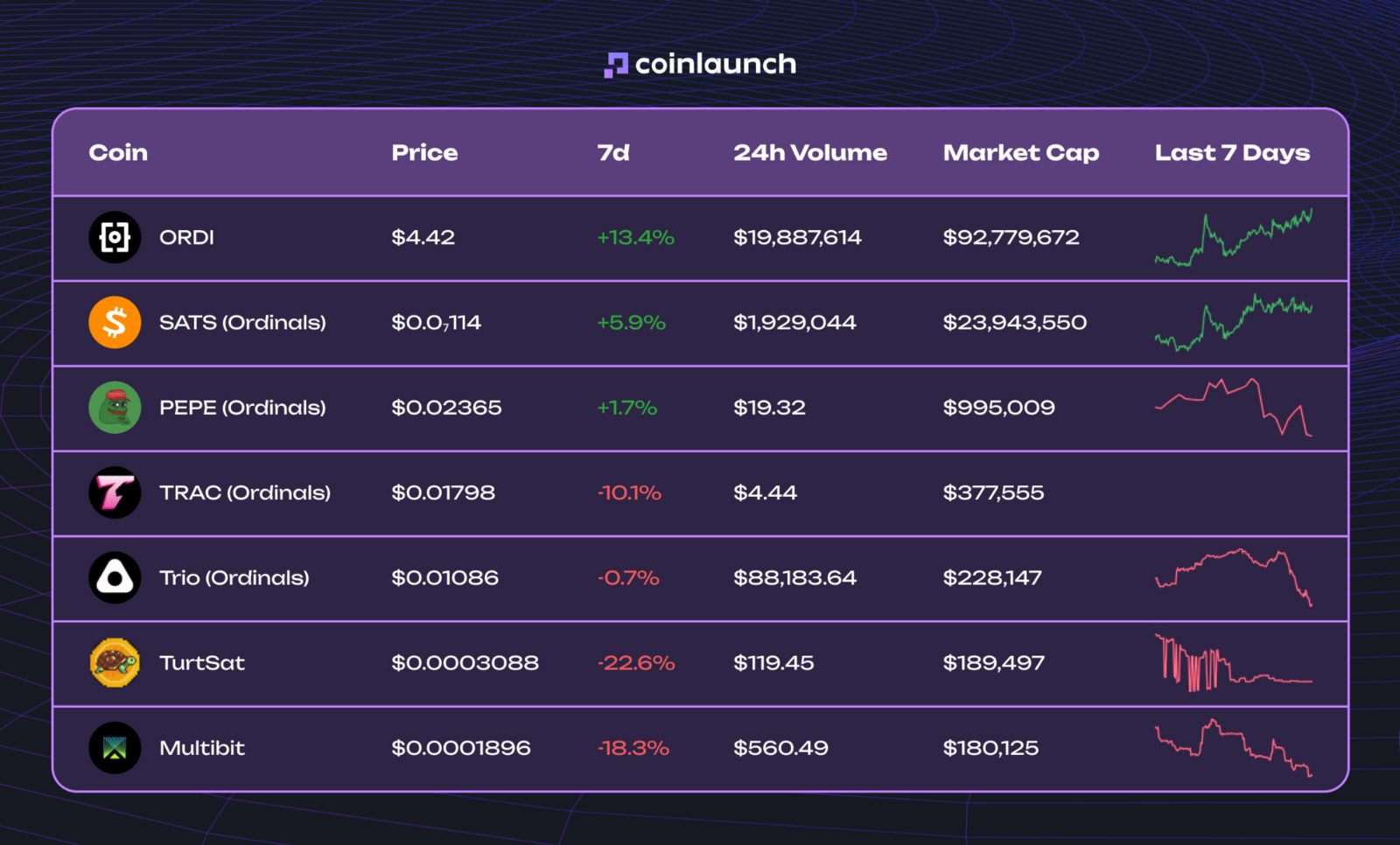
Top 7 largest BRC-20 tokens by market capitalization. Source: coingecko.com
Runes. The protocol allows for the issuance and transfer of fungible assets through the standard UTXO model on Bitcoin. Operational data regarding minting and transfers is recorded in transactions using OP_RETURN. Every single Rune is identical to another, whereas an Ordinals inscription represents a distinct object.
Tokenized BTC. These are assets backed by Bitcoin at a 1:1 ratio or a similar model. sBTC is issued on Stacks, LBTC on Lombard, and tBTC on the Threshold Network. These versions of BTC can be utilized in lending protocols, on DEXs, and as collateral.
The Execution layer consists of the networks and protocols where DeFi operations take place. The Bitcoin blockchain confirms BTC transactions, but its native capabilities are insufficient for running applications. Therefore, Bitcoin DeFi platforms offload computations to a separate network connected to Bitcoin.
A Bitcoin bridge is often used to transfer liquidity. A user locks BTC on the Bitcoin network and receives a pegged asset on another network. For example, when depositing BTC through the Stacks BTC bridge, an equal amount of sBTC is minted. This asset can then be supplied to a lending protocol, swapped on a DEX, and so on. When withdrawing, the process is reversed.
Rootstock provides an EVM-compatible environment, allowing developers to run contracts and applications originally built for Ethereum. The native asset of the network is rBTC, which is pegged to BTC via the two-way PowPeg mechanism. Rootstock already hosts applications for trading and Bitcoin-collateralized lending.
Core supports EVM smart contracts and a separate mechanism for self-custodial Bitcoin staking. A user locks BTC via a Bitcoin transaction, selects a Core validator, and earns rewards in CORE. In Dual Staking mode, they stake BTC and CORE simultaneously, with the yield depending on the ratio between the two assets.
BOB (Build on Bitcoin) is positioned as a hybrid L2 network that combines an EVM environment with Bitcoin infrastructure. The BOB Gateway is used for cross-chain operations with BTC, and the project's architecture includes a BitVM-based Bitcoin bridge.
Application: Bitcoin DeFi Protocols and Apps
The Application layer consists of end-user products: DEXs, lending services, liquidity pools, stablecoins, and yield farming applications. They operate on top of execution layer networks and leverage their smart contracts.
Bitcoin native DeFi typically refers to applications centered around BTC as their primary asset.
Bitcoin Staking: Rewards and Economic Security
Does Bitcoin have staking? No. Bitcoin uses Proof of Work, meaning miners produce blocks and secure the network. Within BTCFi, Bitcoin staking refers to locking BTC on the Bitcoin blockchain so that another network can use its value as economic security.
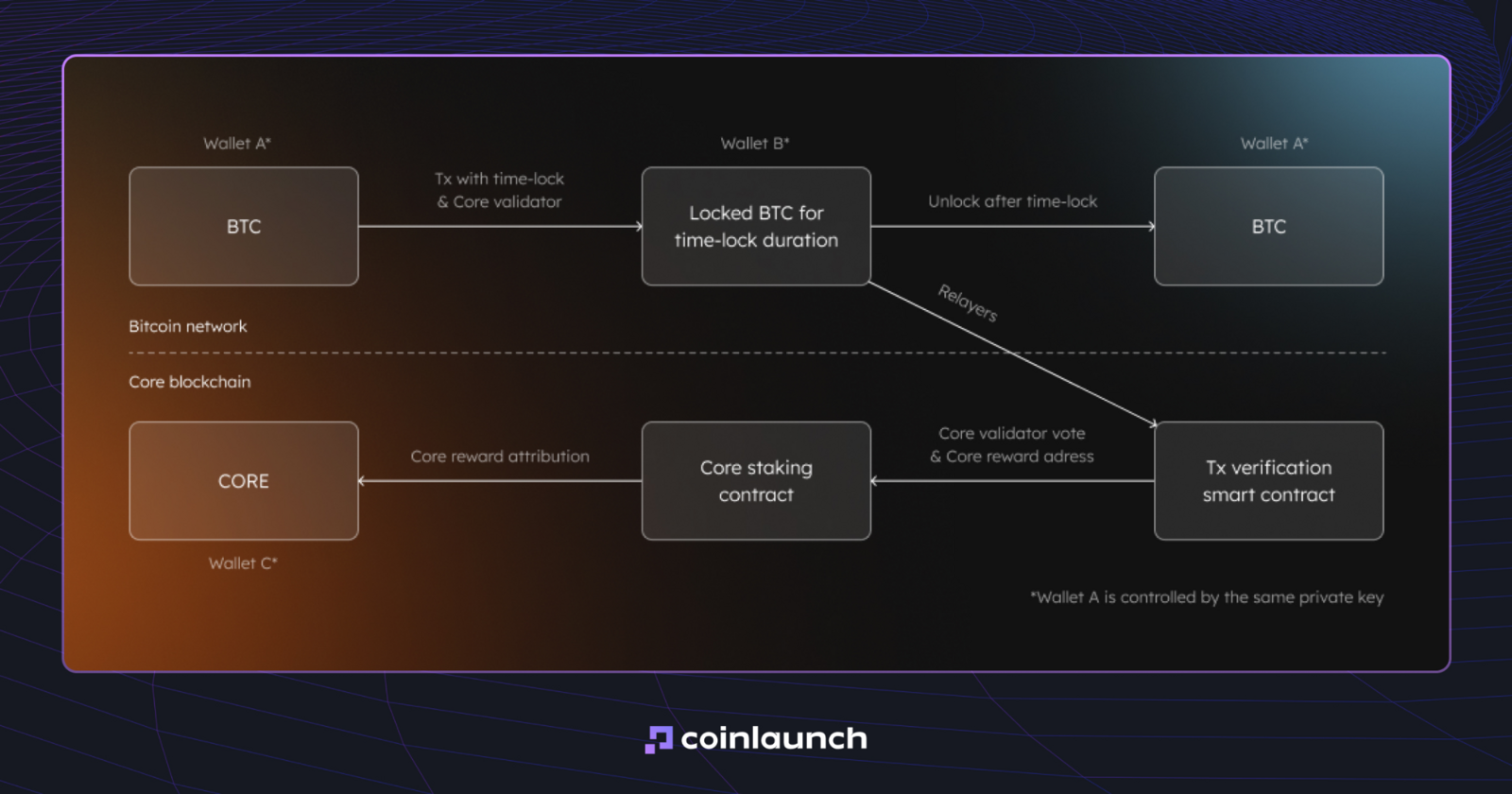
The BTC is not transferred to a validator, wrapped, or moved through a bridge. Instead, the holder creates a time-locked Bitcoin transaction and selects an operator. The connected network detects the transaction and counts the locked BTC when assigning security power to that operator. The operator participates in validation but cannot spend the user’s Bitcoin.
Core is a Layer 1 blockchain that combines three security inputs: CORE token delegations, locked BTC, and delegated Bitcoin mining hash power. A BTC holder locks coins on Bitcoin and assigns them to a Core validator. Relayers detect this transaction and register the delegated amount on Core, where it affects validator selection.
Selected validators produce Core blocks and receive newly issued CORE tokens and transaction fees. Each validator retains a commission and distributes the remaining rewards among its delegators. BTC holders therefore earn rewards in CORE, while their Bitcoin remains locked on its native blockchain.
How Bitcoin staking works on Core. Source: coredao.org
Babylon Genesis is a PoS Layer 1 and the coordination layer for Babylon’s Bitcoin staking protocol. BABY validators produce blocks, while BTC holders lock Bitcoin and delegate it to finality providers. These providers use the delegated security power to confirm blocks. If a provider violates the protocol rules, a portion of the associated BTC can be slashed.
Other chains and applications can integrate with Babylon as Bitcoin Supercharged Networks (BSNs). This allows them to use security backed by staked BTC instead of building a separate Bitcoin staking system or relying as heavily on inflation of their own token. Babylon’s multi-staking model is also designed to let the same BTC position secure several connected networks.
BSNs send their native tokens or another selected asset to Babylon Genesis as staking rewards. Babylon deducts a small protocol fee and forwards the remaining tokens to BTC stakers. This fee is how the protocol earns from providing its security infrastructure. On Babylon Genesis itself, BTC and BABY stakers receive BABY rewards from annual token issuance, while finality providers retain a commission.
The Bitcoin network does not pay Bitcoin staking rewards. Their source depends on the connected network:
Core distributes newly issued CORE tokens and transaction fees.
Babylon Genesis distributes BABY from annual issuance.
Other BSNs distribute their own tokens or another selected reward asset.
Bitcoin staking yield depends on the network’s reward rules, the amount of locked BTC, operator performance, and commission rates. The user’s BTC balance does not increase. Rewards are paid separately in CORE, BABY, or tokens provided by other secured networks.
Bitcoin Token Standards and Protocols
BTCFi extends beyond financial applications. Dedicated standards and protocols make it possible to issue tokens, store data, and execute trades directly through Bitcoin infrastructure.
Ordinals record data on satoshis, BRC-20 and Runes support fungible token issuance, and Light Pools introduce a trading model based on signed quotes and Bitcoin transactions. Each mechanism uses Bitcoin’s network capabilities and transaction data differently.
What Are Bitcoin Ordinals and What Is BRC-20?
Interest in expanding Bitcoin's functionality surged after the SegWit and Taproot upgrades, which increased transaction data capacity and simplified complex scripting scenarios. Against this backdrop, developers began searching for ways to store arbitrary data, such as images, directly on the blockchain.
This effort resulted in Ordinals, a method that allows attaching data to the smallest unit of BTC, a satoshi.
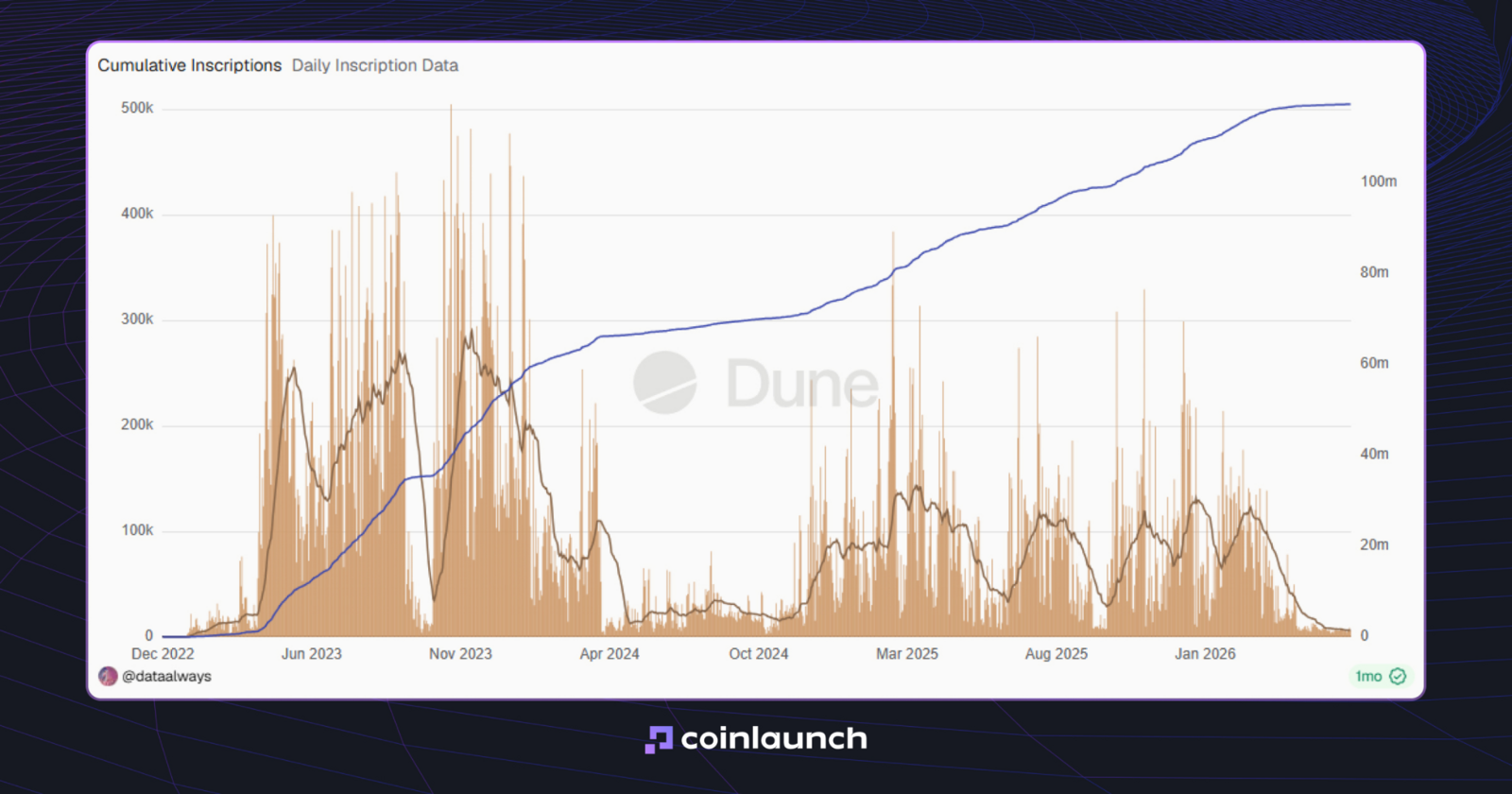
Ordinals make it possible to create digital objects directly on Bitcoin without altering its underlying protocol. Data is placed inside a transaction, and the associated satoshi becomes the carrier of that content. This approach enabled the release of images, text files, and other artifacts, driving a rapid surge in network activity and transaction fees.
Yet, as of August 2026, almost no new Ordinals are being inscribed.
Ordinals statistics: daily new inscriptions on satoshis. Source: dune.com
Building on Ordinals, BRC-20 emerged as one of the primary Bitcoin token standards. It utilizes the same on-chain inscriptions but introduces a structured JSON data format to define token parameters: ticker, total supply, minting limits per transaction, and action type. Essentially, there are three core operations: deploy, mint, and transfer. Each operation is recorded as a separate inscription tied to specific satoshis.
Crucially, BRC-20 does not rely on smart contracts. The underlying Bitcoin network only processes raw inscription data, while external indexers, such as specialized services and wallets, calculate and track overall token balances.
Today, the BRC 20 tokens list includes thousands of active assets alongside an abundance of Ordinals inscriptions. Ordinals frequently take the form of digital art and collectibles similar to Ethereum NFTs, with NodeMonkes and Bitcoin Puppets ranking among the largest collections. And similarly to Ethereum NFTs, once the speculative interest in Ordinals has cooled off, the activity there dropped almost to zero.
What Are Bitcoin Runes?
The emergence of Runes was a response to the limitations identified in BRC-20. The BRC-20 standard relies on inscriptions and external indexers, making it resource-intensive for the network and vulnerable to interpretation errors. Runes address these issues differently: they utilize Bitcoin's native UTXO transaction model and record operational data in the OP_RETURN field without overloading the witness portion of transactions.
This approach embeds token operations directly into the transaction structure, making the protocol independent of complex off-chain interpreters.
Runes mechanics: every operation, whether minting, distributing, or transferring tokens, is reflected in a separate UTXO. Balances are determined by the state of the output set rather than a JSON inscription. This makes the model more aligned with Bitcoin's architecture and reduces the risk of desynchronization. Operating via OP_RETURN minimizes the amount of data stored on-chain, thereby improving scalability and reducing blockspace load compared to BRC-20.
BRC-20 vs Runes: Comparison Table
BRC-20
Runes
Implementation
Based on Ordinals Theory
UTXO-based, not directly related to Ordinals
(Meta)data location
Witness (up to 4 MB)
OP_RETURN field (80 bytes)
Transferring
Requires new inscription to be created
Transferred using normal Bitcoin transactions with protocol message
Minting
Open mint: once created, anyone can mint the BRC-20
Supports open minting but also other formats of distribution
Token name
4 characters only
Up to 26 letters. Symbols with 13+ characters are available at launch, with the limit decreasing over time
Compatibility
Ordinals-supported wallets only
Compatible with Lightning and DLCs. Supports SPV wallets and light clients
Creator
Domo
Casey Rodarmor
Bitcoin Light Pools
As the number of BRC-20 tokens and Runes grew, so did the demand for decentralized trading tools within the Bitcoin ecosystem. However, the lack of native smart contracts makes implementing AMMs on Bitcoin technically impossible.
Bitcoin Light Pools emerged as a response to this challenge. The concept was introduced by Bitcoin developer Casey Rodarmor in April 2024.
Light Pools: A simple solution for decentralized trading of Bitcoin-native assets. Mempool-sniping resistant, price and cost effective.
I'm not going to build this one, unlike runes where I was like, eh, who knows. I hope someone else does! 🧵https://t.co/euLTnYIckk
Bitcoin Light Pools represent a concept for trading assets within the Bitcoin network without the use of smart contracts or centralized exchanges. Instead of traditional order books or AMM pools, participants exchange pre-signed messages containing quotes for the traded assets.
In Bitcoin Light Pools, there are no liquidity pools, no smart contracts, and nobody locks funds on a third-party platform. Instead, quotes circulate within the network, acting as messages from market makers offering to buy or sell an asset for a specific amount of BTC.
Each quote contains a digital signature confirming that the market maker truly controls the specified UTXOs (Unspent Transaction Outputs). This is achieved through BIP-322, a standard allowing a UTXO owner to sign arbitrary messages without spending the outputs. This signature serves as proof of asset ownership.
When a taker (the buyer) finds a suitable quote, they create and sign a PSBT (Partially Signed Bitcoin Transaction). This draft transaction outlines their inputs, outputs, and the terms of the exchange.
The PSBT cannot be immediately broadcast to the network. It must be finalized by the second participant, the one who posted the initial quote. Only then does the transaction become complete and ready to be submitted to the blockchain.
Today, Light Pools are not a widely adopted trading protocol. Runes, BRC-20, and Ordinals are still primarily traded through marketplaces using off-chain order books and on-chain Bitcoin settlement.
Conclusion
BTCFi gives Bitcoin more use cases than buying and holding. BTC can serve as collateral, generate yield, provide liquidity, or secure external networks. However, most complex operations still take place outside the Bitcoin base layer through connected networks, bridges, and tokenized versions of BTC.
The ecosystem also remains fragmented. Its more developed segment uses tokenized BTC across Ethereum and other EVM networks, including lending and liquidity protocols such as Aave, Morpho, and Curve. Bitcoin-native infrastructure has attracted less consistent demand. The closure of Botanix in 2026 showed that building additional utility around the Bitcoin network does not automatically create sustainable activity.
Different protocols generate returns through borrower interest, trading fees, or rewards from external networks. Despite these emerging use cases, Bitcoin is still used primarily as a store of value, while BTCFi remains a smaller and less unified ecosystem around it.
FAQ
What are Bitcoin Ordinals?
Bitcoin Ordinals is a satoshi numbering system that allows attaching images, text, and other data to individual units of Bitcoin. These records are called inscriptions, and the information is stored directly within Bitcoin transactions. Ordinals became the foundation for digital collectibles and the BRC-20 standard.
How to earn yield on Bitcoin?
You can earn yield on Bitcoin through lending protocols, liquidity pools, yield-bearing versions of BTC, and Bitcoin staking. The source of payouts depends on the specific product: borrower interest, trading fees, or rewards from a separate network. Before depositing BTC, users must verify where their coins are stored, which asset is used for reward payouts, and whether funds are at risk of liquidation or bridge failure.
What is BRC-20?
BRC-20 is an experimental fungible token standard on the Bitcoin network introduced by Domo in March 2023. It utilizes Ordinals inscriptions containing JSON-formatted data to issue, mint, and transfer tokens. BRC-20 balances are calculated by external indexers, as the base Bitcoin blockchain does not maintain a separate registry for such tokens.
What is Bitcoin DeFi?
Bitcoin DeFi comprises protocols and applications that enable the use of BTC for lending, trading, yield generation, and other financial operations. Complex logic is typically executed on Layer 2 networks, sidechains, or separate blockchains linked to Bitcoin. The ecosystem also includes bridges and tokenized versions of BTC that provide access to smart contracts.
What is Bitcoin staking?
Bitcoin staking is the locking of BTC to participate in the security system of a separate network, such as Core or Babylon Genesis. The coins remain on the Bitcoin blockchain and are not transferred to an operator, but another network factors them into its validator selection or block confirmation model. Rewards are paid out by this separate network in its own native token, as Bitcoin itself operates on Proof of Work and does not disburse staking yield.